El Monte
 Log in
Log in
Log in

Craig’s Cruisers – Grand Rapids is located in Wyoming, MI, just a few miles southwest of downtown Grand Rapids.
This 120,000-square-foot family fun center offers a wide range of attractions including indoor and outdoor go-karts, a two-level laser tag arena, 36 holes of mini-golf, bumper boats, bumper cars, a trampoline park with slide zone, a cruiser coaster, a zip line, and over 85 arcade games. The venue is a popular choice for birthday parties, corporate events, field trips, and group outings, with seven private party rooms and several semi-private spaces available for events of all sizes.
Beyond the attractions, guests can enjoy an all-you-can-eat pizza buffet, comfortable lounge seating throughout the facility, and special value programs like the Summer Season Pass, Wristband Wednesday, and adults-only after-hours events. The dedicated events team, led by a coordinator who grew up visiting the park, works closely with guests to plan celebrations and ensure a smooth, memorable experience for everyone.
 Indoors
 Outdoors
Main Event Grand Rapids is located in Kentwood, Michigan, at the Woodland Mall complex on 28th Street SE. This nearly 49,000-square-foot entertainment center offers multi-level laser tag in a foggy, black-lit arena, 22 pro-level bowling lanes with cosmic lighting, over 100 arcade games (classic and modern), gravity ropes, virtual reality, billiards, and shuffleboard. The venue runs on a Fun Card system for arcade play and provides structured packages for birthdays, school groups, and corporate events — all supported by a dedicated party planning team and a full calendar of group lock-ins and all-access passes.
The on-site Family Kitchen restaurant serves pizza, burgers, wings, and full bar offerings, while the VIP bowling room, banquet hall, and semi-private spaces allow for quieter celebrations or post-game gatherings. With a staff of about 160 trained team members and a general manager focused on guest experience, the venue is designed for birthdays, team-building events, graduation parties, holiday gatherings, and casual family nights out.
IndoorsBattleGR Tactical Games is located in Comstock Park, Michigan, just north of Grand Rapids near the LMCU Ballpark.
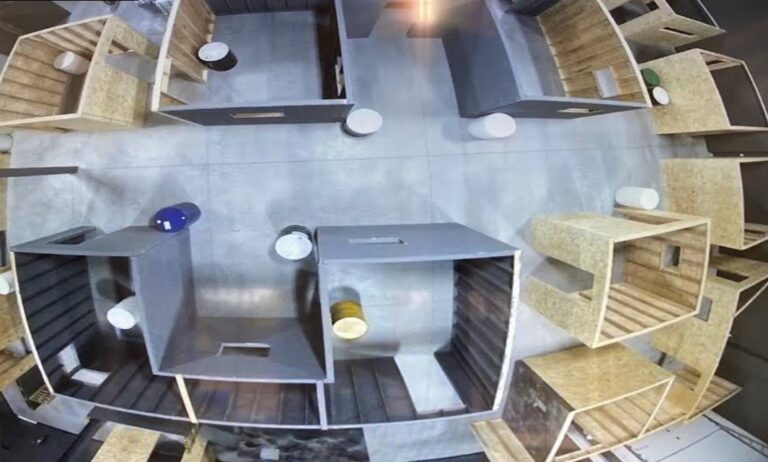
This 24,000-square-foot facility offers a fully immersive tactical gaming experience centered around a reconfigurable laser tag arena with over 40 mission-based games, military-replica taggers, and team-focused objectives that keep everyone in the action. Beyond laser tag, guests can enjoy archery tag, axe throwing with digital game modes, gel blasters, a full sports court for basketball, volleyball, futsal, and pickleball, as well as team-based virtual reality experiences including escape rooms.
The venue is well-suited for birthday parties, corporate team-building events, school field trips, summer camps, and private group celebrations, with dedicated party hosts, private rooms, and on-site food from The Grub kitchen. Additional amenities include an arcade, lounge area, mobile services that bring games to outside locations, and membership options for regular visitors. The facility is locally owned and operated, with a focus on safe, inclusive, and engaging entertainment for all ages.
IndoorsLaser tag has evolved from a niche 1980s experiment into a global phenomenon that bridges the gap between tactical training simulation and high-octane recreation. By blending infrared technology, athletic movement, and immersive storytelling, it provides an experience that is as mentally stimulating as it is physically exhausting. Whether played in a dimly lit, fog-filled indoor arena or across an expansive woodland course, laser tag offers a unique form of engagement that remains a staple of social interaction in the 21st century.
At its core, laser tag is a recreational shooting sport where participants utilize infrared-emitting light guns to tag designated targets, usually worn by other players. Unlike paintball or airsoft, which involve physical projectiles, laser tag is entirely non-contact and “pain-free,” as the system relies on digitized signals.
A standard setup consists of a lightweight vest equipped with sensors or a headband unit, alongside a phaser that transmits a coded infrared beam. When a beam makes contact with a sensor, the hit is registered instantly through sound, light, or haptic feedback. Modern systems are highly sophisticated, often connecting to central computer servers that track scores, accuracy percentages, and team objectives in real-time. This technological backbone transforms a simple game of “tag” into a complex, data-driven battle that rewards precision and strategy.
The true brilliance of laser tag lies in its versatility regarding game modes. Players are rarely limited to a simple free-for-all; instead, arenas often employ “scenarios” that mirror popular gaming tropes.
Beyond the thrill of the chase, laser tag offers significant benefits that appeal to both children and adults. Physically, it is a high-intensity cardiovascular workout. A single session requires constant movement, sprinting, lunging, and squatting, all of which improve heart health, coordination, and endurance.
Mentally, it acts as a playground for strategic thinking. Players must learn to communicate effectively under pressure, analyze their environment constantly, and adapt to the shifting tactics of their opponents. Because the feedback is immediate, it also teaches the value of “failing fast”—if a strategy doesn’t work, a player can adjust their approach in the next round. It also fosters social cohesion, as it requires teamwork and trust to execute a winning play.
Research into play-based learning and cognitive development suggests that activities like laser tag serve as a vital release for the brain. Industry experts often point out that laser tag operates as a form of “gamified fitness,” which is particularly effective in an age where sedentary screen time is at an all-time high.
Experts in human-computer interaction (HCI) celebrate the way laser tag integrates technology into the physical realm. By removing the barrier of a flat screen, the game encourages spatial awareness and motor skill development. Furthermore, psychological studies on group dynamics highlight that competitive team-based play is an exceptional tool for breaking down social barriers and fostering bonds between individuals who might otherwise have little in common, such as coworkers or students.
While often associated with childhood, the demographic for laser tag is remarkably broad. For children, the game is an unmatched developmental tool. It encourages them to move away from video game consoles and engage with peers in a physical environment that emphasizes fairness and rule-following. It allows them to inhabit roles—like a commander or a scout—that help them practice social negotiation and collaborative problem-solving. Furthermore, the “no-pain” nature of the game makes it a safe, approachable entry point for children who might be intimidated by contact sports or harsher simulation games.
Because of its accessibility, laser tag has become a premier choice for celebratory events.
The playing field dictates the pace of the game. Choosing between an indoor and outdoor venue depends on the desired atmosphere.
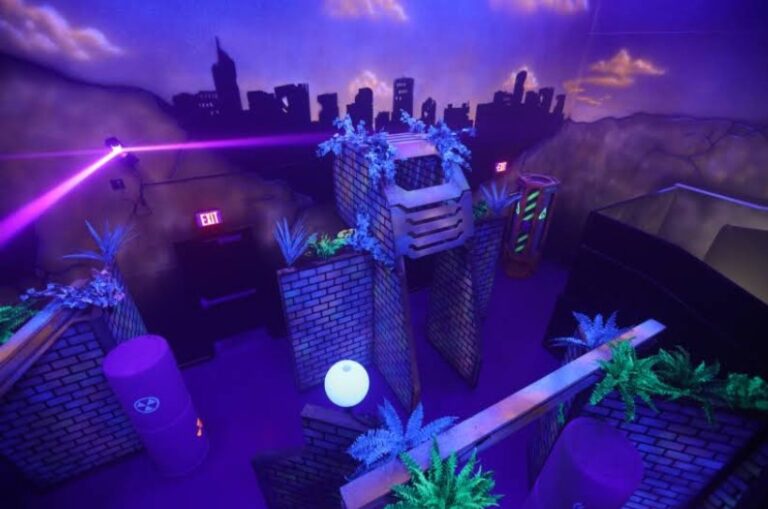
Indoor Venues: These are typically found in specialized arenas characterized by blacklights, neon-painted walls, and elaborate mazes. Indoor play is highly controlled, meaning it is immune to weather, and the use of fog machines and atmospheric lighting creates an intense, immersive environment. These venues are ideal for competitive, fast-paced play where visibility is low and reflexes are tested.
Outdoor Venues: Outdoor laser tag often utilizes natural terrain, such as forests, abandoned buildings, or inflatable bunkers in large fields. These venues provide a more “rugged” experience. The physical stakes are higher, as players must navigate uneven ground and environmental obstacles. Outdoor play is often preferred for larger groups or specialized long-range equipment, as the spatial scale allows for more tactical maneuvers, such as flanking and long-range sniping, which are impossible in the tight corridors of an indoor arena.
In conclusion, laser tag remains a vibrant, multifaceted activity. It is at once a challenging sport, a social experiment in teamwork, and an immersive escape from the everyday. Whether you are looking for a venue for a child’s sixth birthday or a strategy-heavy team-building exercise for a corporate department, the game continues to provide a perfect blend of technology, physical exertion, and human connection.


 5730 Clyde Park Ave SW, Wyoming, MI 49509