El Monte
 Log in
Log in
Log in

Located in Grand Rapids, MI, Amped Virtual Reality is a premier virtual reality arcade that caters to individuals of all ages. With a wide range of virtual reality experiences and games, both beginners and experienced gamers can find something to enjoy at Amped Virtual Reality.
Immerse yourself in a variety of virtual reality worlds at Amped Virtual Reality, where you can engage in action-packed shooter games or thrilling racing simulators. Equipped with state-of-the-art VR equipment and a comfortable gaming environment, Amped Virtual Reality guarantees an unforgettable experience.
At this arcade, you have the option to play both single-player and multiplayer games. Challenge your friends to a competitive match or collaborate for cooperative gameplay. Additionally, Amped Virtual Reality offers party packages for birthdays, corporate events, or any other special occasions.
 Indoors
Twisted Reality Gaming is a popular gaming center located in Greenville, MI. It offers a unique and immersive gaming experience for gamers of all ages. The center features state-of-the-art gaming equipment and a variety of gaming options to cater to different interests.
At Twisted Reality Gaming, you can find a wide range of gaming consoles, including Xbox, PlayStation, and Nintendo Switch. They also have a selection of virtual reality (VR) gaming setups, allowing you to dive into an entirely new world of gaming.
The center offers both single-player and multiplayer gaming options. You can challenge your friends in competitive games or team up to take on virtual enemies. They host regular tournaments and events for avid gamers to showcase their skills and compete for prizes.
IndoorsIn the traditional landscape of gaming, the player has long been resigned to a seat, a couch, or a small square of carpet in a living room, tethered by cords or limited by the proximity of walls. The emergence of free-roam VR arenas has shattered these constraints, transforming the act of playing a video game into a physical, immersive performance. By marrying high-fidelity virtual reality with wide-open, real-world physical spaces, these arenas have created a new category of entertainment that feels less like software and more like a bridge to another dimension.
A free-roam VR arena, often referred to as “warehouse-scale” VR, represents the pinnacle of current consumer-facing immersive technology. Unlike home setups that rely on stationary sensors or restricted boundaries to keep users from colliding with furniture, a free-roam arena is a purpose-built environment. These spaces are typically large, unobstructed warehouses or rooms equipped with sophisticated motion-tracking arrays installed in the ceiling.
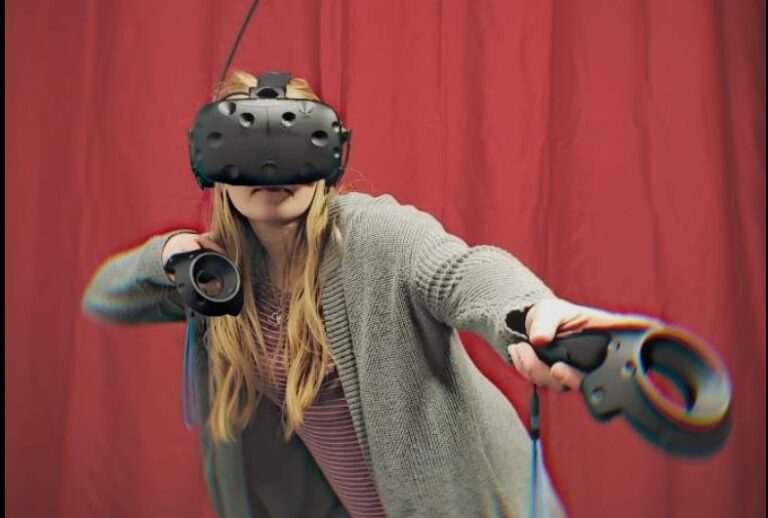
Players wear lightweight, high-resolution headsets and often carry haptic gear—such as vests that vibrate when an impact is received—and tracked props like plastic rifles or wands that function as virtual tools. Because the physical floor plan is mapped precisely to the virtual environment, a player can walk for miles inside a virtual world without ever bumping into a wall. If a player sees a corridor in their headset, they are walking down a real-world corridor. This 1:1 mapping of physical movement to virtual action is the “holy grail” of immersion, essentially eliminating the motion sickness that often plagues sedentary VR experiences.
The power of these arenas lies in their narrative versatility. Because the environment is entirely digital, the same physical room can exist as a haunted Victorian mansion at 2:00 PM and a neon-lit cyberpunk training facility by 3:00 PM.
The scenarios currently deployed in these arenas are designed to leverage the player’s urge to explore. Common genres include high-stakes tactical shooters where teams must communicate to clear rooms and defuse threats; survival-horror experiences where groups navigate dark, claustrophobic corridors teeming with cosmic entities; and puzzle-based escape rooms that are physically impossible in reality—such as floating in zero gravity or shrinking to the size of an insect to navigate a mechanical clockwork world. Each scenario is engineered to force players to interact with one another: shifting heavy virtual objects together, covering each other’s blind spots, or physically ducking behind digital crates that correspond to real-world barricades.
While initially viewed as a niche hobby for hardcore technology enthusiasts, free-roam VR has rapidly transitioned into mainstream family entertainment. The demographic is wide and inclusive. Because these systems are managed by professional operators who assist with equipment setup, the barrier to entry is minimal.
VR for kids has become a massive driving force in this industry. Children, who are often more adaptable to digital interfaces than adults, find these arenas particularly captivating. For younger demographics, free-roam VR acts as a “digital playground.” Many of the experiences are built as non-violent adventures—exploring magical forests, solving logic puzzles in fantasy realms, or playing virtual sports. Operators maintain strict safety protocols to ensure that high-quality, sanitized equipment is used and that children remain within safe boundaries, making it a popular choice for families looking for an active outing that involves more movement than a traditional cinema visit.
The “event” nature of free-roam VR has made it a formidable competitor to traditional party venues. For a birthday party, it provides an unforgettable centerpiece. Instead of simply sitting around a table, a group of friends can literally fight off an alien invasion or explore a treasure-filled tomb together. The shared adrenaline of these experiences fosters a sense of camaraderie that is often difficult to manufacture in other social settings.
For graduation parties, these arenas offer a sophisticated, tech-forward vibe that appeals to young adults looking for something beyond the typical restaurant outing. The novelty of the technology ensures that the event is highly “Instagrammable,” with spectators on the sidelines watching the gameplay on screens, cheering on their friends as they dive and dodge in the arena.
Corporate parties and team-building retreats have also adopted free-roam VR rapidly. Because the scenarios require high-level cooperation—often involving tasks that can only be completed if the team communicates clearly and trusts one another—it has become a top-tier tool for professional development. It breaks down the social hierarchies of an office; when the CEO and the intern are both trapped in a virtual dungeon, they must rely on each other equally to survive. This leveling of the playing field makes it an effective way to improve communication and morale in a corporate environment.
From the perspective of industry experts and researchers in human-computer interaction, free-roam VR is viewed as the most significant development in spatial computing to date. Scientists are increasingly interested in the neurological impact of these environments. Research has shown that when an individual moves their own body to navigate a space, the brain encodes “spatial memories” much more effectively than when a controller is used to move a character. This makes free-roam VR a powerful potential tool for education, rehabilitation, and cognitive training.
Industry experts also point to the psychological concept of “presence”—the subjective feeling of being in a place, rather than just observing it through a screen. In a free-roam arena, the brain’s vestibular system (which controls balance) and its visual system are in sync. When you walk forward, your eyes see the world moving forward; when you turn your head, the world turns with you. This alignment reduces the cognitive dissonance that causes VR sickness, leading to a much more profound and lasting psychological experience.
While the technology is currently focused on entertainment, experts suggest that we are only seeing the infancy of the medium. Future applications are expected to branch out into professional training for high-risk professions, such as fire fighting, emergency medicine, and military strategy. By allowing trainees to navigate these high-stakes scenarios in a free-roam environment, organizations can simulate dangerous situations without the physical risks.
Ultimately, free-roam VR arenas are redefining the boundary between the physical and the digital. By prioritizing the human body’s natural instinct to move and explore, this technology has created a new medium that feels less like a game and more like a genuine alternate reality. As the hardware becomes more sophisticated and the software more immersive, these arenas are poised to become a staple of modern social and professional life, forever changing how humanity experiences digital media.


 2923 28th St SE, Grand Rapids, MI 49512, United States