
 El Monte
 Log in
Log in
Log in

T.C. Paintball Grand Rapids is located in Walker, Michigan, just northwest of downtown Grand Rapids at 2070 Waldorf St NW.
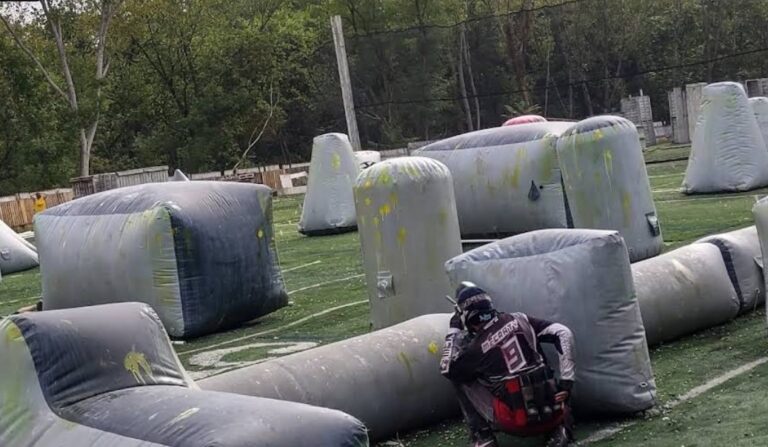
The park offers three game formats: Gelly Ball (ages 6+), Low Impact Paintball (ages 8+), and traditional Paintball (ages 10+), all playable year-round on a 20,000 sq ft indoor turf arena plus two outdoor courses — a tactical village and an airball inflatable bunker field. Rental packages include all necessary equipment, and self-equipped players can purchase an all-day park pass with unlimited air refills. The park runs recurring leagues for kids, teens, and adults, including Random Draw League Nights on Fridays.
Beyond the games, the facility features a pro shop with thousands of products, a lounge area, a snack bar, clean restrooms, changing rooms, storage lockers, free WiFi, and free parking. Certified referees and techs are on hand for every session. The park specializes in birthday parties, bachelor parties, corporate outings, youth group activities, and team-building events. Groups of 8 or more can opt for private field time, and reservations are required for all visits.
 Indoors
 Outdoors
Paintball has evolved from a niche hobby practiced by a handful of enthusiasts into a global phenomenon. It is a high-octane sport that blends physical exertion, tactical thinking, and social bonding. While often misunderstood as merely a test of aggression, paintball is fundamentally a game of communication and strategy.
At its core, a paintball is a spherical gelatin capsule filled with water-soluble, non-toxic, and biodegradable PEG-based paint. The shell is engineered to be fragile enough to rupture upon impact with a target, yet durable enough to withstand the propulsion generated by a paintball marker (the official term for the “gun”).
When a marker is fired, it uses compressed air or nitrogen to launch the ball at velocities typically ranging between 260 and 300 feet per second. Upon hitting an object, the gelatin shell breaks, leaving a distinct, vibrant splash of color. This marking system serves the dual purpose of proving a hit occurred and ensuring that the gameplay remains objective and fair.
Safety is the absolute cornerstone of the sport. Every participant must wear an ASTM-approved paintball mask at all times while on the field. The mask is designed to protect the eyes, ears, and face, as a direct impact to these areas can cause severe injury.
The primary rule of gameplay is the concept of “getting marked.” If a player is hit anywhere on their body or equipment by a paintball that breaks and leaves a mark, they are considered “out” for that round. Once hit, the player must signal they are eliminated—usually by raising their marker above their head—and exit the field immediately to a designated “dead zone.”
Additional rules often include “surrender” clauses, where a player who sneaks up on an opponent at very close range can offer them a chance to yield rather than shooting at point-blank range, which minimizes bruising. Cheating, such as “wiping” (wiping off paint to stay in the game), is widely considered the ultimate social taboo and often results in expulsion from the match.
The versatility of paintball lies in its endless variety of scenarios. While “Elimination” (the last team standing wins) is the classic mode, modern venues offer complex, narrative-driven experiences.
“Capture the Flag” remains the gold standard for team tactics, requiring players to balance aggressive offense with a solid defensive perimeter. “King of the Hill” tasks a team with holding a specific, fortified position against waves of attackers. For those seeking a deeper experience, “Woodsball” takes place in natural forests, utilizing camouflage and stealth, while “Speedball” occurs on flat, inflatable-bunkered fields that emphasize rapid movement, high rates of fire, and extreme athleticism. Some venues even host “Scenario Games” that last for hours or even days, featuring props, simulated tasks, and a persistent storyline.
Beyond the adrenaline rush, paintball serves as an excellent vehicle for physical and psychological development. It forces participants to stay active, involving intense bursts of sprinting, crawling, and maneuvering that burn significant calories.
From a psychological perspective, it is a masterclass in decision-making under pressure. Players must process environmental variables, communicate locations to teammates, and execute plans while under fire. It is frequently used in corporate team-building exercises because it levels the playing field; the CEO and the intern are equal once the goggles are on. Successful teams are those that listen, support one another, and maintain composure in chaotic situations, making it a powerful metaphor for professional collaboration.
The demographic of paintball is surprisingly diverse. While it is often associated with adolescent males, the reality is far more inclusive. Professional leagues attract athletes from various sporting backgrounds, including track, swimming, and martial arts, due to the high cardiovascular demands.
Furthermore, the sport has seen a massive surge in family participation. Parents often bring their children to recreational parks to foster outdoor engagement away from screens. Because the sport can be played at various intensity levels—from casual “walk-on” games to highly structured competitive tournaments—it appeals to anyone from the casual weekend warrior looking for a fun birthday activity to the hardened athlete looking for a sport that demands peak physical conditioning.
From a scientific and industrial standpoint, paintball is viewed as a triumph of material engineering and sports safety standards. Experts in impact science emphasize that when played within established guidelines—namely, keeping the bolt velocity below 300 feet per second and wearing certified protective gear—the sport carries a lower injury rate than many traditional school sports like soccer or basketball.
Industry experts also note the evolution of “reball” and “paint-less” technologies, which represent the sector’s commitment to sustainability and cost-efficiency. Environmental scientists have lauded the shift to polyethylene glycol (PEG) paint, which is non-toxic to soil and vegetation, ensuring that even large-scale outdoor events do not have a lasting negative impact on the ecosystems where they are hosted. The industry has effectively transitioned from “messy” hobbyism to a highly regulated, standardized sport that prizes safety as much as, if not more than, the competition itself.
The playing environment significantly alters the nature of the match. Outdoor venues are generally more expansive, often spanning dozens of acres. These locations utilize natural terrain—trees, hills, trenches, and man-made structures like mock villages—to create an immersive, realistic tactical experience. They are ideal for players who enjoy long-range shooting and the challenge of navigating unpredictable outdoor variables.
Indoor venues, by contrast, are typically climate-controlled and offer a more consistent experience regardless of the weather. These facilities are usually specialized for “speedball,” featuring artificial turf and inflatable bunkers that are arranged in symmetrical, high-visibility layouts. Indoor fields are perfect for beginners who want to learn the mechanics of the sport without worrying about mud or uneven ground, as well as for competitive players looking to hone their reflexes in a fast-paced, high-intensity environment.
Whether you choose a sprawling outdoor forest or a sleek, professional indoor arena, the experience of paintball remains a unique blend of strategy and visceral excitement. It is a sport that strips away the pretenses of daily life, leaving only the player, their teammates, and the clear objective of the game ahead.


 2070 Waldorf St NW, Walker, MI 49544, United States