El Monte
 Log in
Log in
Log in

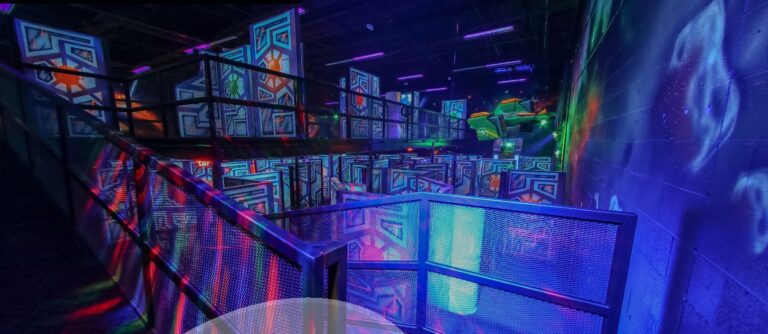
Main Event Indoor Laser Tag arena is located in Huntsville, AL.
Main Event is a huge entertainment hub where you can spend your weekend or throw a birthday party. These laser-tag battles take place in a multi-story arena with fantasy-like decorations, neon lights, and laborious obstacles. Climb up the towers and rain fire on unsuspecting enemies.
There is also a large recreation area with snacks and drinks to chill after the game. There’s also bowling, pool, VR, mini-golf, a story room, and a ropes course – all available at one single place!
 Indoors
Doomsday Paintball & Airsoft Park is located in Athens, AL
Doomsday Paintball & Airsoft Park is an adrenaline-packed adventure park located in Athens, AL. The park features 55 acres of dense woodlands and open fields, offering a variety of game scenarios for paintball and airsoft enthusiasts of all levels. The park also offers rental equipment and a pro shop for all your paintball and airsoft needs. With professional referees on-site and a commitment to safety, Doomsday Paintball & Airsoft Park is the perfect destination for a thrilling day of tactical gaming.
 Outdoors
Stars and Strikes Family Entertainment Indoor Center is located in Huntsville, AL.
Stars and Strikes Family Entertainment Center located in Huntsville, AL offers a fun-filled experience for people of all ages. It features state-of-the-art bowling lanes, a laser tag arena, an arcade with over 100 games, bumper cars, mini golf, and party rooms for special events. The center also has a sports bar and grill with delicious food and a range of beverages. With its modern facilities and lively atmosphere, Stars and Strikes is a perfect spot for family outings, birthdays, corporate events, and other celebrations.
Indoors
Laser‑tag is a fast‑paced, technology‑driven game in which participants wear infrared‑sensing vests and wield handheld “phasers” that emit harmless beams of light. When a beam strikes a sensor on a rival’s vest, the hit is recorded instantly, flashing the vest and decrementing the player’s score. Unlike paintball or airsoft, there are no physical projectiles, no mess, and virtually no risk of injury, making the activity suitable for a wide range of ages and environments. At its core, laser‑tag is a modern take on the classic game of tag, enhanced by digital scoring, sound effects, and themed arenas that transport players into futuristic battlefields, alien planets, or urban combat zones.
The appeal of laser‑tag lies in its ability to morph into countless scenarios, each designed to keep players engaged and to test different skill sets. A “Team Deathmatch” pits two squads against one another, with the objective of scoring the most hits before time runs out. “Capture the Flag” adds a strategic layer: teams must infiltrate the opponent’s base, seize a glowing flag, and return it to their own territory while fending off defensive fire. “Zombie Survival” flips the script, assigning a handful of “infected” players the task of converting the rest of the participants by tagging them, while the uninfected must survive a set period or reach a safe zone. “Mission‑Based” games incorporate riddles, hidden objectives, and timed challenges, urging players to cooperate in order to unlock doors, deactivate alarms, or rescue virtual hostages. Seasonal themes—such as a haunted‑house hunt for Halloween or a “Space‑Rescue” mission for a science‑fair celebration—add novelty and encourage repeat visits.

Beyond the obvious thrill of sprinting through dimly lit corridors while dodging neon beams, laser‑tag delivers a suite of physical, mental, and social benefits. Physically, a typical session lasts 15 to 30 minutes of high‑intensity activity, involving running, ducking, sliding, and quick directional changes that elevate heart rate and improve cardiovascular fitness. The sport also enhances hand‑eye coordination, as players must aim their phaser accurately while navigating obstacles. Mentally, laser‑tag is a live‑action problem‑solving exercise. Players must assess opponents’ positions, anticipate movements, and make split‑second tactical decisions, thereby sharpening spatial awareness and strategic thinking. Socially, the game fosters teamwork and communication; success often depends on coordinated attacks, shared cover, and clear vocal cues. Because the equipment is safe and the environment controlled, participants can focus on collective goals without the fear of injury, encouraging confidence, camaraderie, and a sense of achievement.
Laser‑tag’s inclusive design attracts a remarkably diverse audience. Children as young as five can join age‑appropriate sessions, while teenagers gravitate toward competitive leagues and themed tournaments. Adults, particularly those seeking a low‑impact alternative to traditional sports, enjoy weekend “battle nights” that double as social outings. Seniors find laser‑tag appealing for its gentle impact on joints while still offering a stimulating mental workout. Corporate teams, school clubs, and community groups regularly book slots for team‑building events, capitalizing on the game’s blend of fun and collaboration. The universality of the experience—no need for prior athletic skill, language, or equipment—means that families can play together, bridging generational gaps and creating shared memories.
For younger participants, laser‑tag doubles as an educational playground. Many facilities tailor the arena layout and game rules to suit developmental stages, simplifying scoring systems and providing clear visual cues. The non‑violent nature of infrared beams reassures parents, while the bright lights, sound effects, and mission narratives engage children’s imagination. Structured “kid‑only” hours limit the number of players per session, ensuring that younger children are not overwhelmed by older, more aggressive participants. In addition, staff often act as game masters, guiding kids through objectives, reinforcing concepts such as fair play, turn‑taking, and sportsmanship. The result is an exhilarating, safe environment where children can burn off energy, develop coordination, and practice teamwork—all while having a blast.
Because laser‑tag combines excitement with convenience, it has become a go‑to option for a variety of celebrations.
Birthday Parties: Parents can transform a standard birthday into an action‑packed adventure by reserving a private arena for a block of time. Packages typically include multiple game modes, a dedicated game master, and optional add‑ons such as themed decorations, pizza, and custom trophies for the top scorer. The fast turnover of rounds allows for a high‑energy party that keeps every guest engaged, while the indoor setting provides a weather‑proof venue.
Graduation Gatherings: High‑school and college graduates often seek unique ways to commemorate the transition to the next life stage. A laser‑tag tournament can serve as a metaphor for the challenges ahead, with teams representing different graduating classes or academic departments. Organizers can incorporate personalized scoring screens that display names, graduation years, and inside jokes, turning the arena into a living yearbook. The competitive yet friendly atmosphere encourages alumni to reconnect and create lasting bonds.
Corporate Parties: Companies looking to inject fun into staff retreats, product launches, or end‑of‑year celebrations find laser‑tag an effective team‑building tool. Customizable game modes can be aligned with corporate values—“Mission Impossible” scenarios that stress problem‑solving, “Defend the Base” rounds that emphasize leadership, or “Survival Mode” that highlights resilience. Post‑game debriefs, facilitated by the venue’s staff, allow participants to reflect on communication styles, decision‑making processes, and group dynamics, turning a playful outing into a strategic development exercise. The indoor nature of most arenas ensures that corporate events remain on schedule regardless of weather, and many facilities offer on‑site catering and branding opportunities.
Laser‑tag can be enjoyed in a spectrum of settings, each offering distinct experiences.
Indoor Arenas: The majority of commercial laser‑tag facilities operate within climate‑controlled warehouses or repurposed sports halls. These venues feature black‑out lighting, reflective surfaces, inflatable obstacles, and multi‑level platforms that create a futuristic battlefield. Because the environment is fully controlled, lighting effects, soundtracks, and thematic décor can be synchronized to heighten immersion. Indoor arenas also accommodate large groups, making them ideal for birthday parties, school outings, and corporate events. Additionally, many locations incorporate auxiliary attractions—arcade games, virtual‑reality stations, or mini‑golf—providing a full‑day entertainment package.
Outdoor Courses: For groups seeking a more natural backdrop, outdoor laser‑tag is gaining popularity. Parks, forested trails, and campus quads can be transformed into expansive arenas using portable infrared sensors, solar‑powered phasers, and rugged vests designed to withstand the elements. Outdoor scenarios often exploit terrain features such as hills, trees, and bunkers, encouraging stealth, long‑range targeting, and strategic movement. Seasonal festivals sometimes set up temporary outdoor laser‑tag zones, adding a dynamic element to community events. While weather can affect scheduling, the open‑air experience appeals to adventure‑seekers who enjoy the added challenge of navigating real‑world obstacles.
Hybrid Experiences: Some operators blend indoor and outdoor elements, offering “mixed‑terrain” games where players start inside a darkened arena for close‑quarters combat and then transition to an outdoor field for a final showdown. This hybrid model maximizes space utilization and adds variety to repeat visits, keeping the experience fresh for seasoned players.
When selecting a laser‑tag location, several factors help determine the best fit for a particular group or occasion. Capacity is paramount: larger parties or corporate groups require venues that can host multiple teams simultaneously without overcrowding. Safety standards—such as regularly inspected equipment, clear emergency exits, and trained staff—should be verified. For themed events, the venue’s ability to customize décor, lighting, and music will influence the overall atmosphere. Accessibility is another consideration; facilities with wheelchair‑friendly entrances, level playing fields, and adjustable sensor sensitivity ensure that participants of all abilities can join. Finally, ancillary services like catering, parking, and on‑site lockers add convenience and enhance the overall experience.
Laser‑tag has evolved from a novelty arcade attraction into a versatile, widely embraced activity that caters to children, adults, and organizations alike. Its blend of physical exertion, strategic thinking, and immersive storytelling creates a compelling platform for entertainment, education, and team development. Whether played in a high‑tech indoor arena pulsing with neon light, a wooded clearing beneath the open sky, or a custom‑designed hybrid space, laser‑tag offers endless scenario possibilities—from classic deathmatches to elaborate mission‑based quests. The benefits—improved fitness, sharpened cognition, and strengthened social bonds—are enjoyed by participants of all ages, making the game a popular choice for birthday celebrations, graduation parties, and corporate events. As technology continues to advance, with augmented‑reality overlays and sophisticated scoring analytics on the horizon, laser‑tag is poised to remain a dynamic fixture in the recreational landscape, inviting everyone to step into the arena, fire a beam, and experience the thrill of safe, futuristic competition.


 6884 Governors W, Huntsville, AL 35806, United States