
 El Monte
 Log in
Log in
Log in

Doomsday Paintball & Airsoft Park is located in Athens, AL
Doomsday Paintball & Airsoft Park is an adrenaline-packed adventure park located in Athens, AL. The park features 55 acres of dense woodlands and open fields, offering a variety of game scenarios for paintball and airsoft enthusiasts of all levels. The park also offers rental equipment and a pro shop for all your paintball and airsoft needs. With professional referees on-site and a commitment to safety, Doomsday Paintball & Airsoft Park is the perfect destination for a thrilling day of tactical gaming.
 Outdoors
Liberty Paintball LLC is located in Danville, AL.
Liberty Paintball identifies itself as the only paintball field in North Alabama. It is a family-owned business that was established in 2004.
Liberty Paintball specializes in catering to groups of all sizes. They are equipped to host large parties and corporate events, accommodating up to 100 guests. The venue can host birthday parties, church groups, bachelor/bachelorette parties, and corporate events.
Liberty Paintball features multiple playing fields: Urban, Speedball, Tactical, Natural Woods, and Hyperball. They are currently in the process of building a tournament-size speedball field.
Available amenities include: 12 picnic tables, 2 pavilions, restroom facilities, a snack bar and drinks, clean, well-maintained fields, ample parking, a full pro-shop of merchandise, and sales, repairs, and service.
Outdoors
Paintball is a fast‑paced, team‑oriented sport in which participants fire small, gelatin‑filled capsules—known as paintballs—through pneumatic or CO₂‑powered markers. The capsules break on impact, leaving a visible splatter that instantly marks a hit. While the equipment may look like a miniature version of a firearm, the game is governed by a strict set of safety standards that keep the activity both exhilarating and secure. Paintball can be played in a casual “shoot‑out” format or organized into elaborate scenarios that mimic military missions, historical battles, or futuristic conflicts. The core appeal lies in its blend of strategy, physicality, and the instant feedback provided by the colorful paint splatters.
Safety Gear – Every player must wear a full‑face mask certified for paintball use, along with appropriate padding, gloves, and sturdy footwear. Many venues also require a protective vest or chest plate to shield the torso.
Marker Limits – Most fields cap the muzzle velocity of markers at 300 feet per second (fps) to reduce the risk of injury. Some indoor arenas enforce a lower limit, often around 250 fps, due to tighter spaces.
Ammo Management – Players receive a set number of paintballs at the start of a match, known as “stock.” Once the allotted stock is depleted, the player must return to a designated reload area to receive more. Some formats allow unlimited refill as long as the player stays within the safe zone.
Hit Confirmation – A player is considered out when a paintball breaks on the body, clothing, or gear and the paint is clearly visible. In some leagues, a hit can be contested only if a referee witnesses the impact; otherwise, the player must accept the call.
Boundaries and Obstacles – The playing field is delineated by clear borders, and any movement beyond those lines results in a penalty. Obstacles—such as inflatable bunkers, wooden structures, or natural terrain—must be used as intended; climbing over a solid wall is prohibited unless the scenario explicitly allows it.
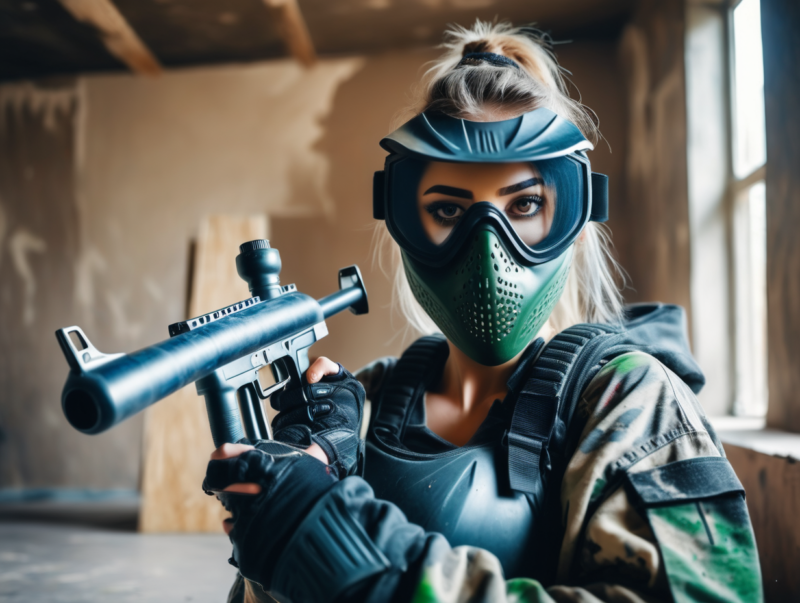
Code of Conduct – Unsportsmanlike behavior, such as intentional headshots, aggressive tackling, or verbal abuse, can lead to immediate disqualification. Players are expected to respect referees, field staff, and fellow participants at all times.
Game Start and End – Matches typically begin with a “flag drop” or “ready‑set‑go” signal from a referee. The game concludes when a predefined objective is achieved (e.g., capture the flag, eliminate all opponents) or when a time limit expires, at which point the team with the most points is declared the winner.
Capture the Flag – Two teams each defend a flag while attempting to infiltrate the opponent’s territory and retrieve the opposing flag. The scenario rewards speed, coordination, and effective use of covering fire.
Elimination (Last Man Standing) – All players start with a full stock of paintballs, and the goal is simple: eliminate every opponent. The match continues until only one player or one team remains. This format emphasizes accurate shooting and tactical positioning.
Objective‑Based Missions – Inspired by military exercises, these games assign specific tasks such as “defuse the bomb,” “secure the hostage,” or “retrieve the intelligence package.” Players must navigate complex terrain, communicate silently, and often split into squads with specialized roles (assault, support, recon).
Zombie Survival – One side begins as “zombies” with limited movement speed and a small number of paintballs. After being “tagged,” a human player becomes a zombie, creating a cascading effect that tests endurance and teamwork.
Scenario Storylines – Some venues craft immersive narratives, complete with themed props, sound effects, and role‑playing elements. A typical storyline might place participants in a post‑apocalyptic city where factions vie for control of dwindling resources. The narrative depth encourages players to think beyond pure combat and engage with the environment as part of the story.
Speedball – Played on a compact, inflatable field with evenly spaced bunkers, speedball focuses on rapid movement and quick decision‑making. The format is popular in competitive leagues because it highlights individual skill and fast‑paced team tactics.
Each scenario offers a distinct flavor of gameplay, allowing paintball to cater to both adrenaline‑seeking thrill‑seekers and those who enjoy strategic problem‑solving.
Physical Fitness – Running between bunkers, crouching, climbing, and quickly changing direction provide a full‑body workout that improves cardiovascular health, agility, and muscular endurance.
Strategic Thinking – Successful teams must plan routes, allocate resources, and adapt tactics on the fly. The need to anticipate opponents’ moves cultivates analytical skills and situational awareness.
Team Building – Paintball forces participants to communicate clearly, trust one another’s decisions, and coordinate actions under pressure. Many corporate training programs use the sport as a hands‑on method for developing leadership, conflict resolution, and collaborative problem‑solving.
Stress Relief – The physical exertion combined with a controlled competitive environment offers a powerful outlet for stress. The immediate visual feedback of a hit and the satisfaction of a well‑executed maneuver provide a mental reset.
Confidence Building – Overcoming the fear of getting “shot,” mastering the marker, and achieving objectives in a high‑stakes setting can boost self‑esteem and encourage a growth mindset.
Social Interaction – Paintball attracts a diverse community of enthusiasts. Regular players often form lasting friendships, and the sport’s inclusive nature welcomes newcomers of varying ages and skill levels.
Skill Transfer – The quick decision‑making and teamwork practiced on the field translate well to other areas, such as emergency response, military training, and even esports, where similar tactical concepts apply.
Youth and Teens – Many high schools and youth clubs organize paintball outings as part of extracurricular activities, introducing students to teamwork and physical fitness in a safe, supervised setting.
College Students – Campus clubs and intramural leagues provide a low‑cost, high‑energy alternative to traditional sports, often emphasizing competitive play and tournament participation.
Professionals – Corporate groups use paintball for team‑building retreats, valuing the sport’s ability to break down hierarchical barriers and foster open communication.
Military and Law Enforcement – Tactical training programs incorporate paintball to simulate combat scenarios without the risks associated with live ammunition. The sport’s emphasis on cover, movement, and team coordination mirrors real‑world operational demands.
Families and Casual Players – Many venues offer “family days” or beginner sessions, allowing parents and children to share an adventure in a controlled environment. The accessibility of equipment rental and beginner-friendly rules make paintball an appealing weekend activity.
Competitive Athletes – A dedicated circuit of professional paintball players competes in regional, national, and international tournaments, often with sponsorships and prize pools. These athletes train rigorously, focusing on precision shooting, mental stamina, and advanced tactics.
The demographic breadth of paintball illustrates its versatility: it can be a casual pastime, a corporate development tool, or a high‑level competitive sport.
Outdoor Fields –
Large, natural‑terrain venues span dozens of acres and incorporate forests, hills, streams, and abandoned structures. The varied landscape offers realistic cover and long‑range engagements, making outdoor fields ideal for scenario‑based games and large‑scale battles. Many of these sites provide themed zones—such as a “military base” or “urban ruin”—that add narrative depth to matches.
Speedball Arenas –
Designed specifically for fast, competitive play, speedball arenas are typically flat fields lined with a grid of inflatable bunkers. The uniform layout ensures that skill, rather than terrain knowledge, determines the outcome. Speedball fields can be found both outdoors and under large canopies, allowing year‑round operation.
Indoor Paintball Centers –
Located in repurposed warehouses, gyms, or purpose‑built complexes, indoor arenas offer climate‑controlled environments and compact layouts. Inflatable or modular barriers create labyrinthine courses that emphasize close‑quarters combat and rapid decision‑making. Indoor venues often host corporate events, birthday parties, and league matches because they can accommodate groups regardless of weather conditions.
Hybrid Facilities –
Some modern complexes combine outdoor fields with adjacent indoor arenas, giving players the flexibility to switch between open‑field tactics and tight‑space skirmishes within a single visit. These hybrid sites frequently host multi‑stage tournaments that blend scenario play with speedball finals.
Pop‑Up and Mobile Set‑Ups –
Temporary paintball setups can appear at festivals, fairs, or community events. Portable bunkers and inflatable obstacles allow organizers to create a quick, engaging experience for a wide audience. While the rules may be simplified, these pop‑up games serve as an introduction to the sport for curious newcomers.
When choosing a venue, participants should consider factors such as field size, the variety of obstacles, safety certifications, marker rental policies, and the presence of trained referees. Many venues also provide equipment packages—including markers, air tanks, masks, and protective gear—for those who do not own their own gear, lowering the barrier to entry for first‑timers.
Paintball stands out as a uniquely adaptable sport that merges physical exertion, tactical depth, and social interaction. From the simple thrill of a “last man standing” showdown to the immersive storytelling of elaborate scenario battles, the game offers a spectrum of experiences that satisfy both casual players and serious competitors. The core rules—emphasizing safety, sportsmanship, and clear objectives—create a structured environment where participants can focus on strategy and teamwork without unnecessary risk.
Beyond the immediate excitement of splattering color across opponents, paintball delivers tangible benefits: improved fitness, sharpened decision‑making, stronger team dynamics, and a healthy outlet for stress. Its appeal cuts across age groups, professions, and skill levels, making it a popular choice for schools, corporations, military training programs, and families alike. Whether played on a sprawling wooded field, a high‑tech indoor arena, or a compact speedball layout, the sport thrives wherever creative course design and well‑maintained equipment are present.
For anyone seeking a dynamic activity that blends adrenaline with intellect, paintball offers a proven formula. The next time a group of friends searches for a weekend adventure, a company looks to strengthen collaboration, or a tactical unit needs a low‑risk training platform, the answer may very well be found in the bright bursts of paint that mark each successful hit on the field.


 24952 US-72, Athens, AL 35613, United States
