
 El Monte
 Log in
Log in
Log in

Stars and Strikes Family Entertainment Indoor Center is located in Huntsville, AL.
Stars and Strikes Family Entertainment Center located in Huntsville, AL offers a fun-filled experience for people of all ages. It features state-of-the-art bowling lanes, a laser tag arena, an arcade with over 100 games, bumper cars, mini golf, and party rooms for special events. The center also has a sports bar and grill with delicious food and a range of beverages. With its modern facilities and lively atmosphere, Stars and Strikes is a perfect spot for family outings, birthdays, corporate events, and other celebrations.
 Indoors
DiVRgence Virtual Reality Indoor Theme Park is located in Huntsville, AL
DiVRgence Virtual Reality Theme Park is located in Huntsville, AL, and offers a wide range of virtual reality experiences for visitors to enjoy. The park features state-of-the-art equipment and immersive environments that transport guests to new and exciting worlds. Visitors can explore distant planets, battle against zombies, or even test their skills on a virtual reality roller coaster. With a variety of experiences to choose from, DiVRgence Virtual Reality Theme Park is a must-visit destination for anyone looking for an immersive and thrilling virtual reality experience.
Indoors
In the rapidly evolving world of immersive entertainment, free‑roam virtual reality (VR) stands out as a bold hybrid of physical activity and digital storytelling. Unlike the handheld headsets that confine a player to a living‑room or a small studio, a free‑roam VR arena is a purpose‑built space where participants move freely, interact with a three‑dimensional world, and remain untethered by cables or limited tracking zones. The result is a kinetic playground where the line between “real” and “virtual” dissolves, creating experiences that are as physically demanding as they are narratively rich.
At its core, a free‑roam VR arena is a specially designed environment equipped with a network of tracking sensors, motion‑capture cameras, and sometimes infrared beacons embedded in the floor and walls. These components work together to constantly locate each headset and any handheld controllers, translating a participant’s precise position into the virtual space with sub‑meter accuracy. The arena is typically a cleared area ranging from 5 × 5 meters for boutique setups to larger halls of 30 × 30 meters for commercial venues.
Inside‑Out Tracking with Multiple Cameras – A ring of high‑resolution cameras mounted around the perimeter watches the headset and controllers, allowing the system to reconstruct the user’s movements without external wires.
Wireless Power and Data Links – Battery packs attached to the headset, or short‑range wireless power transmitters, keep the hardware operational for the duration of a session, while low‑latency Wi‑Fi or proprietary radio frequencies carry the data stream to the rendering server.
Room‑Scale Safety Systems – Physical padding, laser‑guided floor markings, and real‑time virtual boundaries prevent collisions with walls or obstacles, ensuring that the excitement never translates into injury.
High‑Performance Rendering Servers – Because the graphics must be delivered at 90 fps or higher to avoid motion sickness, the actual rendering often occurs on a powerful PC or a cloud‑based GPU farm, with the video feed streamed wirelessly to the headset.
When these elements converge, participants step into a space where they can sprint, duck, climb, and even collaborate with others, all while the virtual world reacts to their every motion. The freedom to roam physically distinguishes free‑roam VR from seated or stationary experiences, expanding the medium into a form of active storytelling.
The breadth of scenarios possible within a free‑roam arena reflects the flexibility of the technology. Developers design experiences that leverage the full three‑dimensional canvas, often blending game mechanics with narrative arcs.
Adventure Quests – Players embark on treasure‑hunt missions set in ancient ruins or alien landscapes. The arena’s physical layout mirrors the virtual terrain, so a real‑world corridor becomes a narrow canyon, and a raised platform transforms into a floating island that must be leapt onto.
Co‑op Escape Rooms – Traditional puzzle rooms are reimagined with digital overlays. Teams must manipulate virtual levers, decode holographic symbols, and coordinate their movements to unlock the next chamber, encouraging communication and spatial reasoning.
Sports Simulations – From futuristic laser tag to full‑scale basketball matches where the ball is a glowing sphere of light, the arena captures the kinetic energy of real sports while adding fantastical elements such as anti‑gravity zones or power‑up zones that alter gameplay.
Educational Journeys – Learners can walk through a recreated dinosaur ecosystem, explore a molecular lattice, or practice emergency response drills in a controlled yet lifelike setting. The tactile freedom enhances retention compared with passive video lessons.
Narrative Cinematics – Interactive films place the viewer at the center of the story. As the plot unfolds, participants physically move to different stages, becoming actors in their own cinematic experience.
Each scenario is crafted to exploit the arena’s ability to blend motion, haptics, and visual immersion, delivering experiences that would feel contrived in a confined seated environment.
Free‑roam VR’s appeal cuts across age groups, interests, and professional backgrounds. The demographic landscape can be grouped into several key segments:
Youth and Families – Children and teenagers are drawn to the physicality and novelty of moving through a virtual world. Parents appreciate the active nature of the experience, which counters the sedentary stereotype of screen time.
Gamers and Tech Enthusiasts – Early adopters and seasoned gamers seek the next frontier beyond conventional console or PC gaming. The promise of full‑body interaction and group play satisfies their craving for immersive competition.
Corporate Teams – Companies use free‑roam VR for team‑building exercises, leadership training, and creative brainstorming. The collaborative puzzles and high‑energy challenges foster trust and communication in a memorable way.
Educators and Researchers – Institutions leverage the technology for experimental learning, psychological studies, and design prototyping. The ability to simulate environments safely and repeatedly makes the arena a valuable research tool.
Event Planners and Party Hosts – For celebrations ranging from birthday parties to graduations, the arena offers a unique centerpiece that differentiates an event from conventional venues.

The unifying factor across these groups is a desire for experiences that blend physical presence with digital wonder—a desire that free‑roam VR satisfies with a seamless, safe, and socially engaging platform.
When the audience includes children, safety and educational value become paramount. Free‑roam VR arenas tailor their offerings to younger participants through several strategies:
Age‑Appropriate Content – Scenarios are designed with adjustable difficulty levels and themes that are suitable for various age brackets, ranging from whimsical fairy‑tale adventures for early elementary schoolers to tactical problem‑solving missions for pre‑teens.
Physical Safeguards – Soft padding lines the perimeter, and staff members monitor sessions to intervene if a child gets overly enthusiastic. The headset’s field of view is calibrated to prevent motion sickness, and session lengths are limited to avoid fatigue.
Learning Integration – Many kid‑focused experiences embed educational objectives, such as basic geometry concepts hidden in puzzle walls or environmental stewardship lessons in a virtual rainforest cleanup.
Social Interaction – Group scenarios encourage teamwork and communication, helping children practice social skills in a controlled yet exciting environment.
Parents report that the active nature of free‑roam VR serves as a modern playground, offering a blend of physical exercise and cognitive challenge that complements traditional outdoor activities.
Beyond everyday entertainment, free‑roam VR arenas have carved a niche as venues for milestone events. The immersive quality turns ordinary celebrations into unforgettable spectacles.
Birthday Parties
A birthday celebration in a free‑roam arena becomes a quest that the birthday child and friends embark on together. Organizers can customize the storyline to feature the birthday child as the hero, navigating through levels that reflect personal interests—whether it’s a space‑exploration saga, a superhero showdown, or a magical treasure hunt. The venue can integrate a “cake moment” where a virtual cake appears in the game world, prompting a real‑world celebration. The combination of physical activity, collaborative gameplay, and themed storytelling ensures that the party stands out from typical arcade visits.
Graduation Ceremonies
Graduation marks a transition, and a free‑roam VR experience can symbolize that journey. A cohort of graduates might step into a simulated world where they traverse symbolic milestones: crossing bridges that represent overcoming challenges, solving puzzles that echo problem‑solving skills learned in school, and ultimately reaching a summit that signifies new horizons. The communal nature of the arena allows all graduates to share the experience simultaneously, fostering a sense of unity. Post‑session, the venue can host a traditional reception, letting participants celebrate their achievement while still buzzing from the immersive adventure.
Corporate Parties and Team‑Building
For corporate gatherings, free‑roam VR offers dual benefits: entertainment and purposeful team development. Companies can book the arena for an after‑hours party that doubles as a collaborative challenge. Scenarios can be tailored to reflect company values—such as a mission where teams must rescue virtual “data packets” to illustrate data security or a futuristic design sprint where participants prototype products in a shared virtual workshop. The physical movement inherent in the experience promotes health and energizes participants, while the shared objectives nurture communication, trust, and creative problem‑solving. After the VR session, staff can provide debriefs, turning the fun experience into actionable insights for workplace improvement.
As technology progresses, free‑roam VR arenas are poised to become even more immersive and accessible. Anticipated developments include:
Enhanced Haptic Feedback – Wearable vests, gloves, and shoe inserts that simulate impact, temperature, and texture will deepen the sense of presence.
Mixed‑Reality Integration – Projected holographic elements that blend physical props with digital objects will blur the boundary further, allowing participants to physically pick up a virtual artifact that appears solid.
AI‑Driven Narrative Adaptation – Real‑time AI will adjust storylines based on group dynamics, ensuring that each session feels personalized and responsive.
Scalable Modular Spaces – Portable tracking kits and modular walls will enable pop‑up arenas in malls, festivals, and corporate campuses, expanding reach beyond fixed locations.
Sustainability Measures – Energy‑efficient servers, recyclable headset components, and low‑impact construction materials will address environmental concerns as demand grows.
These innovations will reinforce free‑roam VR’s role as a versatile platform for entertainment, education, and social interaction, cementing its place in the broader VR ecosystem.
Free‑roam VR arenas represent a convergence of technology, physical movement, and imaginative design that transforms ordinary spaces into dynamic, story‑filled worlds. By liberating participants from the constraints of stationary headsets, these arenas unlock a spectrum of scenarios—from adventurous quests and collaborative escape rooms to sports simulations and educational journeys. The appeal spans children eager for active play, gamers seeking deeper immersion, corporate teams looking for innovative collaboration, and event planners desiring a standout venue for birthdays, graduations, and corporate celebrations.
Safety measures and age‑appropriate content ensure that even the youngest visitors can explore confidently, while the adaptable nature of the experiences allows each group to extract both joy and value. As the industry advances, the fusion of richer haptics, AI‑driven narratives, and modular designs promises to expand the possibilities even further.
In a world where digital and physical realities increasingly intersect, free‑roam VR arenas stand out as the frontier where we can run, jump, solve, and celebrate—all while the surrounding walls dissolve into the limitless canvas of imagination.


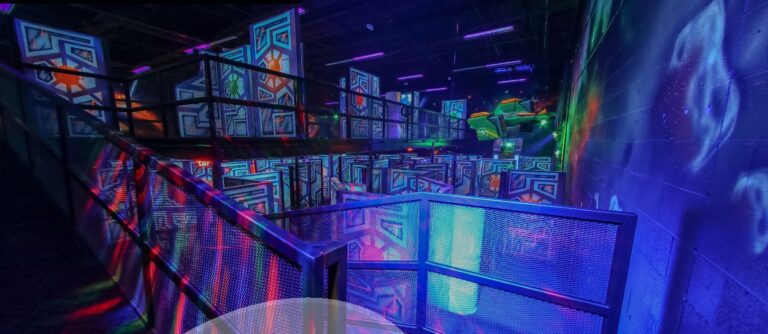
 930 Old Monrovia Rd NW, Huntsville, AL 35806, United States
