
 El Monte
 Log in
Log in
Log in

Pyrrhic Indoor Sports is located at 2104 Caldwell Blvd in Nampa, ID, inside the former Reel Theatre. The 22,500-square-foot facility offers five indoor activities: Tactical Laser Tag, Gel Blaster Nexus, Tactical Nerf, Airsoft, and Virtual Reality. The arenas are darkly lit with special effects and tracer ammunition, creating an immersive experience for players ages 6 and up (VR requires ages 10+). Birthday packages, youth group rates, and private event options are available.
Beyond the games, the venue features an arcade with air hockey, pool, and a motion simulator, plus spectator areas in each arena. The staff is family-owned and known for being energetic and helpful. Outside food is allowed for parties, and the lobby includes repurposed theater seating for relaxation. The center also operates an outdoor paintball and airsoft facility in Caldwell for those seeking high-impact action.
 Indoors
Urban Air Adventure Park is located in Meridian, Idaho, just off East Lanark Street in the Treasure Valley.
The park features a wide range of indoor attractions including wall-to-wall trampolines, a black light laser tag arena, a multi-level ropes course, climbing walls, a Sky Rider zip line, a warrior obstacle course, a battle beam, and a dedicated kids’ zone for children under seven. Guests can purchase day passes at different tiers — Deluxe and Ultimate — with the Ultimate pass granting access to all attractions including laser tag and the ropes course.
Beyond open play, Urban Air offers structured birthday party packages with reserved tables, party hosts, and bundled food options. The park also hosts group events, field trips, team-building activities, and summer day camps (Camp Urbie). A membership program provides unlimited visits and ongoing perks. The on-site Urban Café serves pizza, drinks, and snacks for refueling between activities. Lockers are available, and grip socks are required for all guests.
IndoorsLaser tag is a fast‑paced, team‑oriented game that uses infrared‑emitting “guns” and wearable sensors to simulate a futuristic combat arena without the mess of paint or the danger of real projectiles. Players wear a vest or wristband that registers hits, while the hand‑held phaser records every shot fired. The system automatically tallies scores, tracks individual performance, and can even display real‑time statistics on a central monitor. Because the technology is entirely electronic, the experience can be repeated endlessly, with each match resetting the battlefield in a matter of seconds.
The appeal of laser tag lies in its blend of physical activity, strategic thinking, and immersive storytelling. Unlike video games that keep participants seated, laser tag requires players to sprint, duck, and navigate a three‑dimensional space, making the body a controller and the environment a dynamic opponent. The result is a game that feels both futuristic and intuitively human—perfect for anyone looking for a high‑energy, low‑risk adventure.
Laser‑tag arenas are rarely just empty warehouses; they are crafted to transport players into a specific narrative. Below are some of the most common scenarios that keep the game fresh and encourage different styles of play.
Urban Warfare – Dimly lit corridors, stacked crates, and simulated street furniture create a gritty cityscape. Teams act as rival street gangs, special‑ops units, or police squads, vying for control of “hostile zones.” The tight spaces promote quick reflexes and close‑quarters tactics.
Space Station Siege – Neon lighting, metallic panels, and low‑gravity “air‑cushion” tunnels evoke a sci‑fi setting. Participants become astronauts defending a research outpost from alien invaders, encouraging imaginative role‑play and teamwork across multiple levels.
Jungle Expedition – Artificial foliage, rope bridges, and mist machines transform the arena into a rainforest. Players become explorers hunting for a hidden artifact while avoiding “dangerous wildlife” marked by moving laser targets.
Zombie Apocalypse – One side plays “survivors” equipped with standard phasers, while the other assumes the role of zombies, using modified low‑power tags that mimic bites. The asymmetrical design forces survivors to strategize, fortify, and manage limited resources.
Corporate Capture‑the‑Flag – A neutral arena is divided into two zones with a central “data vault.” Teams represent rival departments competing to extract the vault’s “confidential files.” The structure emphasizes planning, communication, and rapid decision‑making—ideal for team‑building.
Birthday Quest – A custom storyline built around the birthday child’s favorite hero or movie (e.g., “Superhero Showdown” or “Pirate Treasure Hunt”). The narrative is simple, allowing younger players to focus on fun rather than complex tactics.
Each scenario can be tailored with lighting, sound effects, fog machines, and even themed props, ensuring no two matches feel the same. Operators can switch between scenarios on the fly by reprogramming the central console, giving venues the flexibility to host a wide range of events.
Beyond pure entertainment, laser tag delivers a host of physical, cognitive, and social advantages that make it a valuable activity for diverse age groups.
| Benefit | How Laser Tag Contributes |
|---|---|
| Cardiovascular Fitness | Players constantly run, duck, and sprint, raising heart rate and improving endurance. A typical 15‑minute match can burn as many calories as a light jog. |
| Coordination & Agility | Aiming the phaser while maneuvering through obstacles sharpens hand‑eye coordination and improves balance. |
| Strategic Thinking | Teams must devise tactics, allocate roles (sniper, scout, defender), and adapt to opponents’ moves, honing problem‑solving and situational awareness. |
| Teamwork & Communication | Success hinges on clear, concise communication—players learn to listen, delegate, and support one another under pressure. |
| Stress Relief | The immersive environment provides a safe outlet for releasing tension, while the endorphins generated by physical exertion boost mood. |
| Inclusivity | Because the game is non‑contact and adaptable (adjustable hit sensitivity, wheelchair‑compatible arenas), participants of varying physical abilities can compete on equal footing. |
| Technology Literacy | Interacting with infrared sensors, digital scoreboards, and sometimes augmented‑reality overlays familiarizes players with emerging tech in a hands‑on way. |
These benefits are not limited to a single demographic; they translate across age groups, making laser tag an appealing choice for schools, youth clubs, corporate wellness programs, and family celebrations alike.
Children are perhaps the most enthusiastic participants. The bright phasers, vibrant arenas, and narrative possibilities capture their imagination while delivering a constructive outlet for energy. For younger kids (ages 5‑9), many venues offer “Kid‑Friendly” equipment with larger sensors and lower hit thresholds, ensuring that a single miss doesn’t end the game prematurely. Parents appreciate the supervised environment, where staff enforce safety rules and provide brief tactical briefings.
A laser‑tag birthday party combines the excitement of a themed adventure with the convenience of an all‑in‑one venue. Packages typically include exclusive arena time, a dedicated game master, themed decorations, and catering options that range from pizza to healthy snack bars. Because the arena can be reserved, families avoid the chaos of public courts and guarantee a focused, memorable experience for the birthday child and guests.
Graduation ceremonies mark a transition—a perfect moment for a “team‑building” celebration. Laser tag offers a dynamic alternative to traditional banquet halls. Graduates can split into class “houses” and compete for a final trophy, reinforcing camaraderie forged during years of study. The competitive yet friendly nature of the game mirrors the spirit of achievement and forward‑looking ambition.
Businesses increasingly use laser tag for employee engagement, leadership training, and morale‑boosting events. The activity’s built‑in scoring system allows organizers to track individual contributions, encouraging healthy competition. Facilitators can customize scenarios to align with corporate goals—e.g., a “Data Breach” mission to underline the importance of cybersecurity, or a “Supply‑Chain Challenge” that emphasizes logistical planning. Post‑game debriefs enable teams to reflect on communication breakdowns and strategic successes, turning a fun outing into measurable development.
Beyond structured events, many adults treat laser tag as a regular recreational pursuit. Leagues form in major cities, hosting weekly matches with ranked ladders, seasonal tournaments, and custom rule sets (e.g., “no‑kill‑shot” or “capture‑the‑flag”). Enthusiasts often upgrade their gear with aftermarket lenses, higher‑output emitters, or custom‑painted phasers, turning the hobby into a subculture that values both competition and craftsmanship.
Purpose‑Built Arenas – Most urban centers host purpose‑designed facilities featuring black‑out lighting, modular walls, and integrated sound systems. These arenas can be reconfigured quickly, allowing operators to switch from a “Space Station” layout one hour to a “Zombie Apocalypse” the next. Climate control ensures comfort year‑round, making indoor venues an all‑season option.
Multipurpose Entertainment Centers – Some arcades, bowling alleys, or family activity complexes include a laser‑tag bay as part of a broader attraction portfolio. While the space may be smaller, these locations are convenient for families already planning a day of varied activities.
Corporate Campuses – A growing number of large businesses install permanent laser‑tag modules in their recreation zones. These setups often incorporate company branding and can be accessed during lunch breaks or after‑hours, providing an on‑site wellness perk.
Forest or Park Courses – Some adventure parks construct laser‑tag courses among trees, natural rock formations, and open fields. The irregular terrain adds a layer of realism to “jungle” or “post‑apocalyptic” scenarios. Because the infrared signals can be interfered with by sunlight, outdoor systems usually employ higher‑power emitters and shielded sensors to maintain accuracy.
Urban Scavenger Hunts – In city‑wide events, participants move between landmarks while completing laser‑tag missions broadcast via mobile apps. This hybrid format blends traditional scavenger hunts with the competitive edge of tag, encouraging exploration of public spaces while fostering teamwork.
Temporary Pop‑Up Arenas – Festivals, fairs, and summer camps often set up temporary laser‑tag zones using portable inflatable obstacles and modular walls. These pop‑ups can accommodate large crowds and are designed for rapid assembly and disassembly, bringing the experience to communities lacking permanent facilities.
When selecting a venue, organizers should consider the following factors:
Capacity and Layout – For large birthday parties or corporate events, a venue with multiple simultaneous bays prevents bottlenecks. For intimate gatherings, a single‑room arena creates a more personal atmosphere.
Equipment Quality – Modern phasers use infrared LEDs with adjustable power, and sensors incorporate multiple receivers to reduce blind spots. High‑quality gear prolongs the life of the system and provides a more accurate scoring experience.
Safety Protocols – Look for venues that enforce age‑appropriate guidelines, provide protective headgear if needed, and have staff trained in first‑aid and emergency response.
Customization Options – The ability to program bespoke scenarios, upload team logos, or integrate music playlists adds a personal touch that can elevate the event from a generic game to a memorable narrative.
Accessibility – Ramps, wide aisles, and wheelchair‑compatible equipment ensure that participants with mobility challenges can fully engage.
Laser tag has evolved from a novelty arcade attraction into a versatile platform for recreation, education, and corporate development. Its core technology—infrared emission and sensor detection—remains simple, yet the myriad ways it can be staged make each encounter fresh and immersive. Whether a group of ten‑year‑olds sprinting through a jungle canopy, a graduating class defending a data vault, or a multinational team strategizing in a corporate capture‑the‑flag, the experience hinges on the same fundamental pillars: physical movement, tactical collaboration, and the thrill of outmaneuvering an opponent.
The benefits extend beyond the immediate rush of adrenaline. Participants improve cardiovascular health, sharpen coordination, practice strategic communication, and enjoy a safe, inclusive environment that welcomes diverse abilities. For organizers, laser tag offers a turnkey solution: pre‑designed scenarios that can be customized, flexible indoor and outdoor settings, and a clear framework for measuring performance and team dynamics.
In a world where screens dominate leisure time, laser tag provides a compelling bridge between digital excitement and real‑world interaction. It invites players to leave their chairs, engage their senses, and step into a story where their actions have instant, tangible consequences. As technology continues to advance—introducing augmented‑reality overlays, haptic feedback vests, and AI‑driven opponents—the future of laser tag promises even richer experiences. Yet the essence will remain unchanged: a burst of infrared light, a quick dodge behind a barrier, and the exhilaration of hearing “you’ve been hit!” echo through a dimly lit arena. Whether celebrated at a child’s birthday, commemorated at a graduation, or leveraged for corporate cohesion, laser tag stands as a dynamic, accessible, and endlessly entertaining pursuit for all ages.


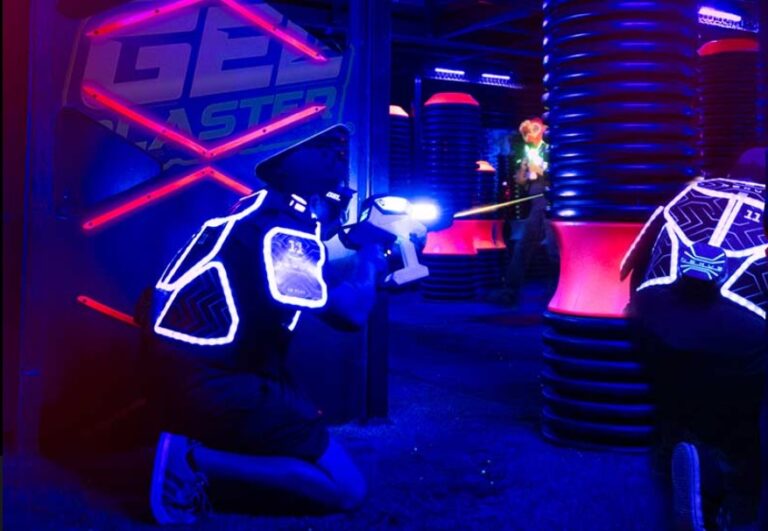
 2104 Caldwell Blvd, Nampa
