Uptown Alley Indoor Center is located in Winnipeg, MB.
Uptown Alley is an entertainment center located in Winnipeg, Manitoba. It offers a variety of activities for people of all ages, such as bowling, billiards, arcade games, and a sports bar. This family-friendly venue is perfect for hosting birthday parties, corporate events, or simply enjoying a fun day out with friends and family.
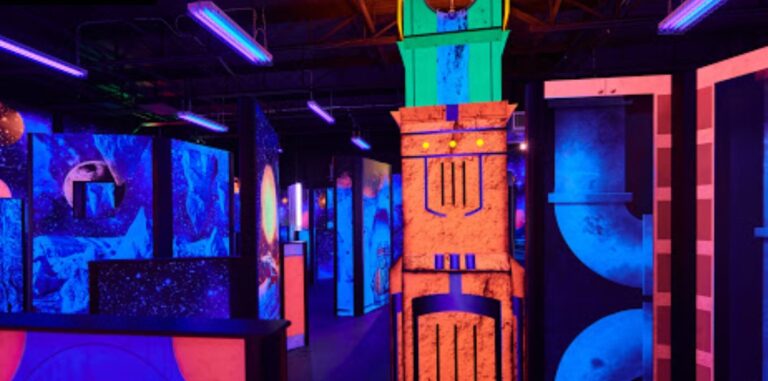
LaserTopia Indoor Center is located in Winnipeg, MB.
LaserTopia is a fun and exciting lasertag facility located in Winnipeg, Manitoba. Offering thrilling gameplay and state-of-the-art equipment, it provides an excellent opportunity for friends, family, and team-building events. With its engaging atmosphere and competitive spirit, LaserTopia ensures an unforgettable experience for all ages.
Fun Park Amusement Center Indoor Center is located in Winnipeg, MB.
The Fun Park Amusement Center in Winnipeg, Manitoba, offers a thrilling and entertaining experience for people of all ages. With a variety of attractions, including rides, games, and activities, this family-friendly destination aims to provide memorable moments and laughter for everyone who visits.
U-Puttz Amusement Centre Indoor Center is located in Winnipeg, MB.
U-Puttz Amusement Centre in Winnipeg, Manitoba offers an exciting and entertaining laser tag experience for people of all ages. This thrilling activity combines strategy, teamwork, and a fun-filled environment, making it a perfect choice for family outings, birthday parties, or group gatherings. The state-of-the-art laser tag equipment ensures a safe and enjoyable adventure for everyone involved.
The Ultimate Guide to Laser Tag: From Playgrounds to Boardrooms
Laser tag has sprinted from dim‑lit arcade corners to sprawling indoor arenas, high‑tech outdoor fields, and even corporate training rooms. Whether you’re a parent scouting the next birthday‑party hit, a team‑lead looking for a fresh team‑building activity, or simply a curious thrill‑seeker, this deep‑dive will give you everything you need to know—what laser tag is, the wildest scenarios, the surprising benefits, expert opinions, and where you can actually play.
What Is Laser Tag?
At its core, laser tag is a team‑or‑individual combat sport that uses infrared (IR) light to simulate “shooting” opponents. Participants wear a sensor‑laden vest or harness and wield a hand‑held phaser that emits invisible IR beams. When a beam strikes a sensor, the system records a hit, deducts points, and often flashes a light or sound cue on the vest to let the player know they’ve been “tagged.”
Key Elements
Element
Description
Infrared Emitters
Safe, eye‑friendly beams that travel up to 30‑50 m (depending on equipment).
Sensors/Receivers
Typically mounted on the front, back, and sides of a vest; some models add wrist/ankle sensors for extra realism.
Scoring System
Real‑time dashboards track hits, kills, assists, and mission objectives.
Arena Layout
Darkened spaces with obstacles (inflatable bunkers, mirrors, black‑light décor) that create tactical cover.
Game Modes
Free‑for‑all, team deathmatch, capture the flag, hostage rescue, and custom scenario‑driven missions.
Because the technology is non‑projectile and non‑lethal, laser tag is safe for all ages and can be played repeatedly without the wear‑and‑tear of paintball or airsoft.
Laser Tag Scenarios: From Classic Battles to Immersive Storytelling
Most venues offer a menu of pre‑programmed scenarios, but the real magic lies in customizable missions that can be tailored to any group’s interests. Below are some of the most popular—and a few out‑of‑the‑box—scenarios.
1. Classic Team Deathmatch
Goal: Eliminate as many opponents as possible within a set time.
Best For: Beginners, birthday parties, and quick‑fire tournaments.
2. Capture the Flag (CTF)
Goal: Retrieve the enemy’s flag and bring it back to your base while defending your own.
Tactics: Split teams into “offense” and “defense” squads; use decoys to mislead opponents.
3. Hostage Rescue
Goal: One team (the “terrorists”) holds a “hostage” (a mannequin or a player) while the other team must infiltrate, locate, and extract them.
Narrative Hook: Adds urgency and role‑play elements that boost immersion.
4. Zombie Apocalypse
Goal: One or two “infected” players start as zombies; they tag humans who then become zombies themselves. Humans must survive or reach a safe zone.
Why It Works: The evolving dynamics keep adrenaline high and encourage strategic movement.
5. Spy vs. Spy (Stealth Ops)
Goal: Complete a series of covert objectives (e.g., “hack” a terminal, retrieve intel) without being detected.
Tech Twist: Some arenas integrate RFID‑based “keycards” that must be scanned to unlock mission stages.
6. Corporate Quest (Custom Branding)
Goal: Align the game’s storyline with a company’s values or product launch.
Example: “Retrieve the lost prototype” where each checkpoint highlights a product feature.
7. Fantasy Realm (VR‑Enhanced)
Goal: Blend laser tag with augmented reality (AR) headsets for a medieval or sci‑fi setting, complete with dragons, lasers, and magical spell‑casting.
Future‑Forward: This hybrid is gaining traction in tech‑savvy venues.
Laser Tag Benefits: Why It’s More Than Just Fun
Beyond the obvious thrill, laser tag offers physical, mental, and social advantages that make it a surprisingly holistic activity.
Physical Health
Cardiovascular Workout: A 20‑minute round can burn 200–300 calories, similar to a brisk jog.
Improved Agility & Coordination: Dodging obstacles and aiming under pressure hones reflexes and proprioception.
Cognitive Gains
Strategic Thinking: Players must constantly assess terrain, opponent positioning, and resource (ammo) management.
Problem‑Solving Under Stress: Rapid decision‑making mimics real‑world high‑pressure environments.
Social & Emotional Growth
Teamwork & Communication: Success hinges on clear calls, role allocation, and trust.
Conflict Resolution: Friendly competition encourages players to manage wins and losses gracefully.
Confidence Building: Especially for shy or introverted kids, the “game mask” provides a low‑stakes arena to practice assertiveness.
Educational Applications
STEM Learning: The technology behind lasers, sensors, and data analytics can be a springboard for lessons in physics, coding, and engineering.
Leadership Training: Corporate groups use scenarios that require delegation, time‑management, and risk assessment—mirroring real business challenges.
Scientists and Industry Experts View on Laser Tag
Safety Perspective
Dr. Karen Lopez, PhD (Biomedical Engineering, University of Washington):“Infrared laser tag operates well below the International Commission on Non‑Ionizing Radiation Protection (ICNIRP) limits. There’s no risk of retinal damage because the beams are diffused and power‑controlled.”
Psychological Impact
Prof. Michael Cheng, Cognitive Psychologist, Stanford:“Controlled competitive environments like laser tag can boost dopamine release, which enhances motivation and mood. When paired with teamwork, it also stimulates oxytocin, fostering group cohesion.”
Business & Innovation Outlook
Laura Martínez, CEO of PlayPulse Interactive (laser‑tag hardware manufacturer):“We see laser tag evolving into a data‑rich platform. Real‑time stats, AI‑generated opponent behavior, and mixed‑reality overlays will turn each game into a personalized learning and entertainment experience.”
Concerns & Recommendations
Ergonomic Design: Experts warn that heavy vests can strain the back if not properly adjusted.
Screen Time Balance: As with any tech‑centric activity, moderation is key—especially for younger children.
Who Plays Laser Tag?
Kids & Teens
Age Range: 6–18 (most venues have a minimum age of 6 due to sensor size).
Why They Love It: The “battle” narrative, instant feedback, and friend‑group competition.
Families
Parent‑Child Bonding: Parents can join the action, turning it into a shared adventure.
Multi‑Generational Appeal: Adjustable difficulty levels make it accessible for grandparents too.
College Students
Campus Clubs: Many universities host laser‑tag leagues that count toward intramural sports.
Fraternity/Sorority Events: Often used as a low‑cost, high‑energy alternative to bar nights.
Corporate Teams
Team‑Building: Companies book sessions for leadership retreats, product launches, and morale boosters.
Skill Development: Scenarios can be designed to focus on communication, risk assessment, and strategic planning.
Special Interest Groups
Military & Law‑Enforcement Training: Simulated tactical drills without the hazards of live fire.
Therapeutic Use: Occupational therapists incorporate laser tag to improve motor skills in patients with neurological disorders.
Laser Tag for Kids: The Perfect Birthday Party Weapon
A laser‑tag birthday party is a high‑energy, low‑mess alternative to traditional cake‑and‑games celebrations. Here’s how to make it unforgettable:
Choose a Theme – Space Rangers, Ninja Warriors, Superheroes, or a custom “Mission: Rescue Mom.”
Set Up Teams Early – Use colored wristbands or caps so kids can identify allies.
Create a Simple Scoring System – Award “gold stars” for most hits, most assists, and most creative tactics.
Add Non‑Game Activities – Photo booth with laser‑tag props, a “cool‑down” snack station with fruit smoothies, and a short awards ceremony.
Safety Briefing – 5‑minute talk on proper handling of phasers, respecting personal space, and the “no‑tag‑behind‑the‑back” rule.
Cost Snapshot (U.S.)
Venue Rental: $150–$300 for 2‑hour block (incl. equipment).
Per‑Child Fee: $20–$30 (covers vest, phaser, and staff).
Extras: Custom t‑shirts, themed décor, and a cake (optional).
Result: A party that leaves kids buzzing with excitement—no paint splatters, no broken glass, just pure, safe adrenaline.
Laser Tag for Milestones: Graduations, Corporate Parties, and More
Graduation Celebrations
Why It Works: Transitioning from school to the next chapter is all about stepping into new arenas—laser tag mirrors that sentiment.
Setup Tips: Use the graduating class’s colors for team uniforms; incorporate “memory checkpoints” where players answer trivia about their school years for bonus points.
Corporate Events
Objectives: Strengthen inter‑departmental communication, identify natural leaders, and inject fun into corporate culture.
Custom Scenarios:
Product Launch Quest: Teams must “secure” the prototype and present it to a “board of investors.”
Risk Management Drill: Simulated “hazard zones” where players must navigate without triggering “alarms.”
Metrics: Post‑game debriefs can analyze teamwork scores, decision‑making speed, and communication patterns—valuable data for HR insights.
Fundraisers & Charity Nights
Hybrid Model: Charge an entry fee, donate a portion to a cause, and offer “sponsor a team” packages.
Community Engagement: Pair with local schools or youth groups to invite under‑privileged kids for free.
Where to Play Laser Tag? Indoor vs. Outdoor Venues
Indoor Arenas
Advantages
Disadvantages
Controlled Lighting – Ideal for visual effects, black‑light, and fog machines.
Space Limits – Typically 2,000–5,000 sq ft; fewer natural obstacles.
All‑Weather – Open year‑round, no rain or temperature concerns.
Ventilation – Some venues may feel hot after intense play.
Tech Integration – Easier to install RFID, AR projectors, and sound systems.
Travel Distance – May require driving to urban centers.
Top Indoor Chains (U.S.)
Laser Quest – Over 200 locations, classic arena design.
Battlezone – Offers multi‑level platforms and “laser maze” challenges.
Weather Dependency – Rain, wind, or extreme heat can cancel sessions.
Natural Cover – Trees, hills, and structures make tactics more varied.
Setup Time – Portable equipment must be installed each session.
Event Flexibility – Ideal for festivals, company retreats, or school outings.
Safety Concerns – Must monitor terrain for hazards (rocks, uneven ground).
Popular Outdoor Formats
Paintball‑Hybrid Laser Tag – Players wear laser gear on a paintball field, adding “hit‑markers” that trigger a light when a paintball lands.
Laser Tag on a Course – Similar to a golf course or obstacle‑course layout, with checkpoints that unlock new weapons.
Hybrid / Mobile Solutions
Pop‑Up Laser Tag – Companies ship inflatable bunkers and modular sensor kits to any venue (schools, community centers, corporate campuses).
VR‑Laser Tag Pods – Small, enclosed units where a single player can practice against AI before joining a live arena.
Planning Your First Laser Tag Experience
Define the Objective – Party? Team‑building? Training?
Choose the Venue Type – Indoor for controlled ambience; outdoor for scale and novelty.
Select a Scenario – Match the audience’s age and interests.
Book Equipment & Staff – Most venues provide a game master; for private events, consider hiring a freelance laser‑tag facilitator.
Prep Safety & Logistics – Brief participants, check vest fit, and enforce a “no‑running‑into‑walls” rule.
Gather Feedback – After the event, use quick surveys to gauge enjoyment and learning outcomes.
Laser tag is no longer just a retro arcade pastime; it’s a versatile platform that blends physical activity, strategic gameplay, and immersive storytelling. From a child’s birthday bash to a high‑stakes corporate retreat, the technology’s safety, adaptability, and data‑rich environment make it a compelling choice for anyone looking to spark excitement, build teamwork, or simply burn off some energy.
So the next time you hear the “pew‑pew” of an IR beam echoing through a darkened corridor, remember: behind that fleeting flash lies a world of skill development, social connection, and endless fun—ready for you to step into the arena.

 El Monte
 Log in

 Indoors


 1301 St Matthews Ave, Winnipeg, MB R3G 1E3, Canada


