El Monte
 Log in
Log in
Log in

LaserTopia Indoor Center is located in Winnipeg, MB.
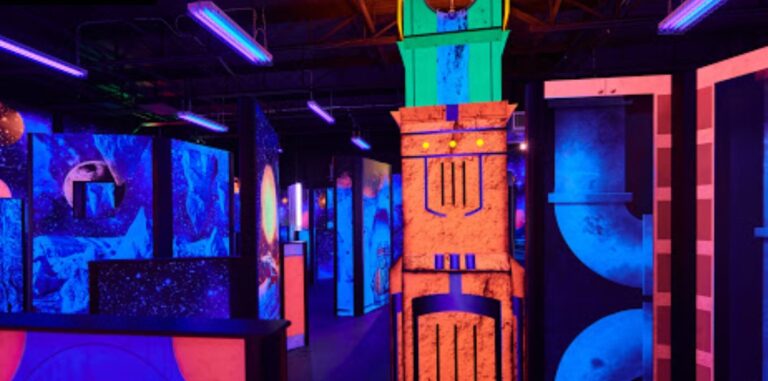
LaserTopia is a fun and exciting lasertag facility located in Winnipeg, Manitoba. Offering thrilling gameplay and state-of-the-art equipment, it provides an excellent opportunity for friends, family, and team-building events. With its engaging atmosphere and competitive spirit, LaserTopia ensures an unforgettable experience for all ages.
 Indoors
U-Puttz Amusement Centre Indoor Center is located in Winnipeg, MB.
U-Puttz Amusement Centre in Winnipeg, Manitoba offers an exciting and entertaining laser tag experience for people of all ages. This thrilling activity combines strategy, teamwork, and a fun-filled environment, making it a perfect choice for family outings, birthday parties, or group gatherings. The state-of-the-art laser tag equipment ensures a safe and enjoyable adventure for everyone involved.
IndoorsUptown Alley Indoor Center is located in Winnipeg, MB.
Uptown Alley is an entertainment center located in Winnipeg, Manitoba. It offers a variety of activities for people of all ages, such as bowling, billiards, arcade games, and a sports bar. This family-friendly venue is perfect for hosting birthday parties, corporate events, or simply enjoying a fun day out with friends and family.
IndoorsFun Park Amusement Center Indoor Center is located in Winnipeg, MB.
The Fun Park Amusement Center in Winnipeg, Manitoba, offers a thrilling and entertaining experience for people of all ages. With a variety of attractions, including rides, games, and activities, this family-friendly destination aims to provide memorable moments and laughter for everyone who visits.
IndoorsLaser tag is a team‑oriented, high‑tech sport that uses infrared (IR) light to simulate combat without any physical projectiles. Participants wear a lightweight vest or harness equipped with IR sensors and carry a handheld “phaser” that emits a coded infrared beam. When the beam strikes an opponent’s sensor, the system records a hit, displays it on the player’s console, and updates the overall score in real time. Unlike traditional paintball, there is no mess, no recoil, and virtually no risk of injury, making the game accessible to a wide age range and suitable for venues that cannot accommodate paint‑splatter or firearms.
The origins of laser tag trace back to the early 1980s, when hobbyists and engineers combined infrared technology with portable electronics to create a safe, interactive shooting experience. Over the past four decades the hardware has become more sophisticated: modern units can track player location, differentiate between friendly fire and enemy fire, and even integrate with virtual‑reality (VR) headsets. The result is a dynamic, fast‑paced activity that blends physical movement, strategic thinking, and a dash of futuristic flair.
Laser‑tag scenarios are the narrative backbones that turn a series of hits into an immersive adventure. Operators design each arena with a specific storyline, lighting, sound effects, and obstacles to match the theme. Some of the most common scenarios include:
Urban Warfare – A maze of stacked pallets, metal barriers, and dim fluorescent lighting mimics a city block under siege. Teams act as special‑operations units tasked with clearing the area of “hostile” forces.
Space Station Conflict – Neon‑blue corridors, metallic walls, and ambient sci‑fi music transport players to a zero‑gravity environment where they must protect a research lab from alien intruders.
Zombie Outbreak – One or two participants play “infected” zombies equipped with faster‑firing phasers, while the rest attempt to survive until the timer expires, adding a horror‑movie twist to the competition.
Treasure Hunt – Sensors are hidden throughout the arena; scoring is based not only on hits but also on the successful discovery of “artifacts.” This format encourages exploration and teamwork.
Team‑Based Capture the Flag – Two opposing bases hide a physical or virtual flag. The objective is to retrieve the opponent’s flag while defending one’s own, blending classic outdoor games with indoor IR technology.
These scenarios can be adjusted on the fly—by changing the lighting, altering the layout, or adding new rules—so each session feels fresh, even for regular players.
Beyond the sheer excitement, laser tag offers a suite of physical, mental, and social advantages:
Cardiovascular Fitness – A typical 15‑minute round can burn between 400 and 600 calories as players sprint, duck, and weave through the arena. The intermittent bursts of high‑intensity activity resemble interval training, improving stamina and heart health.
Hand‑Eye Coordination – Players must aim, track moving targets, and react within milliseconds. Repeated practice hones fine motor skills and improves reaction time, which can translate to better performance in other sports and everyday tasks.
Strategic Thinking – Successful teams employ tactics such as flanking, suppression fire, and resource management (e.g., conserving “ammo” or using power‑ups). This encourages critical thinking, quick decision‑making, and the ability to adapt on the fly.
Teamwork and Communication – Since hits are often recorded only when a teammate reports them, clear verbal cues and coordinated movements are essential. Participants learn to listen, delegate roles, and support one another under pressure.
Stress Relief – The combination of physical exertion, playful competition, and a futuristic setting provides an outlet for pent‑up energy and stress. Endorphin release after a session can improve mood and boost overall mental well‑being.
Inclusivity – The non‑contact nature of laser tag makes it suitable for people with varying physical abilities. Adjustable difficulty levels, such as “beginner,” “intermediate,” or “expert,” enable players to engage at a comfortable pace.
Collectively, these benefits make laser tag an attractive option for schools, fitness centers, and corporate wellness programs alike.
Researchers in kinesiology and cognitive psychology have examined laser tag as a model for studying movement‑based video games. A 2021 study published in Journal of Active Entertainment found that participants who played laser tag for 30 minutes experienced a 12% increase in aerobic capacity and a measurable improvement in spatial awareness tasks compared with a control group that watched a passive video.
Industry analysts point to laser tag’s growth as part of the broader “experiential entertainment” market. According to a 2023 market report from Global Gaming Insights, laser‑tag facilities contributed an estimated $2.3 billion to global revenues, driven largely by the rise of “hyper‑realistic” arenas that blend augmented reality (AR) overlays with traditional IR sensors. Experts suggest that continued integration with wearable tech—such as heart‑rate monitors and biometric feedback—will deepen the health‑tracking potential of the sport.
From a safety standpoint, occupational health experts laud laser tag for its low injury rate. Unlike paintball, which carries a risk of bruising or eye injury from high‑velocity pellets, laser tag’s infrared beams are harmless to the skin and eyes. Protective eyewear is still mandated in many venues, but it primarily serves to block bright lights and improve visual clarity, not to prevent physical harm.
Overall, the consensus among scientists and industry leaders is that laser tag occupies a unique niche at the intersection of recreation, fitness, and emerging technology—a niche that is poised to expand as consumer demand for immersive, active experiences rises.
Children are perhaps the most enthusiastic demographic. The game’s colorful equipment, easy‑to‑understand rules, and “no‑mess” nature make it a safe playground for ages five and up. Parents appreciate that the activity encourages outdoor‑style play without the need for a large yard or the hazards associated with projectile‑based games. Many youth programs incorporate laser tag into after‑school clubs to promote teamwork and physical activity, especially in urban areas where open spaces are limited.
For adolescents, laser tag provides a social hub where friends can compete in a tech‑savvy environment. High‑school tournaments have become a staple in some regions, with leagues offering season‑long standings, playoffs, and even scholarships for top‑performing players. The competitive aspect appeals to those who enjoy esports, as the physical component adds a tangible dimension to the strategic gameplay.
Corporate teams are increasingly turning to laser tag for team‑building exercises. The activity’s blend of physical exertion and strategic planning mirrors many workplace challenges, making it an effective platform for developing leadership, communication, and conflict‑resolution skills. Additionally, “adult nights” at laser‑tag centers draw groups of friends looking for a lively, low‑commitment nightlife option that is more active than a traditional bar outing.
Surprisingly, senior centers have begun to adopt laser tag as a gentle form of aerobic exercise. Adjustable difficulty settings allow participants with limited mobility to engage at a comfortable pace while still reaping the cognitive benefits of rapid decision‑making and hand‑eye coordination.
A laser‑tag birthday party offers a hassle‑free, all‑included package: venue rental, equipment, themed décor, and sometimes even a customized scenario that reflects the birthday child’s favorite movies or video games. Because the game is self‑contained, parents can relax while kids burn off energy in a safe, supervised environment.
Graduates looking for a memorable send‑off often choose laser tag as a “last‑hurrah” activity before stepping into adulthood. The competitive element provides a fun way for classmates to bond one final time, and many venues offer group discounts for large graduating classes.
When companies host holiday gatherings or product launches, laser tag can serve as both entertainment and a subtle brand‑experience. Some facilities allow sponsors to project logos onto the arena walls or integrate product‑related challenges into the game flow. The energetic atmosphere promotes camaraderie and can even serve as an informal networking platform.
Most commercial laser‑tag facilities are housed indoors, offering controlled lighting, climate, and safety conditions. Indoor arenas typically feature modular walls, obstacle courses, and multimedia effects that can be reconfigured for different scenarios. Because they operate year‑round, indoor venues are ideal for schools and corporate groups that need a reliable, schedule‑friendly location.
Key advantages of indoor play include:
Outdoor laser‑tag fields take advantage of natural terrain—forests, open fields, or urban rooftops—to create larger, more varied battlegrounds. Players navigate real obstacles such as trees, hills, and buildings, which adds a tactical layer absent from the more confined indoor spaces.
Benefits of outdoor play include:
When choosing a venue, organizers should consider the size of the group, desired scenario complexity, and logistical factors such as parking, accessibility, and weather contingencies. Many laser‑tag providers now offer hybrid packages that combine indoor base stations with portable outdoor sensors, delivering the best of both worlds.
Laser tag has evolved from a novelty arcade attraction into a multifaceted activity that blends physical exercise, strategic gameplay, and cutting‑edge technology. Its adaptable scenarios cater to a wide spectrum of participants—from toddlers celebrating a birthday to corporations seeking innovative team‑building solutions. Scientific research underscores its health benefits, while industry experts predict continued growth fueled by immersive tech integrations.
Whether played in a climate‑controlled arena illuminated by neon lasers or across a sun‑drenched field dotted with natural cover, laser tag provides a safe, exhilarating experience that encourages movement, cooperation, and quick thinking. As the entertainment landscape leans increasingly toward active, socially connected experiences, laser tag stands out as a timeless yet ever‑evolving option that promises both fun and functional value for generations to come.


 1140 Waverley St Unit #5, Winnipeg, MB R3T 0P4, Canada