Log in
Mission Laser 757 is located in Norfolk, VA.
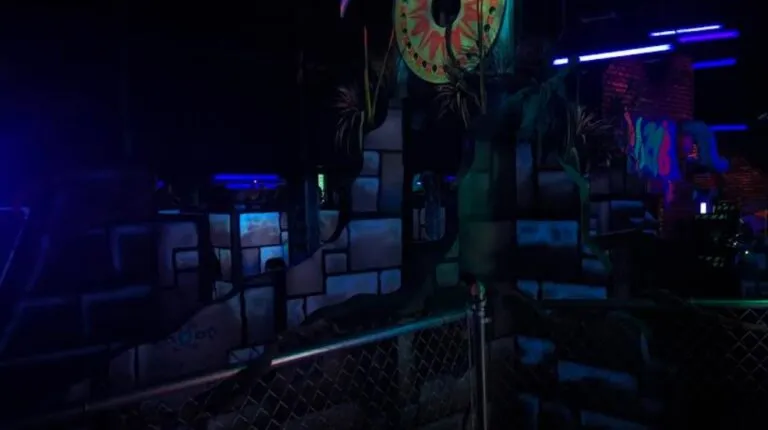
Mission Laser 757, located in Norfolk, VA, proclaims itself to offer the “757’s BEST Laser Tag Experience.” Mission Laser is an interactive Laser Tag experience. The 6,000 square foot multi-level arena is designed to immerse players in the game.
Participants can enjoy a round of Laser Tag in a multi-level arena filled with fog and music. Each game can accommodate up to 29 players for maximum action and fun with friends and family. They recommend closed-toe athletic shoes for participation.
The facility boasts a state-of-the-art Laser Blast game system, alongside new video games and newly renovated party rooms, all designed to provide visitors with a memorable experience. Even those who choose not to play can observe the action live from the observation area.
Indoors
Laser tag is a team‑oriented, high‑tech game that simulates a futuristic combat scenario without the use of paintballs, airsoft pellets, or any physical projectile. Players wear lightweight vests fitted with infrared sensors and wield hand‑held phasers that emit focused beams of infrared light. When a beam contacts a sensor, the system records a “hit” and updates each player’s score in real time. Modern laser‑tag arenas are equipped with computer‑controlled lighting, sound effects, and digital scoreboards, creating an immersive experience that blends physical activity with interactive technology. The game can be adapted for short, arcade‑style bouts or extended missions that last an hour or more, making it suitable for a wide spectrum of participants, from casual weekend warriors to serious competitive teams.
The flexibility of laser‑tag equipment allows organizers to craft a variety of scenarios that cater to different ages, skill levels, and thematic preferences.
Classic Capture the Flag – Two teams compete to retrieve the opposing team’s flag while defending their own. The infrared sensors can be programmed to award bonus points for successful captures, encouraging strategic movement and teamwork.
Zombie Survival – One or several “zombies” attempt to infect other players by tagging them, while survivors must reach safe zones within a set time limit. The scenario adds a narrative twist that appeals to fans of horror and science‑fiction media.
Mission‑Based Ops – Players receive a briefing that outlines objectives such as “disable the enemy’s power core” or “rescue the hostages.” Sensors placed on props or on the arena walls trigger additional scoring events when hit, creating a dynamic, mission‑oriented playground.
Free‑For‑All Arena – In this less structured format, every player is on his or her own, attempting to rack up the highest individual score. It works well for larger groups where team formation may be impractical.
Themed Adventures – Seasonal events—such as a “Space Station Assault” for a sci‑fi convention or a “Wild West Shootout” during a festival—use decorative set pieces and custom soundtracks to enhance immersion.
These scenarios can be mixed, matched, or altered on the fly, giving laser‑tag operators the ability to keep the experience fresh for repeat participants.
Beyond the thrill of competition, laser tag delivers measurable physical, cognitive, and social advantages.
Physical Activity – Players run, dodge, crouch, and climb, providing a cardiovascular workout that can burn between 400 and 600 calories per hour, depending on intensity. The activity is low‑impact, reducing the risk of joint strain common in contact sports.
Hand‑Eye Coordination – Aiming and firing a phaser while navigating an obstacle‑filled arena sharpens visual tracking and fine motor skills, benefiting both children developing motor pathways and adults seeking to maintain dexterity.
Strategic Thinking – Most scenarios require players to devise tactics, communicate positions, and adapt to changing conditions. This promotes critical‑thinking skills and improves the ability to process information quickly under pressure.
Teamwork and Communication – Success often hinges on coordinated movement and clear verbal cues. Participants practice leadership, delegation, and conflict resolution in a setting that feels more like play than formal training.
Stress Relief – The combination of physical exertion, focused attention, and playful competition triggers endorphin release, offering a constructive outlet for stress and anxiety.
Inclusivity – Because there are no hard projectiles and the equipment can be adjusted for height and ability, laser tag is accessible to people with differing physical capacities, making it a valuable tool for adaptive recreation programs.
Collectively, these benefits make laser tag an attractive option for schools, community centers, and corporate wellness initiatives alike.
Researchers in exercise physiology and human factors engineering have begun to study laser tag as a hybrid model of active gaming. Peer‑reviewed studies indicate that laser‑tag sessions can achieve moderate‑intensity aerobic zones comparable to traditional team sports such as basketball or soccer, while also stimulating cognitive load through rapid decision‑making tasks.
Industry analysts observe that the market for location‑based entertainment (LBE) is expanding, driven by a demand for experiences that blend digital interactivity with physical movement. Laser‑tag technology, which has progressed from simple infrared emitters to sophisticated networked systems capable of real‑time analytics, is positioned as a low‑maintenance, high‑turnover attraction for both commercial venues and mobile pop‑up events.
Health psychologists note that the gamified nature of laser tag encourages repeated participation, a key factor in establishing long‑term exercise habits. By framing physical exertion as part of a narrative mission, the activity bypasses the perceived “boring” aspects of conventional workouts, thereby increasing adherence among otherwise sedentary demographics.
Overall, the consensus among scientists and industry professionals is that laser tag represents a viable, scalable tool for promoting active lifestyles, fostering teamwork, and generating revenue within the entertainment sector.
Laser tag’s appeal cuts across age groups, gender, and cultural backgrounds, drawing participants from several distinct segments.
Children and Adolescents – Schools and youth organizations use laser tag for physical education, after‑school clubs, and summer camps. The game’s safety profile and instant feedback mechanisms resonate with younger players who crave competition and adventure.
Young Adults – College campuses and urban nightlife venues host league nights and “battle passes,” turning laser tag into a social outing that combines nightlife, team building, and low‑cost entertainment.
Families – Many families choose laser tag as a weekend activity because it offers a shared experience that is both active and age‑neutral. Parents appreciate the non‑violent, equipment‑based format, while children enjoy the fantasy elements.
Corporate Groups – Companies integrate laser tag into team‑building programs, employee onboarding, and leadership workshops. The controlled competitive environment allows staff to practice communication and problem‑solving outside the office.
Special‑Needs Communities – Adaptive laser‑tag setups—featuring adjustable sensor placement and wheelchair‑friendly arenas—enable participants with physical disabilities to engage fully, fostering inclusion and confidence.
The diversity of its player base underscores laser tag’s flexibility as both a recreational pastime and a structured development tool.
For children, laser tag delivers a unique blend of fun and learning. The game’s non‑contact nature eliminates the fear of bruises or injuries, while the bright arena lights and sound effects capture their imagination. Educators incorporate laser‑tag modules into curricula to teach concepts such as geometry (calculating angles of fire), physics (understanding line‑of‑sight), and teamwork.
Safety protocols are simple yet effective: all equipment is inspected before each session, helmets and protective padding are optional but recommended for younger players, and staff monitor the arena to enforce age‑appropriate boundaries. The short duration of typical rounds—usually 5 to 10 minutes—matches children’s attention spans, allowing multiple matches within a single visit and keeping the experience dynamic.
Laser tag’s adaptability makes it an excellent platform for milestone celebrations and corporate gatherings.
Birthday Parties – Parents can book private arena slots, customizing the game mode to match the birthday child’s favorite theme—whether it’s a superhero showdown or a space‑mission quest. Packages often include party rooms, catering, and personalized trophies, turning a standard birthday into an unforgettable adventure.
Graduations – High‑school or college graduates seeking a memorable send‑off can organize “final missions” where each team represents a graduating class. The competitive format encourages camaraderie and provides a shared narrative that celebrates the transition to the next life stage.
Corporate Parties – Companies use laser tag for product launches, employee appreciation days, or as an ice‑breaker during conferences. The game’s built‑in scoring system allows organizers to track performance metrics, create leaderboards, and even award prizes for categories like “Best Strategist” or “Most Accurate Shooter.” The competitive yet playful environment helps break down hierarchical barriers, fostering a culture of collaboration.
Because the core equipment can be transported and set up in temporary spaces, many providers offer mobile laser‑tag services that bring the arena to the event venue, whether it’s a hotel ballroom, a community hall, or an outdoor corporate campus.
Laser‑tag facilities exist in both indoor and outdoor formats, each offering distinct advantages.
Indoor venues benefit from controlled lighting, climate, and sound, allowing precise calibration of sensors and a consistent gameplay experience year‑round. Typical indoor arenas feature a network of multi‑level platforms, maze‑like corridors, and themed set pieces that can be reconfigured for different scenarios. The enclosed environment also enables advanced features such as holographic projections and synchronized LED walls, elevating the immersive quality.
Major cities host dedicated laser‑tag centers that combine arcade games, virtual‑reality stations, and party rooms under one roof. Some franchises operate through franchised locations, guaranteeing a standardized experience across regions.
Outdoor laser‑tag expands the playing field to natural landscapes—forests, parks, and abandoned industrial sites—adding a tactical dimension that mimics real‑world military training exercises. Portable sensor kits, battery‑powered phasers, and rugged vests allow operators to set up temporary courses in a matter of hours.
The open‑air format leverages natural obstacles such as trees, hills, and buildings, encouraging players to incorporate cover and line‑of‑sight considerations reminiscent of paintball or airsoft, but without the risk of projectiles. Weather‑proof equipment ensures that sessions can continue in light rain or moderate temperature fluctuations, extending the seasonality of the activity.
Both indoor and outdoor options often provide group‑booking discounts, membership programs, and loyalty cards, catering to repeat visitors and larger organizations. Prospective players can locate venues through online directories, mobile apps that display real‑time availability, or by consulting local recreation departments that have integrated laser‑tag into community programming.
Laser tag has evolved from a novelty arcade attraction into a sophisticated, multi‑purpose platform that blends physical exertion, strategic gameplay, and immersive storytelling. Its versatility is evident in the wide array of scenarios—from classic capture‑the‑flag battles to narrative‑driven missions—allowing organizers to tailor experiences for children’s birthday parties, graduation celebrations, and corporate team‑building events alike.
Scientific research confirms that laser tag delivers moderate‑intensity aerobic exercise, sharpens hand‑eye coordination, and nurtures cognitive flexibility, while industry experts highlight its growing market relevance within the location‑based entertainment sector. The activity’s inclusive design welcomes participants of all ages and abilities, making it a popular choice for families, schools, youth groups, and businesses.
Whether played in a climate‑controlled indoor arena equipped with high‑tech lighting or in a rugged outdoor field that leverages natural terrain, laser tag offers a compelling blend of fun and functional benefits. As technology continues to advance—incorporating real‑time analytics, augmented‑reality overlays, and adaptive hardware—the future of laser tag promises even richer experiences, cementing its place as a staple of modern active entertainment.