Log in
Launch Family Entertainment sits along Bald Hill Road in Warwick, Rhode Island, a lively commercial corridor in the West Bay area serving families across the greater Providence region. It is an all-in-one indoor destination where trampoline courts, bowling lanes, a laser tag arena, a ninja course, dodgeball, and the XP Arena obstacle course all sit under one roof, with newer attractions like the Pixel Game Floor, Human Claw Machine, and AirTrack Basketball.
The venue also features the Krave Restaurant and Bar Hops lounge, private party rooms, and a full arcade, making it a natural fit for birthday parties, corporate events, field trips, and facility rentals. Special programs like Toddler Time, Sensory Time, and summer Launch Camp, along with a friendly staff and a loyalty program, round out a welcoming experience for families and groups of all ages.
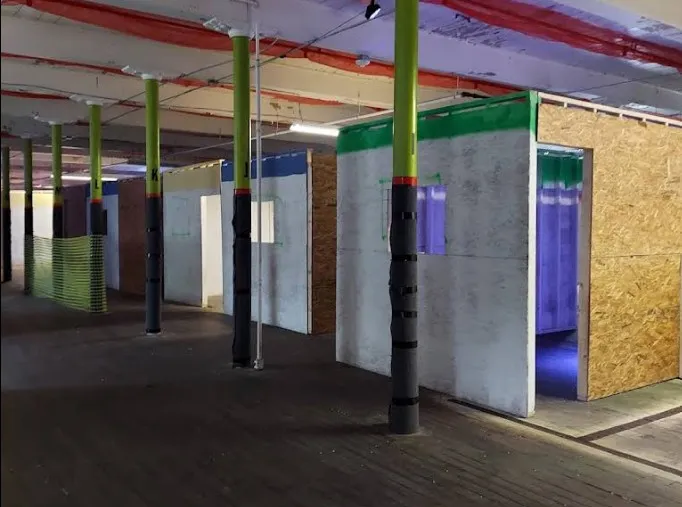
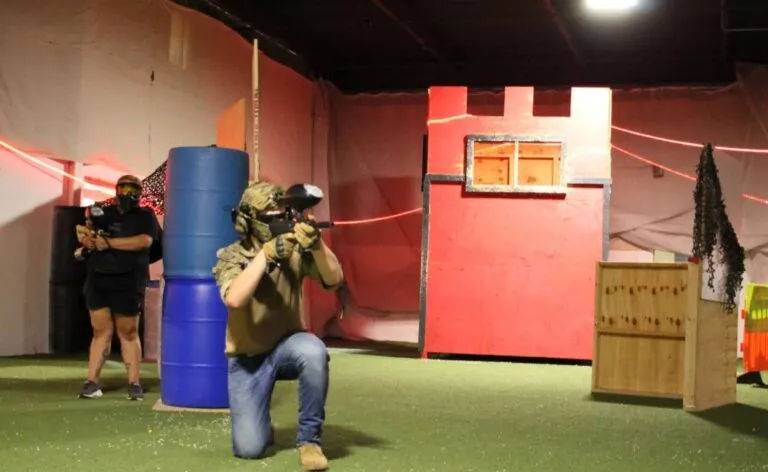
IndoorsAdvanced Action Sports sits in West Warwick, Rhode Island, roughly twenty minutes south of Providence and just off I-95, housed in a 32,000-square-foot indoor action sports center that is the largest of its kind in New England by gross square footage. The venue offers airsoft, reball paintball, laser tag, gel blaster, and Nerf battles across a modular arena that adapts quickly, plus Space VR, Rhode Island’s largest free-roam virtual reality center, with cooperative games and escape rooms. Experienced staff and referees keep play safe and controlled, and a fully equipped retail store with on-site repairs supports both newcomers and dedicated players.
Beyond open play, the club runs organized sessions including MilSim, LARP scenarios, and historical reenactments, and it offers structured party packages from economy open-play to private-play experiences with dedicated staging, rental packages, ammunition, and pizza and water. The space is well suited to birthdays, corporate outings, team building, and group trips, with group-level packages for larger crowds and events that run rain or shine. With multiple activities under one roof, it’s a complete destination for thrill-seekers and families alike.
IndoorsUnited Skates of America sits in Rumford, the northern neighborhood of East Providence, Rhode Island, just off New Road near the Seekonk border.
At its heart is a 30,000-square-foot roller rink with a wooden floor, state-of-the-art lighting, live DJs, skate and rollerblade rentals, adjustable skates and Skate Mates for beginners, plus drop-in lessons and a summer Skate Camp. Beyond skating, the venue offers the Laser Storm arena, the 25-foot Mercury Mountain climbing tower, a large arcade, and the Stuff Shop prize store. Kid birthday packages start at $20.99 per person, with themed options like KPop, Mario, Stitch, and Wicked, and Super and Fun Passes bundle admission, skate rental, game credits, laser tag, and more.
The Cosmic Cafe serves pizza, pretzels, nachos, and cotton candy, lockers are available, and the rink is fully air-conditioned. United Skates hosts school and group packages, STEM field trips, fundraisers, and corporate events, along with Adult Skate Nights and Saturday Glow Skates. It’s a family-oriented, welcoming spot suited to birthdays, date nights, and team outings alike.
IndoorsBattlegroundZ sits in Lincoln, Rhode Island, a short drive from Providence, inside a sprawling 50,000-square-foot indoor complex on Higginson Avenue.
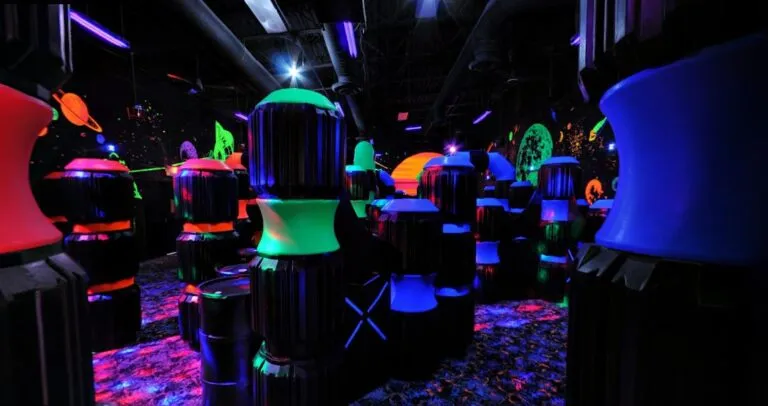
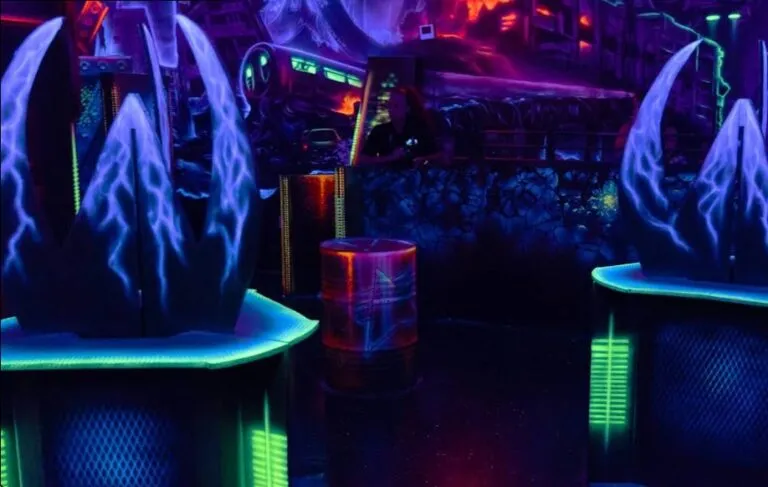
The venue pairs two 20,000-square-foot arenas for paintball and airsoft with a 5,000-square-foot UV-lit Lazer Wars arena, plus gel blasters, archery tag, dart wars, dodgeball, and a full arcade. Paintball uses reusable silicone balls so players stay clean, airsoft features theatrical sound and lighting with new game modes each week, and all games run in ten-minute rounds with respawn rules.
Beyond the arenas, BattlegroundZ hosts birthday, bachelor, and corporate events with party hosts, private VIP rooms, and a 5,000-square-foot banquet room. The Mess Hall serves chef-created food, the Battle Bar pours adult beverages, and a 1,200-square-foot Pro Shop stocks gear and airsoft replicas. Safety briefings, chronograph checks, and ANSI-certified protection make it welcoming for both newcomers and seasoned players.
Indoors
Laser‑tag is a fast‑paced, team‑oriented “combat” sport that uses infrared (IR) light to simulate futuristic weaponry. Players wear a vest or chest‑piece equipped with sensors and a handheld “phaser” that emits a low‑power IR beam. When a beam strikes a sensor, the vest registers a hit and displays it with a sound, a flash, or a score update. Unlike paintball, there is no projectile, no mess, and no safety‑gear beyond the vest, making the game instantly accessible to almost any age group or venue.
Modern laser‑tag systems are sophisticated: some incorporate GPS, motion‑tracking, or even augmented‑reality overlays that project digital obstacles onto a physical arena. The core idea, however, remains the same—teamwork, strategy, and the thrill of “out‑shooting” the opposition without any real danger.
One of the great strengths of laser‑tag is its flexibility. Below are some of the most popular scenarios that keep the experience fresh and exciting.
| Scenario | Description | Typical Setting |
|---|---|---|
| Free‑For‑All (FFA) | Every player for themselves. Points are earned by hitting any opponent. | Small indoor arena or outdoor field. |
| Team Deathmatch | Two (or more) teams compete to reach a target score or eliminate the opposing side. | Classic indoor arenas with barriers. |
| Capture the Flag | Teams must retrieve the opponent’s flag and bring it back to their base while defending their own. | Large outdoor area or multi‑room indoor complex. |
| Zombie Survival | One or two “zombies” start infected; they “tag” survivors, who then become zombies. The last human wins. | Darkened indoor arenas with fog effects. |
| Mission‑Based Ops | Players receive a briefing with objectives (e.g., defusing a “bomb,” rescuing a hostage). | Theme parks or custom‑built sets with props. |
| Competitive Leagues | Structured season play with rankings, playoffs, and trophies. | Dedicated laser‑tag centers with league scheduling software. |
| Augmented Reality (AR) Quests | Digital overlays appear on tablets or smart‑glasses, adding virtual enemies or puzzles. | High‑tech indoor venues or open fields with robust Wi‑Fi. |
Each scenario can be tweaked—change the time limit, adjust hit‑point penalties, add “power‑ups,” or layer multiple objectives—to match the skill level and interests of the participants.
Dr. Maya Patel, Human‑Factors Engineer, MIT
“Laser‑tag is a prime example of an embodied, interactive system that engages both the motor and cognitive domains simultaneously. Compared with sedentary video games, it prompts measurable physiological responses—elevated heart rate, greater caloric burn, and positive affective valence. Its potential as a tool for physical‑rehabilitation is being explored in several pilot studies.”
Prof. Lars Johansson, Sports Psychologist, University of Stockholm
“Team‑based laser‑tag triggers the same social cohesion mechanisms we see in traditional sports. The quick feedback loop (instant hit notification) reinforces learning and keeps participants motivated. It’s a low‑barrier entry point for people who might feel intimidated by contact sports.”
Industry Insight – LaserTag Technologies (LT) CEO, Elena Morales
“Our latest platform integrates Bluetooth Low Energy beacons with AI‑driven analytics. Organizers can now generate real‑time heat maps of player movement, allowing coaches to dissect tactics post‑game. This data‑rich environment is attracting corporate wellness programs and even military training units looking for safe, cost‑effective scenario rehearsal.”
Health‑Policy Perspective – Dr. Carlos Mendes, WHO Physical Activity Advisor
“In low‑resource settings, portable laser‑tag kits offer a scalable way to meet WHO’s recommendation of at least 150 minutes of moderate‑intensity activity per week. Because equipment is inexpensive to maintain and can be used in schools, it aligns with public‑health goals of increasing active play among youth.”
Collectively, these voices affirm that laser‑tag is not merely a novelty; it’s a legitimate, research‑backed avenue for improving physical fitness, mental health, and collaborative skills.
Laser‑tag’s safe, non‑violent veneer makes it a favorite for families seeking active recreation. Parents appreciate that children can burn off energy without the mess of paintball or the risk of hard projectiles.
Competitive leagues, “e‑sports” style tournaments, and high‑energy scenario nights attract teenagers who crave fast‑paced social competition. Many schools now incorporate laser‑tag into physical‑education curricula as a modern alternative to conventional ball games.
Team‑building workshops leverage laser‑tag to surface leadership styles, communication gaps, and decision‑making processes in a fun, low‑stakes environment. It’s especially popular for onboarding new hires or celebrating quarterly milestones.
Thanks to lightweight vests and adjustable sensitivity settings, senior centers and disability programs use laser‑tag to promote mobility and social interaction. Specialized “slow‑motion” modes allow participants with limited agility to enjoy the game on their own terms.
A birthday party built around laser‑tag creates an unforgettable adventure. Packages often include:
Parents love the blend of safe play and immersive storytelling—no need to worry about cleaning up paint or broken equipment.
Graduation celebrations can be transformed into “mission‑complete” events. Graduates form squads, complete a series of progressive challenges, and finish with a “final boss” showdown. The shared experience reinforces camaraderie as classmates transition to the next life stage.
Corporate events often include:
These sessions translate into measurable improvements in teamwork metrics, as reported by post‑event surveys.
| Feature | Advantages | Typical Locations |
|---|---|---|
| Controlled lighting | Precise infrared detection, immersive ambiance with blacklight or laser effects. | Dedicated laser‑tag centers, amusement parks, malls. |
| All‑weather reliability | No rain, wind, or temperature concerns. | Urban entertainment districts. |
| Modular layouts | Walls, obstacles, and props can be rearranged quickly for varied scenarios. | Multi‑room facilities with themed chambers. |
| Technology integration | Easy installation of AR projectors, sound systems, and scoring consoles. | High‑tech experience centers. |
| Feature | Advantages | Typical Locations |
|---|---|---|
| Large play area | Enables expansive scenarios like “Capture the Flag” across acres. | Parks, forest clearings, university campuses. |
| Natural obstacles | Trees, terrain, and structures add realism to tactical gameplay. | Adventure resorts, military training grounds. |
| Portable setups | Pop‑up inflatable arenas or temporary sensor nets allow events at festivals. | Community fairs, corporate retreats. |
| Day‑light fun | Sunlight adds an extra sensory dimension, great for family picnics. | Beach fronts, lakeside venues. |
From its humble beginnings as a sci‑fi novelty in the 1980s to today’s data‑driven, immersive experiences, laser‑tag has evolved into a versatile platform that blends physical activity, strategic gameplay, and social connection. Whether you’re a child chasing the thrill of a “laser blast,” a corporate team seeking innovative bonding, or a researcher exploring new avenues of active play, laser‑tag offers a compelling, low‑risk, high‑reward solution.
As technology continues to merge infrared tracking with AI, AR, and even biometric feedback, the next generation of laser‑tag will likely blur the line between game and training, entertainment and education. The arena is set, the phasers are charging—are you ready to step into the beam?