
 El Monte
 Log in
Log in
Log in

Spare Time Colchester is located in Colchester, VT.
More than just a bowling alley—though it boasts 24 regulation lanes—Spare Time has evolved into a dynamic recreation hub that caters to all ages. At the heart of its appeal? A full-tilt entertainment experience where laser tag lights up the night and good times roll from dawn to dusk.
But Spare Time Colchester isn’t just about competitive fun. The facility spans over 70,000 square feet, making it one of the largest entertainment centers in northern Vermont. Alongside laser tag and bowling, visitors can enjoy a full arcade loaded with the latest video games, redemption kiosks, and classic favorites like air hockey and Skee-Ball. For those craving a more relaxed pace, the on-site lounge and bar serve craft beers, cocktails, and appetizers—perfect for parents unwinding while kids play.
 Indoors
Laser tag is a fast‑paced, team‑oriented sport that uses handheld infrared‑emitting devices (often called “phasers”) and wearable sensors to simulate combat without any physical projectiles. Players move through a defined arena—whether a darkened indoor arena, a warehouse, or a forested outdoor space—aiming their phasers at opponents’ sensor vests. When a sensor registers a hit, the player’s score is reduced or a “life” is lost, depending on the game’s rules. Modern systems can track hits in real time, display individual statistics on a central leaderboard, and even integrate sound effects and lighting cues to heighten immersion. Because the technology relies on light rather than balls or paint, the activity is safe, low‑impact, and suitable for a wide age range, making it a popular choice for recreation, team‑building, and themed events.
The flexibility of laser‑tag equipment allows organizers to craft a variety of scenarios that go far beyond simple “tag‑the‑other‑team” play.
These diverse formats keep repeat players engaged, encourage strategic thinking, and enable event planners to tailor experiences to specific audiences, from school groups to corporate teams.
Beyond the obvious thrill of competition, laser tag delivers a suite of physical, mental, and social advantages.
Collectively, these outcomes make laser tag an attractive option for educators, fitness professionals, and employers seeking engaging, multi‑dimensional activities.
Researchers in kinesiology and cognitive psychology frequently cite laser tag as a valuable “serious play” platform. Studies on active video‑gaming demonstrate that laser tag improves aerobic capacity and can boost spatial awareness comparable to traditional sports. Cognitive scientists highlight the technology’s capacity to provide real‑time feedback, enabling players to self‑correct and refine strategies faster than in static classroom simulations. From an industry perspective, experts emphasize the technology’s scalability: modular sensor systems and wireless networking allow venues to expand or reconfigure arenas without costly renovations. Moreover, the low maintenance and minimal safety concerns associated with infrared lasers make laser tag a sustainable investment for entertainment centers, schools, and corporate facilities alike. Collectively, the scientific and commercial consensus points to laser tag as a versatile tool that blends recreation with measurable developmental benefits.
Laser tag’s appeal cuts across generations, but distinct demographics gravitate toward the activity for different reasons. Children and pre‑teens are drawn to the bright, futuristic gear and the sense of adventure that mimics favorite video‑game heroes. For teenagers, the competitive edge and opportunity for social bonding make it a staple after‑school or weekend pastime. Adults—particularly those in fitness or team‑building programs—appreciate the low‑impact cardio and the chance to step away from screen‑based entertainment into a physically immersive setting. Seniors, especially those with limited mobility, can still partake in modified, slower‑pace games that focus on strategy rather than speed. The inclusive nature of laser tag, combined with customizable difficulty levels, ensures that players of almost any age and fitness level can find a suitable experience.
Parents increasingly choose laser tag venues for birthday celebrations because the activity provides a built‑in structure that keeps children engaged from start to finish. Packages often include dedicated game time, private arena access, and optional add‑ons such as themed decorations, snack stations, and personalized scoreboards that turn each participant into a “hero of the day.” The competitive format encourages friendly rivalry, while the controlled environment ensures safety without constant adult supervision.
High‑school and college graduation parties benefit from laser tag’s ability to blend excitement with a sense of achievement. Organizers can design “final mission” scenarios that symbolize the transition from student life to the next chapter, incorporating milestones like “collect your diploma” or “secure the future.” The shared adrenaline rush creates memorable bonding moments among classmates, and the post‑game debrief can serve as a fun, informal reflection on teamwork and perseverance.
Companies leverage laser tag for both celebratory gatherings and structured team‑building sessions. The activity’s blend of physical exertion and strategic planning mirrors many workplace challenges, making it an effective conduit for leadership development, conflict resolution, and cross‑departmental collaboration. Professional facilitators often pair laser‑tag rounds with debriefing workshops that translate in‑game observations into actionable workplace insights, turning a recreational outing into measurable organizational growth.
Laser tag can be enjoyed in a range of settings, each offering distinct advantages.
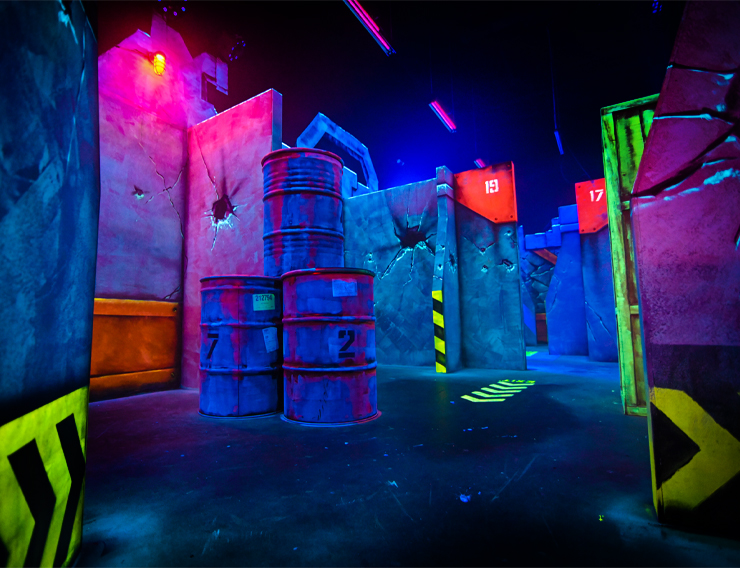
Indoor Arenas – Purpose‑built facilities feature blackout lighting, reflective surfaces, and modular obstacles that can be rearranged for fresh scenarios. The controlled climate ensures year‑round availability, and integrated audio‑visual systems can amplify the thematic experience with music, sound effects, and synchronized lighting. Many urban centers host multiple indoor arenas, making them convenient for quick weekday sessions or corporate bookings.
Outdoor Fields – Larger, open‑air locations—such as wooded parks, abandoned warehouses, or even university campuses—allow for expansive, tactical gameplay. Natural terrain adds realism to military‑style missions, while daylight or dusk lighting creates varying visibility challenges. Outdoor setups often incorporate inflatable bunkers, zip lines, and climbing structures, expanding the physical dimension of the game. Because weather can impact scheduling, venues typically offer seasonal packages or provide portable canopy shelters to extend playability.
Both environments benefit from advances in infrared sensor range and durability, enabling reliable hit detection even across several hundred feet. Players can choose the setting that best matches their desired intensity, aesthetic, and logistical considerations.
Laser tag has evolved from a niche amusement into a multifaceted platform that blends physical exercise, strategic thinking, and immersive storytelling. Its adaptable scenarios, measurable health benefits, and broad demographic appeal make it a compelling option for birthday parties, graduation celebrations, and corporate events alike. Backed by scientific research that highlights improvements in coordination, cognition, and teamwork, and supported by industry innovations that keep equipment affordable and flexible, laser tag stands out as a dynamic activity for the modern age. Whether played in a high‑tech indoor arena or a rugged outdoor field, the experience delivers excitement, connection, and lasting memories—proof that a beam of light can illuminate far more than just a target.


 215 Lower Mountain View Dr, Colchester, VT 05446