
 El Monte
 Log in
Log in
Log in

Spare Time Colchester is located in Colchester, VT.
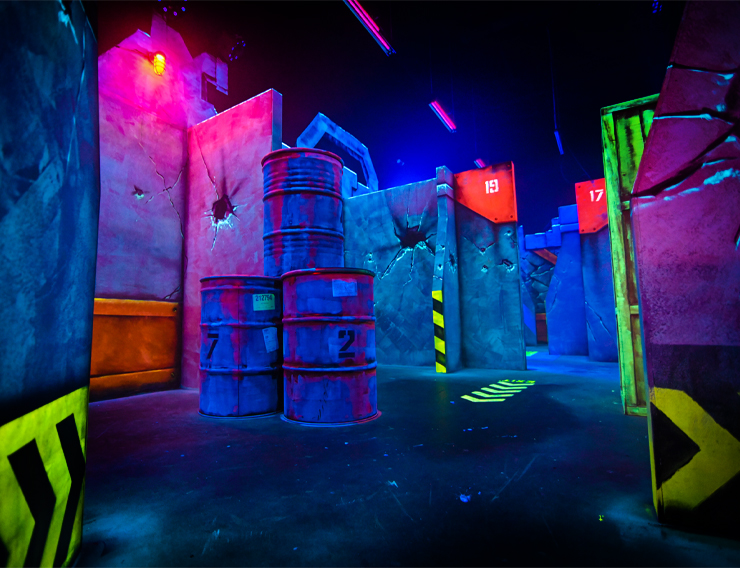
More than just a bowling alley—though it boasts 24 regulation lanes—Spare Time has evolved into a dynamic recreation hub that caters to all ages. At the heart of its appeal? A full-tilt entertainment experience where laser tag lights up the night and good times roll from dawn to dusk.
But Spare Time Colchester isn’t just about competitive fun. The facility spans over 70,000 square feet, making it one of the largest entertainment centers in northern Vermont. Alongside laser tag and bowling, visitors can enjoy a full arcade loaded with the latest video games, redemption kiosks, and classic favorites like air hockey and Skee-Ball. For those craving a more relaxed pace, the on-site lounge and bar serve craft beers, cocktails, and appetizers—perfect for parents unwinding while kids play.
 Indoors
Laser tag is a fast‑paced, team‑oriented game that simulates a combat scenario using infrared light instead of real projectiles. Players wear a lightweight vest or wrist‑mounted sensor that registers hits from handheld “laser guns.” When a sensor is struck, it flashes, emits a brief sound, and records the hit in a central scoring system. The technology allows the game to track each player’s accuracy, total hits, and time‑based objectives, producing an instant leaderboard at the end of the round.
Although the core concept is simple, modern laser‑tag arenas incorporate sophisticated software, dynamic lighting, and themed soundscapes that transform a basic hide‑and‑seek exercise into an immersive experience. The sport can be enjoyed by anyone from five‑year‑old children to seasoned adults, making it a versatile activity for recreation, celebration, and even training.
The flexibility of laser‑tag equipment means that the game can be adapted to a wide range of scenarios, each designed to keep participants engaged and to emphasize different skills.
| Scenario | Typical Objective | Gameplay Highlights |
|---|---|---|
| Capture the Flag | Retrieve the opposing team’s flag while protecting your own. | Emphasizes coordination, rapid movement, and strategic positioning. |
| Team Deathmatch | Accumulate the highest number of hits within a set time limit. | Focuses on offensive tactics, reflexes, and accurate shooting. |
| Zombie Survival | One or more players start as “zombies”; they attempt to tag humans who must survive until the timer expires. | Adds suspense, encourages stealth, and creates a narrative twist. |
| Mission‑Based Ops | Players must complete a series of objectives—disarming a “bomb,” rescuing a “hostage,” or reaching a designated “safe zone.” | Promotes problem‑solving, communication, and role‑playing elements. |
| Free‑For‑All | No teams; every player competes individually. | Tests personal skill, adaptability, and quick decision‑making. |
These scenarios can be mixed, altered, or expanded based on the venue’s layout, the number of participants, and the preferences of the organizing group. The ability to tailor the game ensures that laser tag never feels repetitive, even for frequent players.
Beyond the obvious entertainment value, laser tag offers a suite of physical, mental, and social advantages.
These benefits have contributed to laser tag’s growing popularity in schools, community centers, and corporate wellness programs.
Researchers in kinesiology and cognitive psychology view laser tag as a valuable hybrid of aerobic activity and cognitive training. Studies on “exergaming” – video‑game‑based exercise – have demonstrated that games requiring full‑body movement improve both physical fitness and executive functions such as attention switching and working memory. Laser tag, with its real‑time feedback and unpredictable opponent behavior, closely mirrors these experimental conditions, allowing participants to practice rapid information processing while physically active.
Industry analysts note that the market for location‑based entertainment (LBE) is expanding, with laser‑tag facilities ranking among the top revenue generators alongside escape rooms and virtual‑reality arenas. Experts attribute this growth to the technology’s relatively low maintenance cost, the ability to update software with new game modes, and the social nature of the experience, which aligns with consumer demand for “shared” activities in a post‑pandemic world.
Children are drawn to laser tag because the activity merges the thrill of a “spy mission” with a safe, non‑violent framework. Parents appreciate the controlled environment: helmets and vests protect the eyes, the infrared beams cause no physical harm, and the scoring system eliminates disputes. Schools frequently organize laser‑tag sessions as part of physical‑education curricula, using the game to reinforce teamwork, rule‑following, and fair play.
The age‑appropriateness of laser tag can be fine‑tuned. Many venues offer simplified rules for younger players, lower‑intensity laser guns, and brightly colored arenas that reduce the risk of overstimulation. The result is a balanced experience that encourages confidence and motor development without overwhelming the child.
For teenagers, laser tag becomes a venue for friendly rivalry and social bonding. Clubs and youth organizations host regular leagues, tracking individual and team statistics across seasons. The competitive edge appeals to those who enjoy e‑sports but prefer a physically engaging format.
Adult participation often spikes during milestone celebrations, team‑building retreats, and fitness‑oriented gatherings. The game’s combination of strategy and exercise satisfies adults who seek an alternative to traditional sports or gym routines. Furthermore, many corporate wellness programs incorporate laser tag as a low‑impact, high‑energy option that can accommodate participants of diverse fitness levels.
Laser tag has become a go‑to choice for birthday celebrations because it offers a built‑in structure that removes the need for extensive adult supervision. Packages typically include a set duration of gameplay, a private arena, and optional add‑ons such as themed decorations or custom mission briefs. The seamless transition from one game to the next keeps the energy high, ensuring that the birthday child and guests remain fully engaged throughout the event.
Graduates often look for experiences that feel “grown‑up” yet still fun. Laser tag satisfies both criteria: the technology is sophisticated, the competition is intense, and the activity encourages camaraderie among classmates. Many venues provide group discounts and a “champion” trophy that can be personalized with the graduating year, adding a memorable keepsake to the celebration.
Corporate clients value laser tag for its ability to break down hierarchical barriers. In the arena, a CEO and an entry‑level employee become teammates, united by a shared objective. Facilitators can incorporate specific corporate goals—such as communication drills or decision‑making challenges—into the game’s mission structure. Post‑game debriefs allow teams to reflect on performance, translating on‑field insights into workplace improvements. The combination of physical activity, strategic thinking, and fun makes laser tag a potent tool for enhancing morale and collaboration.
Indoor laser‑tag arenas offer controlled lighting, climate, and sound, making them suitable for year‑round play regardless of weather. These facilities often feature modular walls, fog machines, and LED effects that can be reconfigured to match the chosen scenario. Urban centers host dedicated laser‑tag centers that operate on a walk‑in basis, while some entertainment complexes integrate laser tag alongside bowling, arcades, and food courts.
Key advantages of indoor venues include:
Outdoor laser‑tag expands the playing field to parks, forests, and even abandoned industrial sites, providing a more expansive, tactical environment. The open space encourages long‑range engagements, stealth approaches, and the use of natural obstacles as cover. Some adventure parks design “laser‑tag trails” where participants navigate through varied terrain while completing mission objectives.
Challenges of outdoor play involve ensuring that sensors are protected from sunlight (which can interfere with infrared detection) and that equipment is weather‑resistant. Many modern laser‑tag systems incorporate robust housings and adaptive calibration algorithms that maintain accuracy in bright or rainy conditions.
A growing trend is the hybrid arena that combines indoor technology with outdoor elements. For example, a facility may have a central indoor hub for scoring and briefing, while the actual gameplay takes place in a fenced outdoor area equipped with portable laser‑tag pods and battery‑powered lighting rigs. This model offers the best of both worlds: the immersive storytelling of an indoor setting and the tactical freedom of an open field.
Laser tag has evolved from a novelty arcade attraction into a multifaceted activity that satisfies a broad spectrum of participants. Its adaptable scenarios, measurable benefits, and endorsement by both scientific researchers and industry analysts underscore its relevance in today’s entertainment landscape. Whether for a child’s birthday, a graduate’s celebration, a corporate team‑building day, or simply a weekend outing, laser tag delivers a blend of physical exertion, strategic thinking, and social interaction that few other pastimes can match.
With a growing network of indoor arenas, outdoor fields, and hybrid venues, the opportunity to experience laser tag is more accessible than ever. As technology continues to enhance sensor precision, immersive storytelling, and data analytics, the future of laser tag promises even richer experiences—ensuring that the glow of those infrared beams will keep drawing players of all ages back for another round of friendly fire.


 215 Lower Mountain View Dr, Colchester, VT 05446