
 El Monte
 Log in
Log in
Log in

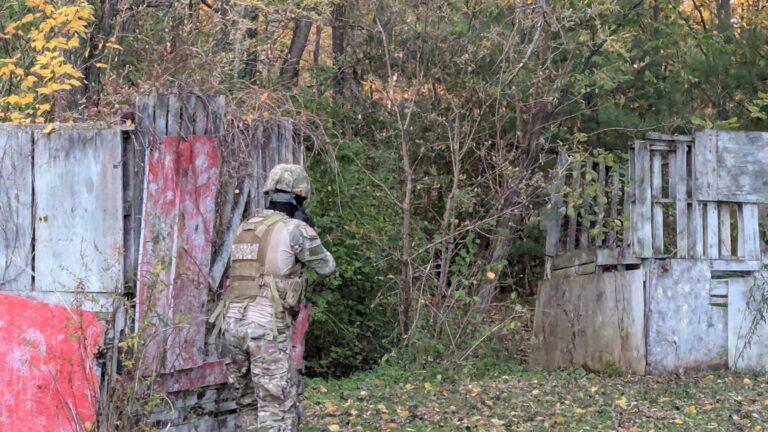
Legacy Paintball & Airsoft Park is located in Morrisonville, NY.
This 40-acre adventure complex blends high-octane action with cutting-edge facilities, offering immersive experiences in paintball, airsoft, and the rising sport of gellyball.
Beyond individual play, Legacy Paintball & Airsoft Park thrives as a community hub. The venue hosts weekly leagues, holiday tournaments, and themed events, fostering camaraderie among competitors and casual players alike. Corporate teams, school groups, and families regularly book exclusive field sessions for team-building or social gatherings. On-site amenities, including picnic areas and concession stands, enhance the day-trip appeal.
 Indoors
Paintball is a fast‑paced, team‑oriented sport in which participants fire small capsules—known as paintballs—filled with a non‑toxic, water‑based dye from pneumatic or CO₂‑propelled markers. The markers resemble compact rifles, but they are engineered to launch a 0.68‑inch (17 mm) sphere at velocities typically ranging from 250 to 300 feet per second. When a paintball strikes a player’s protective gear or exposed skin, the dye ruptures and leaves a brightly colored mark, signalling an “out.” Modern paintball combines elements of tactical combat, strategy games, and physical fitness, creating a uniquely immersive experience that can be adapted for casual recreation, competitive leagues, or corporate team‑building.
Although the specifics can vary by venue, most paintball fields abide by a core set of safety and gameplay guidelines designed to protect participants and preserve fair play.
Protective Gear – Every player must wear a certified mask at all times while on the field, along with appropriate padding such as chest protectors, gloves, and elbow/knee pads. Some venues also require long‑sleeve shirts and pants to reduce bruising.
Marker Limits – Most fields enforce a maximum muzzle velocity, often measured with a chronograph before a session begins. This limit, usually around 300 fps, helps to keep impacts within a safe kinetic range.
Barrel Obstructions – Paintball markers must be equipped with a fully open barrel or a regulated barrel that complies with local regulations. Modifications that increase velocity or alter the projectile’s trajectory are prohibited.
Shooting Discipline – Players are required to keep their markers pointed downrange and never fire at a non‑player, a referee, or an official. “No shooting in the bunker” and “no shooting while out of bounds” are common clauses.
Hit Confirmation – If a paintball bursts on a player, that player must raise their hand or otherwise acknowledge the hit before leaving the field. Some leagues use “hit‑markers” that players must display for a set period.
Reloading Zones – Many fields designate safe zones where players can reload and tend to equipment. While reloading is allowed, the marker must remain pointed downrange and the player must stay within the designated area.
Game Duration and Scoring – Depending on the scenario, matches can be timed (e.g., two‑minute rounds) or objective‑based (e.g., first team to capture a flag). Scoring methods are clearly explained before each game.
By adhering to these rules, paintball maintains a reputation as a safe, organized sport while still delivering the adrenaline rush that draws players back again and again.
The versatility of paintball lies in its ability to accommodate a wide array of game formats. Below are some of the most popular scenarios that field operators and league organizers employ to keep the action fresh.
Perhaps the most straightforward format, elimination pits all participants against each other in a free‑for‑all. Players respawn after a brief “downtime” or are eliminated permanently, depending on the event’s rules. The last surviving player—or team—claims victory.
Teams are assigned a flag or “objective marker” placed within their opponent’s territory. The goal is to retrieve the enemy flag and bring it back to one’s own base while defending one’s own flag from capture. This scenario emphasizes coordinated assaults, defensive formations, and quick decision‑making.
One side is tasked with protecting a critical asset—such as a “command post” or a set of “hostages”—while the opposing side must infiltrate the defended area within a limited time frame. The defending team can set up barricades, tripwires, and overlapping fields of fire, turning the match into a tactical chessboard.
Advanced events often weave a storyline into the gameplay. Participants might assume the roles of soldiers, spies, or post‑apocalyptic survivors. Props, sound effects, and mission briefs add depth, turning a regular match into an immersive theater of war.
Played on a compact, symmetrically designed field with artificial bunkers placed at regular intervals, speedball emphasizes fast movement, rapid reloads, and high‑intensity firefights. This format is the standard for competitive leagues and televised tournaments.
Each scenario can be tailored to the skill level of the participants, the size of the field, and the desired pace of play, ensuring that paintball remains fresh for newcomers and veterans alike.
Beyond sheer entertainment, paintball offers a spectrum of tangible benefits that appeal to individuals, organizations, and even academic researchers.
Running between bunkers, diving for cover, and carrying a marker and air tank provide a cardiovascular workout comparable to high‑intensity interval training. Players develop agility, coordination, and muscular endurance while burning a substantial number of calories.
Successful paintball relies on quick situational awareness, strategic planning, and real‑time problem solving. Players must assess terrain, predict opponent movements, and adjust tactics on the fly, honing cognitive flexibility and decision‑making speed.
Many scenarios require seamless communication and role specialization. Those who excel at delegating tasks, directing fire, and maintaining morale often emerge as natural leaders. This dynamic translates well to corporate environments, where similar skills drive project success.
The adrenaline surge and focus required during a match create a temporary escape from daily pressures. The physical exertion also triggers the release of endorphins, leaving participants with a post‑game sense of wellbeing.
Law enforcement and military training programs sometimes incorporate paintball to simulate tactical engagements without lethal risk. Participants can practice unit cohesion, cover‑and‑move techniques, and decision making under stress in a controlled environment.
Collectively, these benefits make paintball a multifaceted activity that supports both personal growth and professional development.
The demographic landscape of paintball is remarkably diverse, reflecting its broad appeal across age groups, cultures, and professions.
The sport’s inclusive nature—thanks to adjustable equipment, adjustable game intensity, and a strong emphasis on safety—ensures that virtually anyone can find a comfortable entry point.
Academic research and industry analysis converge on a generally positive assessment of paintball, though they also highlight areas requiring vigilance.
Studies published in sports medicine journals indicate that paintball injury rates are low when proper protective gear is used. Most reported injuries are minor abrasions, bruises, or eye irritation resulting from mask misuse. Researchers stress that enforcement of mask‑on policies and regular equipment inspections are critical to maintaining this safety record.
Psychologists have examined paintball’s effect on stress resilience. Controlled experiments reveal that participants who regularly engage in paintball demonstrate improved coping mechanisms in high‑pressure situations, suggesting that the sport can serve as a practical stress‑management tool.
Industry analysts note that the global paintball market has experienced steady growth over the past decade, driven by expanding indoor facilities, advances in marker technology, and rising interest in experiential recreation. Revenue streams now extend beyond field fees to include equipment sales, air‑compressor rentals, and merchandise.
Experts in environmental science raise concerns about the biodegradability of paintball gelatin capsules. While most modern paintballs are made from non‑toxic, water‑soluble gelatin, some older formulations contain synthetic polymers that linger in ecosystems. The industry has responded by adopting stricter standards and encouraging fields to enforce “leave no trace” policies.
Overall, the consensus among scientists and experts is that paintball, when managed responsibly, offers a safe, socially enriching, and economically viable activity.
Choosing the right venue hinges on preferred gameplay style, weather conditions, and logistical considerations. Both outdoor and indoor fields provide distinct experiences.
Outdoor venues capitalize on natural terrain—forests, hills, and open fields—to create sprawling battlefields that can accommodate large participant counts. These sites often feature:
Because of their size, outdoor fields are ideal for scenario‑based games, capture‑the‑flag contests, and military‑style simulations.
Indoor arenas—often called speedball or arena fields—provide a controlled environment with artificial bunkers arranged in symmetric patterns. Benefits include:
Speedball arenas are favored by competitive leagues and those seeking fast, intense matches that emphasize reflexes over navigation.
Some modern complexes blend both experiences, offering indoor speedball arenas alongside adjacent outdoor fields. This hybrid model allows groups to switch between formats within a single visit, catering to varied skill levels and preferences.
When selecting a venue, players should consider factors such as equipment rental policies, safety certifications, and the availability of scenario programming. Many fields provide introductory packages that include marker rental, air tanks, and protective gear, easing the entry barrier for newcomers.
Paintball continues to evolve, merging cutting‑edge technology with timeless principles of teamwork and strategy. Whether a participant is chasing the thrill of a rapid‑fire speedball match, immersing themselves in a narrative scenario, or using the sport as a training tool, the blend of physical exertion, mental challenge, and social interaction makes paintball a uniquely rewarding pursuit. The sport’s broad demographic appeal, documented health benefits, and growing industry infrastructure suggest that paintball will remain a vibrant component of recreational and professional landscapes for years to come.


 Clinton County Fairgrounds 84 Fairgrounds Road, Morrisonville, NY