
 El Monte
 Log in
Log in
Log in

Augusta Paintball is located off Barton Chapel Road in Augusta, Georgia, near the Augusta Mall and Fort Eisenhower. The club features five outdoor tactical arenas with diverse terrain, offering classic elimination, capture-the-flag, and objective-based scenarios. Rental packages include full equipment and 500 paintballs for a full day of play, while players with their own gear can access the fields with a reduced fee and on-site air refills.
Beyond the battles, Augusta Paintball hosts birthday parties, corporate events, and private group outings for teams of 5 to 50+ players. A lounge area provides space to relax between matches, and the experienced staff handles all safety briefings and game coordination. The venue is a popular choice for military units from Fort Eisenhower and local organizations seeking a structured, high-energy team-building experience.
 Outdoors
Augusta, GA is quickly becoming one of the top Paintball destinations in the United States, boasting a wide range of courses that are perfect for experienced and novice players alike. Whether you’re looking for a challenging tournament or a fun day on the field with friends, Paintball in Augusta has something for everyone.
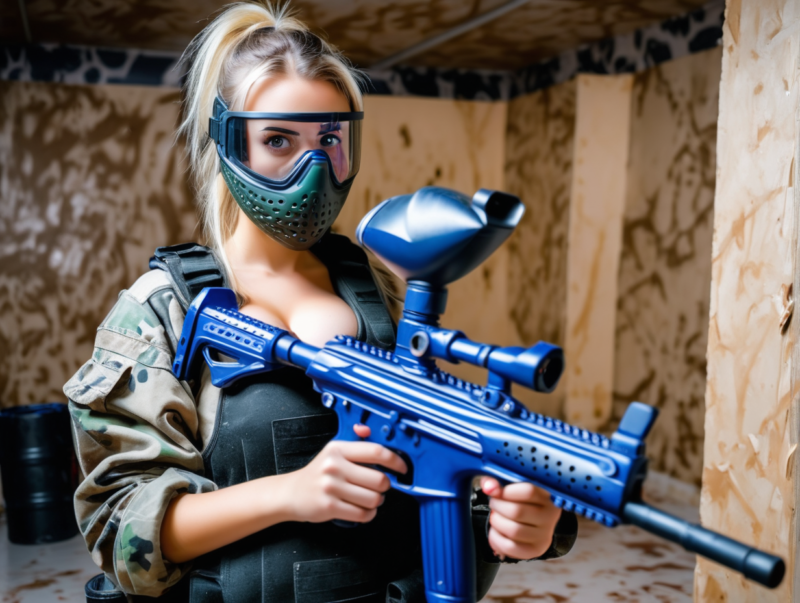
Paintball is a fast‑paced, team‑oriented sport that pits players against one another using pneumatic or CO₂‑powered markers that fire small gelatin capsules filled with non‑toxic, water‑based paint. When a capsule strikes a target, it bursts and leaves a bright, easily visible mark, indicating that the player has been “hit.” The game can be played on a variety of terrains—from dense woods and abandoned industrial sites to purpose‑built arenas lined with inflatable obstacles. Although the equipment is relatively simple, modern paintball markers incorporate sophisticated engineering: adjustable hop‑up systems, electronic firing modes, and modular barrel designs that allow players to fine‑tune velocity, accuracy, and reliability. The sport’s appeal lies not only in its adrenaline‑pumping action but also in the strategic depth that emerges when teams coordinate movement, cover, and firepower under ever‑changing conditions.
The framework of paintball is built on a core set of safety and gameplay rules that keep the sport both exhilarating and responsibly managed. First and foremost, all participants must wear approved protective gear, the most critical piece being a full‑face mask that meets the standards set by governing bodies such as the National Paintball League (NPL) or the International Paintball Federation (IPF). The mask must remain on at any time a marker is loaded or when a player is within the playing field.
Markers are limited to a maximum muzzle velocity of 300 feet per second (≈ 91 m/s) for standard play, a restriction that reduces the risk of serious injury while preserving the challenge of accurate shooting. Players must also adhere to a “no shooting” rule when they are within a designated safe zone, such as the starting line or a designated “base” area, to prevent accidental hits when the game is not actively underway.
Elimination occurs when a paint capsule strikes any part of the body that is not covered by protective gear, or when a marker is fired within the safe zone. Upon being hit, a player must raise a hand or otherwise signal to the referee that they are out, then retreat to the designated “dead‑ball” area for a prescribed “respawn” time, typically ranging from 30 seconds to a minute, depending on the game mode.
Beyond safety, most organized matches follow a set of objective‑oriented rules. Common formats include “Capture the Flag,” where teams vie to retrieve an opponent’s flag and return it to their own base, and “Elimination,” where the goal is to remove all opposing players. Scoring may be based on flag captures, points per hit, or a combination of both, with clear win conditions defined before the match begins.
Lastly, sportsmanship is codified in the “Code of Conduct”: players must respect referees, avoid unsportsmanlike conduct such as deliberate low‑aim shots, and maintain the integrity of the playing field by cleaning up spent paintballs and debris.
Paintball’s versatility stems from the wide variety of scenarios that can be crafted to suit any skill level or narrative preference. In “Attack/Defend,” one team occupies a fortified position while the other attempts a breakthrough, creating a classic siege atmosphere that emphasizes tactical planning and coordinated fire. “Scenario” or “Story” games can involve elaborate storylines—such as post‑apocalyptic survival, hostage rescue, or historical battle reenactments—where players assume specific roles, complete missions, and interact with props that enhance immersion.
Another popular format is “Speedball,” played on a compact, symmetrically designed field marked with inflatable bunkers. The confined space forces rapid decision‑making and promotes high‑intensity, fast‑draw shooting, making it the preferred style for competitive leagues and televised events. “MilSim” (Military Simulation) scenarios, on the other hand, often span multiple acres and incorporate realistic military tactics, communication protocols, and equipment such as camouflage gear, night‑vision markers, and simulated grenades.
Hybrid formats blend elements from several styles—for instance, a “King of the Hill” game that combines capture points with timed respawns, encouraging both offensive pushes and defensive holds. The adaptability of paintball scenarios means that organizers can tailor the experience to the age group, fitness level, and creative aspirations of participants, transforming a simple match into a memorable adventure.
Beyond its entertainment value, paintball offers a suite of physical, mental, and social benefits. Physically, the sport provides a full‑body workout: players sprint, duck, climb, and navigate uneven terrain, developing cardiovascular endurance, agility, and core strength. The rapid bursts of activity mimic high‑intensity interval training (HIIT), which has been shown to improve metabolic health and boost calorie expenditure.
Mentally, paintball sharpens decision‑making under pressure. Players must assess threats, calculate trajectories, and coordinate with teammates within seconds, fostering quick problem‑solving skills and heightened situational awareness. The necessity of adopting and adapting strategies in real time also cultivates flexible thinking and resilience—attributes that translate to professional and academic environments.
Socially, paintball encourages teamwork, communication, and trust. Successful squads rely on clear, concise radio or hand‑signal communication, role specialization, and collective responsibility for safety. These dynamics nurture leadership abilities and reinforce the value of cooperation over individual heroics.
Finally, paintball can serve as an effective stress‑relief outlet. The combination of physical exertion, focused attention, and the release of adrenaline often leads to a “runner’s high” effect, reducing cortisol levels and promoting a sense of well‑being. For many participants, stepping onto the field provides a constructive, cathartic alternative to sedentary leisure activities.
Paintball’s participant base has expanded dramatically since the sport’s inception in the 1980s. Initially popular among military enthusiasts and adrenaline seekers, the demographic now encompasses a broad spectrum of ages, professions, and cultural backgrounds. Teenagers and college students are drawn to the competitive and social aspects, often forming clubs that host weekly league matches.
Adult players range from corporate teams using paintball as a team‑building exercise to seasoned competitors who travel nationally and internationally to partake in tournaments. In recent years, a notable rise in family‑oriented “kid‑friendly” fields has attracted parents looking for safe, supervised outdoor activities for their children.
Women’s participation has also grown, with dedicated women’s leagues and mixed‑gender tournaments encouraging inclusivity. Adaptive paintball programs have emerged to accommodate players with physical disabilities, employing modified markers, wheelchair‑compatible fields, and specialized safety gear.
Geographically, paintball enjoys popularity across North America, Europe, Asia, and Australia, with each region adding local flavor—whether it be jungle‑style courses in Southeast Asia, historic castle backdrops in Europe, or desert terrain challenges in the Middle East. This global reach illustrates paintball’s capacity to unite diverse groups through a shared love of tactical competition.
Research on paintball, though not as extensive as studies on mainstream sports, has yielded insights into its physiological and psychological impacts. Exercise physiologists have measured heart rates during competitive Speedball matches, recording average values between 150–170 beats per minute—levels comparable to high‑intensity sports such as basketball or squash. These findings affirm paintball’s efficacy as a cardiovascular workout.
Biomechanical analyses reveal that the rapid directional changes inherent in the sport improve proprioception and balance, reducing the likelihood of falls and injuries in everyday life. Studies on reaction time indicate that regular paintball players develop faster visual processing speeds, an advantage that extends to driving and other fast‑paced activities.
From a safety perspective, epidemiologists note that paintball injuries are relatively rare and predominantly minor, consisting mainly of bruises, superficial skin lacerations, or eye injuries when protective masks are improperly used. The implementation of standardized velocity limits and mandatory protective equipment has dramatically lowered the incidence of severe trauma.
Industry experts emphasize the sport’s economic contribution. The global paintball market, valued at several hundred million dollars, supports manufacturers of markers, paint, protective gear, and venue operators. Analysts predict continued growth driven by technological advancements—such as low‑profile electronic markers, biodegradable paint capsules, and augmented‑reality integration—and by the expanding appeal of paintball as a corporate wellness tool.
Collectively, scientific and professional assessments underscore paintball’s status as a safe, physically demanding, and socially enriching activity with significant potential for further development.
Paintball enthusiasts can find suitable venues in both outdoor and indoor settings, each offering distinct advantages.
Outdoor Fields – Natural terrain fields capitalize on forests, hills, abandoned structures, and open fields to create immersive battle zones. These venues often feature extensive land acreage, allowing for large‑scale MilSim scenarios that can last several hours. Outdoor fields may incorporate permanent structures such as bunkers, watchtowers, and trenches, providing a realistic backdrop for tactical play. Seasonal considerations—such as heat, rain, or snow—add an extra layer of challenge, requiring players to adapt gear and strategies accordingly.
Indoor Arenas – Also known as Speedball arenas, indoor facilities are typically housed in warehouses or purpose‑built complexes with inflatable obstacles arranged in symmetrical layouts. The controlled environment eliminates weather variables, making indoor paintball ideal for year‑round play and competitive leagues. The compact size of indoor arenas encourages rapid engagements, fostering a faster game tempo suited for skill development and spectator events. Many indoor venues also offer “paintball bars” or lounge areas where participants can socialize between matches, enhancing the community aspect of the sport.
Both venue types often provide rental equipment, on‑site marker maintenance, and safety briefings to accommodate newcomers. Some operators offer hybrid experiences, featuring an indoor Speedball arena adjacent to an outdoor scenario field, giving players the flexibility to switch styles within the same facility.
When selecting a venue, players should consider factors such as field size, terrain variety, equipment availability, safety protocols, and the specific game formats offered. Accessibility, parking, and proximity to accommodations become important for multi‑day events or tournament participation. In many regions, local clubs maintain calendars of open play nights, special scenario weekends, and competitive seasons, providing a ready network for both novices and seasoned veterans to engage in the sport.


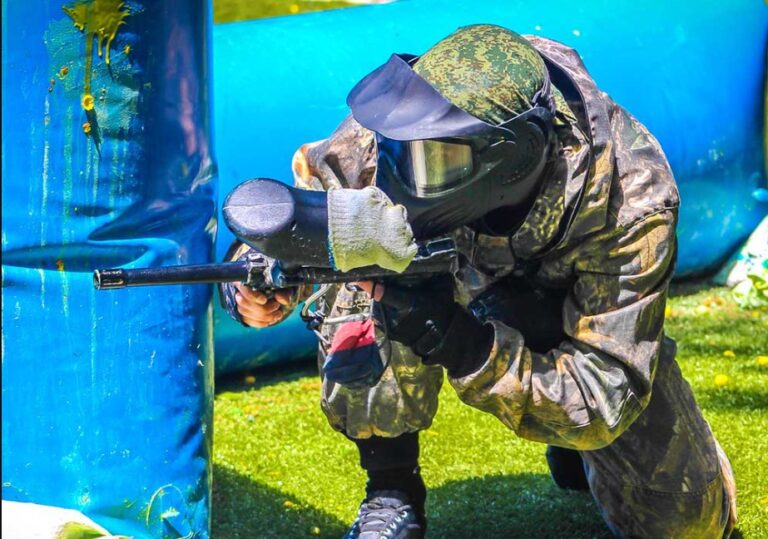
 1818 Barton Chapel Rd, Augusta, GA 30909, United States