El Monte
 Log in
Log in
Log in

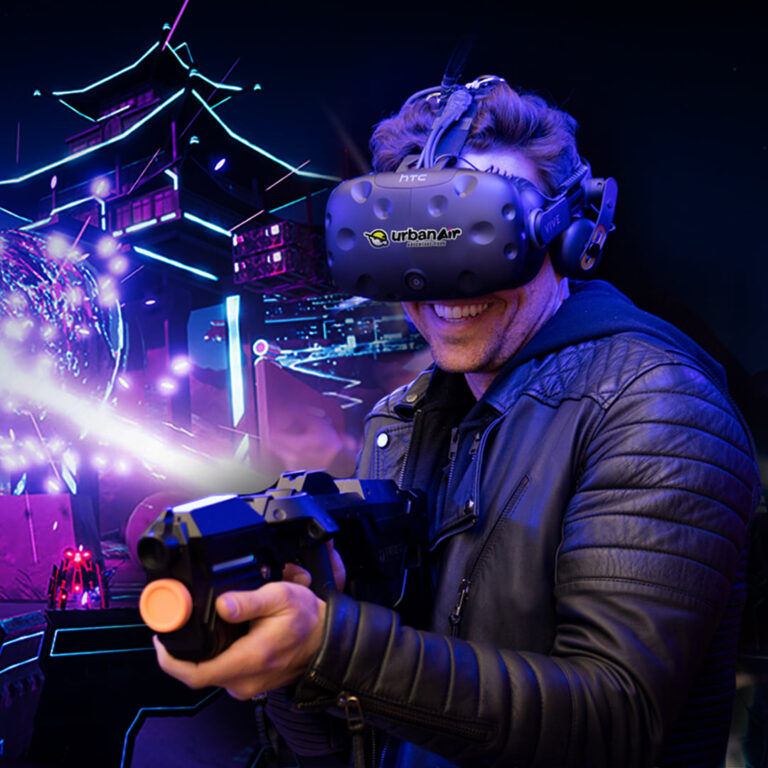
Urban Air Trampoline and Adventure Indoor Park is located in Augusta, GA.
Urban Air Trampoline and Adventure Park in Augusta, GA is a thrilling indoor destination for families and adventurous individuals. The park offers a range of activities including trampolines, climbing walls, dodgeball, Warrior obstacle course, ropes course, and virtual reality experiences. It’s the perfect spot to host a birthday party, corporate event, or just spend a day out with friends and family. With affordable prices and countless options for entertainment, Urban Air Trampoline and Adventure Park is a must-visit destination for anyone in Augusta looking for a fun-filled adventure.
 Indoors
Vizion VR is located in Aiken, SC.
Vizion VR is a virtual reality arcade located in Aiken, SC that offers a unique entertainment experience for all ages. With a variety of games and experiences to choose from, visitors can step into immersive virtual worlds and explore, play, and interact in ways they never thought possible. From adrenaline-inducing action games to relaxing simulations, Vizion VR has something for everyone. The arcade also offers party packages for events and birthdays. Come visit Vizion VR and experience the future of entertainment today!
IndoorsStars and Strikes Family Entertainment Indoor Center is located in Augusta, GA.
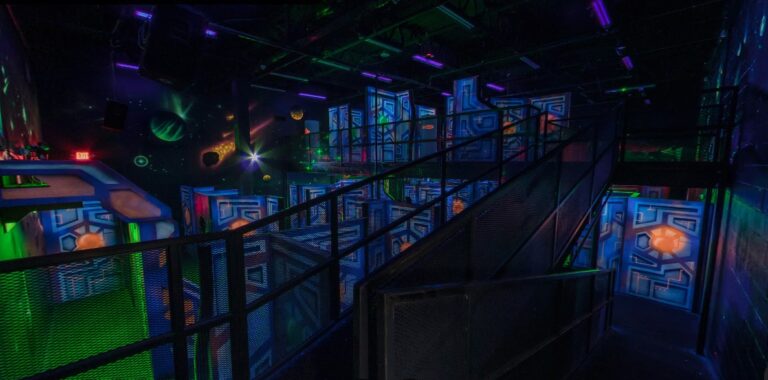
Stars and Strikes is a family-friendly entertainment center located in Augusta, GA. It offers a variety of activities such as bowling, laser tag, arcade games, bumper cars, and virtual reality experiences. The center also has a full-service restaurant and bar, making it a great spot for birthday parties, corporate events, or just a fun night out with family and friends. There are multiple packages available, including options for unlimited play and group discounts. Overall, Stars and Strikes is a great spot for anyone looking for a fun and exciting time in Augusta.
Indoors
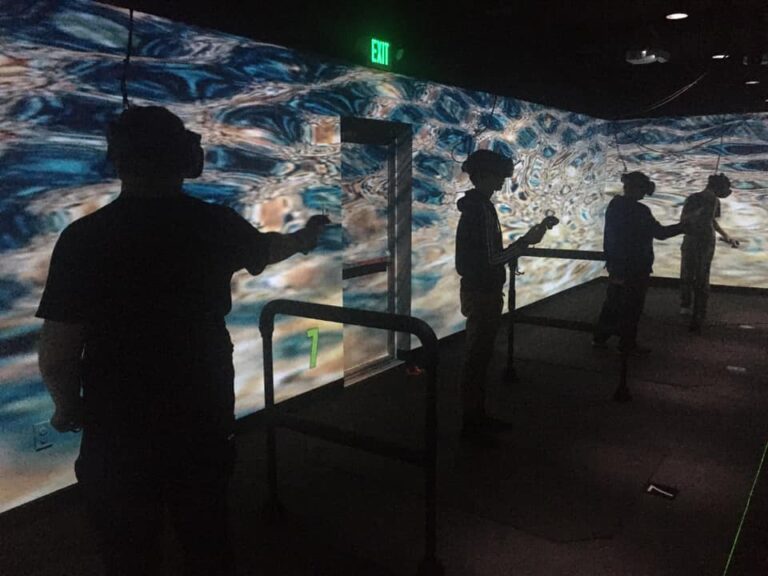
Video game lovers in Augusta, Georgia are in for a real treat! VR arenas, or virtual reality arenas, are now available in the area. These arenas offer an immersive, interactive gaming experience like no other. Players don virtual reality headsets which put them in full-fledged 3D virtual worlds where they can battle online opponents, explore virtual environments, and much more.
As part of the arena experience, players are invited to attend team-based gaming events, tournaments, and leagues. This type of social gaming can be a great way to collaborate and have fun with other gamers. There are countless ways for players to get involved and enjoy the world of virtual reality, from shooting aliens and casting spells, to exploring vast virtual worlds.
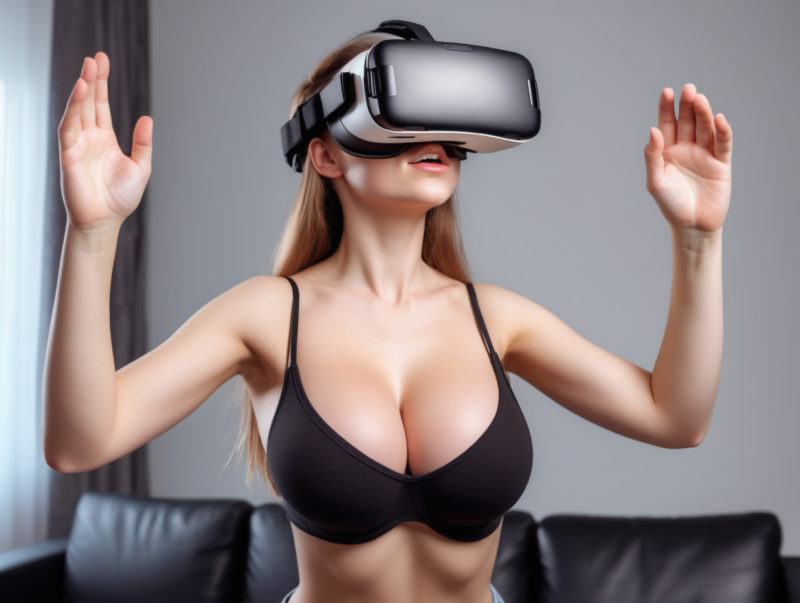
A free‑roam virtual‑reality (VR) arena is a purpose‑built physical space where users can move unhindered while wearing untethered head‑mounted displays (HMDs). Unlike seated or tabletop VR setups, the arena eliminates cables, external sensors, and confined play areas, allowing participants to walk, duck, leap, and interact with a three‑dimensional virtual world as naturally as they would in the real one. The space is typically bounded by safety netting, padded walls, or motion‑capture barriers that keep players within a defined zone while protecting them from collisions. Inside the arena, a network of infrared cameras, lidar scanners, or inside‑out tracking systems constantly monitors the position of each headset, translating real‑world motions into precise in‑game actions with sub‑second latency.
Because the hardware is wireless and the tracking infrastructure is designed for large volumes, free‑roam arenas can host multiple players simultaneously, each inhabiting a shared virtual environment. The result is an immersive playground that blends the freedom of physical movement with the limitless creativity of digital design, opening the door to experiences that would be impossible in a conventional living‑room setup.
The flexibility of a free‑roam arena gives designers a broad canvas for crafting scenarios that exploit full‑body interaction. Some of the most popular categories include:
Adventure Quest Worlds – Players embark on narrative‑driven missions, solving puzzles, battling enemies, and navigating sprawling environments that unfold as they physically walk through the arena. The sense of scale is amplified when a towering castle or deep cavern is rendered around them, making every step feel consequential.
Sports Simulations – From futuristic zero‑gravity dodgeball to realistic archery and fencing, the arena’s open space enables kinetic sports that mimic their physical counterparts. Real‑time physics engines give objects weight and inertia, so a thrown virtual ball arcs just as it would in the real world.
Co‑op Escape Rooms – Teams work together to decode riddles, manipulate virtual levers, and uncover hidden passages. Because participants can move side‑by‑side, communication becomes a natural part of the gameplay, mirroring the collaborative tension of a brick‑and‑mortar escape room.
Educational Expeditions – Learners can stroll through a reconstructed ancient city, examine a life‑size dinosaur skeleton, or conduct a chemistry experiment without the hazards of actual lab equipment. The ability to walk around a model gives a spatial understanding that flat screens cannot match.
Creative Sandbox Studios – Users wield virtual paintbrushes, sculpting tools, and building blocks to construct three‑dimensional art installations. The freedom to approach a creation from any angle encourages a more organic design process.
These scenarios share a common thread: they rely on the arena’s capacity to map the player’s whole body into the virtual realm, delivering an experience that feels both physically engaging and digitally boundless.
The demographic spectrum of free‑roam VR participants is surprisingly wide. Young adults and teenagers constitute the core market, drawn by the novelty of high‑energy gaming and the social aspect of shared sessions. However, the technology also attracts:
Families – Parents often bring children to explore family‑friendly experiences, such as collaborative storytelling adventures or gentle educational tours, appreciating the safe, supervised environment that a commercial arena provides.
Corporate Teams – Companies use the arena for team‑building exercises, leveraging cooperative challenges to foster communication, trust, and problem‑solving skills among employees.
Therapeutic Practitioners – Rehabilitation centers experiment with free‑roam VR to encourage motor‑skill recovery, balance training, and cognitive engagement for patients recovering from injuries or neurological conditions.
Event Organizers – Planners for festivals, conventions, and pop‑culture gatherings incorporate VR arenas as headline attractions, capitalizing on the spectacle of people physically moving through vivid digital worlds.
Researchers and Educators – Academic institutions set up temporary arenas for studies on spatial cognition, human‑computer interaction, and immersive learning, using the controlled environment to collect data on how people navigate and respond to virtual stimuli.
The common denominator across these groups is a desire for an experience that transcends the limitations of a screen, offering a blend of physical activity, social interaction, and imaginative exploration.
Designing free‑roam VR for children involves a careful balance between excitement and safety. Operators typically implement several layers of protection:
Physical Barriers – Soft, padded walls and ceiling nets prevent accidental collisions with the arena’s structure while still allowing a clear line of sight.
Age‑Appropriate Content – Games are curated to avoid intense horror themes or violent combat. Instead, they focus on whimsical adventures, puzzle solving, and cooperative play that stimulate creativity without overstimulation.
Hand‑Held Controllers or Gesture‑Only Interaction – Younger users can engage using simple hand gestures, reducing the need for complex button combinations that might frustrate them.
Supervised Sessions – Trained staff members monitor each session, ensuring children stay within the safe zone, adhere to hygiene protocols for headset use, and receive assistance if motion sickness arises.
When executed well, kid‑focused free‑roam VR can become a powerful educational tool. For instance, a marine‑biology adventure lets children swim alongside virtual dolphins, learning about species behavior while physically ducking and reaching to interact with coral formations. The embodied learning experience improves retention because the brain encodes information through both visual and kinesthetic pathways.
The versatility of the arena makes it an attractive venue for a range of celebrations:
Birthday Parties – Parents can book themed packages that combine a short introductory tutorial with a series of quick, high‑energy mini‑games. The social aspect encourages guests to cheer each other on, and the arena’s clean‑up‑free nature means parents don’t have to worry about post‑party mess.
Graduations – Institutions can mark a milestone by immersing graduates in a custom‑built virtual campus tour, allowing them to revisit cherished locations in an interactive format. Group challenges that require teamwork can symbolize the collaborative journey they have just completed.
Corporate Parties – Companies often opt for competitive or cooperative VR tournaments that align with corporate values—innovation, agility, and teamwork. The arena can be stylized with branding, and after‑party analytics provide insights into participant engagement, helping organizers tailor future events.
In each scenario, the free‑roam arena offers a novel backdrop that differentiates the event from typical banquet‑hall gatherings. The kinetic nature of the experience also promotes physical activity, which can be a refreshing change for attendees who spend most of their day seated.
The scientific community has taken a keen interest in free‑roam VR as a research platform. Neuroscientists examine how full‑body immersion influences spatial memory formation, discovering that participants who navigate a virtual maze by walking retain more detailed map information than those using joystick controls. Psychologists study the impact of embodied avatars on empathy, finding that embodying a different perspective in a free‑roam setting can reduce implicit biases.
From an engineering standpoint, experts highlight the challenges of scaling tracking systems to larger spaces while maintaining sub‑millisecond latency. Advances in edge‑computing and 5G networking are seen as key enablers for future arenas that can support dozens of simultaneous users without degradation of experience.
Industry analysts point to the commercial potential of free‑roam VR as a catalyst for the broader adoption of immersive technologies. They argue that the “wow” factor of seeing people physically move through fantastical environments drives word‑of‑mouth marketing, while the recurring revenue model of session‑based pricing creates a sustainable business case. Moreover, the convergence of hardware trends—lighter headsets, longer battery life, and more robust hand‑tracking—suggests that operating costs will decline, making the experience accessible to a wider audience.
Overall, the consensus among scientists and industry specialists is that free‑roam VR represents a pivotal step toward truly embodied digital interaction. Its capacity to blend physical motion, social presence, and high‑fidelity visuals positions it as a cornerstone technology for entertainment, education, therapy, and workplace collaboration in the years ahead.
Free‑roam VR arenas have moved beyond novelty installations to become dynamic spaces where imagination is anchored in real‑world motion. Whether participants are navigating a mythic castle, learning about the solar system, celebrating a milestone, or contributing to cutting‑edge research, the arena offers a unique synthesis of body and byte that promises to reshape how people experience virtual worlds. As hardware continues to evolve and content creators push the boundaries of what can be simulated, the arena will likely expand its role—from a weekend diversion to an essential venue for learning, socializing, and innovating.


 207 Robert C Daniel Jr Pkwy, Augusta, GA 30909, United States