El Monte
 Log in
Log in
Log in

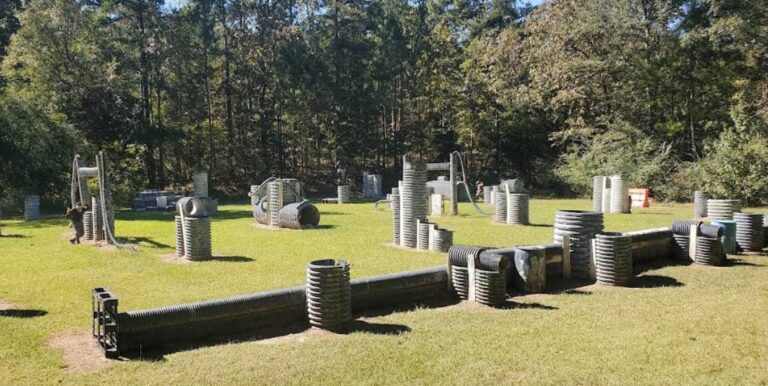
Central Alabama Paintball Park is located in Calera, AL
Nestled in the heart of the Deep South, Central Alabama Paintball Park stands out as a premier destination for paintball enthusiasts of every skill level. The complex is not a single, homogeneous field but a curated collection of five completely different arenas, each engineered to deliver a unique tactical experience. Whether a group of friends is looking for a quick, high‑energy skirmish or an organization is planning a sprawling tournament that could host hundreds of players, the park’s versatile layout accommodates both. Its blend of makeshift fortifications, repurposed vehicles, and thoughtfully designed terrain creates an immersive battlefield that keeps participants coming back for more.
 Outdoors
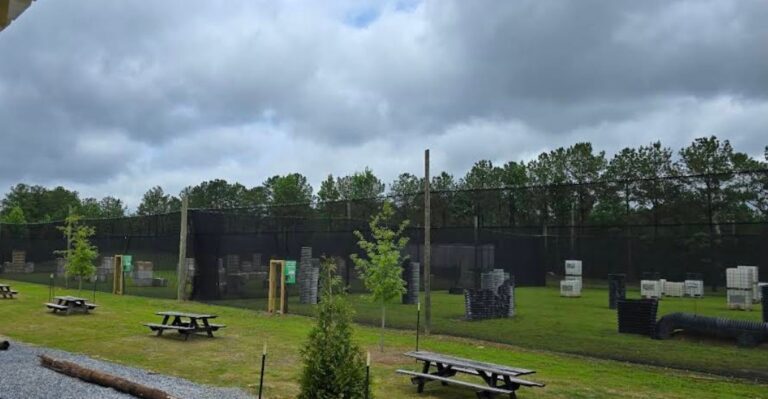
Alabama Paintball Quest & Airsoft is located in McCalla, AL.
Alabama Paintball Quest & Airsoft: Adventures in McCalla, AL
Alabama Paintball Quest & Airsoft, located in McCalla, AL, provides an exciting destination for a variety of group outings and individual play. It caters to those seeking adrenaline-pumping action in a safe and well-managed environment. This facility offers diverse options tailored to meet the needs of different groups, making it an ideal choice for celebrations, team-building activities, and casual play.
For individuals and small groups, Alabama Paintball Quest & Airsoft offers Open Play sessions. During these sessions, individuals can join in on games and compete against other players, providing a chance to test their skills and meet new people. Alternatively, for those seeking a more exclusive experience, Private Play options are available. These options allow groups to reserve the field for themselves, providing a more personalized and private gaming experience. It ensures that they can play at their own pace and with their chosen companions, without the presence of other players.
OutdoorsAlabama Paintball 280 is located in Sterrett, AL.
Alabama Paintball 280: The Newest Premier Paintball Experience in Sterrett, AL
Alabama Paintball 280, located in Sterrett, AL, is presented as the newest premier paintball experience in the state. They offer open play every Saturday, with equipment provided.
They offer Open Play, which are public sessions where individuals and small groups are combined. These package options are for a public paintball playing session where individuals may be added to a group of other Open Play guests. Participants will still rotate between all 5 of their playing fields while under the supervision and guidance of their service-oriented Safety Hosts, who act as referees and assistants throughout the stay. They provide clean and reliable rental equipment. Equipment is guaranteed to be available for up to 2 hours, with the only limit being the amount of ammo consumed. Players can anticipate consuming between 50-100 paintballs per game, with each game lasting between 3-10 minutes. The facility features outdoor space for parties and events.
 Indoors
Paintball is a fast‑paced, team‑oriented sport in which participants fire small gelatin capsules filled with non‑toxic, water‑based dye from pneumatic or compressed‑air markers. When a capsule—commonly called a “paintball”—hits a player’s body or equipment, the dye bursts, leaving a bright, unmistakable mark that signals an elimination. The game can be as brief as a single 15‑minute match or stretch into an all‑day tournament, but the core experience remains the same: a blend of strategy, physical agility, and the exhilaration of a friendly, competitive chase.
The modern paintball marker resembles a compact, futuristic pistol or rifle. Inside, a high‑pressure air reservoir powers a bolt that propels each paintball at speeds typically ranging from 250 to 300 feet per second. Although the projectile carries kinetic energy, the soft, biodegradable shell and low‑mass dye payload keep the impact safe for adult players wearing appropriate protective gear.
Even though paintball’s informal origins trace back to a 1970s backyard game, today most fields and leagues follow a set of universally recognized rules designed to keep play fair, safe, and enjoyable.
Safety Equipment is Mandatory
Every participant must wear a full‑face mask that meets ASTM F1492 or equivalent standards, along with a padded chest guard, gloves, and appropriate footwear. The mask must be secured at all times while on the field.
Markers Must Be Within Legal Velocity
Most facilities cap marker velocity at 300 fps (or 280 fps for younger players). Velocity is measured with a chronograph before the first game of the day; any marker exceeding the limit must be adjusted or removed from play.
Elimination Is Immediate and Visual
A player is out the moment a paintball leaves a visible mark on any part of the body, clothing, or equipment. The mark must be clearly visible; splatter on a shield or a small dot on a leg is sufficient. Once eliminated, the player must leave the playing area promptly and may not re‑enter until the next round.
No Physical Contact
Paintball is a “no‑touch” sport. Pushing, shoving, tripping, or any form of hand‑to‑hand engagement is prohibited. Violations result in immediate disqualification and possible eviction from the venue.
Shot Limitations Vary by Scenario
In most “capture the flag” or “elimination” games there is no shot limit, but certain objective‑based scenarios impose a finite number of paintballs per team to emphasize conservation and tactical planning.
Boundary Awareness
Fields are marked with clear boundaries, often delineated by ropes, flags, or colored tape. Stepping over a boundary line usually incurs a penalty, such as a temporary “timeout” or immediate elimination, depending on the scenario’s ruleset.
Respect for Officials and Opponents
Referees or field staff have the final say on rule interpretations. Unsportsmanlike conduct—including verbal abuse, equipment tampering, or deliberate sabotage—is grounds for removal.
These rules create a framework that lets players focus on tactics and teamwork rather than on avoiding accidental injury. Most fields post a concise rule sheet at the entry gate; seasoned players know them by heart, while newcomers receive a brief orientation before stepping onto the field.
Paintball’s versatility lies in its ability to simulate a wide spectrum of tactical situations. Organizers can craft simple “last man standing” matches or elaborate, narrative‑driven missions that stretch over several hours. Below are several of the most popular scenario categories.
1. Elimination (Free‑For‑All or Team Deathmatch)
The simplest format: two or more teams start at opposite ends of the field, and the objective is to eliminate every opponent. The round ends when only one team remains. Because there is no secondary objective, players concentrate on aggressive movement, cover utilization, and accurate shooting.
2. Capture the Flag (CTF)
Each side defends a flag positioned in its “base” while trying to infiltrate the opponent’s territory to seize the rival flag and return it to their own base. Successful captures score points; the team with the highest point total after a set time wins. CTF encourages coordinated assaults, flanking maneuvers, and disciplined defense.
3. Attack/Defend (Assault)
One team assumes the role of attackers who must reach a designated objective—often a “bunker” or “command post”—while the defending team must prevent the incursion. Attackers may be granted limited respawns, whereas defenders typically have a single‑life rule, adding tension and urgency.
4. Scenario (Story‑Driven)
These games weave a storyline into the match. Participants may receive mission briefings, receive “intel” pieces, or encounter scripted events such as a “bomb” that must be “defused” within a time limit. Scenarios can last from 30 minutes to an entire day and often involve role‑playing elements, making them popular at large tournaments and paintball festivals.
5. Speedball (Arena Play)
Played on a compact, symmetrical field with inflatable bunkers, speedball emphasizes rapid movement and high‑intensity firefights. Matches are short (usually 3‑5 minutes) and the field layout is reset after each round, fostering a fast learning curve for newcomers and competitive depth for seasoned players.
6. MilSim (Military Simulation)
A subset of scenarios that aims to replicate realistic combat conditions. Participants may wear camouflage uniforms, use authentic‑looking accessories (e.g., night vision goggles, tactical vests), and adhere to strict rules of engagement that mirror military doctrine. MilSim events often feature long‑range engagements, limited ammunition, and detailed mission objectives.
Each scenario type caters to different player preferences. Some enjoy the pure, adrenaline‑pumping chaos of free‑for‑all elimination, while others relish the strategic depth of a multi‑hour MilSim operation.
Beyond the obvious thrill of darting across a field while dodging colorful projectiles, paintball offers several tangible benefits that extend into everyday life.
Physical Fitness
Paintball demands sprinting, crawling, climbing, and quick directional changes. A typical 30‑minute match can burn as many calories as a moderate jog, while the intermittent bursts of high‑intensity effort improve cardiovascular health and muscular endurance. The sport also encourages players to develop core stability and balance, as navigating uneven terrain while maintaining aim is a constant challenge.
Teamwork and Communication
Because most scenarios revolve around coordinated objectives, successful teams rely on clear, concise communication. Players learn to delegate roles—designating a “point man,” “sniper,” or “medic”—and to trust teammates’ decisions under pressure. These dynamics translate directly to professional settings where collaborative problem‑solving and rapid information exchange are key.
Strategic Thinking
Effective paintball hinges on assessing terrain, anticipating opponent movements, and budgeting limited resources (such as paintball ammo). Players practice scenario planning, risk assessment, and contingency development, sharpening mental agility that is valuable in both academic and corporate environments.
Stress Relief and Social Bonding
The immersive nature of the game provides a healthy outlet for stress. The combination of physical exertion, focused concentration, and the camaraderie of shared victory or defeat releases endorphins and foster strong social connections. Many participants cite paintball as a means of strengthening friendships and building new networks.
Skill Development – Hand‑eye coordination, fine motor control, and spatial awareness are refined each time a player aims and fires. Repeated practice also improves reaction time and the ability to make split‑second decisions, attributes that enhance performance in other sports and recreational activities.
Collectively, these benefits make paintball more than a weekend hobby; it becomes a multidimensional tool for personal development.
Paintball’s appeal cuts across age groups, professions, and cultural backgrounds, creating a diverse community of participants.
Young Adults and College Students – Many universities host intramural paintball leagues, and college‑aged players are drawn to the sport’s competitive spirit and social interaction.
Corporate Teams – Companies organize paintball outings as team‑building exercises. The controlled pressure of a match provides a realistic platform for observing leadership styles and fostering cooperation.
Military and Law‑Enforcement Personnel – Tactical training units often incorporate paintball into drills to simulate live‑fire scenarios while preserving safety.
Families and Youth Groups – Kid‑friendly fields with lower marker velocities and supervised play sessions introduce children to the basics of sport, responsibility, and teamwork.
Adventure‑Seekers and Extreme‑Sport Enthusiasts – Those who thrive on adrenaline gravitate toward high‑intensity formats like speedball or MilSim events.
Retirees and Hobbyists – Because the game can be moderated for lower impact, older players who enjoy light physical activity and social gatherings participate regularly.
The sport’s inclusive nature—paired with flexible rules that accommodate varying skill levels—ensures that anyone who can walk, run, and communicate can find a place on the field.
The location of a paintball match dramatically influences the experience. Both outdoor and indoor fields offer distinct atmospheres, terrain features, and logistical considerations.
Outdoor Fields
Woodland and Forested Arenas – These venues emulate natural combat environments with dense foliage, uneven ground, and hidden trails. Players must navigate underbrush, climb logs, and use trees for cover. Such fields are ideal for MilSim and long‑range scenarios where stealth and concealment matter.
Open‑Field Courses – Large, flat expanses punctuated by artificial bunkers and obstacles provide a balanced mix of cover and sightlines. The open layout suits speedball, capture‑the‑flag, and elimination games, allowing for fast-paced action.
Mountain or Canyon Sites – Elevated terrain introduces altitude changes and dramatic vistas. The steep slopes and narrow passages compel players to think vertically, adding a layer of complexity to tactical planning.
Urban‑Style “Paintball Cities” – Some venues recreate cityscapes using shipping containers, stacked pallets, and simulated streets. These fields support narrative scenarios like “hostage rescue” or “urban assault,” where close‑quarters combat and careful navigation are paramount.
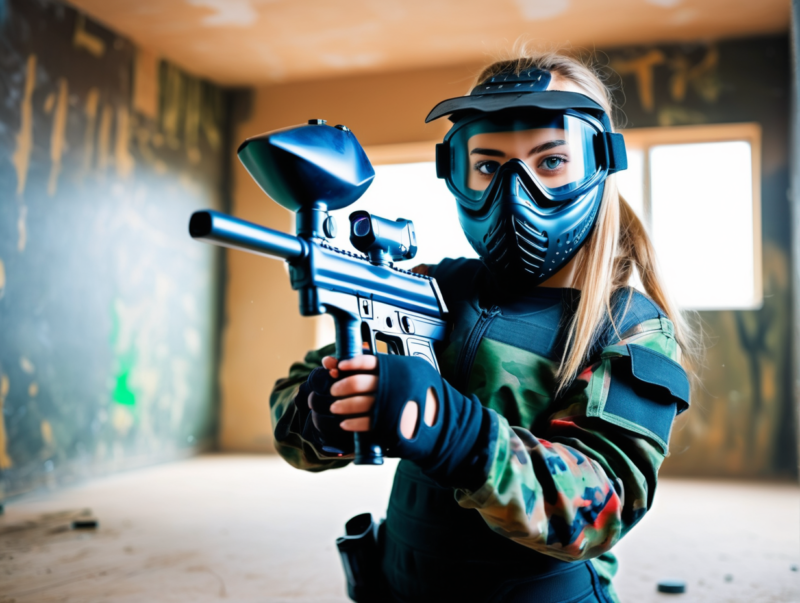
Outdoor fields usually operate seasonally, with weather dictating availability. Many facilities offer rental equipment, an on‑site pro shop, and a range of field configurations that can be swapped between matches.
Indoor Arenas
Inflatable Bunker Centers – The hallmark of indoor paintball is the inflatable obstacle course. Soft, air‑filled structures can be rearranged quickly, allowing operators to craft fresh layouts for each game. The controlled environment ensures consistent lighting and temperature, making indoor venues ideal for year‑round play.
Warehouse‑Style Arenas – Large, empty warehouse spaces can be transformed with walls, barricades, and themed props. The lack of natural light yields an intense, immersive atmosphere, especially when supplemental effects such as smoke machines or strobe lighting are employed.
Multi‑Level Facilities – Some urban centers stack platforms and mezzanines, creating vertical gameplay opportunities. Players can shoot from elevated positions, climb ladders, and coordinate attacks across different floors, adding a three‑dimensional element rarely found outdoors.
Hybrid “Arena‑Park” Complexes – A growing trend combines indoor speedball courts with adjacent outdoor fields, giving participants the flexibility to switch between fast‑paced arena matches and longer, terrain‑heavy games in a single visit.
Indoor venues excel at providing a predictable, weather‑proof setting, which is especially valuable for corporate events, birthday parties, and training sessions. The confined space also amplifies the psychological tension—paint splatters are easily seen, and the proximity of opponents makes every movement critical.
Paintball is more than a simple pastime of firing colored pellets; it is a dynamic sport that blends physical exertion, strategic depth, and social interaction. By adhering to a set of well‑established safety and gameplay rules, participants can enjoy a thrilling yet controlled environment. The wide array of scenarios—from quick elimination bouts in compact arenas to elaborate, story‑driven MilSim operations across sprawling forests—ensures that the game can be tailored to any group’s preferences.
The benefits extend far beyond the field. Regular play improves cardiovascular fitness, sharpens teamwork, and cultivates quick decision‑making, all while delivering a dose of adrenaline that many find addictive. Its diverse player base, ranging from college students to corporate teams and retirees, reflects paintball’s universal appeal.
Whether a group prefers the rugged unpredictability of a woodland field, the tactical corridors of an urban‑styled outdoor course, the fast‑paced precision of an inflatable indoor arena, or the immersive depth of a three‑dimensional warehouse, there is a venue out there that can accommodate the desired experience. As the sport continues to evolve—incorporating new marker technologies, creative scenario design, and increasingly sophisticated safety standards—paintball remains a vibrant, accessible avenue for people to challenge themselves, bond with others, and simply have fun under a spray of bright, harmless color.


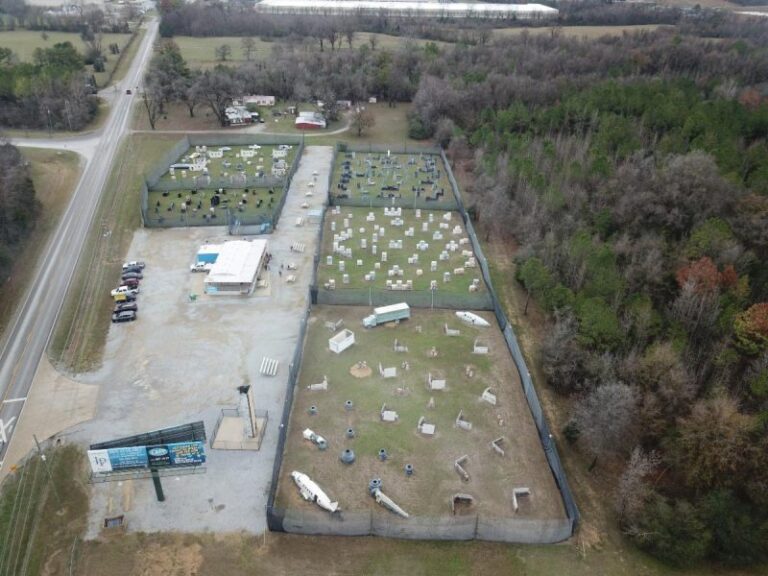
 55 Rosebud Ln, Calera, AL 35040