
 El Monte
 Log in
Log in
Log in

Legacy Paintball & Airsoft Park is located in Morrisonville, NY.
This 40-acre adventure complex blends high-octane action with cutting-edge facilities, offering immersive experiences in paintball, airsoft, and the rising sport of gellyball.
Beyond individual play, Legacy Paintball & Airsoft Park thrives as a community hub. The venue hosts weekly leagues, holiday tournaments, and themed events, fostering camaraderie among competitors and casual players alike. Corporate teams, school groups, and families regularly book exclusive field sessions for team-building or social gatherings. On-site amenities, including picnic areas and concession stands, enhance the day-trip appeal.
 Indoors
Paintball is a fast‑paced, team‑oriented sport in which participants attempt to eliminate opponents by tagging them with spherical capsules filled with a non‑toxic, water‑based dye. These capsules, commonly called “paintballs,” are fired from specially designed markers that resemble pistols or rifles. When a paintball ruptures on contact, a bright splash of color marks the target, signaling a hit. The sport is played on a variety of fields that range from dense forested areas to purpose‑built arenas, and the equipment can be as simple as a basic marker and a handful of protective gear or as elaborate as high‑tech, computer‑controlled load‑out kits. Though its roots trace back to the early 1980s, paintball has evolved into a globally recognized activity that blends athleticism, strategy, and a dash of adrenaline‑fueled excitement.
Although local fields may tweak specific regulations, the core rules of paintball remain consistent worldwide. First and foremost, every player must wear a full‑face mask or visor that meets safety standards; removing protective gear while on the field is strictly prohibited. Markers must be set to a velocity that does not exceed the maximum allowed by the venue—typically around 300 feet per second—to minimize the risk of serious injury.
A player is considered “out” when a paintball breaks cleanly on any part of the body or clothing that is visible to opponents. In certain game formats, a single hit is enough to eliminate a participant, while in others, a “respawn” system allows eliminated players to re‑enter the game after a brief cooldown period. Communication devices such as radios are generally forbidden unless explicitly authorized for specific scenario games.
Boundary lines are clearly marked, and crossing them without permission results in a penalty. Most venues enforce a “no‑shooting” zone around the sidelines, the referee’s area, and any designated safe zones. In addition, players must follow any instructions given by referees or field staff; failure to comply can lead to disqualification. Finally, all participants are expected to respect the field’s property and clean up any spent paintball shells or debris before leaving the site.
Scenario‑based paintball games transform a standard match into an immersive narrative experience. These events often span several hours or even an entire weekend and are built around a storyline—be it a historical battle, a science‑fiction invasion, or a post‑apocalyptic survival challenge.
One popular format is “Capture the Flag,” where each team defends a flag while attempting to seize the opponent’s. Another classic scenario is “Elimination,” a straightforward free‑for‑all where the last player standing wins. More elaborate setups include “MilSim” (military simulation) games that incorporate role‑playing elements such as mission objectives, supply drops, and command hierarchies. In these longer formats, players may receive “load‑out” kits containing specialized markers, additional ammunition, and even simulated medical supplies.
Scenario paintball also encourages creative field design. Organizers may construct bunkers, tunnels, and multi‑level structures, or repurpose existing buildings to serve as urban combat zones. The result is a dynamic environment that challenges participants to think tactically, adapt quickly, and collaborate closely with teammates.
Beyond entertainment, paintball delivers a surprising array of physical, mental, and social benefits. Physically, the sport provides a high‑intensity cardiovascular workout; players sprint, dive, and crouch while navigating uneven terrain, which enhances endurance, agility, and core strength. The rapid decision‑making required on the field sharpens cognitive reflexes and improves hand‑eye coordination.
Mentally, paintball forces participants to evaluate risk, devise strategies, and execute plans under pressure. This problem‑solving component has been linked to improved situational awareness and faster reaction times in high‑stress environments. The collaborative nature of team play builds communication skills, fosters trust, and reinforces leadership qualities.
In a social context, paintball serves as a bonding activity for friends, families, corporate groups, and even educational institutions. Many companies use it as a team‑building exercise, capitalizing on the sport’s ability to reveal individual strengths and highlight the importance of coordinated effort. For youth programs, paintball offers a constructive outlet for energy and a platform for teaching responsibility, sportsmanship, and respect for safety protocols.
The demographic landscape of paintball is remarkably diverse. While the sport originally appealed to a niche group of adrenaline seekers, it now attracts participants ranging from teenagers to retirees. Young adults often view paintball as a social outlet that combines competition with camaraderie, while older players appreciate the low‑impact nature of the activity compared with full‑contact sports.
Corporate teams frequently schedule paintball outings to enhance teamwork and morale, and many military and law‑enforcement units incorporate the sport into tactical training programs because it simulates realistic combat scenarios without lethal risk. Academic institutions have introduced paintball clubs to encourage physical activity and strategic thinking among students.
Inclusivity initiatives have also broadened the player base. Adaptive paintball programs modify equipment and field layouts to accommodate participants with disabilities, ensuring that the sport remains accessible to a wider audience. The result is a vibrant community that includes casual weekend warriors, dedicated league competitors, and professional players who travel to national and international tournaments.
From a scientific standpoint, researchers have examined paintball’s impact on health, cognition, and safety. Studies on aerobic output indicate that a typical 30‑minute match can elevate heart rate to levels comparable with vigorous running, offering a meaningful cardiovascular workout without excessive joint strain. Cognitive research highlights that the rapid decision‑making and spatial navigation required during play stimulate the prefrontal cortex, leading to measurable improvements in executive function over repeated sessions.
Safety experts emphasize that, when proper protective gear is employed, the risk of serious injury is minimal. The majority of reported incidents involve minor bruises or superficial skin abrasions caused by paintball impact. Advances in marker technology, such as regulated velocity controls and electronic safety interlocks, have further reduced accident rates.
Industry analysts note that paintball continues to experience steady growth, driven by expanding indoor facilities, the rise of scenario‑based events, and the integration of digital scoring and tracking systems. Market forecasts predict that the global paintball industry will maintain double‑digit annual growth for the next several years, supported by increasing interest in experiential recreation and the diversification of product lines—from entry‑level marker kits to high‑performance competition equipment.
Paintball fields fall into two primary categories: outdoor arenas that leverage natural landscapes, and indoor complexes that provide controlled environments.
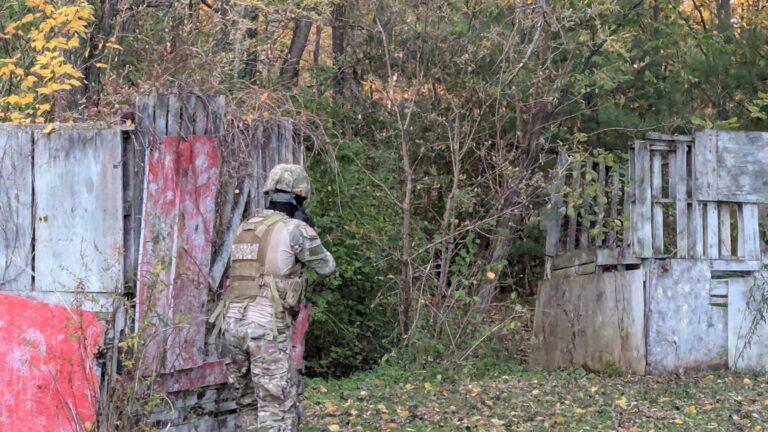
Outdoor venues are typically situated in forests, fields, or reclaimed industrial sites. Their expansive layouts allow for long‑range engagements and varied terrain, including hills, streams, and dense vegetation. The natural setting adds realism to military‑style scenarios and offers participants an opportunity to experience the sport in a setting that mimics real‑world tactical environments. Weather conditions can influence gameplay, making adaptability a key skill for outdoor enthusiasts.
Indoor venues, often housed in large warehouses or converted sports halls, present a compact, climate‑controlled alternative. These arenas rely on artificial obstacles such as inflatable bunkers, modular walls, and multi‑level platforms to create dynamic play zones. Because lighting, temperature, and air quality are regulated, indoor fields provide a consistent experience regardless of season. They are especially popular in urban areas where space for large outdoor fields is limited.
Many operators now offer hybrid facilities that combine indoor arenas for quick, high‑intensity matches with adjacent outdoor fields for extended scenario events. This flexibility enables players to transition seamlessly between fast‑paced skirmishes and immersive, narrative‑driven games.
When choosing a venue, prospective players should consider factors such as field size, obstacle variety, safety record, equipment rental options, and the presence of experienced staff. Visiting a facility’s website or contacting the venue directly can provide insight into the types of games offered, price structures, and any special requirements for first‑time participants.
Paintball has transcended its humble beginnings to become a multifaceted sport that offers physical conditioning, mental sharpening, and social connection. By adhering to a clear set of safety rules, embracing a spectrum of game scenarios, and catering to a broad demographic, paintball continues to attract enthusiasts worldwide. Whether played in a wooded clearing under the open sky or within the bright lights of an indoor arena, the sport delivers an exhilarating blend of strategy, teamwork, and pure, unfiltered fun.


 Clinton County Fairgrounds 84 Fairgrounds Road, Morrisonville, NY