
 El Monte
 Log in
Log in
Log in

Empire Sports Paintball is now located at Ponderosa Speedway in Junction City, KY, having relocated from its original Lawrenceburg home.
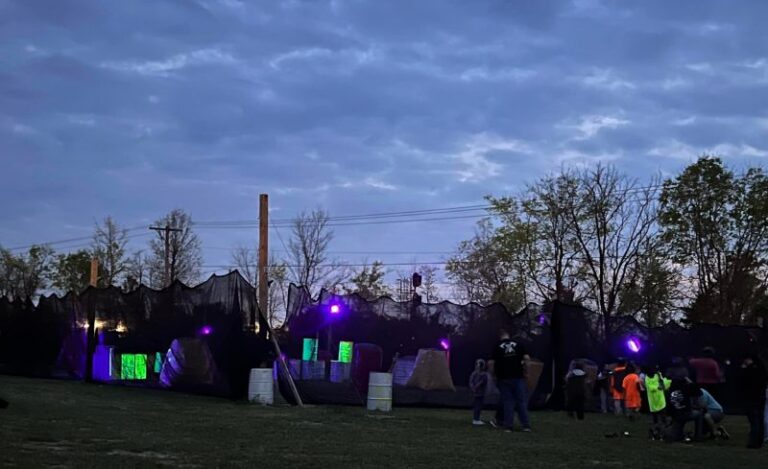
The club offers standard paintball with rental packages (Cronus Tactical markers), low-impact “Splat Attack” for ages 7 and under using spring-loaded markers, and self-equipped player options. They feature outdoor air bunker fields, barrel fortifications, and Kentucky’s first Illuminated Hyper Ball Field (introduced in 2023), with Glow Paintball coming Fall 2025. Equipment upgrades and inflatable jousting are available as add-ons.
Group packages are available for birthdays, corporate events, and team building. The club also offers Mobile Paintball — an all-inclusive service that brings everything to your location. A small pro shop, gift cards, and a welcoming community atmosphere round out the experience. Open Friday through Sunday, with private group bookings available Monday through Thursday.ovised fortifications. There’s plenty of space to run around, ambush the enemy team, and use any tactic imaginable. Give it all your best to win the battle! Empire Sports will be an awesome place to throw a party, hang out with your family and friends, or have a corporate event!
 Outdoors
Paintball is one of the most exciting and thrilling sports in the world, and it’s no wonder that its popularity continues to grow. Paintball in Lexington, KY is no exception. Located in the heart of the Bluegrass State, Lexington is home to a variety of paintball fields and courses for players of all ages and skill levels to enjoy.
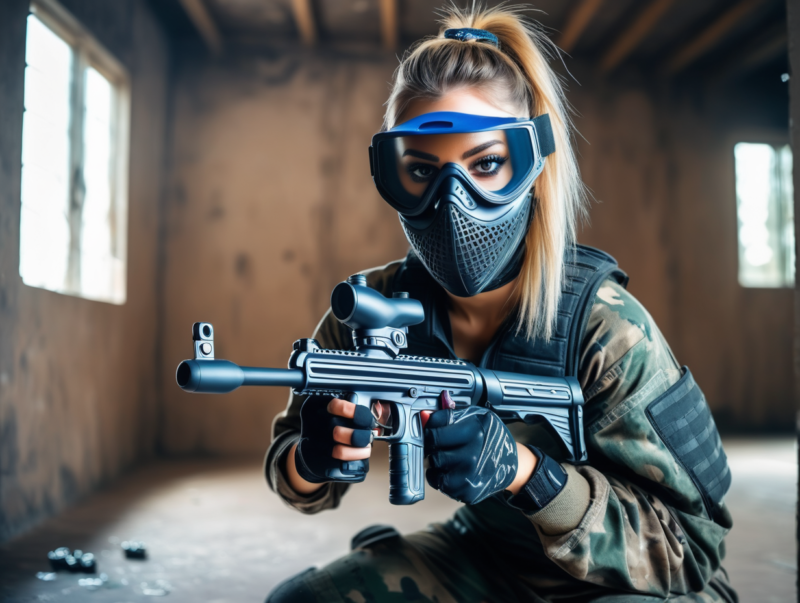
Paintball is a competitive sport that pits two or more teams against each other in a fast‑paced game of strategy, speed, and accuracy. Players are equipped with a marker – a specially designed air‑powered gun – that fires small gelatin capsules filled with non‑toxic, water‑based paint. When a capsule strikes a participant, the paint ruptures, leaving a bright, easily visible mark that signals an “out.” The game can be played in a variety of formats, ranging from short, adrenaline‑filled skirmishes to elaborate, multi‑hour missions that mimic military operations or rescue scenarios. While the core mechanic is simple – hit an opponent and they are eliminated – the sport’s depth comes from the endless possibilities for terrain, objectives, and tactical approaches.
Although each field may have its own specific regulations, a universal set of rules governs the safety and fairness of paintball. All participants must wear approved protective gear, the most important piece being a full‑face mask that meets industry safety standards. Markers are limited to a maximum velocity – usually measured in feet per second – to ensure that the projectile’s impact remains harmless. Players are required to keep their markers on “safe” mode when not actively engaged in play and must never point a marker at another person without the intention of shooting. Once a player is hit, the standard protocol calls for immediate removal from the field and a brief waiting period before re‑entering, often referred to as “reset time.” In many formats, a player may re‑join after a set interval, while in elimination games the player stays out until the round ends. Communication devices such as radios are allowed only in specific game types, and any form of cheating – from tampering with markers to deliberately removing a mask – results in immediate disqualification.
Scenarios are the heart of paintball’s narrative appeal. They transform a simple field into a living, breathing story where each team assumes a role with a clear mission. Classic scenarios include “Capture the Flag,” where opposing teams fight to retrieve the enemy’s banner and bring it back to their base, and “Team Deathmatch,” a pure elimination format focused on pure firepower. More elaborate setups, often called “mil-sim” (military simulation), assign players specific ranks, weapons, and objectives such as hostage rescue, bomb defusal, or territory control. These longer games can span several hours and use a combination of indoor tunnels, outdoor forests, and constructed bunkers to create realistic environments. Scenario design encourages teamwork, communication, and strategic planning, allowing players to experience a sense of immersion comparable to role‑playing games or tactical simulations.
Beyond pure entertainment, paintball offers several tangible benefits. Physically, the sport provides a high‑intensity cardiovascular workout, requiring sprinting, crawling, and rapid changes of direction. The constant need to adjust stance and aim also improves core strength, balance, and hand‑eye coordination. Mentally, paintball sharpens decision‑making under pressure; players must assess threats, choose cover, and allocate resources in real time. The collaborative nature of team‑based formats strengthens communication skills, fosters trust, and builds leadership qualities. Many corporate training programs incorporate paintball as a team‑building exercise, using the game’s challenges to illustrate concepts such as delegation, risk assessment, and resilience. Additionally, the sport’s emphasis on safety protocols teaches participants responsibility and respect for personal protective equipment.
Paintball attracts a remarkably diverse demographic. Teenagers and college students often discover the sport through school clubs or local tournaments, drawn by the adrenaline rush and social atmosphere. Adults ranging from young professionals to retirees participate for fitness, stress relief, or the camaraderie of regular league play. Military veterans and law‑enforcement personnel frequently use paintball to hone tactical skills in a low‑risk environment, while families enjoy “kid‑friendly” fields that feature reduced marker speeds and simplified rules. In recent years, the rise of women‑only leagues and adaptive programs has broadened participation, ensuring that individuals with varying physical abilities and backgrounds can experience the game.
Research on paintball is limited but generally positive. Sports medicine specialists note that the sport’s injury rate is low compared to contact sports such as football or rugby, especially when proper protective gear is used. Studies on the psychological impact indicate that the controlled stress of competitive play can improve coping mechanisms and reduce anxiety, provided that participants feel safe and the environment promotes sportsmanship. Industry experts emphasize the importance of maintaining rigorous safety standards, continued development of biodegradable paint, and the adoption of marker technologies that lower acoustic and kinetic footprints. They also highlight the sustainability trend, with many fields transitioning to solar‑powered bunkers and recycling paint‑ball shells to reduce environmental impact.
Paintball fields are available worldwide, ranging from sprawling outdoor complexes to compact indoor arenas. Outdoor venues typically take advantage of natural terrain such as forests, hills, and abandoned industrial sites, offering a variety of cover and long‑range engagement zones. These fields often feature multiple game modes and can host large‑scale events with hundreds of participants. Indoor locations, commonly housed in repurposed warehouses or dedicated sports centers, provide a controlled environment that is less dependent on weather conditions. Indoor setups excel at close‑quarters combat, with narrow lanes, stacked obstacles, and high‑intensity action. Many facilities combine both elements, offering “hybrid” arenas where indoor tunnels lead into outdoor clearing zones, delivering a seamless transition between environments. Choosing a venue depends on the desired game style, group size, and logistical considerations such as travel distance and available amenities.
Paintball continues to evolve as a sport, a training tool, and a social outlet. Its blend of physical exertion, strategic depth, and teamwork makes it appealing to a wide audience, while stringent safety standards and ongoing research ensure that the experience remains both exciting and responsibly managed. Whether a novice stepping onto the field for the first time or a seasoned veteran planning an intricate scenario, paintball offers a dynamic playground where skill, imagination, and collaboration intersect.


 1052 Eagle Lake Dr, Lawrenceburg, KY 40342