Log in
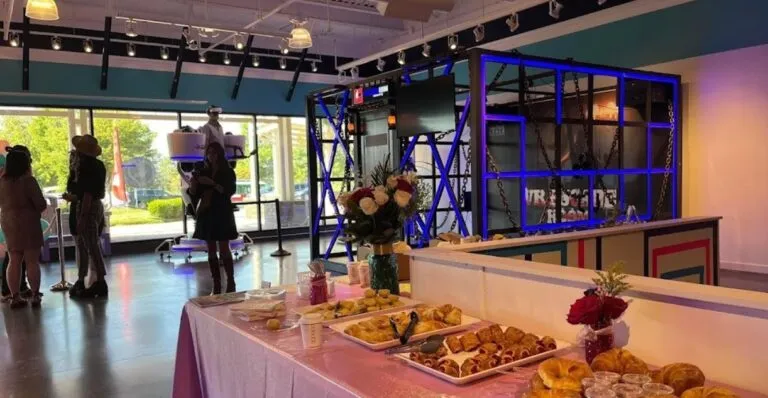
The Illusion Indoor Selfie Studio & VRcade is located in Lexington, KY.
The Illusion Selfie Studio & VRcade in Lexington, KY is a unique destination that offers a one-of-a-kind experience for all ages. Visitors can take selfies in a variety of immersive and interactive themed rooms, such as a jungle or the moon, or step into virtual reality and explore different worlds and games. The studio also offers party packages and is available for private events. The Illusion Selfie Studio & VRcade is a fun and entertaining way to capture memories and escape reality.
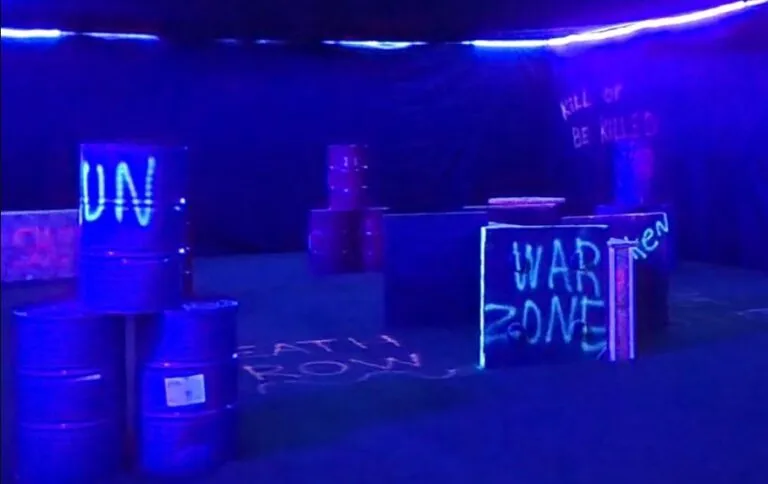
IndoorsMain Event Indoor Laser Tag arena is located in Lexington, KY.
Main Event is a huge entertainment hub where you can spend your weekend or throw a birthday party. These laser-tag battles take place in a multi-story arena with fantasy-like decorations, neon lights, and laborious obstacles. Climb up the towers and rain fire on unsuspecting enemies.
There is also a large recreation area with snacks and drinks to chill after the game. There’s also bowling, pool, VR, mini-golf, a story room, and a ropes course – all available at one single place!
IndoorsBattle Axes is located in Lexington, KY.
Battle Axes Entertainment Center in Lexington, KY, offers a wide array of entertainment options. Visitors can discover and experience activities such as high-speed electric go-kart racing (up to 40mph), indoor racing zip lines, axe throwing, bowling, Footbowl, a Rage Room, an Orbeez Arena, VR experiences, and crazy golf.
For relaxation, the facility offers a variety of foods, including pizza, along with a fully stocked bar featuring over 100 varieties of beers, ciders, and seltzers. Kids can enjoy giant inflatables, a toddler area, an arcade, cornhole, and more.
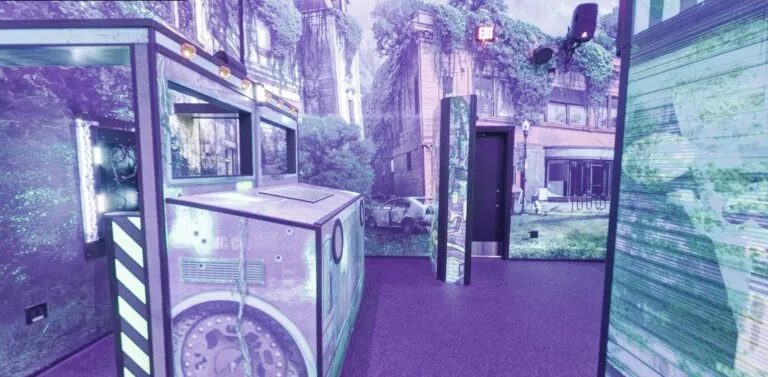
Virtual Reality (VR): Guests can choose from a selection of games or any of the three escape rooms in the four-person Hologate VR Arena.
Gel Ball: Gel Ball is described as an exciting, low-impact shooting game that utilizes water-based gel balls. It’s designed to be easy to shoot and can provide hours of entertainment. This activity is intended for individuals ages 8 and up.
IndoorsMalibu Jack’s Ashland Indoor Center is located in Ashland, KY.
Malibu Jack’s Ashland is a family entertainment center located in Ashland, KY. The center offers a variety of indoor and outdoor activities including go-karts, laser tag, mini-golf, bumper boats, arcade games, virtual reality, and more. It is a popular destination for birthday parties, group events, and family outings. There is also a cafe on-site serving food and drinks. Malibu Jack’s Ashland is open seven days a week and offers various specials and promotions throughout the year.
IndoorsMalibu Jack’s Lexington Indoor Center is located in Lexington, KY.
Malibu Jack’s is a great family entertainment center located in Lexington, KY. It offers a variety of activities for all ages, including go-kart racing, laser tag, mini golf, and an arcade with over 100 games. There is also a restaurant and bar on-site, serving up a delicious menu and specialty cocktails. Birthday parties and group events can also be booked at Malibu Jack’s. The center is open seven days a week and offers affordable pricing options for both individual and group experiences.
Indoors
Virtual Reality (VR) has become increasingly popular in recent years, and Lexington, KY is no exception. With the growing demand for VR experiences, the city has seen the emergence of VR arenas, where players can dive into immersive, virtual worlds.
At VR arenas in Lexington, KY, visitors have the opportunity to experience a variety of virtual reality games and experiences. From racing and shooting games to virtual roller coasters and room scale experiences, there’s something for everyone. Some arenas also offer multi-player games, allowing visitors to play together.

A free‑roam virtual‑reality arena is a purpose‑built space where participants can move unrestricted while wearing a head‑mounted display (HMD). Unlike seated or stationary VR setups, the arena eliminates physical tethers and limited play areas by integrating motion‑capture sensors, safety nets, and sometimes floor‑mounted tracking rigs. The result is an immersive playground that mirrors the real‑world dimensions of the room: users can walk, duck, jump, and even crouch, and their movements are reproduced in the virtual environment in real time.
The technology behind a free‑roam arena typically combines outside‑in tracking (infrared cameras or lidar) with inside‑out tracking (on‑board cameras) to achieve sub‑centimeter accuracy. The space is often padded or lined with soft flooring to protect both equipment and participants. Because the arena is a self‑contained environment, it can host multiple users simultaneously, each experiencing a shared virtual world while remaining physically safe.
The flexibility of an unrestricted play area opens the door to a wide variety of scenarios, each leveraging the sense of presence that only free‑roam can deliver.
Adventure Quest – A sprawling fantasy realm where teams hunt for magical relics, solve riddles, and battle animated creatures. The ability to physically explore caves, climb cliffs, and dodge virtual projectiles makes the experience feel like a live‑action role‑playing game.
Spacewalk Simulations – Participants float through a zero‑gravity station, repairing satellites or navigating asteroid fields. The arena’s 360° tracking translates subtle arm movements into delicate tool handling, providing a realistic astronaut training feel.
Sports and E‑Sports – From futuristic laser tag to VR versions of soccer, basketball, or even quidditch, the arena translates physical sprinting and jumping into high‑octane competition. Spectators can watch live feeds on surrounding monitors, turning the event into a miniature stadium experience.
Educational Expeditions – History classes can stroll through a reconstructed ancient city, while biology lessons might involve “walking” through a magnified cell. The kinesthetic component improves retention, as learners associate physical motion with conceptual content.
Creative Workshops – Artists can paint giant 3D canvases with brush‑like controllers, architects can walk through virtual building models, and musicians can conduct holographic orchestras. The tactile feedback of moving through space adds depth to creative expression.
Each scenario exploits the core advantage of free‑roam: the alignment of real‑world body language with virtual action, which amplifies immersion far beyond what a seated headset can provide.
Free‑roam VR attracts a surprisingly diverse audience, reflecting the technology’s adaptability.
Gamers and Enthusiasts – Early adopters of VR are naturally drawn to the heightened sense of agency a free‑roam arena delivers. For them, the arena is a premium playground where the limits of conventional gaming dissolve.
Families and Children – Parents see the arena as a safe, supervised space where kids can expend energy while engaging with technology. The physicality of the experience also appeals to children who may be less inclined toward passive screen time.
Corporate Teams – Companies use the arena for team‑building exercises, problem‑solving challenges, and leadership training. The collaborative nature of many free‑roam games fosters communication and trust among participants.
Educators and Researchers – Schools, universities, and research labs employ the arena for experiments in human‑computer interaction, ergonomics, and behavioral science. The controlled yet open environment is ideal for studying spatial cognition and motion dynamics.
Event Organizers – From birthday parties to large‑scale festivals, event planners incorporate free‑roam VR as a headline attraction that can accommodate groups of varying sizes and skill levels.
Overall, the arena’s appeal lies in its ability to blend physical activity with digital interactivity, satisfying the appetite of anyone who wants a more embodied virtual experience.
When designing an arena for younger users, safety and accessibility become paramount. Operators typically implement the following measures:
Soft‑Flooring and Padding – Foam mats, rubberized flooring, and cushioned walls absorb impacts from accidental trips or falls. The materials are non‑slip and easy to clean, keeping the space hygienic for frequent use.
Age‑Appropriate Content – Game libraries are filtered to provide age‑rated experiences. Bright, colorful worlds with simple objectives encourage exploration without overwhelming children with complex controls.
Guided Sessions – Trained staff walk participants through the basics of headset handling, controller usage, and spatial awareness before the session begins. This pre‑brief reduces the learning curve and builds confidence.
Time Limits and Rotation – Sessions are usually limited to 10‑15 minutes per child, with a rotation system that ensures everyone gets a turn while maintaining a manageable flow of participants.
Parental Supervision – Many arenas feature observation windows or live video feeds, allowing parents to watch their children’s progress in real time.
The result is a space where children can channel natural curiosity into a structured, immersive adventure. Studies have shown that such environments support the development of spatial reasoning, hand‑eye coordination, and collaborative problem‑solving—skills that translate well into academic and real‑world contexts.
Because the arena can host multiple users at once, it functions as a versatile venue for a range of celebrations and gatherings.
A birthday party in a free‑roam arena transforms the typical cake‑and‑candles routine into an interactive quest. Children can be divided into teams that compete to complete a themed mission—rescuing a lost robot, escaping a haunted mansion, or racing through a candy‑land obstacle course. The experience culminates with a group photo taken inside the VR world, projected onto a screen for all guests to see.
Graduation ceremonies often lack novelty, especially for younger cohorts. Incorporating a free‑roam segment allows graduates to step into a customized virtual venue—perhaps a reenactment of their campus, a futuristic cityscape, or a symbolic “bridge” representing the transition to adulthood. The shared experience can be recorded and edited into a commemorative video, providing a memorable keepsake that blends tradition with technology.
Corporate events benefit from the arena’s capacity to blend entertainment with measurable outcomes. Companies can design custom scenarios that mirror business challenges, such as a strategic “resource‑allocation” simulation or a “panic‑room” problem‑solving drill. Performance data—time to complete tasks, communication patterns, error rates—can be collected (with consent) and later analyzed for insights into team dynamics. For purely celebratory gatherings, immersive dance parties, virtual fireworks displays, and collaborative art installations provide a novel backdrop that sparks conversation and networking.
In each of these contexts, the free‑roam arena serves as both a stage and a catalyst, turning ordinary gatherings into immersive experiences that linger in participants’ memories.
The scientific community has taken a keen interest in free‑roam VR as a research platform, while industry experts see it as a growth engine for the broader VR market.
Neuroscientists and psychologists appreciate the arena’s ability to simulate real‑world locomotion without the logistical constraints of large physical spaces. Studies on spatial navigation, vestibular perception, and embodiment often require participants to move freely; free‑roam VR provides a controlled environment where variables such as lighting, terrain, and obstacles can be precisely altered.
Human‑factors engineers also leverage the arena to test ergonomic designs of wearable devices, evaluating comfort, fatigue, and motion sickness across extended sessions. The data gathered informs the next generation of lighter, more balanced headsets and haptic accessories.
Market analysts project that free‑roam VR will account for a significant portion of the immersive entertainment sector within the next five years. As hardware costs decline and tracking systems become more modular, smaller venues—shopping malls, cinema complexes, and even portable pop‑up installations—can adopt the technology. This democratization promises to expand the user base beyond early adopters to mainstream consumers.
Furthermore, collaborations between content creators and arena operators are accelerating. Studios are developing “arena‑first” titles that exploit multi‑user interaction and physical space, while software platforms are offering on‑demand scenario customization for events, education, and therapy.
Overall, both scientists and industry leaders concur that free‑roam VR represents a convergence point where entertainment, education, and empirical research intersect, each reinforcing the other’s advancement.
Free‑roam VR arenas stand at the frontier of immersive technology, redefining how people interact with virtual worlds by reinstating the body’s natural movements. From adventurous quests and educational journeys to celebrations and corporate challenges, the arena’s versatility caters to a broad spectrum of users. Safety‑focused designs make it accessible for children, while data‑rich environments attract researchers probing the limits of human perception. As hardware becomes more affordable and content continues to diversify, free‑roam VR is poised to transition from a niche novelty to a mainstream venue for entertainment, learning, and collaboration. The future, it seems, is not just virtual—it is a space where the virtual and the physical roam together, unrestricted.