El Monte
 Log in
Log in
Log in

Hogan’s Alley at The Ridge is located within the Powder Ridge Mountain Park & Resort in Middlefield, Connecticut.
The facility offers five outdoor paintball courses and three distinct play styles: recreational paintball with low-impact .50 caliber balls for beginners and rentals, tournament paintball with full-size .68 caliber balls for experienced players with their own gear, and a non-contact shooting gallery with animatronic targets. Open play passes start at $25 for self-equipped players, while rental packages including marker, mask, air, and 500 paintballs start at $55. The facility is Connecticut’s only full-time year-round paintball operation with over twenty years of experience.
Birthday party packages for 10 guests include 2 hours of field play, rental gear, a private party room, pizza, and ice cream cake starting at $545. The resort setting adds an award-winning restaurant and tavern, camping, live music, and other family activities. The facility also hosts corporate team building, bachelor parties, school events, and fundraisers. A 2025 season pass is available for $275, offering unlimited admission and air for the year.
 Outdoors
Extreme Paintball is located in the Waterbury area of Connecticut, off Boyden Street, and has been operating since 1992 on over 50 acres of land. The facility features four wooded fields, a Sup-Air field, and a speedball field, offering a mix of natural terrain and structured bunker play. Players can choose from Open Play sessions, private party packages with a dedicated referee and reserved field, or birthday packages designed for kids and teens with low-impact gun options. The staff provides equipment rental, safety guidance, and game management, making it accessible for both first-timers and experienced players.
Beyond the games, the club offers covered picnic tables for each group, a lounge area, and ample parking. Additional services include jumpsuit rentals, paint grenades, anti-fog wipes, and extra paintballs available for purchase. The facility is cash-free and requires reservations for all visits. It is well-suited for birthday parties, corporate team-building events, bachelor parties, school outings, and family reunions, with the staff handling all equipment and logistics so guests can focus on playing.s that operations and features are up-to-date and of a high quality for their customers.
Outdoors
Paintball in New Haven, Connecticut is a thrilling and exciting game that can be enjoyed by players of all ages. With a wide variety of indoor and outdoor Paintball fields and arenas, Paintball is the perfect activity to bring family, friends, or colleagues together. Whether it is for a birthday party, corporate event, or simply to gather your crew for some good old-fashioned fun, Paintball in New Haven, CT is a great option.
Paintball is especially popular among teenagers and adults, offering a great way to relieve stress and bond with their peers. With the various paintball fields and arenas located throughout New Haven, players will be sure to find the best location for them. What’s more, Paintball is not an expensive game and everyone can afford the costs to set up and play. Prices for paintball usually involve a fee for the venue, plus the cost of the paintball equipment, which can be rented or bought.
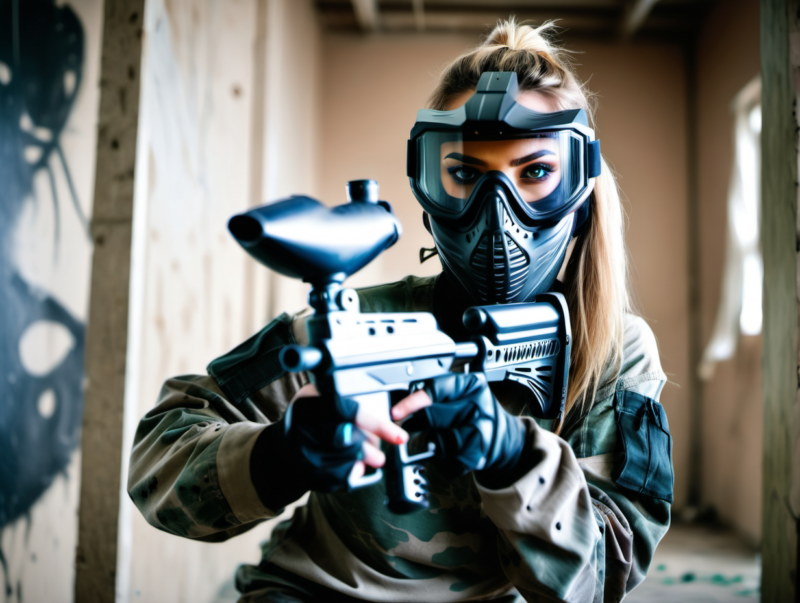
Paintball is a fast‑paced, team‑oriented sport in which participants fire gelatin capsules filled with non‑toxic, water‑based dye from specially designed markers, commonly called paintball guns. The capsules, known as paintballs, burst on impact, leaving a vivid mark that signals a hit. The game can be played in a wide variety of settings—from dense forested fields to compact indoor arenas—allowing players to experience both tactical combat simulations and pure, adrenaline‑driven fun. Although the equipment looks futuristic, the fundamental premise is simple: stay alive while trying to eliminate opponents by tagging them with paint.
The sport originated in the 1970s when a group of friends in New Hampshire, USA, used paint‑filled gelatin shells to settle a friendly wager. Over the ensuing decades, paintball evolved into a global phenomenon, spawning organized leagues, professional tournaments, and a thriving recreational industry. Modern paintball markers are highly engineered, offering adjustable firing rates, interchangeable barrels, and electronic triggers, yet the core experience remains accessible to newcomers and seasoned veterans alike.
A set of universally accepted rules creates a safe and fair environment for all participants. While specific tournaments may introduce variations, the following guidelines form the backbone of most paintball events:
Safety Gear Is Mandatory – Every player must wear a full‑face mask certified for paintball impact, along with appropriate padding such as chest protectors, gloves, and sturdy footwear. Failure to wear proper protection results in immediate disqualification.
Markers Must Be Regulated – Most leagues cap the muzzle velocity of paintball markers at 300 feet per second (fps) to prevent injuries. Players often use chronographs to verify compliance before stepping onto the field.
Paintball Hits Are Final – A paintball that breaks and leaves a visible mark on a player’s clothing, gear, or mask is considered a hit. The player must raise their hand, call “hit,” and exit the playing area promptly. Some formats allow a “soft‑hit” rule, where a hit on the mask does not count, but this must be declared beforehand.
Elimination and Respawn – In elimination game types, once a player is hit, they remain out until the round ends. Other formats, such as “regeneration” or “stock,” permit players to respawn at designated stations after a brief cooldown period.
No Physical Contact – Paintball is a non‑contact sport. Pushing, shoving, or tackling other players is prohibited and can result in penalties. The emphasis is on strategic movement and marksmanship, not brute force.
Field Boundaries Are Enforced – Players must stay within the defined playing area. Crossing a boundary leads to an automatic “out” or a penalty, depending on the ruleset.
Sportsmanship Is Expected – Unsportsmanlike conduct, including verbal abuse, cheating, or tampering with equipment, is strictly prohibited. Organizers often award points for fair play, reinforcing a positive community culture.
Adhering to these rules safeguards participants, maintains competitive integrity, and ensures that the excitement of the game remains rooted in skillful tactics rather than reckless behavior.
Paintball’s versatility stems from its ability to accommodate a multitude of scenarios, each designed to test different aspects of teamwork, strategy, and individual skill. Below are some of the most popular formats:
Two teams defend a flag placed within their own base while simultaneously attempting to seize the opponent’s flag and return it to their home territory. Success hinges on coordinated attacks, disciplined defense, and quick decision‑making under pressure.
A central “hill” area is marked on the field, and teams vie to hold it for the longest cumulative time. Players must balance offensive pushes with defensive holds, creating a constantly shifting battlefield that rewards adaptability.
These immersive experiences replicate historical battles, futuristic skirmishes, or fictional storylines. Players may assume specific roles (sniper, medic, squad leader) and follow narrative objectives, often spanning several hours and involving elaborate props, bunkers, and live actors.
The classic “last man standing” format where each hit eliminates a player permanently for the duration of the round. This style emphasizes individual marksmanship, stealth, and strategic positioning.
One team attacks a fortified position while the other defends. Attackers must breach obstacles and neutralize defenders, while defenders focus on fortification, choke points, and controlled fire.
Each scenario encourages a different blend of tactics—ranging from aggressive rushes to methodical, slow‑burn advances—making paintball a sport that can continuously challenge even veteran players.
Beyond the obvious thrill of fast‑paced competition, paintball offers a surprisingly broad spectrum of benefits that extend into physical, mental, and social realms.
Running, sprinting, crawling, and ducking across varied terrain provide an excellent cardiovascular workout. The sport also engages core muscles, improves hand‑eye coordination, and develops fine motor skills through precise trigger control.
Because most game types demand coordinated effort, paintball is frequently used by corporations, schools, and military units as a team‑building exercise. Participants learn to communicate clearly, delegate tasks, and trust one another under high‑pressure conditions—skills that translate directly to the workplace and other collaborative environments.
Effective paintball play involves planning, real‑time analysis, and adaptive tactics. Players must assess terrain, predict opponent movements, and allocate resources (e.g., ammunition, time) wisely. This mental exercise sharpens decision‑making abilities and encourages creative problem‑solving.
The physical exertion combined with the focus required to stay engaged diverts attention from everyday worries. The controlled release of adrenaline produces endorphins, leaving players with a lasting sense of satisfaction and reduced stress levels.
Whether joining a local league, participating in weekend “pop‑up” events, or attending large‑scale tournaments, paintball offers a vibrant community where friendships are forged through shared experiences and mutual respect.
Collectively, these advantages make paintball more than a leisure activity—it is a multifaceted tool for personal development and group cohesion.
Paintball’s appeal cuts across age, gender, and cultural lines, attracting a diverse audience:
The sport’s inclusivity is reinforced by adaptive equipment, such as lighter markers for younger players and specialized gear for individuals with physical limitations, ensuring that anyone with a desire to play can find a suitable entry point.
Researchers and industry analysts have examined paintball from both safety and market perspectives, offering nuanced insights into its impact and trajectory.
Biomedical studies have evaluated the risk of ocular and dermal injuries associated with paintball. Findings confirm that when players wear certified masks and adhere to velocity limits—typically 300 fps—the incidence of serious injuries drops dramatically. The non‑toxic, water‑based composition of modern paintballs minimizes allergic reactions and skin irritation, further supporting the sport’s safety profile.
Social psychologists have explored paintball’s role in fostering teamwork and resilience. Controlled competitive environments have been shown to enhance group cohesion, improve communication skills, and reduce anxiety levels among participants. The “flow state”—a deep immersion where skill matches challenge—commonly reported by players aligns with established theories of optimal performance and mental well‑being.
Industry analysts note that the global paintball market has demonstrated steady growth, driven by expanding indoor venues, advances in marker technology, and the rise of e‑sports‑style tournaments. Investment in high‑definition arena designs, augmented reality overlays, and integrated scoring systems is reshaping the player experience, attracting tech‑savvy audiences and opening new revenue streams.
Environmental scientists have scrutinized the ecological footprint of paintball fields. While traditional paintballs use gelatin shells that biodegrade relatively quickly, the accumulation of spent paintballs can affect soil composition. Sustainable manufacturers are responding with biodegradable additives and recyclable packaging, aiming to reduce long‑term environmental impact.
Overall, the consensus among experts is that paintball is a relatively safe, socially beneficial, and economically viable activity, provided that regulatory standards and sustainability initiatives continue to evolve alongside the sport’s popularity.
Paintball enthusiasts have a wide array of venues to choose from, each offering distinct atmospheres and tactical possibilities.
Natural terrain fields are often set in forests, abandoned farms, or military training grounds. These venues capitalize on uneven ground, dense foliage, and expansive open spaces, creating realistic “military simulation” environments. Outdoor fields typically feature:
The open nature of outdoor fields encourages long‑range tactics and extensive movement, appealing to players who relish a more rugged, authentic experience.
Indoor paintball venues—often called “speedball” arenas—offer a compact, high‑intensity environment optimized for fast gameplay. Key characteristics include:
Indoor arenas are ideal for beginners, league play, and tournament organizers seeking consistent conditions and quick turnover between matches.
Some operators blend indoor and outdoor elements, offering “arena‑plus‑forest” complexes where players can transition between open fields and enclosed sections. Specialty venues may also incorporate theme‑based set pieces—post‑apocalyptic ruins, fantasy castles, or sci‑fi corridors—providing unique storytelling opportunities.
When selecting a venue, players should consider factors such as proximity, field size, scenario options, safety protocols, and equipment rental policies. Many fields also provide coaching sessions for newcomers, allowing first‑timers to learn marker handling, movement fundamentals, and basic tactics before jumping into a full‑scale match.
Paintball stands at the intersection of sport, strategy, and social interaction. From its simple premise—tagging opponents with harmless dye—to its sophisticated competitive scene, the activity offers something for everyone. Whether a teenager seeking an adrenaline rush, a corporation looking to strengthen teamwork, or a researcher examining human behavior under pressure, paintball delivers a dynamic, safe, and endlessly adaptable experience. As technology advances and sustainability initiatives take hold, the future of paintball promises even richer gameplay, broader accessibility, and continued growth across the globe.


 99 Powder Hill rd Middlefield, CT 06455