
 El Monte
 Log in
Log in
Log in

Extreme Sports Complex is located in Kapolei, Hawaii, on the island of Oahu. This family-run outdoor facility offers three distinct playing fields for paintball, airsoft, and GelStrike (gelly ball), catering to everyone from first-time players to tournament-level speedball enthusiasts. Full rental equipment is available on-site, and the fields are designed for scenario games, big games, and competitive play.
The complex also hosts private events including birthday parties, corporate team-building sessions, and group outings, with a lounge area and dressing rooms available for guest comfort. The staff are experienced players who prioritize safety and fair play, creating a welcoming environment that has kept local players returning since 2011.
 Outdoors
Airsoft is a military simulation sport that has become popular in Honolulu, HI. It is an exciting and energetic sport where players participate in mock combat with authentic military-style weapons and tactics.
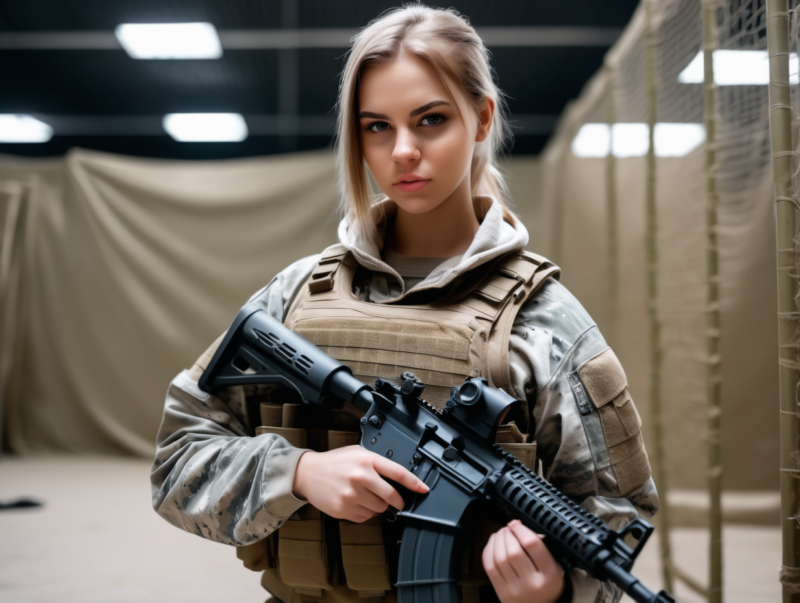
Airsoft is a fast‑growing recreational activity that pits participants against one another in simulated combat using replica firearms that fire lightweight plastic BBs. Unlike paintball, the projectiles are virtually invisible, and the guns are often modeled after real‑world military, law‑enforcement, and civilian weapons. The sport is built around three core pillars: realism, teamwork and strategy, and a wide variety of game modes. Together these elements create an immersive experience that appeals to hobbyists, tactical enthusiasts, and anyone looking for an energetic outdoor pastime.
The realism of airsoft stems from the meticulous attention paid to the design of the guns, gear, and battlefield environment. Manufacturers reproduce the external appearance, weight distribution, and recoil patterns of authentic firearms, which allows players to practice handling, aiming, and movement in a safe, low‑risk setting. This realism is not limited to hardware; many fields incorporate realistic terrain, cover, and objective‑based scenarios that mirror military or law‑enforcement operations.
Teamwork and strategy are equally essential. A typical match requires squads to communicate, assign roles, and execute coordinated maneuvers such as flanking, suppressing fire, and controlled advances. The emphasis on planning and cooperation makes airsoft an excellent training ground for leadership, decision‑making under pressure, and collective problem solving.
Variety of game modes keeps the sport fresh and inclusive. From classic “team deathmatch” and “capture the flag” to more elaborate MilSim (military simulation) scenarios—such as hostage rescue, urban clearing, and long‑range reconnaissance—players can choose the style that matches their skill level and interests. The constant evolution of scenarios encourages creativity and ensures that even seasoned participants encounter new tactical challenges.
Customization is another hallmark of the hobby. Airsoft guns are highly modular; operators can swap barrels, hop‑up units, internal gearboxes, and external accessories like rails, sights, and grips. This level of personalization allows players to fine‑tune performance, ergonomics, and aesthetics to suit their individual preferences and the specific demands of a given game.
Finally, the community surrounding airsoft is vibrant and supportive. Online forums, local clubs, and national associations foster knowledge sharing, organize events, and advocate for safety standards. The camaraderie that develops on the field often extends beyond the game, forming lasting friendships and networks that span regions and even continents.
Entering the world of airsoft requires more than just a replica gun; personal protection and functional clothing are vital to enjoy the sport safely and comfortably. New players should prioritize the following items:
The most critical piece of equipment is a pair of rated ballistic or polycarbonate safety glasses. The high velocity of BBs—typically 300–400 feet per second—can cause serious eye injury. Full‑frame goggles that seal around the eyes are preferred, especially in indoor or close‑quarter environments.
Tactical gloves protect the hands from impacts, BB burns, and abrasions while providing a firm grip on the weapon. Reinforced knuckles and finger dexterity are useful when reloading, handling obstacles, or navigating rough terrain.
Footwear must support rapid movement over uneven ground, mud, and obstacles. Combat‑style boots with ankle support, durable soles, and quick‑dry materials reduce fatigue and lower the risk of sprains or foot injuries.
Crouching, prone shooting, and climbing often place stress on the joints. Soft‑foam or hard‑shell pads protect against scrapes, bruises, and impact from falls or sudden stops.
While not mandatory for every scenario, helmets add a layer of head protection and provide a mounting platform for accessories such as lights or cameras. Lower face shields or balaclavas can prevent BBs from striking the nose, mouth, and chin, which are particularly vulnerable.
In addition to protective gear, players should consider a breathable tactical shirt and cargo pants with ample pockets for magazines, tools, and hydration packs. Dressing in layers allows quick adaptation to changing weather conditions, while camouflage patterns help blend into the chosen field.
Airsoft fields operate under a set of universally accepted rules designed to keep participants safe and the experience enjoyable for everyone.
Safety First – The cornerstone of any match is strict adherence to safety protocols. All guns must be set to a safe firing mode (often a “green” or “yellow” light indicating the weapon is safe). Players are required to keep their weapons pointed downrange or at a safe angle whenever they are not actively engaged in a firefight. Mandatory use of eye protection is enforced at the entrance of every field, and any breach can result in immediate removal from the game.
The Honour System – Airsoft relies heavily on player honesty because there is no electronic verification of hits. When a participant feels a BB strike a sensitive area—usually the torso, head, or limbs—they must call themselves “hit,” announce it loudly, and raise their hands. The honour system also governs reloading, ammo counts, and the use of “no‑shoot zones” such as medical tents or spectator areas.
Respect – Mutual respect among players, referees, and field staff maintains a positive atmosphere. This includes respecting the rules of the specific scenario, refraining from aggressive language or gestures, and treating opponents as teammates in a shared adventure rather than adversaries. Respect also extends to the environment: littering, damaging natural features, or leaving behind spent BBs is discouraged and may incur penalties.
Violations of these core principles can lead to warnings, temporary bans, or permanent exclusion from fields. By internalizing safety, honesty, and respect, newcomers integrate smoothly into the community and set the tone for future matches.
Airsoft firearms fall into three primary powerplant categories, each with distinct characteristics, maintenance requirements, and performance profiles.
AEGs dominate the market thanks to their reliability, rate of fire, and ease of use. Powered by rechargeable lithium‑ion or NiMH batteries, these guns employ an electronic gearbox that drives a motor, a piston, and a spring to compress air and propel BBs. AEGs can function in semi‑automatic, burst, or fully automatic modes, making them versatile for both casual and MilSim scenarios. Their modularity allows owners to upgrade internal components such as upgraded motors, hardened gears, and adjustable hop‑up units to fine‑tune velocity and accuracy.
Gas‑powered guns use compressed propellants—typically green gas (a mixture of propane and silicone oil) or CO₂—to drive a piston. These weapons excel in delivering realistic blowback action, where the slide or bolt physically recoils with each shot, mimicking real firearms. Gas guns are popular for pistols and sniper rifles because they can achieve high muzzle velocities and tighter shot groups. However, they are more temperature‑sensitive; cold weather can reduce gas pressure and affect performance, and they require regular lubrication to prevent wear.
Spring guns are the simplest and most affordable entry point. Each shot requires the user to manually compress a spring by pulling back a bolt or cocking the rifle. Once released, the spring pushes air through the barrel to launch the BB. While they lack the rapid fire of AEGs and gas guns, spring‑powered rifles—especially sniper models—can attain high velocities and exceptional accuracy due to their consistent power delivery. Their mechanical simplicity means fewer moving parts to maintain, making them ideal for beginners or players seeking a low‑maintenance option.
Understanding the strengths and limitations of each gun type helps new players select a platform that aligns with their budget, preferred play style, and the typical environment of their local fields.
Researchers in ballistics, ergonomics, and sports science have examined airsoft from several angles. From a safety perspective, studies confirm that the kinetic energy of a standard 0.20‑gram BB traveling at 350 feet per second is insufficient to penetrate skin but can cause bruising, especially on unprotected areas. Consequently, the consensus among medical professionals is that proper protective equipment—particularly eye protection—effectively mitigates injury risk.
Ergonomics experts point to airsoft as a valuable tool for training in weapon handling, situational awareness, and stress inoculation. The realistic weight and recoil of many AEGs and gas guns allow participants to develop muscle memory that translates to real‑world firearm safety courses. However, scientists caution against overreliance on replica weapons for tactical training, emphasizing that the lack of genuine recoil, sound, and physiological stress limits the fidelity of the simulation.
From an industry standpoint, manufacturers and field operators collaborate with regulatory bodies to ensure that airsoft guns remain below legal velocity thresholds (often capped at 500–600 FPS for 0.20‑gram BBs) and that fields meet safety certifications. This partnership has helped standardize safety protocols, promote responsible ownership, and expand the sport’s legitimacy in regions where it was once misunderstood.
Overall, the scientific and expert community views airsoft as a low‑risk, high‑engagement activity that, when practiced responsibly, offers physical exercise, tactical skill development, and social benefits without the hazards associated with live‑fire weapons.
The demographic landscape of airsoft is surprisingly diverse. While the sport originated among military enthusiasts and paintball veterans, it now attracts participants across a broad age range and background:
The unifying factor across these groups is a shared enthusiasm for strategy, teamwork, and the immersive experience that airsoft uniquely provides.
Finding the right venue is crucial for a fulfilling airsoft experience. Players can choose from several options depending on their skill level, interest in realism, and geographic location.
These are professionally managed sites that meet safety and legal standards set by national airsoft associations. Facilities typically feature a range of terrains—forest, urban mock‑ups, desert‑style fields—and offer rental equipment for newcomers. Sanctioned fields enforce the honour system, provide referees, and often host organized leagues and tournaments. Their structured environment is ideal for beginners learning the rules and for seasoned players seeking high‑quality gameplay.
Most regions have grassroots clubs that meet weekly for informal skirmishes or organized drills. Membership often grants access to private fields or shared use of public parks under special permits. Club gatherings are a great way to build long‑term relationships, receive mentorship from experienced players, and gain insight into advanced tactics and equipment upgrades. Many clubs also organize internal competitions, providing a low‑pressure setting for skill development.
MilSim (military simulation) events are large‑scale, scenario‑driven experiences that can last from a single day to an entire weekend. These events emulate realistic missions such as hostage rescue, convoy protection, or insurgent elimination, complete with command structures, radio communication, and role‑playing elements. Participants often adhere to strict rules of engagement, use realistic loadouts, and may even incorporate simulated casualties and medical evacuation. MilSim events attract players seeking immersive storytelling and deep tactical engagement, and they frequently rotate locations to showcase different terrains.
Regardless of the venue, the key to a rewarding airsoft experience lies in selecting a setting that matches personal goals—whether that means honing fundamental skills on a well‑run field, forging bonds with a local squad, or diving into the narrative depth of a MilSim operation.
Airsoft has evolved from a niche hobby into a globally recognized sport that blends realism, strategic teamwork, customizable equipment, and a supportive community. By understanding the fundamentals—what the sport entails, the essential safety gear, the core rules, the variety of guns, and the perspectives of scientific and industry authorities—newcomers can confidently step onto the field. The sport’s inclusive nature ensures that individuals from varied backgrounds can find a place, whether they are young adults chasing adrenaline, professionals sharpening tactical skills, or veterans seeking camaraderie.
Choosing the appropriate venue—whether a sanctioned field, a local club, or a MilSim event—allows players to tailor their experience to personal preferences and skill levels. With the right preparation and respect for safety and honour, airsoft offers an engaging, physically active, and socially enriching pastime that continues to grow in popularity worldwide.


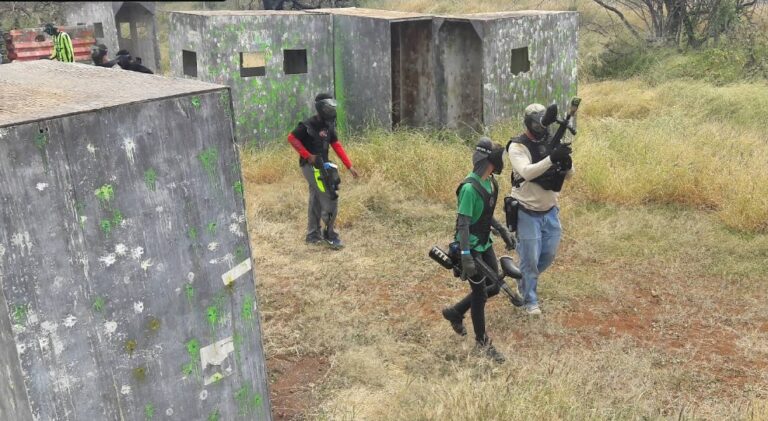
 194 Mumba St, Kapolei, HI 96707, United States