El Monte
 Log in
Log in
Log in

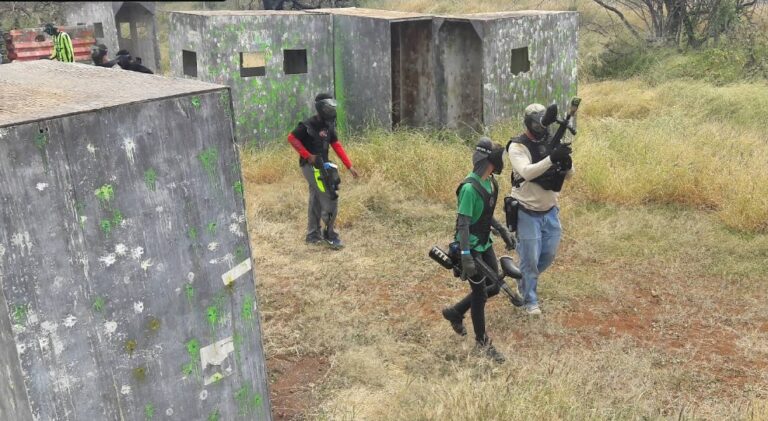
Extreme Sports Complex is located in Kapolei, Hawaii, on the island of Oahu. This family-run outdoor facility offers three distinct playing fields for paintball, airsoft, and GelStrike (gelly ball), catering to everyone from first-time players to tournament-level speedball enthusiasts. Full rental equipment is available on-site, and the fields are designed for scenario games, big games, and competitive play.
The complex also hosts private events including birthday parties, corporate team-building sessions, and group outings, with a lounge area and dressing rooms available for guest comfort. The staff are experienced players who prioritize safety and fair play, creating a welcoming environment that has kept local players returning since 2011.
 Outdoors
Windward Paintball is located on Bellows Air Force Station in Waimanalo, on the windward side of Oahu, Hawaii.
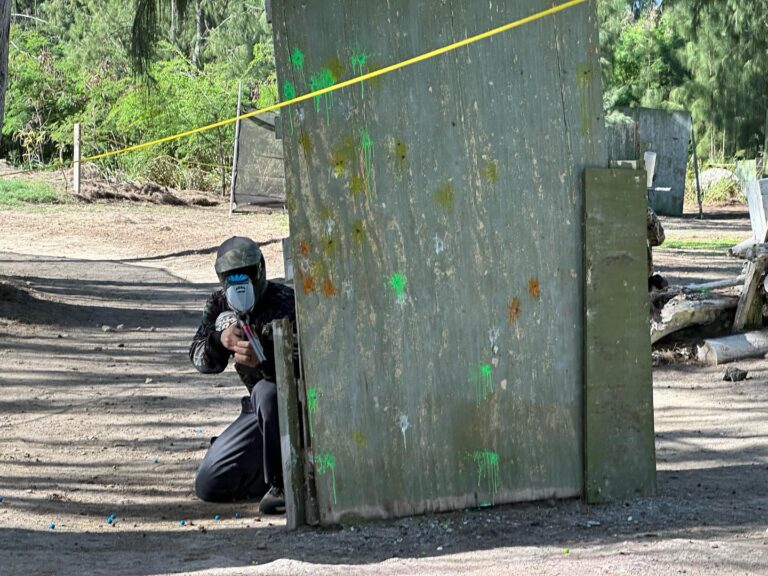
It is the only dedicated woodsball field on the island, spanning over an acre of natural terrain with wooded areas, open sandy spaces, grassy knolls, and wooden bunkers. The club offers walk-on play on weekends and holidays, private bookings during the week, and a full range of rental equipment including standard, keiki (kids), and deluxe kits. Popular game scenarios include capture the flag and zombie runs, with the staff adapting the pace to suit each group.
The field is well-suited for birthday parties, corporate team-building events, and family outings. A recreation area and lounge space are available on-site. The locally owned operation is known for its attentive, safety-focused staff who go out of their way to make every player feel welcome, including shuttling guests without base access from the gate. Paintballs are sold separately in standard and tactical grades, and admission includes unlimited high-pressure air refills.
OutdoorsBrothers Paintball Field is located in the Kunia area near Waipahu on the island of Oahu, Hawaii.
The field is a classic outdoor woodsball setup with uneven terrain, brush, and man-made obstacles like wooden bunkers, spools, and oil drums. Games include team deathmatch and capture-the-flag, with referees keeping rounds moving and rotating formats. Rental packages start with basic or upgraded Planet Eclipse Emek markers, while self-equipped players pay a reduced fee for all-day play and air. The facility operates on a field-paint-only policy.
The field is well-suited for birthday parties, corporate team-building, bachelor parties, and school outings. Picnic tables are available for resting between rounds. The business began in 2004 as a small shop and has grown into the only remaining paintball store in Hawaii and one of the few active fields on the island. The staff are experienced players who prioritize safety and provide briefings for newcomers.
Outdoors
Paintball is an exciting game that people of all ages can enjoy in Honolulu, HI. Whether you want to have a fun time with your family, friends, or colleagues, paintball is an activity that everybody can get involved in.
Paintball is a fast‑paced, team‑oriented sport that pits players against one another using compressed‑air or CO₂‑powered markers that launch small gelatin capsules filled with non‑toxic, water‑based dye. When a capsule, commonly called a “paintball,” strikes a target, it bursts and leaves a conspicuous splash of colour, signaling that the player has been hit and is temporarily out of the game. The equipment is deliberately lightweight: a marker that fits comfortably in the hand, a harness or vest to hold paint‑filled hoppers, and protective gear such as masks, gloves, and padded clothing. The sport can be played in a variety of environments—from dense woodland fields that mimic military terrain to purpose‑built indoor arenas with elaborate inflatable obstacles. While the core mechanic is simple—hit the opponent and eliminate them—the strategic depth, physical demand, and social aspects make paintball a compelling activity for a broad demographic.
Although local fields may adopt minor variations, the universal rule set for paintball is built around safety, fairness, and clear communication. The first and most critical rule is that every participant must wear an approved mask that fully covers the eyes and nose at all times while on the field; removal of the mask is only allowed in designated safe zones. Secondly, markers must be regulated to a maximum velocity—typically 280 feet per second (fps) for standard paintballs and 300 fps for larger, high‑impact variants—to reduce the risk of serious injury.
Gameplay proceeds in rounds that begin with a “call‑to‑action” or “on‑your‑marks” signal from a referee. Once the signal is given, players engage the opposing team, attempting to tag opponents while adhering to the field’s boundaries. If a paintball makes contact with a player’s clothing, skin, or equipment, the player must raise their hand to signal they have been hit and then retire to a designated “dead‑zone” or “respawn” area, depending on the format. In elimination games, the player remains out until the round ends; in “lifetime” or “regeneration” formats, players may re‑enter after a set cooldown period.
Other common rules include: no shooting at players who are out of the field of play, a prohibition on “shoot‑down” or “overhead” fire when it could jeopardize safety, and a requirement to maintain a safe distance when handling markers in the staging area. Penalties for rule violations range from warnings to disqualification, and referees are empowered to enforce the rule set at any time.
Paintball’s flexibility is evident in the myriad scenarios that organizers can devise, each emphasizing different tactical elements and player experiences. The most ubiquitous format is Team Deathmatch, wherein two or more squads compete to eliminate the opposing team(s) within a set time limit. Variants such as Capture the Flag introduce objectives that require players to infiltrate enemy territory, retrieve a flag or “objective device,” and return it to a home base, rewarding coordinated offense and stealth.
For participants seeking a more narrative‑driven experience, “Scenario Paintball” offers elaborate storylines—often based on historical battles, science‑fiction conflicts, or popular movies—accompanied by prop weapons, role‑playing elements, and large‑scale objectives that can span several hours. MilSim (Military Simulation) scenarios attempt to replicate authentic combat conditions, complete with realistic load‑outs, communication protocols, and mission‑type goals such as hostage rescue or convoy protection.
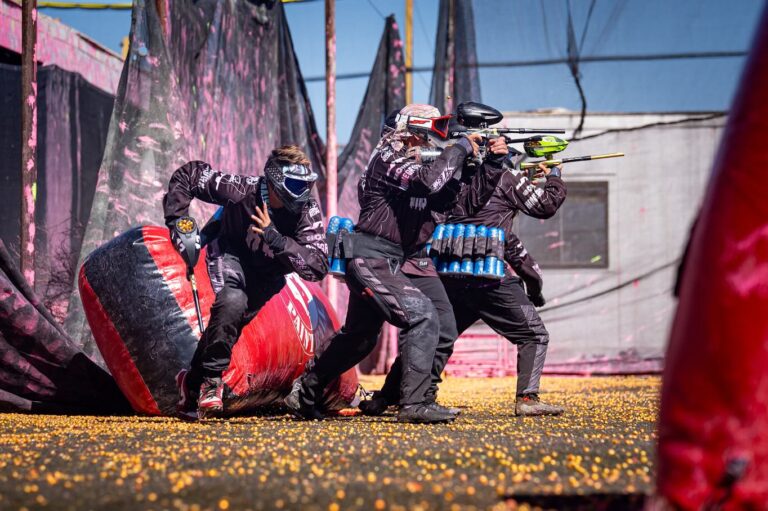
Another popular format is Speedball, which takes place on a compact, symmetrically designed field lined with inflatable bunkers. The emphasis here is on rapid movement, sharp reflexes, and quick decision‑making; matches are usually timed, and the fast‑paced nature makes Speedball the discipline most frequently featured in organized competitions and televised tournaments.
Finally, Zombie or Infection games pit a small “infected” group against a larger “survivor” contingent. When a survivor is hit, they join the infected side, creating a growing pressure that challenges the remaining survivors to reach a safe zone before they are overwhelmed.
Beyond the obvious entertainment value, paintball delivers a suite of physical, cognitive, and social benefits. From a fitness perspective, the sport demands bursts of sprinting, rapid changes of direction, and sustained low‑to‑moderate aerobic effort as players navigate terrain and evade fire. This combination improves cardiovascular health, muscular endurance, and agility. The necessity to carry gear—often weighing several pounds—adds a functional strength component, particularly to the core and lower body.
Cognitively, paintball is a live‑action problem‑solving exercise. Players must assess terrain, anticipate opponent movements, manage limited ammunition, and make split‑second tactical choices. These decision‑making processes enhance spatial awareness, situational assessment, and strategic planning under pressure—skills that are transferable to professional environments such as emergency response, law enforcement, and corporate leadership.
Socially, the activity fosters teamwork, communication, and trust. Successful units rely on clear signalling, coordinated maneuvers, and mutual support. The shared intensity of a match often accelerates bond formation and can break down hierarchical barriers, creating an egalitarian atmosphere where individuals are evaluated on performance rather than rank.
Moreover, paintball can serve therapeutic or rehabilitative roles. Certain programs incorporate it into physical therapy for patients recovering from lower‑limb injuries, using the low‑impact nature of movement to rebuild strength while maintaining motivation through gameplay. For veterans, veteran‑specific paintball events provide a constructive outlet for adrenaline and an avenue to rebuild camaraderie lost after service.
The demographic landscape of paintball is remarkably wide. Historically, the sport attracted a youthful, male‑dominated audience, but contemporary participation reflects greater gender balance and age diversity. Teenagers and college students often experience paintball as an introduction to organized competitive sport, while adults—ranging from corporate teams using it for team‑building retreats to retirees seeking an active hobby—continue to populate fields worldwide.
Professional athletes from disciplines such as rugby, lacrosse, and martial arts frequently incorporate paintball into cross‑training regimens to sharpen reflexes and mental resilience. Military personnel and law‑enforcement officers also engage in paintball, either as a training tool that mimics live‑fire scenarios without the lethal risk or as a recreational activity that reinforces teamwork in a low‑stress setting.
Inclusivity initiatives have broadened participation further. Adaptive paintball programs modify equipment and field layouts to accommodate players with physical disabilities, ensuring that the experience remains accessible. Youth outreach programs, often partnered with schools or community centers, use paintball to teach conflict resolution, responsibility, and the value of fair play.

From an academic standpoint, paintball has attracted research interest across multiple fields. Exercise physiologists study the sport’s metabolic demands, noting that typical matches can elicit heart rates comparable to moderate‑intensity interval training, thereby validating its efficacy as a cardiovascular workout. Psychologists explore the cognitive load imposed by rapid tactical decision‑making, finding that regular participants display improved attentional control and heightened stress tolerance.
Safety engineers examine marker design and projectile physics to establish standards that minimize injury risk. Their consensus underscores the importance of regulating projectile velocity and ensuring the use of biodegradable, low‑impact paintballs. These guidelines have been incorporated into industry certifications, such as the National Paintball Association’s safety protocols, which are widely adopted across North America and Europe.
Industry analysts observe that the global paintball market has experienced steady growth, driven by an expanding network of commercial fields, the rise of e‑sports cross‑overs, and advancements in equipment technology. Innovations such as lightweight polymer markers, wireless electronic firing systems, and eco‑friendly paintball shells have lowered entry barriers, attracting new participants while addressing environmental concerns.
Medical experts generally affirm that, when proper safety measures are observed, paintball poses a low incidence of serious injury. Most reported injuries are superficial bruises or abrasions. Nonetheless, they advise participants to undergo routine equipment checks, maintain proper protective gear, and stay hydrated, especially during outdoor summer play.
Choosing a venue depends on player preferences, weather considerations, and the type of scenario desired. Outdoor fields typically span several acres of natural terrain, offering varied topography such as forests, hills, and water features. These settings are ideal for MilSim and large‑scale scenario games, where the expansive area accommodates multiple objectives and a higher player count. Many outdoor complexes provide “battle zones” with constructed bunkers, trenches, and fortified structures to supplement the natural environment.
In contrast, indoor arenas—often called speedball arenas—present a compact, uniformly designed playing surface surrounded by inflatable barriers. The controlled lighting, climate, and acoustics create a predictable arena that emphasizes speed, agility, and precision. Indoor venues are particularly popular in urban regions where land for expansive fields is scarce, and they allow year‑round play irrespective of weather conditions.
Hybrid venues combine the two approaches, featuring indoor “shoot houses” for rapid‑fire drills alongside adjacent outdoor fields for extended scenario play. Some facilities also integrate virtual reality or augmented reality layers, projecting digital objectives onto physical spaces to elevate immersion.
When selecting a location, players should consider the venue’s safety record, quality of equipment rentals, availability of referees, and the range of game formats offered. Many fields host regular league play, seasonal tournaments, and open‑play sessions, providing opportunities for newcomers to observe, learn, and eventually join organized matches.
Paintball continues to evolve as a sport that balances physical exertion, strategic depth, and social interaction. Whether stepping onto a wooded field at dawn, dodging foam barriers in a high‑tech indoor arena, or participating in a narrative‑driven scenario that stretches over several hours, participants experience a unique blend of challenge and camaraderie. The robust rule set ensures safety, while the diversity of game formats caters to a spectrum of skill levels and interests. As research underscores its health benefits and industry innovations lower barriers to entry, paintball remains poised to attract new generations of players, maintaining its reputation as a dynamic, inclusive, and exhilarating pursuit.


 194 Mumba St, Kapolei, HI 96707, United States