
 El Monte
 Log in
Log in
Log in

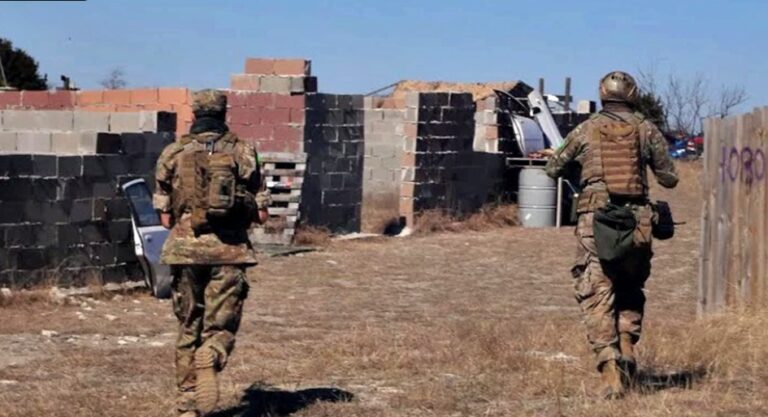
Temple Airsoft is located in Temple, TX
Temple Airsoft: A Hub for Airsoft Enthusiasts in Temple, TX
Temple Airsoft, located in Temple, TX, holds gameplay sessions every Saturday and Sunday. Standard gameplay typically features basic team-vs-team skirmishes, without requiring participants to belong to an established team. They also host special events, birthday parties, military/law enforcement training exercises, corporate events, historical reenactment battles, and private games upon request.
The store has over 10,000 items from real world tactical gear, historical items, and airsoft guns. If what you are looking for is not on hand, Temple Airsoft has access to a large selection of dealers. Utilizing this access, they can order such items, so they are delivered in just a few days for pick up.
 Outdoors
Airsoft is a recreational sport that pits teams against one another in simulated combat using low‑velocity replica firearms that fire 6 mm plastic BBs. Unlike paintball, the projectiles leave only a tiny dent on the target, making the experience feel closer to real‑world tactical engagements. The appeal lies in a blend of realism, teamwork, and strategy. Players must move as a unit, coordinate fire, and make quick decisions based on the evolving battlefield.
The sport offers a variety of game modes, ranging from quick‑draw “capture the flag” skirmishes to multi‑hour “military simulation” (MilSim) scenarios that mimic real operations. This diversity keeps the experience fresh and encourages players to develop a broad set of tactical skills.
Customization is another pillar of airsoft culture. Replicas can be upgraded with tighter barrels, higher‑capacity magazines, adjustable hop‑up units, and a myriad of external accessories such as rails, scopes, and flashlights. This personalisation allows each participant to craft a weapon that matches their play style, whether they prefer a compact close‑quarters carbine or a long‑range sniper platform.
Finally, the community surrounding airsoft is remarkably inclusive. Clubs, online forums, and local teams welcome newcomers, share tips on gear maintenance, organize events, and uphold a shared code of conduct that emphasizes safety and respect. The camaraderie built on the field often extends beyond the game itself, fostering lasting friendships.
Starting out in airsoft can feel overwhelming, but a solid foundation of protective equipment dramatically improves safety and enjoyment. The following items are considered the minimum viable kit for any new player.
The most critical piece of equipment is a pair of certified eye protectors. Full‑frame goggles or wrap‑around glasses that meet ANSI Z87.1 or the European CE EN166 standard are mandatory on every field. Unlike paintball, where the projectile is larger and slower, airsoft BBs can travel at speeds exceeding 300 fps, and even a tiny fragment can cause serious eye injury.
A sturdy pair of tactical gloves protects the hands from BB impacts, rough terrain, and the occasional snag on foliage or metal. Gloves with reinforced knuckles and a palm grip also improve weapon handling, especially during rapid reloads or when navigating obstacles.
Footwear should provide ankle support, puncture resistance, and good traction. Combat‑style boots with reinforced toe caps and a non‑slip sole are ideal for moving through mud, sand, or rocky terrain. Proper boots reduce fatigue during long MilSim events and help prevent twisted ankles.
Many scenarios require players to crawl, take cover behind low walls, or navigate tight indoor spaces. Knee and elbow pads absorb impact when dropping to the ground and protect joints during repeated motion.
While not always mandated on casual fields, helmets become essential in MilSim or urban map play. A lightweight tactical helmet equipped with a rail system can accommodate night‑vision devices, cameras, or communication headsets. Lower‑face protection—often a mesh or polymer “balaclava”—guards the mouth and teeth from stray BBs, a common injury point in close‑quarters battles.
Together, these pieces create a protective envelope that lets players focus on tactics rather than worrying about injuries.
All fields operate under a strict safety hierarchy. The moment a player steps onto a sanctioned field, they must obey the “stop‑shoot‑talk” protocol: weapons are pointed downrange, safety selectors are engaged, and everyone verbally confirms that the area is clear before firing. Most fields require a maximum muzzle velocity—often 350 fps for 0.20 g BBs and 400 fps for heavier 0.30 g BBs—to keep impacts within a safe range for the human body.
Airsoft relies heavily on player honesty. Since BBs leave little evidence of a hit, participants are expected to call themselves out when struck. Many fields employ “hit‑markers”—small colored beads placed on the body—to tally hits, but the underlying principle is the same: integrity ensures the game remains fair and enjoyable.
Respect extends beyond the honour system. Players must treat opponents, referees, and field staff with courtesy. This includes following field rules about restricted zones, refraining from aggressive language, and cleaning up spent BBs or broken equipment after a match. A respectful environment encourages newcomers to stay and helps the sport grow.
Airsoft replicas fall into three primary categories, each with distinct operating mechanisms, performance characteristics, and maintenance requirements.
AEGs dominate the hobby. Powered by a rechargeable 7.2 V or 11.1 V Li‑Po battery, they drive a motor that compresses a spring to fire BBs. AEGs can fire in semi‑automatic, fully automatic, or burst modes, offering the most versatile shooting experience. Their rate of fire (typically 10–15 rounds per second) can be adjusted via internal gears and electronic controllers. Because they are battery‑powered, AEGs are reliable in a wide range of temperatures, though extreme cold can reduce battery performance.
Gas guns use compressed propellants—most commonly green gas (a blend of propane and silicone oil) or CO₂—to propel the BB. The gas expands when a trigger is pulled, driving the piston forward. Gas systems excel at delivering realistic blowback action, making them popular for pistols and sniper rifles. However, they are sensitive to temperature; cold weather can cause reduced velocity and inconsistent cycling.
Spring guns are the simplest mechanically: the shooter manually compresses a spring by cocking the weapon. When the trigger is released, the spring drives the piston and fires a single BB. While their rate of fire is limited to one shot per cock, spring guns are inexpensive, require no batteries or gas, and are highly reliable. They are frequently used for sniper rifles and as entry‑level pistols for beginners.
Each type offers a different balance of realism, cost, and maintenance, allowing players to select the platform that best fits their budget and playing style.
Researchers studying projectile sports often cite airsoft as a low‑risk, high‑engagement activity that provides measurable benefits in motor coordination, spatial awareness, and stress management. A 2022 study published in the Journal of Sports Science found that regular airsoft participants demonstrated improved reaction times and decision‑making under pressure compared to a control group of non‑players.
Industry experts emphasize the importance of rigorous safety standards. The International Airsoft Federation (IAF) has pushed for universal adoption of a 350 fps velocity cap for 0.20 g BBs, arguing that this limit reduces the incidence of skin bruising and ocular injury while preserving the sport’s tactical realism. Manufacturers have responded with built‑in velocity regulators and “smart” hop‑up systems that automatically keep projectiles within safe thresholds.
Environmental scientists note that the biodegradable BBs now widely available—made from PLA (polylactic acid) derived from corn starch—mitigate the ecological impact of stray BBs in natural fields. While traditional ABS plastic BBs can persist for decades, biodegradable versions decompose within six months, reducing the risk to wildlife and water sources.
Overall, the consensus among scientists and industry insiders is that, when played responsibly and with proper equipment, airsoft offers a unique blend of physical activity, strategic thinking, and community building that can complement traditional sports and outdoor recreation.
Airsoft attracts a surprisingly diverse demographic. The core group consists of young adults aged 18‑35, many of whom are military enthusiasts, paintball veterans, or tactical‑training professionals. However, the hobby also appeals to older participants who enjoy the strategic depth and social aspect of organized events.
Students often join university clubs to experience teamwork and leadership in a low‑cost setting. Corporate teams use MilSim scenarios for team‑building exercises, leveraging the game’s focus on communication, role allocation, and stress management.
Internationally, airsoft has a strong foothold in Asia—particularly Japan, Taiwan, and South Korea—where strict gun laws make replica firearms a popular outlet for tactical interest. In Europe and North America, large‑scale MilSim events draw participants from across the continent, fostering a global community connected through forums, YouTube channels, and shared field experiences.
Most regions have dedicated airsoft facilities that enforce safety rules, provide rental gear, and design immersive battlefields ranging from abandoned warehouses to forested “combat zones.” These fields often host weekly “scrims” (short matches) for casual play and larger weekend events for more competitive teams.
Joining a local club offers regular training sessions, tactical workshops, and a supportive network of experienced players. Clubs typically organize their own “home‑field” days at nearby parks or private land, allowing members to experiment with new strategies in a familiar environment.
MilSim (Military Simulation) events are the pinnacle of airsoft immersion. They can span 12‑48 hours and incorporate realistic mission objectives, night‑time operations, and logistical support such as simulated ammunition resupply and casualty evacuation. Participants often wear full combat gear, communicate via radio, and adhere to a codified chain of command. These events are ideal for players seeking a deep, narrative‑driven experience that mirrors actual military exercises.
Regardless of the venue, the key to a rewarding airsoft experience is to select a setting that matches one’s skill level, equipment, and desired level of immersion.
Airsoft stands at the intersection of sport, hobby, and community. Its core draws—realism, teamwork, and strategic depth—are amplified by a wide array of game modes, extensive customization options, and a welcoming network of players. Newcomers should begin with a solid set of protective gear—eye protection, gloves, sturdy boots, pads, and, when appropriate, a helmet and lower‑face shield—to ensure safety while they learn the ropes.
Adhering to universal rules—prioritizing safety, honoring the hit‑call system, and showing respect—creates an environment where players of all ages and backgrounds can thrive. Understanding the three main categories of airsoft guns—AEGs, gas‑powered, and spring‑powered—helps newcomers choose a platform that aligns with their budget, preferred realism, and maintenance willingness.
Scientific studies confirm the sport’s positive impact on reaction time and decision‑making, while industry standards continue to evolve toward safer, more environmentally friendly practices. From casual backyard skirmishes to multi‑day MilSim operations, airsoft offers a flexible playground for anyone eager to test their tactical mettle.
As the community expands and technology advances, airsoft is poised to remain a vibrant, inclusive activity that blends competition, camaraderie, and creativity—providing countless players with the thrill of simulated combat while keeping safety and respect at the forefront.


 1163 Berger Rd, Temple, TX 76501, United States