TOP 10 best of the best Free-roam VR in Boise, ID – Battleonix
El Monte
Log in
0

Advanced Search:

City

Rating

Playground


Price:

Main / Catalog / VR / Idaho, US / Boise, ID

The best Free-roam VR near me in Boise, ID

img
from $6
Laser tagVR

Urban Air Trampoline and Adventure Indoor Park is located in Meridian, ID.


 Urban Air Trampoline and Adventure Park in Meridian, Idaho is a perfect destination for both kids and adults. It features over 15 attractions including trampolines, warrior obstacle course, rope course, bumper cars, climbing walls and much more. This indoor amusement park features a safe and fun environment with unique attractions and various packages for birthday parties, corporate events and group outings. From toddlers to adrenaline seekers, everyone can experience the thrill at Urban Air Trampoline and Adventure Park.

Indoors
img
from $10
Laser tagAirsoftVR

Pyrrhic Indoor Family Fun Center is located in 2104 Caldwell Blvd, Nampa.


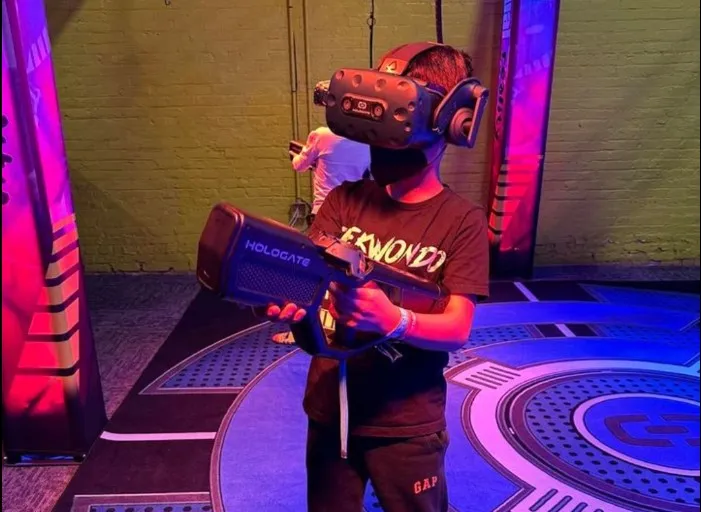
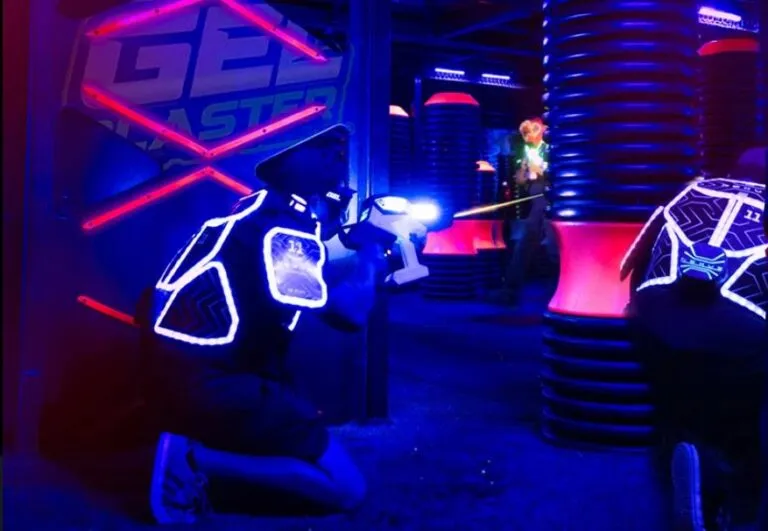
Pyrrhic Indoor Family Fun Center in Nampa, ID, offers a wide variety of indoor games designed to provide excitement for the entire family. Visitors can enjoy activities such as Nerf, Airsoft, Laser Tag, Gel Blaster Nexus, and Virtual Reality (VR) in a newly constructed 22,500-square-foot facility. This location marks the first indoor Airsoft arena in the region. The two-story venue ensures total excitement with casual, all-weather fun for families. Activities are suitable for participants aged 6 and above, with VR available for ages 10+.

Pyrrhic has long been recognized as Treasure Valley’s most memorable destination for birthday parties. With the addition of the indoor location in Nampa, they have expanded their offerings. Event rooms will soon be available for birthdays, reunions, group parties, team training events, bachelor(ette) parties, and more.

Indoors
img
from $8
VR

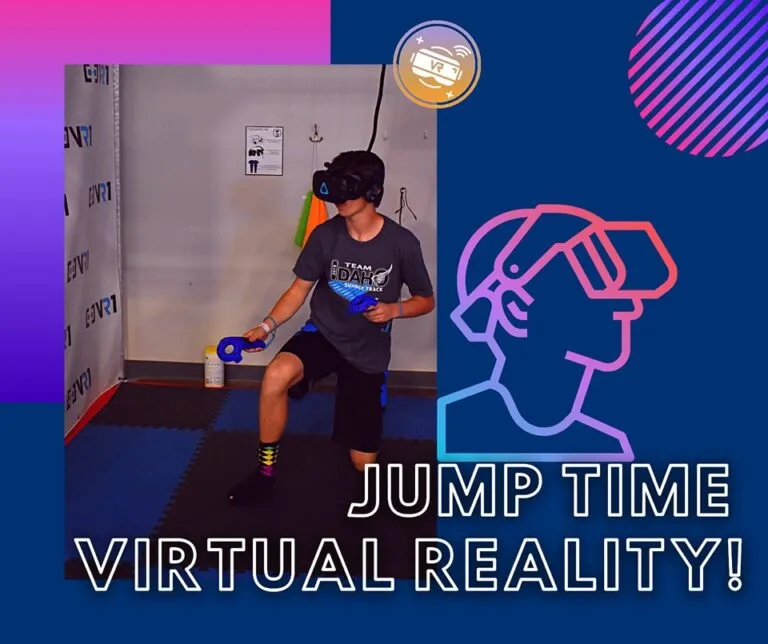
VR1 Arcade at Jumptime Indoor Center is located in  Meridian, ID.


 VR1 Arcade is a popular attraction located at Jumptime in Meridian, Idaho. This arcade offers a unique gaming experience with virtual reality technology. Visitors can immerse themselves in a range of exciting games and experiences, such as racing, shooting, and adventure games. The facility features multiple VR stations, giving groups and individuals the chance to enjoy the games together. With realistic graphics and interactive gameplay, VR1 Arcade is an excellent choice for people of all ages who want to explore new worlds and have fun with friends and family.

Indoors
img
from $28
VR

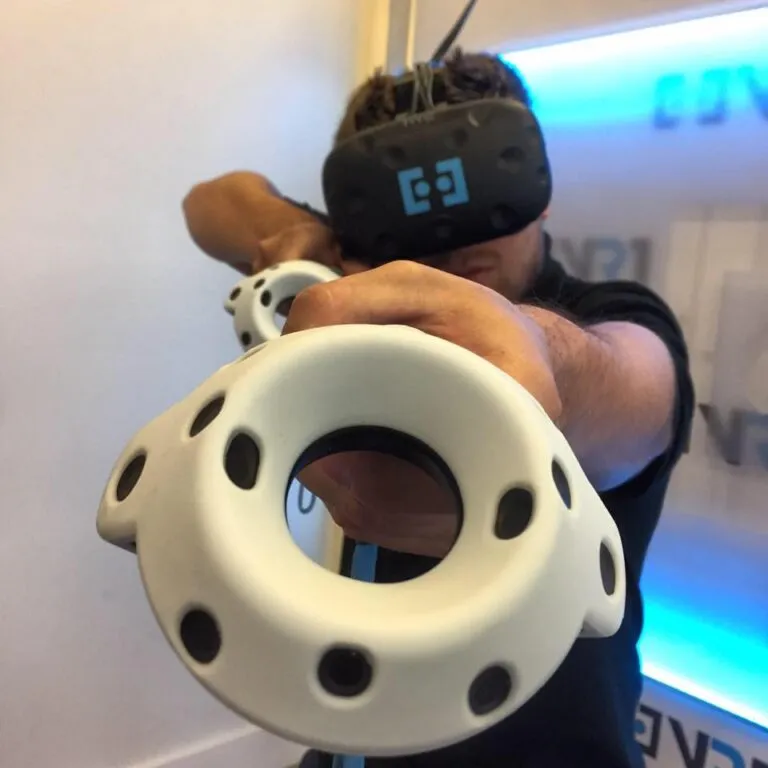
VR1 Arcade Indoor Center is located in Eagle, ID.


 VR1 Arcade in Eagle, ID offers an immersive virtual reality gaming experience for all ages. With state-of-the-art technology, guests can explore new worlds and participate in thrilling adventures. The arcade features a variety of games, from multiplayer team battles to individual challenges. Each experience is fully immersive and offers realistic graphics and sound. VR1 Arcade is the perfect destination for group events, birthday parties, and family outings. The friendly and knowledgeable staff ensure that every guest has an unforgettable experience. Come visit VR1 Arcade in Eagle, ID and discover a whole new world of entertainment.

Indoors

Best of the best Free-roam VR in Boise, ID


A free‑roam virtual‑reality arena is a purpose‑built space in which participants can move unencumbered while wearing head‑mounted displays (HMDs) that track their position in three dimensions. Unlike seated or stationary VR setups that rely on a single controller and a fixed viewpoint, free‑roam arenas combine high‑precision motion‑capture systems, wireless power solutions, and robust safety nets to let users physically walk, duck, jump, and interact with the virtual world as if it were a tangible environment.

The physical layout typically consists of a padded floor, soft‑wall barriers, and strategically placed “tether‑free” zones that keep the HMDs powered and the data link stable. Sensors—often a blend of infrared cameras, lidar, or inside‑out tracking—map the arena in real time, translating each user’s movements into corresponding actions inside the digital scene. The result is an immersive experience that blurs the line between the body’s kinetic sense and the visual‑auditory feedback of the virtual world, creating a sense of presence that is difficult to achieve with conventional VR configurations.

Free‑Roam VR Scenarios

Because the technology removes the physical constraints of conventional VR, developers can craft a far broader range of scenarios. Some of the most popular include:

  • Adventure Questing – Players explore sprawling fantasy lands, solving riddles, battling mythical creatures, and navigating treacherous terrain. The physical act of climbing a real‑world ramp translates to scaling a cliff in the game, heightening the adrenaline rush.

  • Simulation Training – Emergency‑response drills, aircraft cockpit rehearsals, and surgical procedures are rendered with millimeter‑accurate fidelity. Trainees can practice high‑stakes actions repeatedly without the risk and expense of real equipment.

  • Team‑Based Competitive Play – Laser‑tag‑style games, futuristic sport matches, and cooperative puzzle hunts make full use of the arena’s open space, encouraging communication, strategy, and rapid physical coordination.

  • Narrative Storytelling – Immersive theater experiences place participants at the center of a plot, allowing them to interact with actors, manipulate props, and influence outcomes through movement and gestures.

  • Exploratory Art Installations – Artists use the medium to create interactive sculptures where motion triggers visual or auditory changes, turning the arena into a living gallery.

These scenarios demonstrate the versatility of free‑roam VR, where the boundary between gameplay, training, and artistic expression becomes fluid.

Who Plays on Free‑Roam VR Arenas?

The demographic composition of free‑roam VR participants is surprisingly diverse. In entertainment centers, teenagers and young adults dominate foot traffic, drawn by the novelty of physically engaging with virtual worlds. However, the technology’s utility extends far beyond that core group.

  • Corporate Teams – Companies employ free‑roam VR for team‑building exercises, leadership development, and creative brainstorming sessions. The immersive nature encourages participants to think outside the box and break down hierarchical barriers.

  • Educational Institutions – Universities and research labs use the arenas to test human‑computer interaction models, study spatial cognition, and conduct psychology experiments that require naturalistic movement.

  • Healthcare Professionals – Physical therapists, occupational therapists, and neuro‑rehabilitation specialists integrate free‑roam VR into patient programs to improve motor function, balance, and cognitive recovery.

  • Military and First‑Responder Units – Training modules simulate combat zones, fire‑fighting scenarios, and disaster response environments, offering realistic, repeatable practice without the logistical overhead of live exercises.

  • Families and Casual Gamers – Weekend visitors and families often treat the arena as a modern amusement‑park attraction, enjoying short, story‑driven experiences that accommodate a wide age range.

Thus, while the primary market may be recreational, the technology has permeated professional, educational, and therapeutic domains.

Free‑Roam VR Arenas for Kids

Designing free‑roam VR experiences for children requires a careful balance of safety, accessibility, and content relevance. Arena operators typically implement the following measures:

  • Scaled‑Down Physical Spaces – Smaller, brightly colored arenas with low‑height obstacles reduce the risk of injury while still offering enough room for movement.

  • Age‑Appropriate Content – Games focus on exploration, problem‑solving, and cooperative play rather than high‑intensity combat. Themes often revolve around outer‑space adventures, underwater quests, or friendly animal companions.

  • Simplified Controls – Hand‑tracking and gesture‑based interfaces replace complex button layouts, allowing younger users to interact intuitively.

  • Supervised Sessions – Trained staff monitor each session, ensuring that children stay within safe boundaries and that equipment fits properly.

  • Adaptive Difficulty – Algorithms adjust challenge levels in real time based on a child’s performance, keeping engagement high without causing frustration.

The result is a child‑friendly ecosystem where imagination can flourish, motor skills are exercised, and collaborative learning is reinforced—all within a secure, monitored environment.

Free‑Roam VR for a Birthday Party, Graduation, Corporate Party

When it comes to celebrations, free‑roam VR provides a fresh alternative to traditional party activities. Organizers can tailor the experience to the occasion, creating memorable moments that go beyond the usual cake‑and‑balloon routine.

  • Birthday Parties – A themed adventure, such as a treasure‑hunt on a pirate island or a superhero training camp, can be structured in short, repeatable rounds so each guest gets a turn. The physical activity also helps burn off the excitement, making the event more relaxed for parents.

  • Graduations – Cohorts of graduates can step into a collective narrative that symbolizes transition—such as navigating a futuristic cityscape representing career paths. Group challenges foster camaraderie and provide photo‑worthy moments that capture the milestone’s spirit.

  • Corporate Parties – Companies looking to reward employees or celebrate achievements can book exclusive arena time for competitive mini‑tournaments, immersive brand‑themed experiences, or even custom‑crafted simulations that showcase products in a futuristic context. The shared physical immersion often leads to spontaneous networking and morale boosting.

In each case, the flexibility of free‑roam VR allows hosts to script a timeline that aligns with the event’s schedule, while the modular nature of the arena means the same space can host multiple, distinct experiences in a single day.

Scientists and Industry Experts View on Free‑Roam VR

Research communities and technology leaders regard free‑roam VR as a pivotal step toward achieving true spatial immersion. A consensus is emerging around several key insights:

  • Enhanced Spatial Cognition – Studies indicate that when users navigate virtual environments with full-body movement, their brain’s place‑cell systems engage more robustly than in seated VR, leading to better memory retention and spatial awareness.

  • Improved Physical Rehabilitation Outcomes – Clinical trials demonstrate accelerated progress for patients recovering from stroke or traumatic brain injury when therapy incorporates free‑roam VR, owing to the naturalistic movement patterns it encourages.

  • Data‑Rich Human‑Factor Analysis – The precise tracking of locomotion, posture, and gaze provides researchers with high‑resolution datasets that can refine models of human behavior, ergonomics, and interaction design.

  • Scalability Challenges – Experts acknowledge that widespread adoption faces hurdles, including the cost of arena construction, the need for robust safety protocols, and the requirement for high‑bandwidth wireless infrastructure to prevent latency.

  • Future Integration with Mixed Reality – Industry forecasts suggest that the line between free‑roam VR and augmented reality (AR) will blur as headsets gain see‑through capabilities, allowing physical props to blend seamlessly with digital overlays.

Overall, the scientific and professional community views free‑roam VR not just as an entertainment novelty but as a multidisciplinary platform with significant implications for education, healthcare, and industry.

Conclusion

Free‑roam virtual‑reality arenas have transformed the way people experience digital worlds, offering a level of physical engagement that static setups cannot match. From adventurous gameplay and immersive storytelling to serious training, therapeutic applications, and celebratory events, the technology’s adaptability continues to attract a wide spectrum of users. While challenges remain—particularly in cost, safety, and infrastructure—the growing body of research underscores its potential to reshape cognition, rehabilitation, and human‑computer interaction. As developers, scientists, and commercial operators collaborate, free‑roam VR is poised to become a cornerstone of next‑generation immersive experiences, inviting anyone who steps inside to explore, learn, and play in ways previously confined to imagination alone.


VR in Boise, ID