El Monte
 Log in
Log in
Log in

Stars and Strikes Family Entertainment Center sits in Irmo, South Carolina, along Lake Murray Boulevard just a short drive from downtown Columbia.
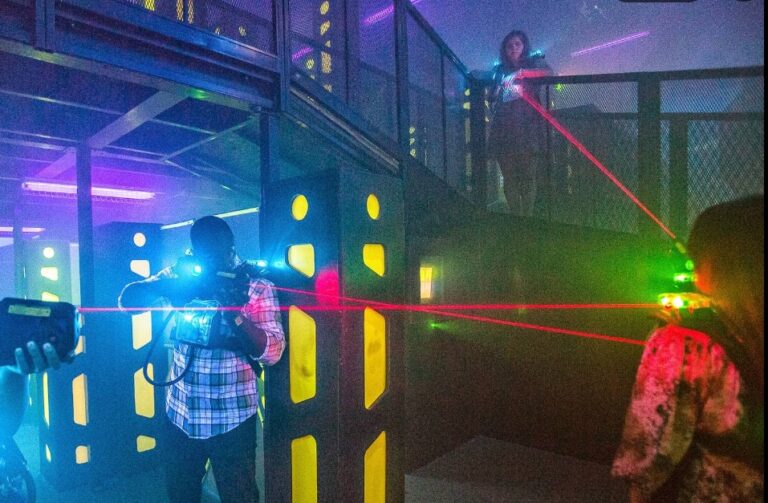
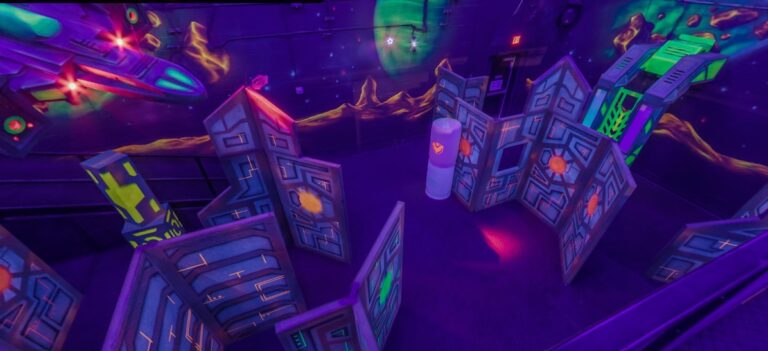
The 50,000-square-foot venue centers on a two-story laser tag arena packed with ramps, obstacles, and glowing hideouts, plus 24 bowling lanes (eight with SPARK augmented reality), a 7,500-square-foot arcade and prize store, virtual reality experiences, and bumper cars. Kids’ birthday packages start at $15.99 per person with a minimum of ten kids and include bowling, arcade cards, and/or laser tag, food, a Ticket Tornado, and a dedicated party host.
The on-site CJ’s Tavern restaurant and bar serves chef-inspired food, and multiple private party rooms include an upscale corporate event space seating over 100 with a full private bar. The venue hosts corporate events, team building, fundraisers, sports and church groups, and reunions, and runs regular specials like entertainment happy hours, Sunday deals, and a Friday Stack-n-Play bundle.
 Indoors
Frankie’s Fun Park sits on 13 acres in the Columbiana Mall area of Columbia, South Carolina, just minutes from downtown, and has been a local favorite since 1994. The park runs on a pay-per-attraction model with no admission fee, offering three go-kart tracks, three miniature golf courses with 54 holes, bumper boats, batting cages, a spinning coaster, and a two-level apocalypse-themed laser tag arena. Indoors, a large arcade with hundreds of games, virtual reality experiences, and the interactive XD Dark Ride keep the fun going regardless of the weather.
The park is well set up for celebrations, with birthday packages starting at $25 per person (ten-guest minimum), twelve family-friendly party rooms, and group packages that add bonus value to play cards. An on-site special events team handles everything from corporate team building for groups up to 180 people to large events for up to 2,000 guests, while the food menu covers pizza, burgers, wings, and sandwiches. With free entry, never-expiring fun money cards, and gift cards available at the park, it suits birthdays, corporate outings, graduations, and family days alike.
IndoorsIn the traditional landscape of virtual reality, users were often relegated to a living room corner, tethered by thick cables or confined to a swivel chair. However, a revolutionary shift has taken place: the emergence of free-roam VR arenas. These expansive, physical spaces allow participants to physically walk, run, and interact within a digital world with full freedom of movement. By merging high-fidelity motion-tracking technology with vast, open environments, free-roam VR has transformed from a niche tech experiment into a pillar of modern immersive entertainment.
At its core, a free-roam VR arena is a dedicated, large-scale physical space—often ranging from hundreds to thousands of square feet—designed specifically to host virtual reality experiences without physical constraints. Unlike home-based VR systems that rely on stationary sensors or limited “guardian” boundaries, a free-roam arena utilizes sophisticated optical tracking systems, often embedded in the ceiling, to monitor the precise position of players in real-time.
Participants wear lightweight, high-performance headsets, often powered by backpack-mounted computers or advanced wireless streaming technologies. This hardware setup removes the tether, allowing the user to move naturally through the physical space while their digital avatar mirrors every step, crouch, and turn. The arena floor is generally kept clear of obstacles, creating a safe environment where physical reality seamlessly overlaps with digital fantasy. When a player walks to the end of a room, the game design often mimics a path that turns them around or uses spatial illusions to make the arena feel infinitely larger than its physical walls.
The versatility of free-roam VR lies in the diversity of its scenarios. Because the arena is software-defined, the setting can change from a high-stakes sci-fi battleground to a historical library or an alien landscape in a matter of seconds.
Common scenarios range from cooperative survival missions, where teams must work together to defend against waves of zombies or mechanical drones, to puzzle-solving adventures that require physical cooperation. In these settings, players might need to physically hand a digital object to a teammate or coordinate their positions to activate a virtual mechanism. Many venues also offer competitive “esport” scenarios, where teams of players face off in capture-the-flag or laser-tag-style matches. Beyond gaming, some scenarios focus on educational exploration, allowing participants to walk through reconstructed historical ruins or traverse the surface of Mars, turning passive learning into an active, sensory-rich experience.
The appeal of free-roam VR spans across every demographic, from tech enthusiasts and gamers to casual tourists looking for a unique outing. However, one of the fastest-growing segments is the younger generation. VR for kids has moved beyond the novelty phase, becoming a sought-after activity for weekend playdates and youth outings.
Because these arenas are monitored by trained staff and use defined physical boundaries, they provide a controlled environment that is safer than many outdoor activities. For children, the immersion is particularly potent; the ability to “exist” inside a cartoon world or a space station caters to their natural sense of wonder. Many venues have tailored their content to ensure that experiences are age-appropriate, focusing on logic, cooperation, and moderate activity levels rather than intense combat. For parents, free-roam VR is viewed as a “productive” form of screen time—one that requires physical movement, spatial awareness, and social interaction, contrasting sharply with the sedentary nature of traditional video games.
The physical, social nature of free-roam VR has made it a premier choice for event hosting. Moving away from standard party venues like bowling alleys or movie theaters, groups are increasingly looking to VR arenas to provide a shared “wow” factor that guests will remember for years.
For birthday parties, the benefit is the shared adrenaline. A group of friends can literally step into their favorite fantasy world together, making it an ideal choice for children and adults alike. For graduation celebrations, it offers a sophisticated level of engagement that breaks the ice among groups who might be transitioning into new life stages.
Perhaps the most significant growth, however, is in the corporate sector. Corporate parties and team-building workshops use free-roam VR to foster collaboration. In a high-pressure virtual scenario, departments must communicate effectively, delegate tasks, and problem-solve under time constraints. Unlike traditional corporate seminars, VR team-building activities bypass office hierarchies, putting employees on a level playing field where their ability to work together is the only metric of success. It provides an immediate, tangible bonding experience that is far more effective than trust-falls or standard conference room workshops.
Industry experts and researchers view free-roam VR as a critical milestone in the development of the “Metaverse” and human-computer interaction. From the perspective of behavioral science, free-roam VR is significant because it engages the body’s proprioceptive system—the sense that tells us where our limbs are in space. When the brain receives visual input that matches physical movement, the sense of “presence”—the feeling that you are genuinely in another place—is exponentially higher than in sitting VR.
Industry experts point to the scalability of this technology as its greatest asset. As tracking hardware becomes more affordable and battery life for headsets improves, they anticipate that these arenas will become staples in shopping malls, cruise ships, and educational institutions. Furthermore, urban planners and architects are beginning to see the potential of these spaces for prototyping; professionals can walk through a digital model of a building years before the foundation is poured, testing traffic flow and interior design in real-time.
While challenges remain—such as the high cost of installation and the ongoing need for hardware maintenance—the consensus among experts is that free-roam VR is the future of interactive entertainment. It solves the greatest problem of early digital media: the disconnect between the digital image and the human body. By inviting the body into the digital equation, free-roam VR has turned the act of “playing a game” into the act of “living an experience.” As the technology continues to mature, it promises to blur the lines between reality and simulation until they are, for all intents and purposes, indistinguishable.


 800 Lake Murray Blvd, Irmo, SC 29063, United States