
 El Monte
 Log in
Log in
Log in

Sorry. We don’t know any vr locations in this city yet
As virtual reality continues to gain traction in the world of entertainment, many cities are turning to the technology for an added layer of immersive fun, such as Macon, Georgia. VR arenas are popping up all over this charming southern city, giving residents and visitors alike the chance to experience the power of virtual reality without ever having to leave the comfort of their own homes.
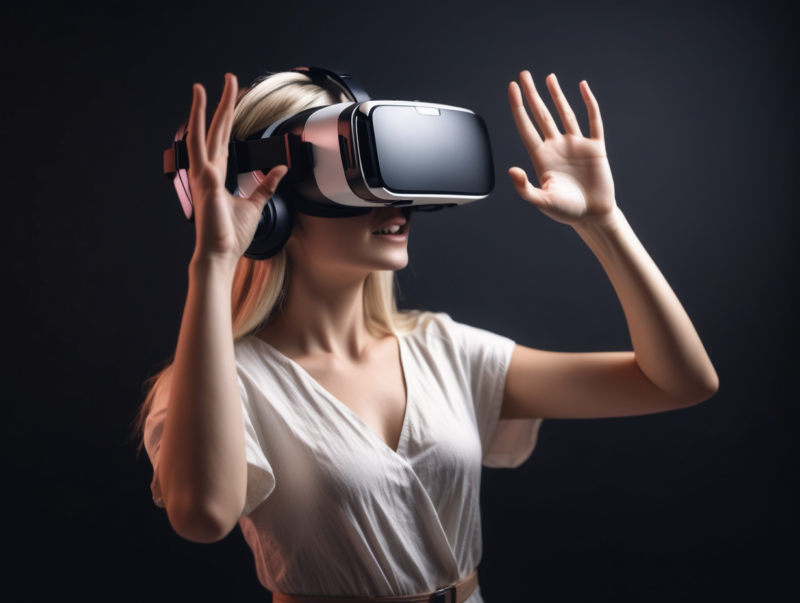
Free‑roam virtual‑reality (VR) arenas are physical spaces that combine immersive digital environments with unrestricted, real‑world movement. Unlike seated or tethered VR setups that confine a user to a small play area, a free‑roam arena is typically a cleared room, warehouse, or purpose‑built venue outfitted with dozens of tracking cameras, infrared beacons, or lidar sensors. These devices map the location of each headset and controller in three dimensions, allowing participants to walk, duck, jump, and even climb while the system updates the virtual world in real time.
The hardware stack usually includes lightweight, untethered head‑mounted displays (HMDs) that communicate wirelessly with a central server. The server renders the graphics, streams them back to the headset, and synchronises every player’s position to prevent collisions. Floor‑mounted safety nets, padded walls, and transparent “virtual boundaries” help keep participants safe while preserving the illusion of limitless space. The result is a shared, high‑fidelity playground where several people can interact simultaneously, each seeing the same virtual scenario from their own perspective.
The flexibility of a free‑roam arena opens the door to a wide variety of narrative and gameplay experiences. Developers design scenarios that take advantage of unrestricted movement, and the most popular categories include:
Adventure Quests – Participants become explorers, treasure hunters, or space marines, navigating sprawling virtual ruins, alien planets, or medieval castles. Because players can physically walk through corridors and hidden chambers, the sense of discovery is far stronger than in a button‑press‑only game.
Co‑Op Puzzles – Teams must coordinate physical actions such as pulling levers, stacking objects, or forming human bridges to solve spatial puzzles. The requirement for genuine collaboration turns the experience into a test of communication as much as intellect.
Competitive Sports – From futuristic laser tag to zero‑gravity dodgeball, the arena can host fast‑paced matches where reflexes and body language matter. Real‑world physics, such as inertia and momentum, are faithfully reproduced, giving the games an almost tangible feel.
Training Simulations – Emergency‑services trainees practice fire‑rescue, hazardous‑material handling, or medical response in a safe, repeatable environment. The ability to move freely mirrors the chaos of real incidents better than static simulators.
Story‑Driven Experiences – Narrative‑heavy titles place participants at the centre of a cinematic plot, often allowing them to influence outcomes through gestures, dialogue choices, and physical interactions with virtual objects.
Because each scenario can be swapped out or updated with software patches, a single arena can host a rotating calendar of experiences, keeping repeat visitors engaged.
The audience for free‑roam VR is surprisingly diverse, reflecting the medium’s capacity to blend entertainment, education, and professional training.
Casual Gamers – Young adults and teenagers who frequent arcades or “VR cafés” are drawn by the novelty of moving their bodies inside a digital world. The social aspect—playing with friends or strangers—adds a layer of excitement absent from home‑based VR.
Families – Parents often bring children to try family‑friendly adventures that are safe, supervised, and suitable for a wide age range. The shared experience fosters bonding and creates memorable moments that are difficult to replicate on a couch.
Corporate Teams – Companies book arenas for team‑building exercises, leadership workshops, and innovation labs. The physicality of the medium forces participants out of their comfort zones, prompting fresh perspectives on problem‑solving and collaboration.
Educators and Researchers – Universities and research institutions use the technology for studies in human‑computer interaction, spatial cognition, and ergonomics. The ability to track precise body movements provides a rich dataset for scientific analysis.
Professional Trainees – Firefighters, pilots, surgeons, and military personnel train in scenario‑based simulations that replicate high‑stress environments without the risk of real injury. The fidelity of motion tracking and haptic feedback improves muscle memory and decision‑making speed.
This broad demographic mix underlines the arena’s role as a versatile platform rather than a niche hobby.
Designing kid‑friendly free‑roam experiences requires a careful balance of safety, accessibility, and imagination. Most venues implement the following safeguards and design choices:
Age‑Appropriate Content – Scenarios avoid graphic violence or mature themes, focusing instead on whimsical worlds such as under‑sea quests, dinosaur safaris, or magical forests.
Simplified Controls – Younger participants receive lightweight controllers with oversized buttons or even gesture‑only interfaces, reducing the learning curve.
Physical Safety Measures – Soft flooring, padded walls, and clearly marked “safe zones” keep children from colliding with obstacles. Staff members monitor the play area and can pause a session at the first sign of danger.
Short Session Lengths – Attention spans dictate shorter gameplay loops, typically 10‑15 minutes per round, with built‑in cooldown periods to prevent eye strain or motion sickness.
Educational Overlays – Some arenas embed learning objectives, such as basic physics concepts in a “gravity‑defying playground” or environmental stewardship in a rainforest rescue mission. This turns fun into a subtle learning opportunity.
Because of these considerations, many parents view free‑roam VR as a modern alternative to traditional playgrounds, offering a safe yet exhilarating way for kids to expend energy while stimulating creativity.
The adaptability of a free‑roam arena makes it an attractive venue for celebrations beyond the typical gaming session. Event planners capitalize on three core advantages: customization, social interaction, and memorable storytelling.
Birthday Parties – Organizers can craft a themed adventure that aligns with the birthday child’s interests—pirate treasure hunts, superhero training camps, or interstellar rescues. Packages often include personalized avatars, custom music, and photo‑capture stations that embed participants into the virtual world, producing keepsake images that blend reality and fantasy.
Graduations – For a graduating class, venues design milestone‑focused experiences: a “future‑city” where graduates explore career pathways, or a “time‑capsule” quest that symbolically unlocks doors to the next life stage. Group challenges encourage classmates to reflect on teamwork and shared memories.
Corporate Parties – Companies looking to combine fun with brand reinforcement can request bespoke scenarios featuring logos, product prototypes, or corporate values. A “mission‑critical” escape‑room style game can highlight problem‑solving abilities, while a relaxed “virtual lounge” lets employees socialize in a visually stunning backdrop.
All these events benefit from the arena’s ability to host multiple groups simultaneously, allowing a host to run parallel sessions for different age groups or skill levels. The physical activity also counters the sedentary fatigue that often accompanies traditional conference or party settings, leaving attendees energized and talkative.
The scientific community and technology industry leaders regard free‑roam VR as a pivotal step toward fully embodied digital experiences. Their assessments focus on three major dimensions: cognitive impact, technical challenges, and future potential.
Cognitive Impact – Researchers studying embodiment note that unrestricted movement deepens the sense of presence, leading to stronger memory encoding and emotional response. Experiments have shown that participants retain up to 30 % more information when learning within a free‑roam scenario compared to a seated VR lesson. The physical engagement also encourages proprioceptive learning, making the medium valuable for skill acquisition.
Technical Challenges – Industry experts highlight the complexity of real‑time motion capture across large spaces. Latency must stay below 20 ms to avoid motion sickness, demanding robust wireless bandwidth and efficient edge‑computing architectures. Additionally, scaling the system to support dozens of simultaneous users without visual artifacts remains an engineering hurdle. Safety algorithms that automatically halt motion when a player nears a physical obstacle are another focus area.
Future Potential – Thought leaders envision free‑roam VR as the foundation for “spatial cloud” experiences, where a single, persistent virtual world overlays multiple physical locations. Integration with haptic suits, brain‑computer interfaces, and AI‑driven narrative engines could transform the arena into a living laboratory for social interaction, therapeutic treatments, and even remote collaboration. Some forecasters predict that as hardware costs drop and tracking precision improves, free‑roam arenas will proliferate beyond dedicated venues into malls, schools, and corporate campuses.
Overall, the consensus is that while current implementations are still niche, the convergence of hardware miniaturization, 5G connectivity, and advanced rendering pipelines positions free‑roam VR as a catalyst for the next wave of immersive technology.
Free‑roam VR arenas represent a convergence of physical movement and digital imagination, providing a canvas where developers, educators, and event planners can craft experiences that feel both tangible and fantastical. From high‑octane adventure quests to gentle educational explorations for children, the medium caters to a broad spectrum of participants—from casual gamers and families to corporate teams and professional trainees.
The appeal of unrestricted motion fuels deeper engagement, stronger memory formation, and a heightened sense of presence, attributes that scientists increasingly recognize as valuable for learning and research. At the same time, industry experts acknowledge significant technical challenges—particularly in latency, scalability, and safety—that must be addressed before the technology can become ubiquitous.
Nevertheless, the current trajectory points toward a future where free‑roam VR extends beyond specialized venues into everyday spaces, enriching birthdays, graduations, corporate celebrations, and even routine education. As hardware becomes lighter, networks faster, and software more sophisticated, the arena will continue to evolve from a novel attraction into a versatile platform that reshapes how people play, learn, and connect in a three‑dimensional digital world.


