
 El Monte
 Log in
Log in
Log in

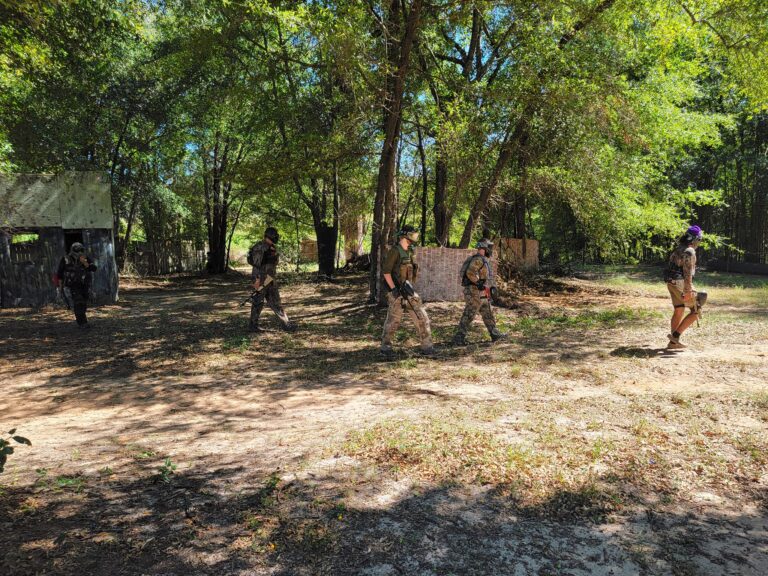
Big Indian Paintball & Airsoft is located in Perry, Georgia, just off Valley Drive, set on an expansive 82-acre property that blends open fields, dense woodland, and a full-scale abandoned town.
The club offers paintball, airsoft, gelly ball, junior league (50-caliber), and NERF play across a 12-acre urban town field, wooded trails, a two-story castle, and two regulation PSP X-ball fields with lights for night games. Walk-on players are welcome without a reservation, and rental packages include markers, masks, and gear. The staff designs mission-based scenarios for each field, and the property includes five large bases and multiple smaller outposts for tactical variety.
Beyond the games, the facility features a covered observation deck, a pavilion with grills and picnic tables, bleachers for tournament viewing, clean restrooms with hot water, and camping space during events. The on-site pro shop sells markers, masks, tanks, and accessories, while the office offers drinks, snacks, and merchandise. The club is a popular choice for birthday parties, corporate team-building, family reunions, and casual group outings.
 Outdoors
Airsoft is an incredibly popular sport in Macon, Georgia. The city offers numerous indoor and outdoor venues for airsoft enthusiasts of all ages and experience levels to enjoy the thrills and camaraderie of the sport.
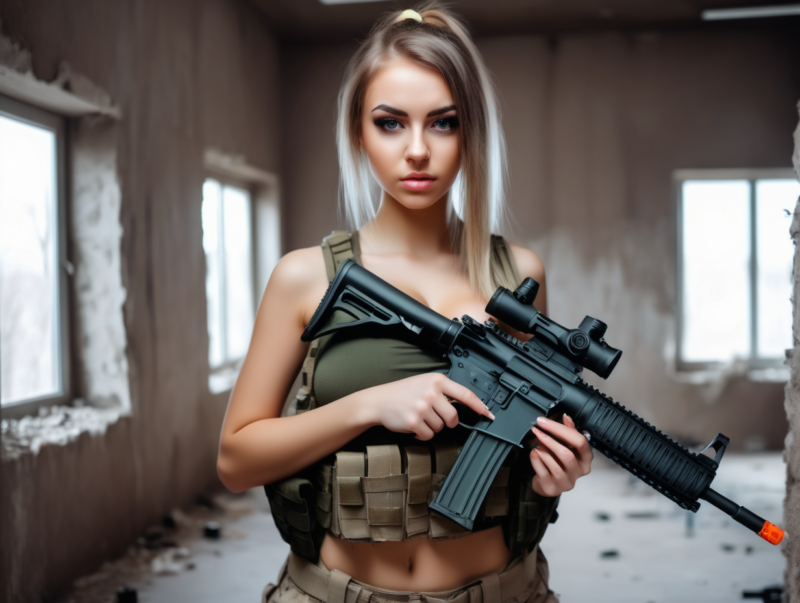
Airsoft is a fast‑growing hobby that blends sport, simulation, and social interaction. Participants—often called “players”—use replica firearms that fire 6 mm plastic BBs powered by electricity, gas, or a spring mechanism. Unlike paintball, the projectiles leave little mess, and the replica weapons are modeled after real‑world firearms, from pistols to full‑size assault rifles. The game takes place on a variety of terrains, ranging from dense woods and abandoned warehouses to purpose‑built indoor arenas. At its core, airsoft offers a safe, controlled environment where enthusiasts can experience the thrill of tactical combat without the lethal consequences of live weapons.
One of the biggest draws of airsoft is its emphasis on realism. Modern replicas faithfully reproduce the weight, ergonomics, and external controls of authentic weapons, allowing players to practice handling techniques that mirror those used by military and law‑enforcement personnel. This realism is more than cosmetic; it encourages disciplined teamwork and strategic thinking. Successful squads coordinate movement, communicate using hand signals or radios, and allocate roles such as point man, support gunner, and medic. The need to think ahead—considering cover, line of sight, and ammunition management—turns each match into a living chess game where the “board” constantly changes.
Airsoft’s versatility is evident in the sheer number of game modes available. Classic “Capture the Flag” pits two teams against each other to retrieve the opponent’s flag while defending their own. “Search and Destroy” focuses on one side planting a mock explosive while the other attempts to defuse it. “MilSim” (military simulation) events recreate specific historical battles or modern tactical scenarios, often lasting several hours and featuring intricate objectives, realistic rules of engagement, and role‑playing elements. Light‑hearted “Free Play” sessions give newcomers a chance to practice without strict objectives. This diversity ensures that whether a player seeks competitive intensity, casual fun, or immersive role‑play, there is a format that fits.
Customization is a cornerstone of the hobby. Most airsoft guns are modular, allowing owners to swap barrels, hop‑up units, stocks, handguards, and optics. These upgrades can improve accuracy, increase range, or simply tailor the weapon’s appearance to the player’s aesthetic preferences. Beyond hardware, players often personalize uniforms, load‑out belts, and tactical accessories such as radios and medical kits.
The community that surrounds airsoft is equally vibrant. Online forums, local clubs, and regional events facilitate knowledge sharing, gear trading, and mentorship. Veteran players routinely welcome newcomers, offering guidance on safety, maintenance, and tactics. This collaborative spirit has helped the hobby expand worldwide, creating a network of enthusiasts who value both competition and camaraderie.
Starting out in airsoft demands a basic set of protective and functional equipment. While the specifics may vary with the chosen game mode, the following items form a solid foundation for safety and performance.
Every reputable field requires players to wear full‑face protection that meets ANSI Z87.1 or a comparable standard. Polycarbonate lenses are essential because they can stop a 6 mm BB traveling at up to 350 ft/s (≈ 106 m/s). Many players opt for goggles combined with a mesh mask, which protects the eyes while allowing adequate airflow.
Gloves shield the hands from BB impact, rough terrain, and cold weather. Tactical gloves with reinforced knuckles provide dexterity for handling magazines and operating weapon controls while offering sufficient padding.
A pair of high‑ankle, lace‑up tactical boots gives ankle support and traction on uneven surfaces. Waterproof materials are advantageous for outdoor fields that become muddy after rain.
Crouching, rolling, and navigating obstacles place stress on joints. Reinforced knee and elbow pads cushion impact and prevent abrasions, especially during fast‑paced “Rush” scenarios.
A lightweight tactical helmet protects the head from stray BBs and low‑hanging obstacles. Many helmets feature a rail system for mounting eye protection and communication devices.
A mesh “balaclava” or a full‑face mask shields the nose, mouth, and chin. This piece is especially important in close‑quarters engagements where BBs can strike at any angle.
By investing in these basics, newcomers lay the groundwork for safe, enjoyable gameplay while complying with most field regulations.
Most organized fields operate under a simple yet effective rule set, built around three pillars: safety, honour, and respect.
Safety First – All players must keep their weapons pointed in a safe direction, engage only when an opponent is within a clearly defined “engagement distance,” and respect designated “safe zones.” Regular safety briefings remind participants to inspect gear, check muzzle velocity limits, and use proper eye protection at all times.
The Honour System – Airsoft relies heavily on honesty. When a player feels they have been hit, they are expected to call “hit” and leave the field or move to a designated respawn area. There is no electronic verification in most games; the trust placed in each participant sustains the flow of the match.
Respect – Players are expected to treat opponents, referees, and field staff with courtesy. Rough physical contact, harassment, or intentional rule violations can result in ejection from the event and a ban from the venue. Maintaining a respectful atmosphere encourages a positive experience for everyone, from seasoned veterans to first‑timers.
Adherence to these principles creates a safe environment where the focus remains on strategy and enjoyment rather than conflict.
Airsoft firearms fall into three primary categories, each with distinct power sources and performance characteristics.
AEGs dominate the market because they combine reliability with ease of use. Powered by a rechargeable battery, an internal motor drives a gearbox that cycles the bolt, feeding BBs from a magazine and delivering semi‑automatic, burst, or fully automatic fire. AEGs are versatile, allowing owners to adjust hop‑up, replace internal parts, and install external accessories. Typical muzzle velocities range from 280 ft/s (85 m/s) for pistols to 400 ft/s (122 m/s) for rifles, depending on field limits.
Gas guns utilize compressed propellant—usually green‑gas (propane mixed with silicone oil) or CO₂—to propel BBs. The gas expands when the trigger releases, driving a piston that pushes the BB out of the barrel. Gas pistols often feature realistic blowback action, where the slide cycles backward, enhancing the tactile experience. Gas rifles can deliver higher velocities (up to 500 ft/s) and are favored for “MilSim” scenarios that demand realistic recoil. However, performance can be temperature‑dependent; colder weather reduces gas pressure and may affect reliability.
Spring guns are the simplest mechanically. Pulling the cock lever or pulling back the hop‑up compresses a spring; releasing the trigger releases the stored energy, firing a single BB. Because each shot requires manual cocking, spring guns are typically used as sniper rifles or bolt‑action rifles. They are inexpensive, require minimal maintenance, and operate reliably in any temperature. Their single‑shot nature encourages precision and careful shot placement.
Understanding the strengths and limitations of each type helps players select the platform that aligns with their preferred play style and budget.
While airsoft is primarily a recreational activity, it has drawn occasional attention from researchers studying ballistic behavior, ergonomics, and psychosocial effects. Materials scientists note that the 6 mm polymer BB offers an ideal test object for studying impact dynamics at low velocities, providing data useful for safety equipment design. Ergonomics experts point out that handling realistic replicas can improve fine motor skills and hand‑eye coordination, especially for individuals who practice in controlled environments.
From a sociological perspective, scholars observe that airsoft serves as a low‑risk outlet for competitive aggression, allowing participants to satisfy the innate desire for teamwork and tactical problem‑solving without exposure to lethal force. Industry analysts, meanwhile, emphasize that the hobby’s growth is driven by advances in battery technology, 3D‑printed accessories, and the rise of organized “MilSim” events that cater to a more narrative‑driven audience. Overall, the consensus among experts is that, when governed by strict safety protocols, airsoft presents a constructive, physically active pastime with educational spill‑over benefits.
Airsoft’s appeal cuts across age groups, professions, and cultures. Young adults in their teens and twenties form the core demographic, attracted by the blend of sport and tactical simulation. Military enthusiasts, law‑enforcement trainees, and former service members often participate to maintain proficiency in maneuvering firearms and coordinating squads. Families with older children find the hobby a way to engage in outdoor activity that emphasizes discipline and communication. Additionally, cosplay communities and historical reenactment groups incorporate airsoft into their events to add an interactive combat element. The hobby’s inclusive nature—supported by beginner‑friendly fields and mentorship programs—ensures a steady influx of new participants each year.
Finding the right venue is essential for a rewarding airsoft experience. Three primary avenues exist for players to engage in the sport.
Commercial fields operate under local regulations and enforce strict safety standards. Indoor arenas often feature modular barriers, darkness lighting, and “close‑quarter battle” (CQB) layouts, while outdoor fields may span several acres with wooded zones, built‑up structures, and long‑range sniper lanes. Most fields provide rental equipment, making them ideal for newcomers who have not yet invested in personal gear.
Grass‑roots clubs gather regularly for practice sessions, friendly scrimmages, and skill workshops. Joining a team provides consistent play opportunities, access to shared equipment, and a supportive network for learning advanced tactics. Many clubs host “open house” days where prospective members can try out the sport in a low‑pressure environment.
MilSim (military simulation) events are large‑scale, often multi‑day affairs that recreate realistic combat scenarios. Participants may be assigned ranks, receive mission briefings, and follow a chain of command. These events can be hosted by dedicated MilSim organizations, private companies, or even military veterans, and they frequently incorporate role‑playing elements such as “intel gathering,” “logistics,” and “medical evacuation.” For players seeking an immersive experience that goes beyond a typical match, MilSim offers a deep dive into strategic planning and long‑term endurance.
Regardless of the venue, the common thread is a shared commitment to safety, fair play, and mutual respect, ensuring that every session—whether a quick weekend match or a week‑long campaign—remains enjoyable for all participants.
Airsoft stands at the intersection of sport, simulation, and community. Its realistic replicas, diverse game modes, and customizable equipment attract a wide audience ranging from tactical enthusiasts to casual weekend warriors. By adhering to fundamental safety rules, respecting the honour system, and embracing the collaborative spirit of the community, players can experience a rewarding blend of teamwork, strategy, and adrenaline. Whether stepping onto a local field for the first time, joining a seasoned squad, or embarking on an immersive MilSim operation, the world of airsoft offers endless opportunities to learn, grow, and engage with like‑minded individuals worldwide.


 301 Valley Dr, Perry, GA 31069, United States