El Monte
 Log in
Log in
Log in

Monster Mini Golf Edison sits in the ShopRite of Edison shopping plaza along U.S. Route 1 in Edison, New Jersey, as a fully indoor, climate-controlled entertainment venue. Its main draw is an 18-hole glow-in-the-dark mini golf course lined with hand-painted artwork and animated animatronic monsters, set to music from the in-house W.I.R.D. Radio station. The venue also features a large arcade mixing retro classics like Pac-Man and Galaga with modern titles such as Halo and Jurassic Park, plus a redemption prize center that runs on reloadable Monster Game Cards.
For celebrations and groups, the venue offers themed private event rooms for birthday parties, with packages covering mini golf, arcade play, pizza, and soda, plus customizable corporate and team-building packages with private suites and outside catering allowed. Friendly, attentive hosts handle setup, service, and cleanup, and comfortable seating areas — including massage chairs overlooking the course — let guests unwind between rounds. It’s a popular choice for family outings, children’s birthdays, date nights, and company events alike.
 Indoors
Monster Mini Golf Eatontown is located in Eatontown, New Jersey, in Monmouth County near the Point Pleasant shore area, as a fully indoor, climate-controlled entertainment destination.
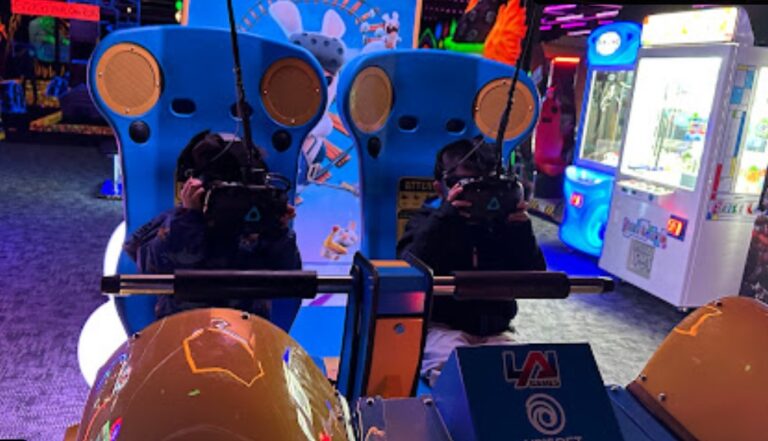
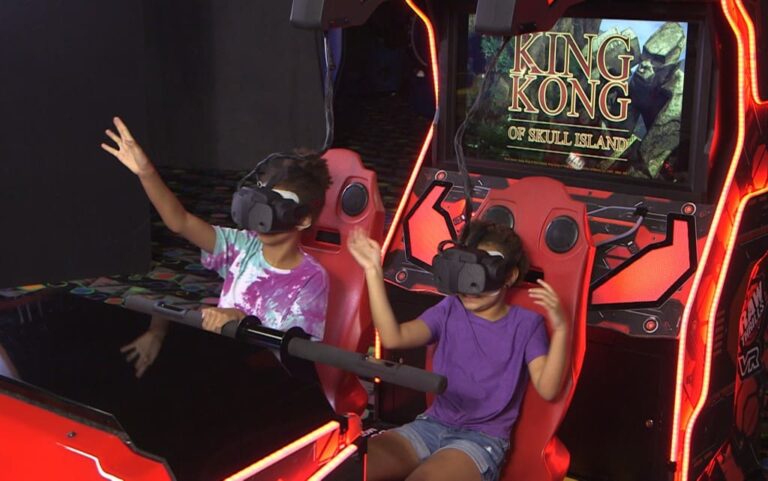
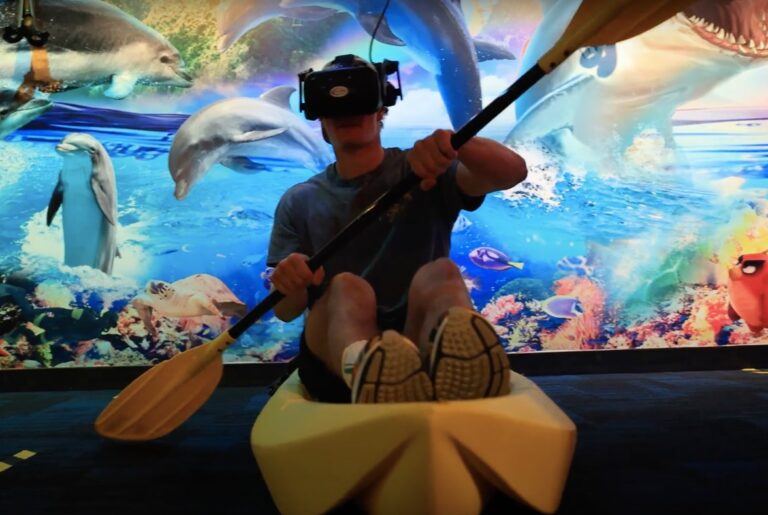
The venue centers on an 18-hole glow-in-the-dark, monster-themed mini golf course with hand-painted neon artwork, friendly animated monsters, and an in-house radio station with live DJ interaction. Beyond golf, guests enjoy a large arcade with redemption games, virtual reality experiences, bowling, and a laser maze, all in a family-friendly, accessible setting.
The facility is a popular choice for birthday parties, field trips, fundraisers, corporate events, and team-building days, with themed packages that include private rooms, mini golf, arcade play, and catering handled by the staff. Reviews praise the friendly, professional team, clean facilities, and relaxed atmosphere, with massage chairs overlooking the course for those who want to unwind while keeping an eye on the fun.
IndoorsSandbox VR Paramus sits along Route 17 South in Paramus, New Jersey, in the middle of Bergen County’s busy shopping corridor.
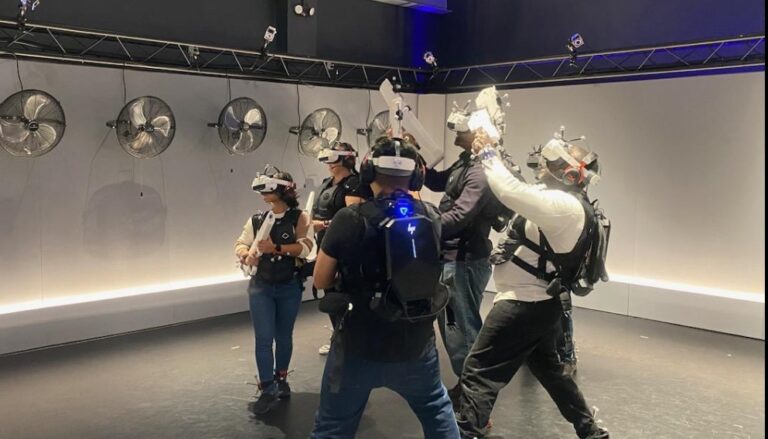
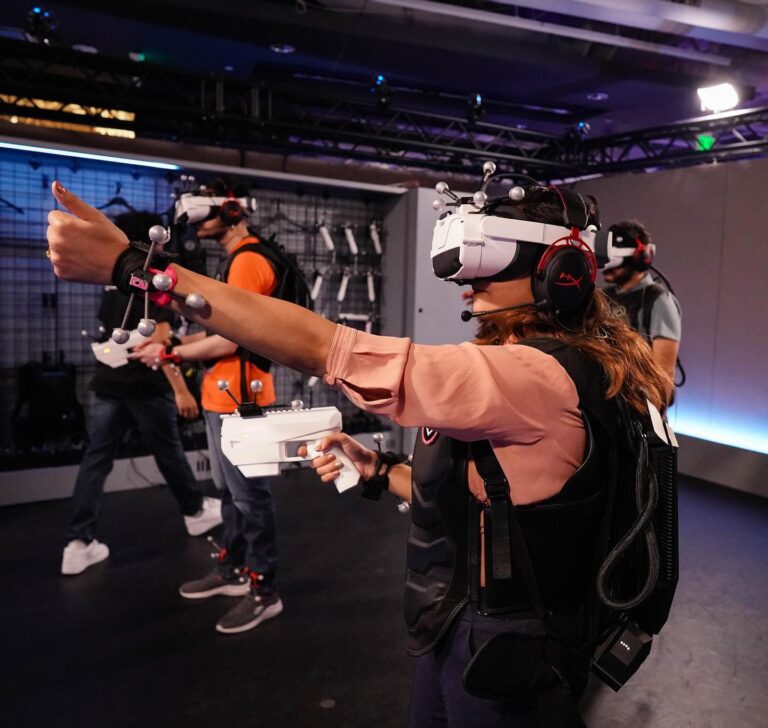
It is a free-roam, full-body virtual reality venue where groups of two to six players physically move through worlds like Squid Game Virtuals, Stranger Things: Catalyst, Age of Dinosaurs, and the Deadwood horror series. Guests wear headsets, body sensors, and haptic vests for realistic feedback, and each roughly 60-minute session includes gearing up, gameplay, and a free personalized cinematic highlight reel.
The venue also handles birthdays, corporate events, and team-building outings, with a lounge area for relaxing before and after play. The staff is known for being accommodating and attentive, helping groups pick games and guiding them through the process. A weekday promo offers 30% off Monday through Friday, and the experience suits families, couples, and coworkers alike.
IndoorsUrban Air Trampoline and Adventure Park sits in the Avenel section of Woodbridge Township, New Jersey, along Saint Georges Avenue, convenient for families from Colonia, Woodbridge, Rahway, Iselin, and Carteret.
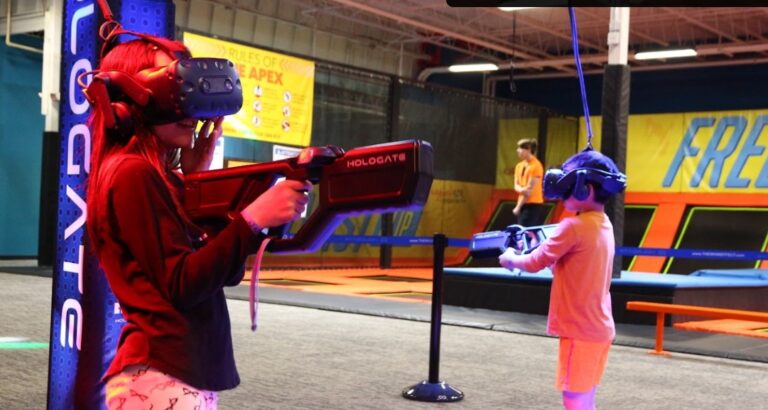
The park is a year-round indoor playground where a single Unlimited Play ticket unlocks every attraction for the whole day — trampolines, a Warrior Course, climbing walls, a Slam Dunk Zone, Battle Beam, a Tubes playground, virtual reality, and a dedicated area for kids 7 and under. Memberships cost about half the price of a day ticket and cover unlimited monthly visits, with reduced rates for children 40 inches and under and for parents.
Birthday parties are a specialty, with Deluxe and Ultimate packages, a Small Squad option, and upgraded Private Room and VIP Suite spaces, all planned online with staff handling the details. A full-service cafe, the Adventure 4 All family bundle, and friendly, helpful staff round out the experience, making it a solid choice for birthdays, family outings, and group events regardless of the weather.
IndoorsUrban Air Adventure Park sits in South Hackensack, New Jersey, in Bergen County, just off Route 17 and within easy reach of Hackensack, Little Ferry, Ridgefield Park, Teaneck, and Paramus.
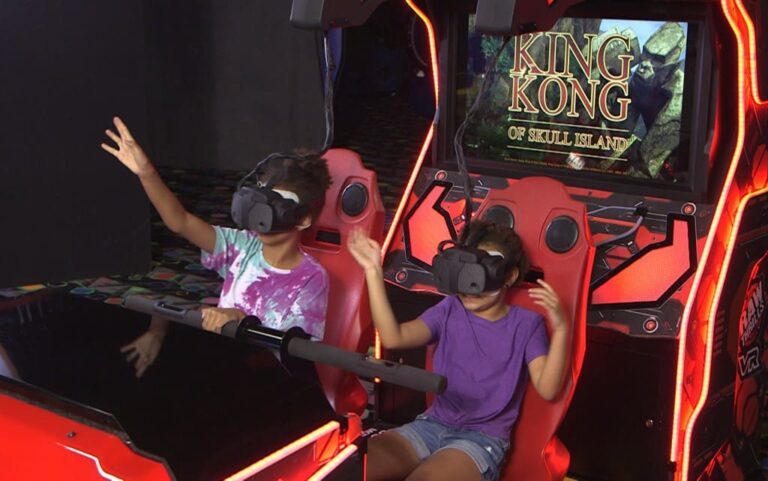
The park is a full indoor adventure center where trampolines, climbing walls, a warrior course, dodgeball, a slam dunk zone, a tubes playground, and virtual reality all live under one climate-controlled roof. Guests can bounce on APEX and ProZone trampolines, race down the Runway tumble track, conquer the Climbing Hill, and battle on the foam-pit Battle Beam. Day tickets, the Adventure 4 All family bundle, and monthly memberships make it easy to visit regularly, while the all-day play model suits everything from casual family outings to active field trips.
Birthday parties are a specialty, with packages that include a dedicated host, a reserved table or private room, pizza and water, a free attraction pass for the birthday child, and full setup and cleanup handled by staff. Add-ons range from pepperoni and cauliflower-crust pizzas to Dippin’ Dots, cotton candy, wings, and goody bags. The friendly, safety-focused crew is praised for its inclusiveness, and reserved tables and private rooms give guests a comfortable place to rest and refuel between adventures.
IndoorsMonster Mini Golf Fairfield sits along U.S. Route 46 in Fairfield, New Jersey, a fully indoor, climate-controlled entertainment center that keeps the fun going regardless of the weather. The venue centers on an 18-hole glow-in-the-dark mini golf course filled with friendly monsters, neon decor, and creative obstacles, complemented by a large arcade with retro and modern games, virtual reality experiences, bowling lanes, and a laser tag arena. Party packages include private themed rooms, mini golf, arcade play, and food, with staff handling setup and cleanup for birthdays, field trips, and corporate events.
Beyond the games, the facility offers private party rooms with refrigerators and space for food and cake, a prize center for redeeming arcade tickets, and even massage chairs overlooking the course for relaxed spectators. The friendly, attentive staff and clean, well-maintained games make it a welcoming destination for families, date nights, and group celebrations of all kinds.
IndoorsOasisVRX specializes in delivering hyper-realistic virtual reality sessions that cater to a wide audience—gamers, families, corporate teams, and even curious newcomers to the VR space. Unlike traditional arcade setups or home VR systems, OasisVRX offers spacious, room-scale environments where users can physically move, dodge, and explore within virtual landscapes. With powerful headsets, motion-tracking technology, and high-fidelity audio, the center ensures that immersion isn’t just a buzzword—it’s the foundation of every experience.
The venue features a curated selection of VR content, ranging from adrenaline-pumping shooters and cooperative zombie survival games to serene mindfulness journeys and creative sandbox environments. Whether participants are fending off alien invasions, solving intricate puzzles in fantastical realms, or practicing public speaking in simulated auditoriums, the variety ensures there’s something for every interest and age group.
IndoorsPower Up Arena is located in Paramus, NJ.
Power Up Arena specializes in high-quality, social VR experiences that emphasize teamwork and excitement. Patrons don VR headsets and motion-tracking gear to step into meticulously designed environments, from adrenaline-fueled combat simulations to collaborative puzzle-solving quests.
Beyond entertainment, Power Up Arena highlights the broader potential of VR. Some experiences incorporate educational elements, such as historical reenactments or interactive science scenarios, subtly blending learning with fun. The venue also hosts themed events, like VR tournaments or pop-culture inspired challenges, creating a dynamic calendar that keeps visitors coming back. For families, it’s a rare opportunity to engage in an activity that balances excitement with mental stimulation, offering a break from traditional screen time.
IndoorsSandbox VR Woodbridge sits in the Woodbridge Crossing shopping center on Green Street in Woodbridge Township, New Jersey, a short drive from the Garden State Parkway and within easy reach of the surrounding Middlesex County towns.
It runs free-roam, full-body virtual reality in a large open arena, with motion capture and haptic vests that make every hit feel physical. The game library spans licensed worlds including Squid Game Virtuals, Stranger Things: Catalyst, the Deadwood zombie series, and the family-friendly Age of Dinosaurs, with each session accommodating 2 to 6 players aged 6 and up and ending with a free personalized highlight reel.
Beyond the arena, the venue includes a bar and lounge area for relaxing before or after play, and it’s a natural fit for birthday parties, date nights, corporate team building, and family outings. The staff handles gear fitting, briefings, and photo capture, and the store offers gift cards, back-to-back bookings for two games at a discounted second rate, and private events for groups larger than six.
Indoors
A free‑roam virtual‑reality arena is a physical space that blends real‑world freedom of movement with immersive digital environments. Unlike seated or tethered VR setups, which keep the user in a limited area, free‑roam arenas are equipped with wireless head‑mounted displays (HMDs) and a network of motion‑capture sensors that track the participant’s position, orientation, and gestures across a sizable floor plan. The result is a seamless blend of the participant’s body and the virtual world, allowing people to walk, run, duck, and interact with objects as naturally as they would in a real room.
The architecture of a free‑roam arena typically includes safety padding, clearly marked boundaries, and often a combination of wall‑mounted and ceiling‑mounted tracking units. The tracking system can be optical (using infrared cameras) or based on inside‑out sensors embedded in the headset; both approaches aim to deliver millimetric accuracy and low latency, which are essential for preventing motion sickness. Because the hardware is untethered, users are not constrained by cables, and the arena can be reconfigured for a variety of experiences—from sprawling sci‑fi landscapes to intimate puzzle rooms.
The flexibility of a free‑roam environment fuels a diverse range of scenarios, each capitalizing on the ability to move freely in three dimensions.
Adventure Exploration – Participants can wander through meticulously crafted worlds such as ancient ruins, alien planets, or deep‑sea wrecks. The physical act of stepping forward to cross a virtual chasm or climbing a virtual ladder adds a visceral layer that flat screen or seated VR cannot replicate.
Team‑Based Challenges – Multiplayer games that require coordination, such as tactical shooters, escape‑room puzzles, or sports simulations, thrive in free‑roam settings. Teams must communicate both verbally and through gestures, mirroring the dynamics of real‑world collaboration.
Educational Simulations – Learners can step inside a virtual chemistry lab, dissect a dinosaur skeleton, or tour a historical battlefield. The embodied experience reinforces memory retention and stimulates curiosity, especially when the scenario allows for hands‑on interaction with virtual objects.
Therapeutic and Rehabilitation Programs – Physical therapists employ free‑roam VR to motivate patients to perform gait exercises, balance drills, and fine‑motor tasks within a gamified context. The immediate visual feedback and playful environment encourage adherence to rehabilitation protocols.
Artistic Installations – Artists can craft immersive installations where visitors become part of a living canvas, manipulating light, sound, and virtual particles through their movement.
These scenarios are often modular; a single arena can host a horror maze one day, a corporate team‑building exercise the next, and a birthday party later in the week, all by swapping software and re‑arranging physical props.
The user base for free‑roam VR is remarkably broad, reflecting the technology’s capacity to satisfy both entertainment cravings and practical needs.
Gamers and Thrill‑Seekers – Young adults and seasoned gamers are drawn to the intense immersion and the physicality of the experience. The ability to physically dodge a virtual projectile or swing a sword adds a level of excitement that conventional VR cannot match.
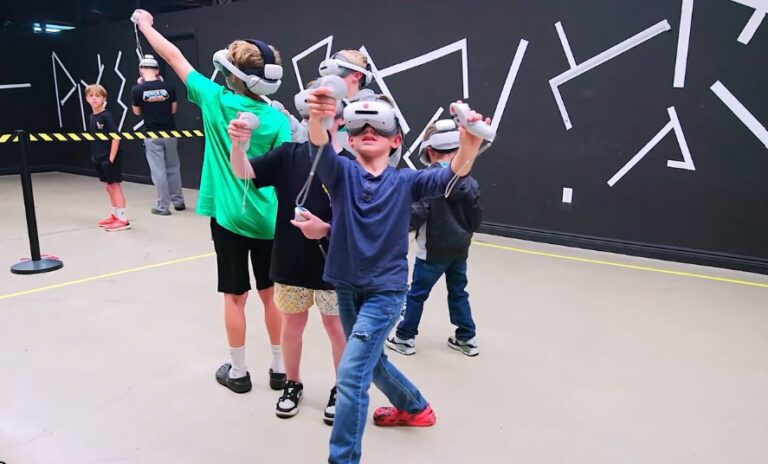
Families and Children – Parents appreciate the safe, supervised environment where kids can explore fantastical worlds without the risk of bumping into furniture at home. The tactile nature of free‑roam VR helps children develop spatial awareness and coordination.
Corporate Teams – Companies use the arenas for team‑building, leadership training, and creative brainstorming. The shared virtual space forces participants to collaborate, solve problems, and communicate under pressure, fostering a sense of camaraderie.
Educators and Researchers – Schools and universities adopt free‑roam VR for immersive lessons in subjects ranging from anatomy to astronomy. Researchers study human behavior, perception, and ergonomics within the controlled yet realistic setting the arenas provide.
Healthcare Professionals – Physical therapists, psychologists, and occupational therapists leverage the technology for patient rehabilitation, anxiety reduction, and cognitive training, capitalizing on the engaging nature of the medium to improve outcomes.
When designed with children in mind, free‑roam VR arenas become more than just entertainment venues; they transform into educational playgrounds. Safety mechanisms such as padded flooring, low‑height boundaries, and guardian monitoring systems ensure that younger participants can explore without risk. Content developers tailor experiences to be age‑appropriate, focusing on bright visuals, gentle pacing, and interactive storytelling.
For example, a “Space Explorer” scenario might have children pilot a friendly spacecraft, collecting stars and learning basic astronomy facts along the way. Because the participants physically move to steer the ship, they develop gross motor skills while absorbing scientific concepts. Similarly, a “Dinosaur Dig” adventure encourages curiosity about paleontology; kids can virtually unearth fossils, examine them in 3D, and assemble skeletal models, reinforcing fine motor control and knowledge retention.
Parental dashboards allow guardians to set session lengths, choose difficulty levels, and track progress. This level of control reassures parents that the experience is both enjoyable and beneficial, turning free‑roam VR into a valuable supplement to traditional classroom learning.
The versatility of free‑roam VR makes it a compelling venue for a wide spectrum of celebrations and corporate gatherings.
Birthday celebrations in a free‑roam arena combine the excitement of a party with the novelty of immersive technology. Packages often include themed experiences such as “Superhero Academy” or “Wizarding Quest,” where the birthday child and friends become protagonists in a narrative tailored to their interests. The physical movement required adds a healthy dose of activity, while the customizable lighting and sound create a festive atmosphere. Event staff handle equipment setup, safety briefings, and post‑play cleanup, allowing families to focus on enjoyment.
Graduation marks a milestone, and free‑roam VR can elevate the ceremony into a memorable event. A cohort of graduates might be guided through a virtual timeline of their academic journey, reliving key moments in a shared, immersive space. The experience can culminate in a celebratory virtual fireworks display, synchronized with real‑world confetti cannons, providing a symbolic transition from the past to the future. The interactive nature encourages alumni networking, as participants explore the virtual venue together and discuss their experiences.
Corporate events benefit from the combination of fun and functional outcomes that free‑roam VR offers. Companies can design bespoke scenarios aligned with brand values—such as navigating a virtual supply chain to illustrate logistics concepts, or solving a simulated crisis to practice decision‑making under pressure. After the gameplay, facilitators debrief participants, extracting lessons on communication, leadership, and problem‑solving. The physical engagement also promotes employee wellness, breaking the monotony of typical conference‑room meetings.
In each of these contexts, the venue’s ability to reconfigure its layout and software quickly ensures that the same physical space can host wildly different experiences, maximizing return on investment for organizers.
The scientific community and industry leaders view free‑roam VR as a pivotal technology with far‑reaching implications for human–computer interaction, neuroscience, and commercial entertainment.
Human‑Centered Design – Researchers emphasize that the embodied nature of free‑roam VR aligns with how the brain processes spatial information. By allowing users to physically move, the technology engages vestibular and proprioceptive cues, resulting in higher presence and reduced simulator sickness compared to stationary setups. Studies indicate that this multisensory integration improves learning outcomes and memory retention, especially in experiential education.
Neuroscience and Cognitive Research – Neuroscientists employ free‑roam arenas to investigate navigation strategies, spatial memory formation, and the neural correlates of immersion. The ability to manipulate virtual environments while recording brain activity (via portable EEG or functional near‑infrared spectroscopy) opens new avenues for understanding how the brain adapts to synthetic realities.
Ergonomics and Safety – Industry experts stress the importance of designing arenas with ergonomics in mind. The optimal height of tracking sensors, the spacing of physical obstacles, and the latency thresholds for motion-to-photon conversion are all critical variables that influence user comfort and safety. Standards bodies are working toward establishing guidelines that ensure consistent performance across venues.
Commercial Viability – Market analysts project steady growth for location‑based VR experiences, with free‑roam arenas positioned as premium offerings. The high upfront cost of hardware, space, and staffing is offset by the ability to charge premium ticket prices for unique experiences, corporate bookings, and educational programs. Innovations such as modular tracking systems and scalable software platforms are reducing operational expenses, making the model more accessible to smaller entrepreneurs.
Future Directions – Experts anticipate convergence with other emerging technologies. Integration of haptic suits, scent emitters, and adaptive AI-driven narratives could further blur the line between physical and virtual worlds. Additionally, advances in wireless bandwidth and edge computing promise to shrink latency even further, enhancing realism and expanding the potential for multi‑user interactions across globally distributed arenas.
Overall, the consensus among scientists and industry veterans is that free‑roam VR represents a critical step toward truly immersive, embodied digital experiences. Its applications stretch beyond entertainment, poised to influence education, healthcare, and workplace training for years to come.
Free‑roam virtual‑reality arenas have evolved from niche attractions into multifaceted platforms that cater to gamers, families, educators, corporations, and healthcare professionals alike. By merging unrestricted physical movement with high‑fidelity digital environments, they deliver experiences that are immersive, educational, and emotionally resonant. Whether children embark on a dinosaur‑dig adventure, graduates revisit their academic milestones, or scientists probe the neural underpinnings of navigation, the arena provides a versatile canvas for storytelling and interaction.
The growing body of research underscores the cognitive and ergonomic benefits of embodied VR, while industry developments continue to lower barriers to entry and expand creative possibilities. As technology advances and content ecosystems mature, free‑roam VR is poised to become a staple of modern entertainment, learning, and professional development—transforming the way people perceive and engage with virtual worlds, one step at a time.


 775 US-1, Edison, NJ 08817, United States