El Monte
 Log in
Log in
Log in

Urban Air Trampoline and Adventure Park sits in the Avenel section of Woodbridge Township, New Jersey, along Saint Georges Avenue, convenient for families from Colonia, Woodbridge, Rahway, Iselin, and Carteret.
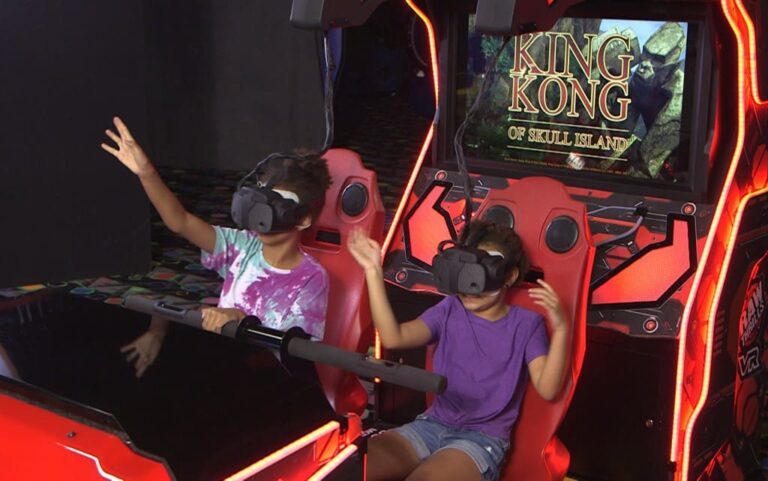
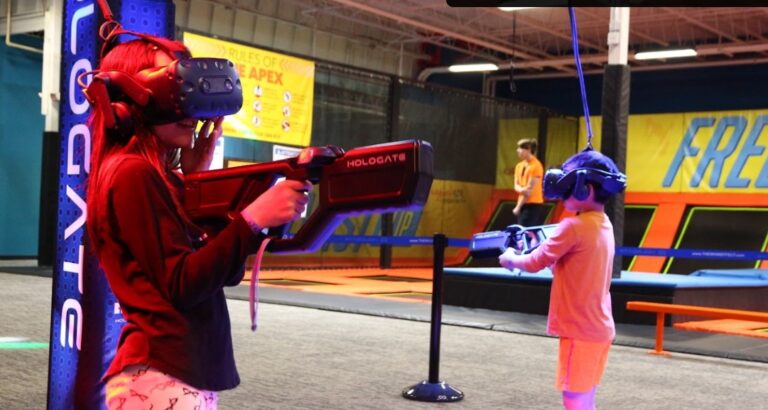
The park is a year-round indoor playground where a single Unlimited Play ticket unlocks every attraction for the whole day — trampolines, a Warrior Course, climbing walls, a Slam Dunk Zone, Battle Beam, a Tubes playground, virtual reality, and a dedicated area for kids 7 and under. Memberships cost about half the price of a day ticket and cover unlimited monthly visits, with reduced rates for children 40 inches and under and for parents.
Birthday parties are a specialty, with Deluxe and Ultimate packages, a Small Squad option, and upgraded Private Room and VIP Suite spaces, all planned online with staff handling the details. A full-service cafe, the Adventure 4 All family bundle, and friendly, helpful staff round out the experience, making it a solid choice for birthdays, family outings, and group events regardless of the weather.
 Indoors
Monster Mini Golf Eatontown is located in Eatontown, New Jersey, in Monmouth County near the Point Pleasant shore area, as a fully indoor, climate-controlled entertainment destination.
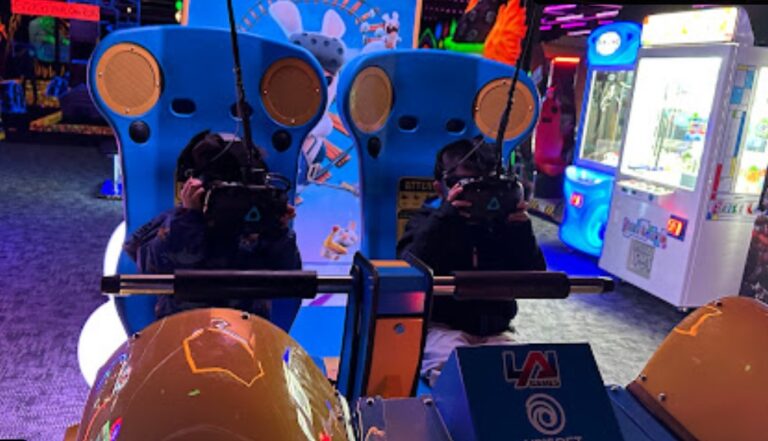
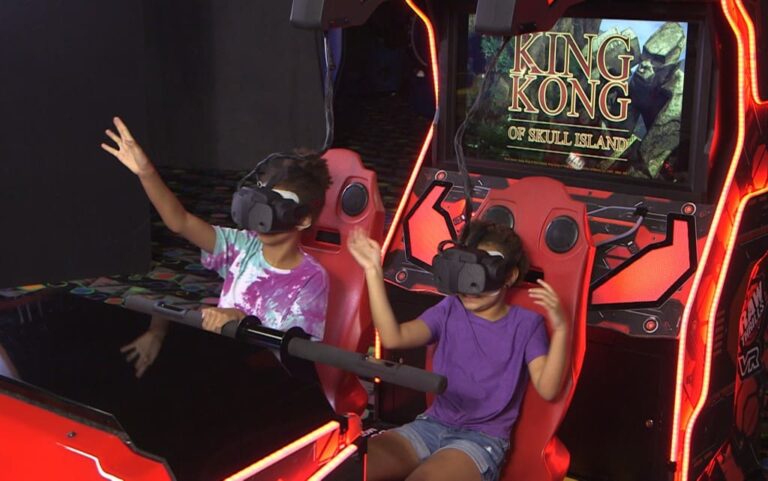
The venue centers on an 18-hole glow-in-the-dark, monster-themed mini golf course with hand-painted neon artwork, friendly animated monsters, and an in-house radio station with live DJ interaction. Beyond golf, guests enjoy a large arcade with redemption games, virtual reality experiences, bowling, and a laser maze, all in a family-friendly, accessible setting.
The facility is a popular choice for birthday parties, field trips, fundraisers, corporate events, and team-building days, with themed packages that include private rooms, mini golf, arcade play, and catering handled by the staff. Reviews praise the friendly, professional team, clean facilities, and relaxed atmosphere, with massage chairs overlooking the course for those who want to unwind while keeping an eye on the fun.
IndoorsMonster Mini Golf Edison sits in the ShopRite of Edison shopping plaza along U.S. Route 1 in Edison, New Jersey, as a fully indoor, climate-controlled entertainment venue. Its main draw is an 18-hole glow-in-the-dark mini golf course lined with hand-painted artwork and animated animatronic monsters, set to music from the in-house W.I.R.D. Radio station. The venue also features a large arcade mixing retro classics like Pac-Man and Galaga with modern titles such as Halo and Jurassic Park, plus a redemption prize center that runs on reloadable Monster Game Cards.
For celebrations and groups, the venue offers themed private event rooms for birthday parties, with packages covering mini golf, arcade play, pizza, and soda, plus customizable corporate and team-building packages with private suites and outside catering allowed. Friendly, attentive hosts handle setup, service, and cleanup, and comfortable seating areas — including massage chairs overlooking the course — let guests unwind between rounds. It’s a popular choice for family outings, children’s birthdays, date nights, and company events alike.
IndoorsPower Up Arena is located in Paramus, NJ.
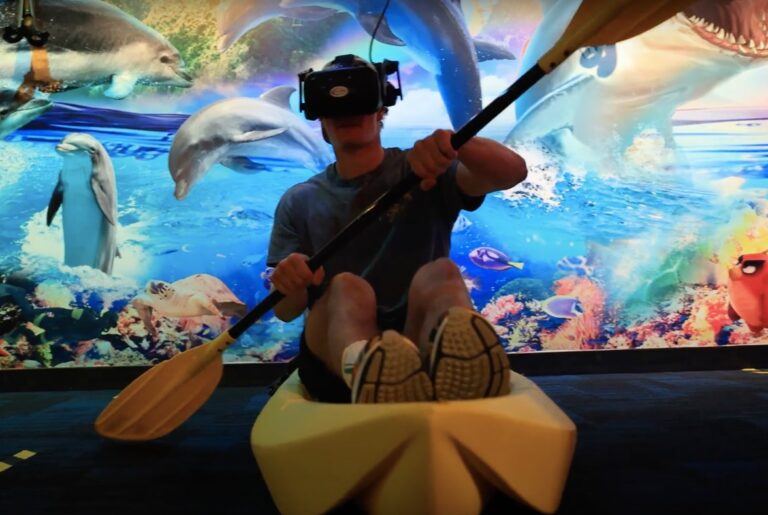
Power Up Arena specializes in high-quality, social VR experiences that emphasize teamwork and excitement. Patrons don VR headsets and motion-tracking gear to step into meticulously designed environments, from adrenaline-fueled combat simulations to collaborative puzzle-solving quests.
Beyond entertainment, Power Up Arena highlights the broader potential of VR. Some experiences incorporate educational elements, such as historical reenactments or interactive science scenarios, subtly blending learning with fun. The venue also hosts themed events, like VR tournaments or pop-culture inspired challenges, creating a dynamic calendar that keeps visitors coming back. For families, it’s a rare opportunity to engage in an activity that balances excitement with mental stimulation, offering a break from traditional screen time.
IndoorsSandbox VR Paramus sits along Route 17 South in Paramus, New Jersey, in the middle of Bergen County’s busy shopping corridor.
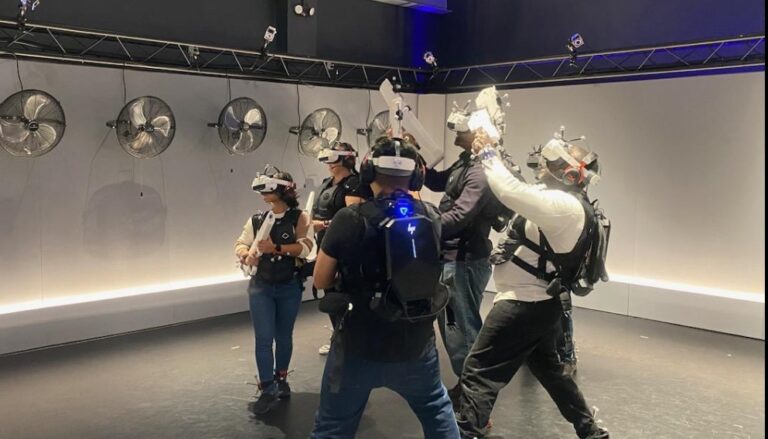
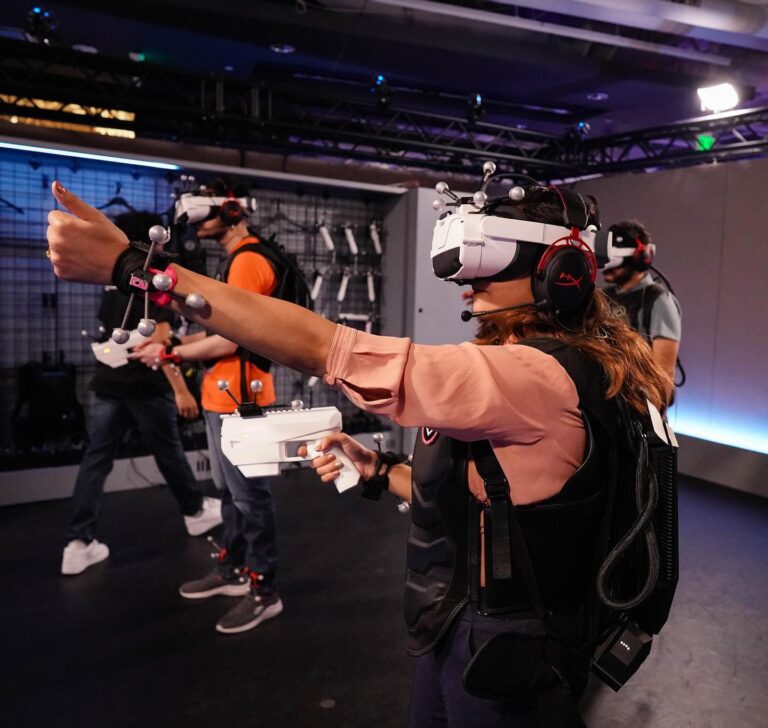
It is a free-roam, full-body virtual reality venue where groups of two to six players physically move through worlds like Squid Game Virtuals, Stranger Things: Catalyst, Age of Dinosaurs, and the Deadwood horror series. Guests wear headsets, body sensors, and haptic vests for realistic feedback, and each roughly 60-minute session includes gearing up, gameplay, and a free personalized cinematic highlight reel.
The venue also handles birthdays, corporate events, and team-building outings, with a lounge area for relaxing before and after play. The staff is known for being accommodating and attentive, helping groups pick games and guiding them through the process. A weekday promo offers 30% off Monday through Friday, and the experience suits families, couples, and coworkers alike.
IndoorsUrban Air Adventure Park sits in South Hackensack, New Jersey, in Bergen County, just off Route 17 and within easy reach of Hackensack, Little Ferry, Ridgefield Park, Teaneck, and Paramus.
The park is a full indoor adventure center where trampolines, climbing walls, a warrior course, dodgeball, a slam dunk zone, a tubes playground, and virtual reality all live under one climate-controlled roof. Guests can bounce on APEX and ProZone trampolines, race down the Runway tumble track, conquer the Climbing Hill, and battle on the foam-pit Battle Beam. Day tickets, the Adventure 4 All family bundle, and monthly memberships make it easy to visit regularly, while the all-day play model suits everything from casual family outings to active field trips.
Birthday parties are a specialty, with packages that include a dedicated host, a reserved table or private room, pizza and water, a free attraction pass for the birthday child, and full setup and cleanup handled by staff. Add-ons range from pepperoni and cauliflower-crust pizzas to Dippin’ Dots, cotton candy, wings, and goody bags. The friendly, safety-focused crew is praised for its inclusiveness, and reserved tables and private rooms give guests a comfortable place to rest and refuel between adventures.
IndoorsMonster Mini Golf Fairfield sits along U.S. Route 46 in Fairfield, New Jersey, a fully indoor, climate-controlled entertainment center that keeps the fun going regardless of the weather. The venue centers on an 18-hole glow-in-the-dark mini golf course filled with friendly monsters, neon decor, and creative obstacles, complemented by a large arcade with retro and modern games, virtual reality experiences, bowling lanes, and a laser tag arena. Party packages include private themed rooms, mini golf, arcade play, and food, with staff handling setup and cleanup for birthdays, field trips, and corporate events.
Beyond the games, the facility offers private party rooms with refrigerators and space for food and cake, a prize center for redeeming arcade tickets, and even massage chairs overlooking the course for relaxed spectators. The friendly, attentive staff and clean, well-maintained games make it a welcoming destination for families, date nights, and group celebrations of all kinds.
IndoorsSandbox VR Woodbridge sits in the Woodbridge Crossing shopping center on Green Street in Woodbridge Township, New Jersey, a short drive from the Garden State Parkway and within easy reach of the surrounding Middlesex County towns.
It runs free-roam, full-body virtual reality in a large open arena, with motion capture and haptic vests that make every hit feel physical. The game library spans licensed worlds including Squid Game Virtuals, Stranger Things: Catalyst, the Deadwood zombie series, and the family-friendly Age of Dinosaurs, with each session accommodating 2 to 6 players aged 6 and up and ending with a free personalized highlight reel.
Beyond the arena, the venue includes a bar and lounge area for relaxing before or after play, and it’s a natural fit for birthday parties, date nights, corporate team building, and family outings. The staff handles gear fitting, briefings, and photo capture, and the store offers gift cards, back-to-back bookings for two games at a discounted second rate, and private events for groups larger than six.
IndoorsOasisVRX specializes in delivering hyper-realistic virtual reality sessions that cater to a wide audience—gamers, families, corporate teams, and even curious newcomers to the VR space. Unlike traditional arcade setups or home VR systems, OasisVRX offers spacious, room-scale environments where users can physically move, dodge, and explore within virtual landscapes. With powerful headsets, motion-tracking technology, and high-fidelity audio, the center ensures that immersion isn’t just a buzzword—it’s the foundation of every experience.
The venue features a curated selection of VR content, ranging from adrenaline-pumping shooters and cooperative zombie survival games to serene mindfulness journeys and creative sandbox environments. Whether participants are fending off alien invasions, solving intricate puzzles in fantastical realms, or practicing public speaking in simulated auditoriums, the variety ensures there’s something for every interest and age group.
IndoorsA free‑roam virtual‑reality arena is a purpose‑built physical space that lets participants move without constraints while remaining fully immersed in a digital world. Unlike seated or treadmill‑based VR setups, the arena is equipped with a network of external sensors—often a combination of infrared cameras, lidar scanners, or radio‑frequency beacons—that track the exact position and orientation of each headset and controller in real time. The result is a seamless overlay of virtual environments onto a safe, open‑floor area where users can walk, duck, reach, and even jump as they would in the real world.
The technology behind free‑roam arenas has matured from early research labs into commercial installations that can accommodate anywhere from a handful of players to whole teams. The floor is typically a soft, non‑slippery material, and the walls are padded or made of clear acrylic to prevent injuries. Lighting is carefully calibrated to keep the motion‑capture system accurate while still allowing dramatic visual effects inside the head‑mounted displays. In short, a free‑roam VR arena blends the physical safety of a playground with the limitless imagination of a computer‑generated universe.
Because the arena can replicate any spatial layout, developers have created a rich library of scenarios that take full advantage of unrestricted movement. Some of the most popular categories include:
Adventure Quest – Players become explorers navigating ancient ruins, alien planets, or mythic forests. Physical obstacles such as climbing walls or rope bridges are mirrored by virtual equivalents, making each climb feel real.
Competitive Sports – From futuristic laser tag to zero‑gravity basketball, these games translate the kinetic excitement of physical sport into a digital arena. The ability to sprint, dodge, and block adds a layer of strategy that seated shooters cannot match.
Co‑operative Puzzle Rooms – Teams must manipulate oversized virtual objects, align holographic symbols, or synchronize movements to unlock doors. The tactile feedback of reaching out and physically moving objects deepens the sense of teamwork.
Training Simulations – First responders, military units, and industrial workers practice high‑risk procedures in a risk‑free environment. Scenarios can range from firefighting in a burning building to operating heavy machinery on a factory floor.
Narrative Experiences – Story‑driven adventures guide participants through branching plots, where their physical choices affect the outcome. The combination of acting, exploration, and problem‑solving makes these experiences feel like immersive theatre.
Each scenario is designed to exploit the arena’s tracking fidelity, encouraging users to move naturally rather than relying on artificial locomotion methods that can cause motion sickness. As a result, free‑roam VR delivers a level of presence that is difficult to achieve with conventional setups.
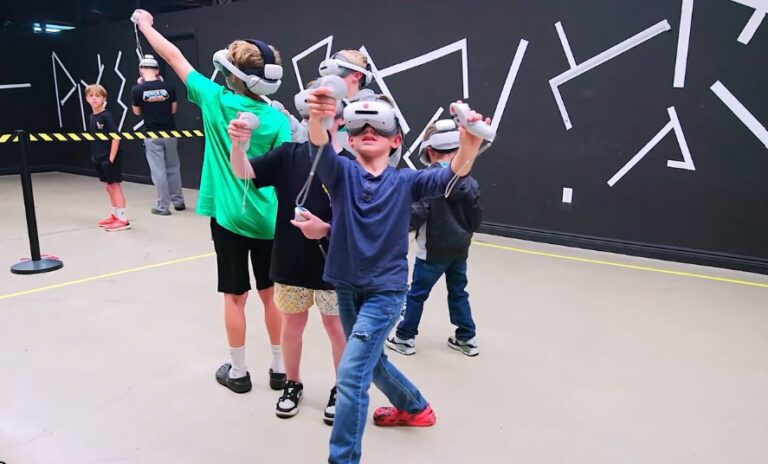
The audience for free‑roam VR is remarkably diverse, and children represent a growing segment of that market. Parents and educators are drawn to the technology because it offers an active alternative to screen‑time that still leverages digital content. For kids, the appeal lies in the marriage of physical play—running, jumping, and gesturing—with the magic of fantastical worlds that would otherwise be inaccessible.
Safety protocols are stricter for younger participants. Age‑appropriate headset straps, reduced motion intensity, and scenarios that avoid scary or overly violent themes ensure that the experience remains both fun and suitable. Some facilities run dedicated “Kids’ Hours,” where staff guide children through curated adventures that emphasize problem‑solving, cooperation, and gentle physical challenges. Because the arena encourages movement, it also serves as a subtle tool for promoting physical activity, helping to combat the sedentary habits often associated with traditional video gaming.
In educational contexts, schools have begun to incorporate free‑roam VR into curricula. Science classes can explore the human bloodstream, history lessons can transport students to ancient civilizations, and language classes can practice conversation in simulated real‑world settings. The immersive nature of the arena captures attention in a way that textbooks alone rarely do, making it a compelling addition to modern pedagogy.
Beyond everyday entertainment, free‑roam VR has become a go‑to option for milestone celebrations and corporate events. The flexibility of the arena allows organizers to tailor the experience to the occasion, creating memorable moments that stand out from conventional party activities.
A birthday party in a free‑roam arena is essentially a custom adventure. Parents can select a themed quest—such as a pirate treasure hunt or a superhero training camp—where the birthday child becomes the central hero. The physical nature of the arena means that guests burn off cake‑induced energy while collaborating to solve challenges, fostering camaraderie among friends. Party packages often include private time slots, personalized avatars, and celebratory digital trophies, turning the celebration into a narrative that can be replayed in photos and videos.
Graduates looking for an unconventional way to mark the end of an academic chapter are turning to free‑roam VR for a “future‑forward” celebration. Schools can design scenarios that symbolize the journey from freshman to senior year, with symbolic checkpoints representing academic milestones. The immersive environment lends itself to group photos taken inside the virtual world, providing a futuristic twist on traditional yearbook portraits. Moreover, the physical activity helps offset the sedentary nature of typical graduation events, making the day both meaningful and energizing.
In the corporate sphere, free‑roam VR shines as a team‑building platform. Companies can rent the arena for product launches, client entertainment, or employee appreciation days. Custom corporate scenarios can incorporate branding elements, such as navigating through a virtual model of a new product or completing challenges that mirror real‑world business objectives. The collaborative nature of most free‑roam games encourages communication, leadership, and quick decision‑making—skills that translate directly to the workplace. Post‑event analytics, often provided by the arena’s software, can even track team performance metrics, giving managers insight into group dynamics.
Because the arena can be reconfigured quickly, the same space can host a high‑energy esports tournament one evening and a calm, narrative‑driven experience the next, making it an economical choice for venues looking to maximize utility.
The scientific community has taken a keen interest in free‑roam VR, recognizing its potential as both a research tool and a catalyst for technological advancement. Neuroscientists study how unrestricted movement within a virtual environment influences spatial cognition, proprioception, and the brain’s navigation circuits. Early findings suggest that the naturalistic motion afforded by free‑roam setups reduces the vestibular‑visual mismatch that often leads to motion sickness, thereby extending the duration users can comfortably stay immersed.
Psychologists are exploring the therapeutic applications of free‑roam VR for conditions such as anxiety, post‑traumatic stress disorder (PTSD), and motor rehabilitation. The ability to safely simulate stressful scenarios—like crossing a busy street or navigating a crowded room—while allowing participants to move freely offers a controlled exposure therapy that mirrors real life more closely than seated simulations.
From an engineering perspective, industry experts point to the rapid improvements in tracking accuracy and latency as the key enablers of current free‑roam experiences. The convergence of high‑resolution inside‑out headsets with external sensor grids has lowered the cost barrier, allowing smaller businesses to launch arena‑style venues. Additionally, advances in edge computing enable complex physics calculations and dynamic lighting to be processed locally, preserving frame rates essential for immersion.
Economists note that the market for free‑roam VR is expanding at a compound annual growth rate of double digits, driven by demand from entertainment, education, and corporate sectors. The technology also spurs ancillary industries—hardware manufacturers, software developers, and even interior designers who specialize in creating ergonomically safe VR spaces.
Overall, the consensus among scientists and industry leaders is that free‑roam VR represents a pivotal step toward bridging the gap between the digital and physical worlds. Its capacity to encourage active participation while delivering high‑fidelity visual experiences positions it as a versatile platform poised to influence entertainment, education, health, and work for years to come.
Free‑roam VR arenas have evolved from experimental labs to vibrant social hubs where people of all ages can explore, compete, learn, and celebrate. By removing the physical constraints that traditionally limit virtual reality, these arenas unlock a level of presence and interaction that reshapes how users experience digital content. Whether a child chasing dragons, a graduate navigating a symbolic campus, or a corporate team solving a high‑stakes mission, the free‑roam arena offers a playground where imagination and movement converge, heralding a new era of immersive experiences.


 1600 St Georges Ave, Avenel, NJ 07001, United States