El Monte
 Log in
Log in
Log in

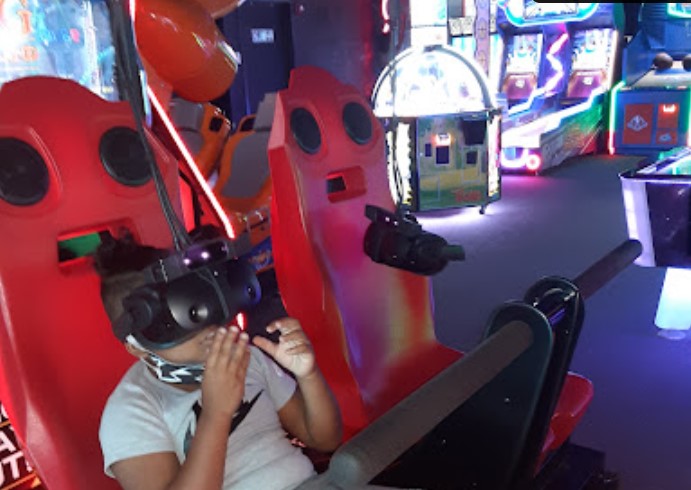
eVRest VR Amusement Park sits in the Borough Park neighborhood of Brooklyn, a short walk from the D line’s 55th Street subway station.
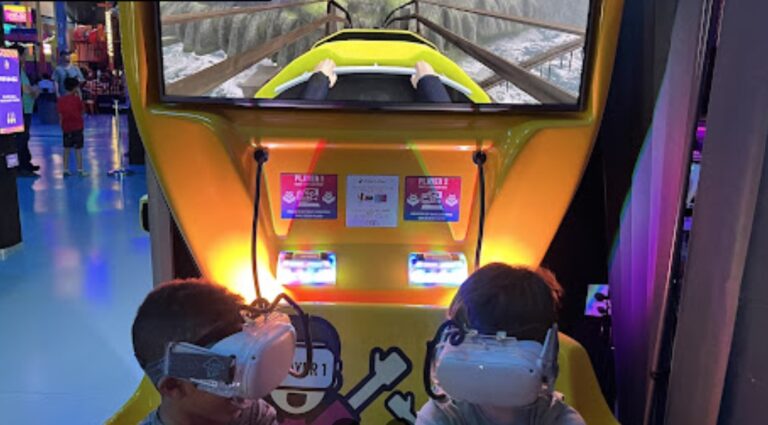
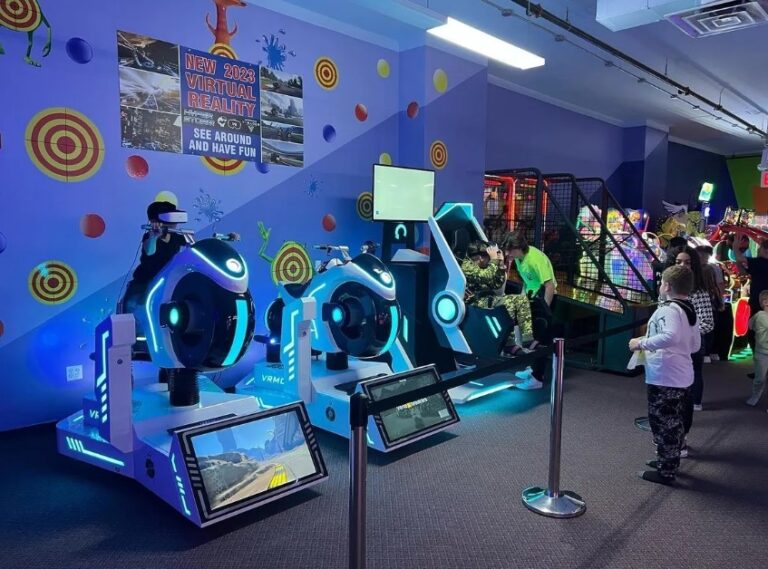
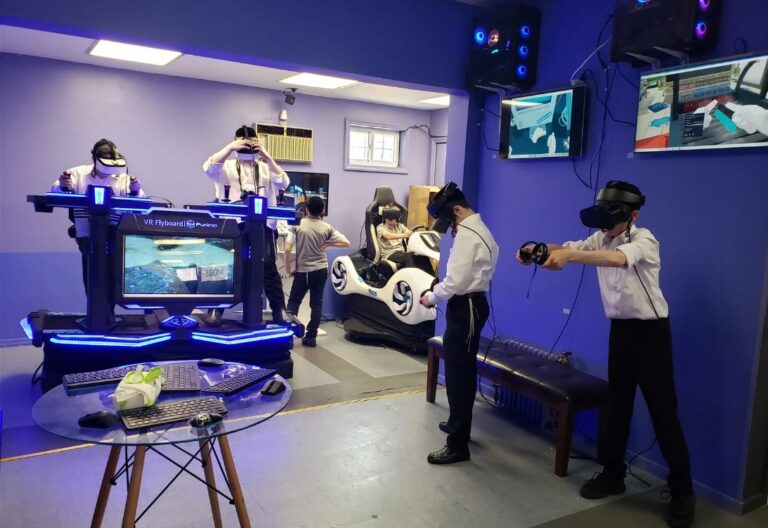
The park is an indoor virtual reality center with more than 200 single and multiplayer games spread across roughly fifteen to twenty motion simulators and pods. Highlights include the X-Machine for 360-degree extreme sports, the X-Bike motorcycle racer, a two-person VR Adventure Machine, and dedicated car and motorbike racing simulators. Experiences range from gentle family-friendly underwater voyages and scenic sleigh rides to intense zombie survival shooters and aviation acrobatics, with options suited to ages three and up.
Beyond walk-in play, eVRest hosts birthday parties, school trips, corporate events, team building, and reunions, with private bookings available all week. The venue offers parking, restrooms, a recreation area, and a lounge for relaxing between sessions, while a friendly, patient staff helps fit equipment and troubleshoot quickly. It’s a versatile choice for family outings, celebrations, and group activities of all kinds.
 Indoors
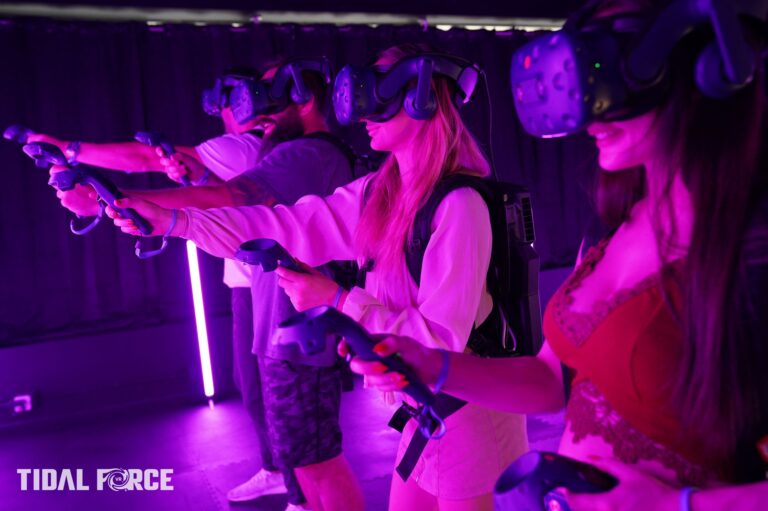
Tidal Force VR is located on the second floor of an elevator building at 166 Fifth Avenue in Manhattan, in the Flower District area of Midtown New York City. It is a free-roam, multiplayer virtual reality venue offering five in-house-built missions — from cryosleep space adventures and drone-defense shooters to zombie thrillers and escape-room puzzles — all played in private sessions of two to six players. Sessions run 20 to 40 minutes of game time and can be booked in one-to-three-hour blocks.
The venue operates three parallel, fully privatizable rooms that scale up to 54 participants, making it a strong fit for birthday parties, corporate team building, bachelor parties, and private events. Staff handle gear, safety, food delivery, table setup, and cleanup, with pizza-and-cake-friendly packages, digital photo booths, in-game stats, and a live high-score leaderboard. The venue has hosted more than 10,000 parties and 34,000 players, with a 5/5 Google rating.
Indoors5th Dimension VR is located in the heart of downtown White Plains, in Westchester County, New York, just a short stroll from the city’s main transit station.
The arcade is built around 18 VR stations and a library of more than 55 games, most of them multiplayer, so entire groups play together at once. Guests can battle zombies in cooperative shooters, face off in virtual paintball with up to 18 players, or tackle escape rooms and puzzle adventures. Sessions come with a training tutorial, and the open layout with spectator seating makes it easy for everyone to join in the fun.
Beyond open play, the venue specializes in all-inclusive birthday parties for kids and teens, Bar and Bat Mitzvahs, and corporate team-building events, with private party rooms, food, drinks, decorations, and cleanup all handled by the staff. There are also themed social nights, friendly competitions, STEAM workshops, summer programs, and holiday camps, plus a municipal parking garage right across the street.
IndoorsMonster Mini Golf sits along Commack Road in Deer Park, New York, in the heart of Long Island, offering indoor, blacklight-lit entertainment that works in any weather.
The centerpiece is an 18-hole glow-in-the-dark mini golf course, joined by a monstrous gaming arcade with prize tickets, an intricate laser maze, virtual reality experiences and bowling. It’s a family-friendly space where playful monsters keep things lighthearted, and the challenging, neon-decorated course appeals to both kids and adults.
The venue shines for celebrations, with birthday packages featuring private themed rooms for 90 minutes to two hours, staff handling setup and cleanup, and add-ons like goodie bags and food trays. Guests also enjoy arcade prize zones, massage chairs overlooking the course, and dedicated party areas for food and cake — making it a dependable choice for birthdays, field trips, fundraisers and corporate outings.
IndoorsRPM Raceway | Race Play More sits in Farmingdale, New York, on Long Island, home to the Guinness World Record-holding longest indoor multi-level go-kart track in the world.
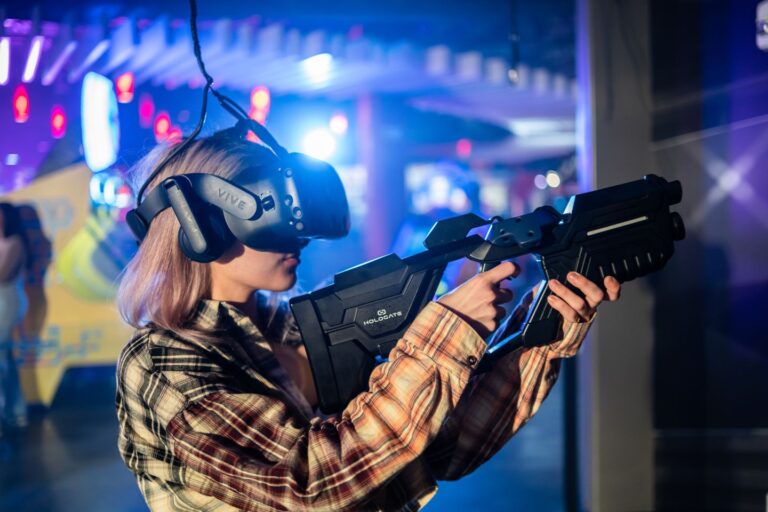
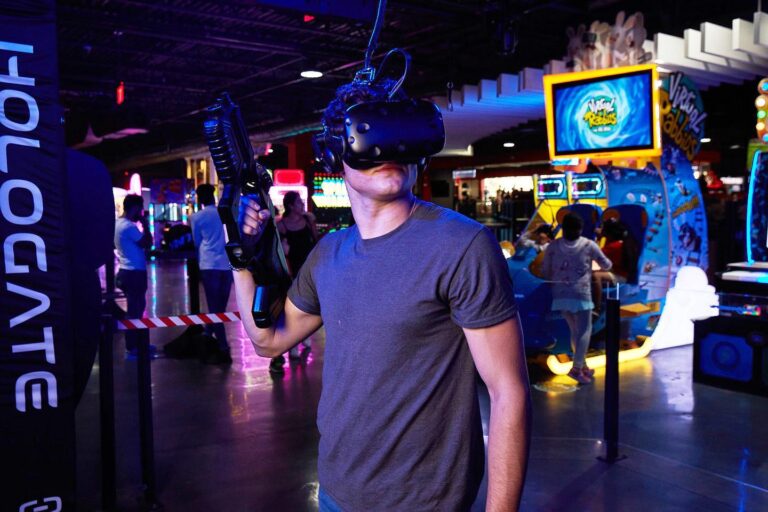
The venue centers on high-speed electric go-kart racing across a 3,500-foot multilevel LED track, plus Kart Klash, a real-life racing game with power-ups, missiles, and shields. Guests can also enjoy hundreds of arcade games, free-roam VR arenas like Hologate and Hyperdeck, Italian racing simulators, and a modern mini-bowling alley.
Beyond racing, RPM offers Gel Blaster Nexus, a 10v10 tactical arena blending paintball, laser tag, and video games. The on-site RPM Bar + Grill serves burgers, wood-fired pizzas, tacos, and more with a full bar. Dedicated party rooms and event spaces host birthday parties, corporate team-building, bar and bat mitzvahs, and large gatherings, with experienced staff and private racing lessons available.
IndoorsUrban Air Adventure Park sits in the Sunset Park neighborhood of Brooklyn, New York, at 4422 2nd Avenue, opened in late 2022 as the borough’s go-to indoor trampoline and adventure park.
The park goes well beyond trampolines, offering Apex and ProZone performance trampolines, a Slam Dunk Zone, a Runway tumbling track, a Warrior obstacle course, a harnessed Ropes Course, climbing walls, a padded Tubes playground, trampoline dodgeball, and Battle Beam. It’s designed so toddlers and teens can both play comfortably, with height-restricted zones for younger kids and dedicated staff supervision.
For an extra fee, guests can enjoy Spin Zone and Flip Zone bumper cars, virtual reality games, and arcade machines. The park hosts kids’ birthday parties with dedicated hosts, table or private room options, and all-inclusive packages, and it works well for group outings and team-building events. A large cafe with pizza, snacks, and drinks, plus monthly memberships for unlimited year-round play, round out the experience.
IndoorsSportime USA sits in the town of Ardsley, New York, in Westchester County, a short drive off the Saw Mill River Parkway, and has been a local family-entertainment staple since 1989.
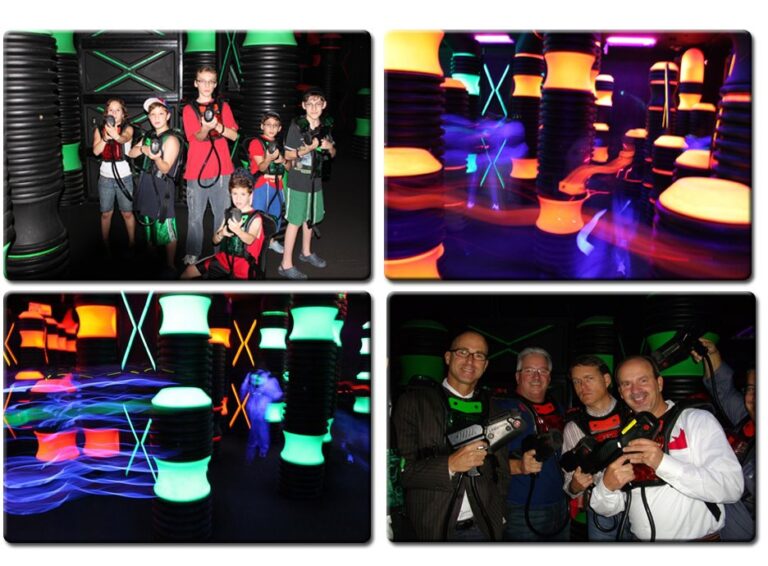
Its centerpiece is a state-of-the-art Lasertron laser tag arena set in a dark, fog-filled outer-space world with a maze of cover and colored lighting, recommended for ages 7 and up. Around it are a Super Fly ride, a Free Fall ride, a 24-foot rock climbing wall, eight two-person bumper cars, a two-level soft adventure structure, inflatables, and a large arcade with reloadable credit cards plus virtual reality rides.
The venue hosts themed birthday parties with a party host, private rooms, game credits, ride time, pizza, and free invitations, plus camp and group packages with unlimited rides and free bus parking. A snack bar and party rooms round out the experience, making it a flexible choice for birthdays, school outings, and family days out.
IndoorsRPM Raceway in Jersey City sits at 99 Caven Point Road, near Liberty State Park, and is the closest indoor go-karting venue to Manhattan, about seven minutes away by PATH train, NY Ferry, or rideshare.
After a multi-million-dollar renovation, the venue features a colossal, LED-lit, three-story multi-level track with hairpin turns, underpasses, and spiraling ramps, plus a combined MegaTrack stretching roughly 2,200 feet. Guests race Italian electric karts reaching 45 mph, try the video-game-style Kart Klash format with power-ups, and enjoy Hologate VR, motion racing simulators, a Gel Blaster Nexus arena, a bowling alley, and a large arcade with a prize-redemption center.
A trackside sports bar serves hand-crafted burgers, wood-fired pizzas, custom cocktails, and local draft beers. The venue hosts kids’ birthday parties, bar mitzvahs, adult parties, charity events, and corporate outings, and offers private lessons, summer camps, leagues, and weekly promotions. It has hosted celebrities like Rihanna, A$AP Rocky, and F1 drivers, and has been recognized by Fast Company and USA Today.
IndoorsEscape Virtuality is located at 130 W 29th Street in the Chelsea/NoMad area of Manhattan, on the ground floor between Sixth and Seventh Avenues. It pairs production-style physical escape rooms with a full virtual reality arcade, offering games like Ghost Collector, Runaway Subway Train, and Mission Galaxy Quest alongside VR escape games, a sci-fi shooter, and haunted VR walking adventures. The facility features two full-motion racing simulators, four 360-degree multi-directional treadmills, an augmented reality climbing wall, and two Xtrematic machines with around 30 VR games.
The venue is well suited to birthday parties, corporate team building, school field trips, and family outings, with private function rooms and catering options including beer and wine. Guests can choose pay-per-experience pricing starting around $10 or passes ranging from an hourly pass at $35 to an Unlimited Plus pass at $150 covering VR and escape rooms all day. The neon-lit lobby with comfortable couches and a photo-ready checkered wall sets a welcoming tone, and the staff are frequently praised for being helpful and friendly.
IndoorsUrban Air Trampoline and Adventure Park sits in Lake Grove, New York, tucked behind the Smith Haven Mall and easily reached from Setauket, Stony Brook, Port Jeff, Mount Sinai, Commack, Kings Park, Smithtown, St. James, Nesconset, Centereach, Terryville, Bohemia, Lake Ronkonkoma, and the surrounding Long Island communities.
This 48,000-square-foot indoor park offers much more than trampolines, with a 30-foot Sky Rider indoor zipline, a high ropes course, laser tag, dodgeball on trampolines, a Warrior Course, climbing walls, bumper cars, mini go-karts, virtual reality, and a dedicated toddler area. An “All Day Play Promise” means one ticket covers every attraction with no time limits, and monthly memberships offer unlimited visits for frequent jumpers.
The park is a top-rated spot for kids’ birthday parties, with Deluxe, Ultimate, and Small Squad packages that include a dedicated host, reserved tables, and all the supplies. It also welcomes school field trips, homeschooler days, and group outings. Between sessions, guests can refuel at the on-site food counter with pizza, popcorn, cotton candy, and drinks, making it a dependable year-round destination for family fun and celebrations.
IndoorsRPM Raceway sits in the Waterside neighborhood of Stamford, Connecticut, just off West Avenue and within easy reach of Fairfield and Westchester counties and New York City.
The venue is centered on high-speed all-electric go-kart racing on multilevel, LED-lit tracks with spiraling ramps, dips, drops, and underpasses, plus timed results and private lessons. Alongside the karts, guests can dive into Gel Blaster and Laser-Tag battles, bowl, play in the arcade, try VR and racing simulators, and grab food and drinks at the on-site bar and grill.
RPM Raceway also hosts kids’ birthday parties, adult parties, corporate events, fundraisers, and bar and bat mitzvahs, with private track rentals and full facility buyouts available. The event spaces are equipped with modern audio-visual tech, and the staff handles catering, arcade play, and trophies. With lounge areas, a bar and grill, summer camps, and a heroes discount program, it’s a well-rounded destination for families, friends, and coworkers alike.
IndoorsLand-O-Fun is located in the Brighton Beach area of southern Brooklyn, New York.
This 11,000-square-foot family entertainment center centers on a multi-level jungle gym and a toddler area, complemented by arcade games with thousands of prizes, spinning bumper cars, kids’ bowling, and two virtual reality experiences. It’s a popular destination for children’s birthday parties, with private party rooms and customizable themed packages handled by a friendly, experienced staff.
Beyond play, the venue offers a cafe with kid-friendly and heartier menu options, a SPA salon for girls, disco sessions, afterschool classes, and special packages for camps and schools. Free parking, wheelchair and stroller access, and a secure single-entrance layout make it a comfortable choice for families with young children.
Indoors
The evolution of digital entertainment has transitioned from static screens to immersive environments that demand physical engagement. At the forefront of this revolution is Free-Roam Virtual Reality (VR), a medium that dissolves the boundaries between the physical and digital worlds. Unlike traditional home-based VR, which often restricts users to a small stationary area or a tethered connection to a computer, free-roam VR offers an uninhibited experience where the player’s actual movements are mirrored perfectly within a virtual landscape. This technology represents more than just a new way to play games; it is an entirely new category of social and sensory experience.
A free-roam VR arena is a dedicated physical facility designed to facilitate multi-user virtual experiences within a large, open space. These arenas can range from the size of a large living room to massive warehouses spanning thousands of square feet. The defining characteristic of these spaces is the absence of wires. Players are equipped with high-performance wireless headsets and, in some cases, haptic vests or specialized peripherals that look like tools or weapons within the simulation.
The technology behind these arenas relies on sophisticated tracking systems. Many facilities utilize “inside-out” tracking where the headset cameras map the room in real-time, while others use “outside-in” tracking, employing a series of wall-mounted sensors that pinpoint the exact location of every player and object with sub-millimeter precision. This allows for “one-to-one” movement, meaning that if a player takes five steps forward in the physical arena, their digital avatar does the exact same in the virtual world. Because the brain receives consistent signals from the eyes and the inner ear regarding movement, this setup significantly reduces the motion sickness often associated with static VR systems.
Furthermore, free-roam arenas are inherently social. They allow multiple participants to occupy the same virtual space simultaneously. Players can see each other’s avatars, talk through integrated communication systems, and work together to solve challenges. This collective immersion is what separates the arena experience from the solitary nature of traditional gaming, making it a shared adventure rather than an isolated activity.
The versatility of free-roam VR allows for a vast array of scenarios that cater to different interests and intensity levels. Because the entire floor of the arena can be mapped to any digital environment, the possibilities are virtually limitless. One of the most popular genres is the tactical shooter or survival scenario. In these simulations, teams must navigate post-apocalyptic cities or space stations, working in tandem to fend off waves of digital adversaries. The physical sensation of walking through a corridor or ducking behind a virtual crate adds a level of realism that a controller cannot replicate.
Beyond combat, free-roam VR is an ideal medium for “escape room” style puzzles. In these scenarios, the focus shifts from reflexes to logic and communication. Players might find themselves inside a high-tech laboratory or an ancient Egyptian tomb, where they must physically move around objects, pull levers, and collaborate with teammates to unlock secrets. The spatial awareness required for these tasks makes the puzzles feel far more tangible and rewarding than their 2D counterparts.
Furthermore, there are experiential and artistic scenarios designed for those who prefer exploration over action. Users can walk through a digital forest, explore the wreckage of the Titanic on the ocean floor, or even travel through the human bloodstream. These educational and narrative-driven experiences leverage the free-roam aspect to allow for a natural pace of discovery, where the user’s curiosity dictates the flow of the story.
While initially targeted at hardcore gamers, free-roam VR has evolved into a mass-market attraction that appeals to a wide demographic. One of the fastest-growing segments of this market is children and young teenagers. For the “digital native” generation, VR is a natural extension of their existing media consumption. However, free-roam VR offers benefits that resonate particularly well with parents and educators.
Unlike traditional gaming, which is often criticized for its sedentary nature, free-roam VR is inherently active. It requires crouching, walking, and constant physical coordination. For kids, this turns screen time into a form of light physical exercise. Additionally, arenas typically offer content specifically curated for younger audiences. These games often swap realistic combat for vibrant, cartoonish aesthetics and prioritize teamwork over competition.
Safety is a primary concern for providers catering to kids. Modern arenas utilize “guardian” systems or virtual boundaries that prevent players from walking into walls or each other. Furthermore, the intuitive nature of free-roam VR means that children do not need to master complex controller layouts. They simply move their bodies, which makes the technology accessible to younger players who might struggle with the dexterity required for traditional console gaming. This accessibility ensures that VR arenas are becoming a staple in modern family entertainment centers.
The social architecture of free-roam VR makes it a premier choice for organized events. For birthday parties, it provides an “all-in-one” entertainment solution that is both novel and memorable. The excitement of being “inside” a game with friends creates a shared narrative that remains a topic of conversation long after the headsets are removed. Most arenas provide viewing areas where those who aren’t currently playing can watch a livestream of the action, turning a participant sport into a spectator one for the rest of the party guests.
Graduation parties also benefit from the high-energy, futuristic vibe of VR arenas. As students transition to new phases of their lives, these experiences offer a high-tech rite of passage that feels contemporary. It allows friend groups to engage in a final, high-stakes digital adventure together, fostering a sense of camaraderie and closure.
In the corporate world, free-roam VR has emerged as a powerful tool for team building. Traditional corporate outings, like bowling or dinners, often lack a goal-oriented collaborative element. VR scenarios, particularly those focused on puzzle-solving or tactical coordination, force employees to communicate clearly, delegate tasks, and support one another under pressure. It levels the professional playing field, as a junior staff member might show a natural aptitude for navigation or strategy that their superiors hadn’t previously observed. The shared adrenaline and the necessity of teamwork can break down social barriers and improve office culture more effectively than a standard workshop.
The scientific community and industry analysts view free-roam VR as a critical milestone in human-computer interaction. From a psychological perspective, researchers are particularly interested in the concept of “presence”—the subjective sensation of being in a place even when one is physically located elsewhere. Neuroscientists have observed that free-roam VR creates a high degree of “embodiment,” where the brain quickly accepts the virtual avatar as the physical self. This has profound implications for learning and memory; studies suggest that information learned in a spatially immersive environment is often retained better than information delivered via traditional 2D methods.
Industry experts also see free-roam VR as the ultimate testing ground for the future of the “Metaverse.” While the consumer market for home VR continues to grow, it is the location-based entertainment (LBE) sector that pushes the boundaries of hardware. Business owners can afford the high-end haptic floors, wind machines, and scent generators that are too expensive or bulky for home use. Experts predict that as Wi-Fi 7 and advanced edge computing become standard, the latency—the delay between movement and visual updates—will reach a point where it is imperceptible to the human eye, making the virtual world indistinguishable from reality in terms of physical response.
Furthermore, medical and physical therapy experts are beginning to recognize the therapeutic potential of free-roam environments. The ability to simulate real-world movements in a controlled, safe digital space allows for innovative approaches to movement disorders and phobia treatment. By analyzing how different demographics interact with these spaces, scientists are gaining valuable data on spatial navigation and human behavior in digital realms. This collective insight ensures that free-roam VR will move beyond the realm of simple entertainment and become a fundamental tool in the evolution of digital architecture and human experience.


 5604 New Utrecht Ave, Brooklyn, NY 11219, United States