El Monte
 Log in
Log in
Log in

Galaxy Fun Park is located in Raleigh, NC.
Galaxy Fun Park: An Indoor Entertainment Extravaganza
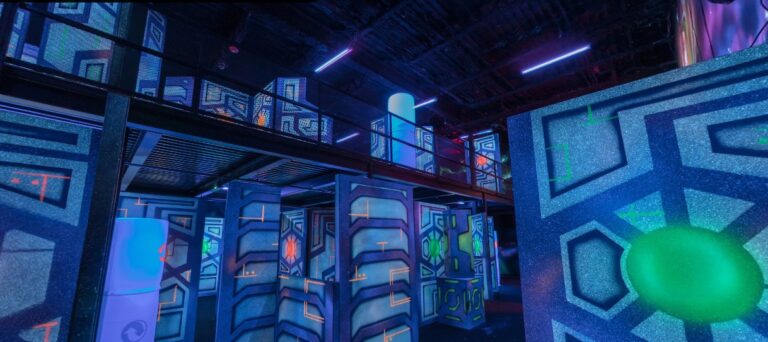
Located in Raleigh, North Carolina, Galaxy Fun Park stands as the city’s largest indoor Family Fun Center. Spanning over 65,000 square feet, the facility boasts a diverse array of attractions, including trampolines, go-karts, laser tag, a ropes course, spin zone, mini golf, soft play area, and a cafe. It promises an unforgettable experience for visitors of all ages.
 Indoors
Urban Air Trampoline and Adventure Indoor Park is located in Morrisville, NC.
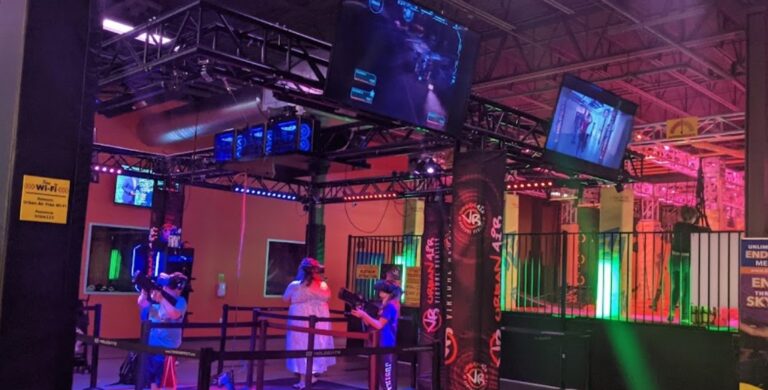
Urban Air Trampoline and Adventure Park in Morrisville, NC is an indoor family entertainment center that offers a variety of attractions and activities such as trampolines, ropes courses, climbing walls, warrior course, virtual reality games, and more. They also offer birthday party packages and corporate team building events. The park is aimed at providing an exciting and safe environment for children and adults alike to have fun and stay active. With friendly staff and a range of options, Urban Air is a great place to spend some quality time with family and friends.
IndoorsFrankie’s of Raleigh is located in Raleigh, NC.
A Day of Thrills and Flavors at Frankie’s of Raleigh
Frankie’s of Raleigh in Raleigh, NC, stands as a vibrant entertainment hub, offering a diverse range of activities that cater to thrill-seekers of all ages. From the adrenaline rush of go-karts to the strategic excitement of laser tag, the facility promises a memorable experience for every visitor. Those seeking a challenge can test their skills in the batting cages, while others might prefer the splashy fun of bumper boats. Flight simulators provide a taste of aviation, and the meticulously designed mini-golf course offers a more relaxed, yet engaging, form of competition. The heart of Frankie’s beats with the energy of its extensive arcade, filled with games that blend classic nostalgia with modern technology.
When hunger strikes, Frankie’s Cafe provides a welcome respite. Their chef-created menu features an array of delicious options, ensuring that everyone finds something to satisfy their cravings. From classic pizzas to fresh salads, juicy burgers to crispy wings, and satisfying sandwiches, their offerings are designed to refuel and delight.
IndoorsStars and Strikes Family Entertainment Indoor Center is located in Raleigh, NC.
Stars and Strikes Family Entertainment Center is a popular destination for family fun in Raleigh, NC. The center features bowling lanes, a laser tag arena, an arcade with over 100 games, bumper cars, and a full-service restaurant and bar. It also offers a variety of party packages for birthdays and other special events. With something for everyone, Stars and Strikes is the perfect place to gather with family and friends and enjoy a day of entertainment and excitement.
IndoorsUrban Air Trampoline and Adventure Indoor Park is located in Raleigh, NC.
Urban Air Trampoline and Adventure Park in Raleigh, NC is a family-friendly indoor entertainment center that offers a variety of fun activities for all ages. The park features trampolines, a ninja course, virtual reality games, and more. It is a great place for birthday parties, group events, or just a fun day out with the family. The staff are friendly and attentive, and the facilities are clean and well-maintained. Overall, Urban Air is a great choice for those looking for an exciting and memorable experience in Raleigh.
Indoors
The landscape of digital entertainment has undergone a radical transformation over the last decade, evolving from static screen-based experiences to fully immersive digital worlds. Among the most significant advancements in this field is the rise of the free-roam virtual reality (VR) arena. Unlike home VR systems that often confine users to a small rug or a swivel chair, free-roam VR provides a vast, physical space where players can move naturally, unburdened by wires or restrictive boundaries. This evolution marks a shift from merely playing a game to physically inhabiting a story.
A free-roam VR arena is a specialized entertainment facility designed to allow multiple participants to move through a large, empty physical space while wearing high-end virtual reality equipment. The core philosophy of this technology is “unmatched immersion.” It achieves this through the synchronization of physical movement and virtual feedback. When a person takes five steps forward in the physical room, their avatar moves five steps forward in the digital world. This fundamental 1:1 mapping of movement eliminates the cognitive dissonance often associated with stationary VR, which is a primary cause of motion sickness.
Technologically, these arenas utilize a combination of sophisticated hardware. Traditionally, this involved players wearing specialized backpacks containing high-performance computers connected to a headset. However, recent advancements have enabled the use of powerful, standalone headsets that communicate with external tracking sensors via high-speed local networks. These arenas are equipped with motion-capture cameras or laser-based tracking systems that monitor every limb movement with sub-millimeter precision. Because the space is cleared of physical obstacles, the virtual environment can be mapped exactly to the dimensions of the room, creating a seamless “holodeck” style experience where walls and floors in the game correspond to the real-world environment.
The versatility of the software used in these arenas allows for a wide array of scenarios, catering to diverse interests and skill levels. One of the most popular genres is the cooperative tactical shooter. In these simulations, a team of players might find themselves in the middle of a zombie apocalypse or a futuristic military operation. The physical thrill of navigating a digital battlefield while standing back-to-back with actual friends creates a level of tension and camaraderie that traditional gaming cannot replicate.
Beyond combat, free-roam VR offers intricate puzzle-solving and “escape room” style scenarios. These experiences often transport players to exotic locations, such as ancient Egyptian tombs, derelict space stations, or fantasy realms. Instead of just clicking on items, players must physically walk over to a lever, bend down to inspect a clue on the floor, or coordinate with a partner to reach high-off objects.
Furthermore, some arenas offer “passive” or exploratory scenarios designed for those who prefer non-violent interaction. These might include virtual tours of underwater ecosystems or journeys through the human body. Because the environment is entirely digital, the same physical room can serve as a haunted house in the morning and a serene Martian colony in the evening, simply by switching the software.
The demographic for free-roam VR is surprisingly broad, spanning from young children to retirees. However, the youth market has become a primary driver of the industry’s growth. Children today are “digital natives” who have grown up with touchscreens and high-definition consoles; for them, VR is the logical next step in their interactive journey.
For kids, free-roam VR provides a healthy alternative to sedentary gaming. It encourages physical activity, as players are constantly walking, crouching, and moving their arms. Most facilities set an age limit—typically around eight to ten years old—due to the weight of the headsets and the developmental requirements of visual processing. Within these age-appropriate bounds, kids often find the experience less intimidating than traditional gaming because the controls are intuitive. Instead of memorizing complex button combinations on a controller, they simply use their hands and bodies.
Safety is a paramount concern for this demographic. Arenas are designed with “chaperone” systems—digital grids that appear in the headset if a child wanders too close to a physical wall. Additionally, staff members, often called “Game Masters,” monitor every session from a control hub, ensuring that players do not collide or become overwhelmed by the sensory input. This controlled environment makes it a preferred choice for parents looking for a safe yet cutting-edge recreational activity.
The social nature of free-roam VR makes it an ideal venue for milestone events. Historically, group outings were limited to activities like bowling, mini-golf, or laser tag. While these are enjoyable, they often lack the “wow factor” that a fully realized digital world provides.
For birthday parties, free-roam VR offers an organized, high-energy activity that keeps participants engaged simultaneously. Unlike older forms of VR where only one person could play while others watched a monitor, free-roam is a collective experience. A group of friends can celebrate a birthday by literally stepping into a different world together, creating shared memories that feel like a physical adventure.
Graduation parties also benefit from the immersive nature of the technology. As students transition from one phase of life to another, the high-tech, forward-looking nature of VR serves as a fitting celebration of the future. It provides a bridge between the playfulness of childhood and the sophisticated interests of young adulthood.
In the professional world, corporate parties and team-building retreats have embraced free-roam VR as a tool for improving workplace dynamics. Many of the scenarios require intense communication and division of labor. A team that must defend a virtual base from incoming threats must learn to delegate tasks, provide clear instructions, and trust their colleagues’ performance. These virtual challenges often mirror real-world office dynamics but in a low-stakes, high-fun environment, making it an effective way to break down silos and build morale among employees.
The academic and professional interest in free-roam VR extends far beyond its value as a recreational tool. Cognitive scientists and psychologists are particularly interested in the concept of “presence”—the psychological state where a user truly feels they are in another place. Experts note that free-roam VR achieves a higher level of presence than any other medium because it engages the vestibular system (the inner ear’s sense of balance) in tandem with the visual system. When the body and the eyes agree on the movement, the brain’s immersion becomes nearly absolute.
Industry experts see free-roam VR as a preview of the future of “spatial computing.” As hardware becomes lighter and more powerful, the gap between the physical and digital worlds will continue to shrink. Engineers are currently working on integrating “haptic feedback” systems, such as vests that vibrate when a player is touched in-game, or even climate-control systems that simulate wind or heat. This is viewed by tech leaders as the maturation of the metaverse—a tangible, physical interface for a digital reality.
Medical professionals also see potential in the motion-based nature of free-roam settings. There are ongoing discussions regarding the use of these arenas for physical therapy and specialized training. Because a trainer can control the virtual gravity, the obstacles, and the speed of the environment, it provides a unique laboratory for human movement. The consensus among the scientific community is that free-roam VR is not merely a gaming trend; it is a foundational technology that will redefine how humans interact with digital information and each other in the decades to come.
In conclusion, free-roam VR represents the pinnacle of modern location-based entertainment. By stripping away the cables and boundaries of traditional gaming, it offers a visceral, social, and physically active experience that appeals to all ages. Whether utilized for a child’s birthday, a corporate training session, or a scientific study on human perception, the free-roam arena is a testament to the incredible synergy between human movement and digital imagination. As the technology continues to evolve, the line between what is real and what is virtual will continue to blur, opening up limitless possibilities for exploration and connection.


 14460 Falls of Neuse Rd, Raleigh, NC 27614, United States