El Monte
 Log in
Log in
Log in

Gamer Planet is located in Sandy, UT.
Gamer Planet: Utah’s Premier Esport Center in Sandy, UT
Gamer Planet in Sandy, UT, positions itself as Utah’s leading Esport Center, aiming to provide the ultimate gaming destination for enthusiasts of all levels. They strive to create a vibrant and engaging environment for players to connect, compete, and experience the latest in gaming technology.
For those looking to celebrate a special day, Gamer Planet aims to be the ultimate destination for birthday parties. They provide a space where individuals can have a blast and make unforgettable memories. They offer a unique and exciting alternative to traditional party venues, catering specifically to gamers and tech enthusiasts. They strive to create a fun and memorable experience for all attendees.
 Indoors
All Star Bowling & Entertainment – Tooele is located in Tooele, UT.
All Star Bowling & Entertainment – Tooele: Fun for Everyone in Tooele, UT
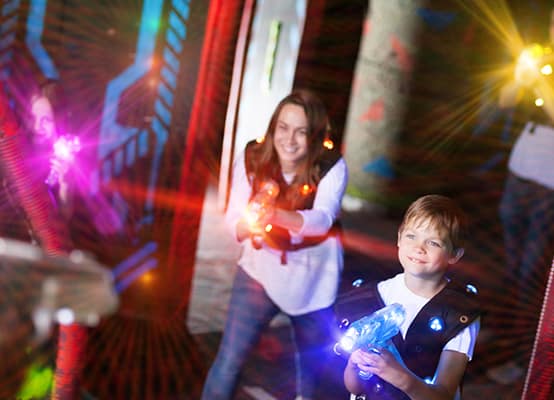
All Star Bowling and Entertainment in Tooele, UT, features state-of-the-art bowling lanes, scoring systems, and bumpers designed for younger bowlers. They position themselves as a place where the entire family can enjoy spending time together. They also offer Cosmic Bowling, featuring black lights, lasers, fog, and music, designed to be a hit with people of all ages. All Star Bowling & Entertainment aims to provide something for everyone.
All Star Bowling & Entertainment offers a diverse range of exciting attractions suitable for individuals of all ages. They encourage visitors to explore the attractions offered at their location, guaranteeing that they will find something fun for everyone in their group. The attractions listed include an Arcade, a Climbing Wall, Bumper Cars, Laser Tag, and Hologate Virtual Reality.
IndoorsSandbox VR Indoor Center is located in Murray, UT.
Located in Murray, Utah, Sandbox VR Murray brings cutting-edge virtual reality entertainment to guests of all ages. The venue combines full-body VR technology, advanced motion capture, and detailed 3D worlds to create hyper-realistic adventures that feel completely lifelike.
Sandbox VR Murray offers a wide selection of immersive games and story-driven missions. Groups can battle through futuristic sci-fi landscapes, explore mysterious worlds, survive thrilling horror scenarios, or work together to complete action-packed quests. Each experience allows players to move naturally within the space, interact with their environment, and see both themselves and their teammates as personalized avatars inside the virtual world.
Beyond its lineup of VR adventures, Sandbox VR Murray is also a popular destination for celebrations and special events. The location hosts birthday parties for kids, teens, and adults, offering unforgettable shared experiences and plenty of opportunities for photos and laughs. Corporate groups often choose the venue for team-building activities, as the cooperative gameplay naturally encourages communication, strategy, and problem-solving. The venue also accommodates bachelor and bachelorette parties, holiday gatherings, family outings, and graduation celebrations, giving each group a private space and a personalized schedule.
Indoors
From kids’ birthday parties to corporate team‑building, from sci‑fi adventure scenarios to scientific research labs, free‑roam virtual reality is reshaping how we experience digital worlds. In this deep dive we’ll explore what a free‑roam VR arena actually is, the wildest scenarios you can find inside, who’s stepping into the portals, how the technology is being used for celebrations, and what the scientific community thinks about this fast‑growing medium.
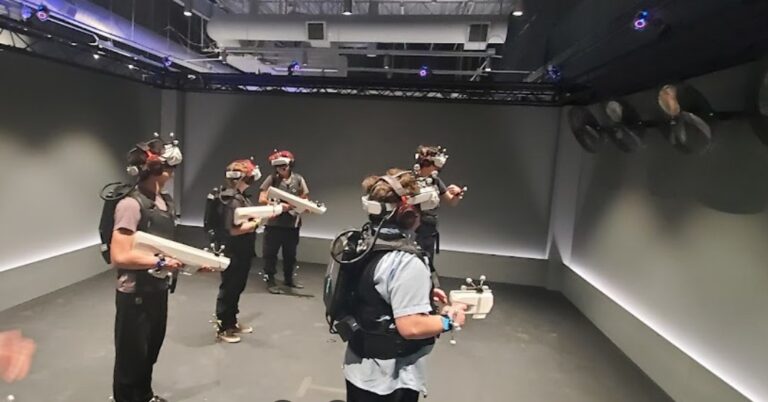
At its core, a free‑roam VR arena is a physical space—usually ranging from a modest 500 sq ft room to a sprawling warehouse‑scale environment—equipped with everything needed for participants to move unconstrained while wearing a head‑mounted display (HMD). Unlike seated or tabletop VR, where your avatar is limited to a chair or a small play area, free‑roam arenas combine three essential ingredients:
| Ingredient | What It Is | Why It Matters |
|---|---|---|
| Tracking System | Multi‑camera optical rigs, infrared lasers, or inside‑out sensors that keep a millimetre‑accurate eye on every headset and controller. | Guarantees that virtual motion matches real‑world movement, eliminating drift and motion sickness. |
| Safety Infrastructure | Soft padded walls, floor‑level cushioning, motion‑capture‑aware “no‑go” zones, and sometimes a staff‑supervised “safety net.” | Allows users to sprint, jump, duck, or even roll without fear of injury. |
| Immersive Content Engine | Custom game engines (Unreal, Unity, proprietary platforms) tuned to render high‑fidelity scenes across multiple synchronized headsets. | Creates a shared, seamless world where each player sees the same environment from their own perspective. |
The result is a real‑world playground where you can physically walk around a jungle, climb a digital cliff, or duck behind a laser‑grid while your brain believes you’re truly there. Because the arena is bounded, developers can push graphical fidelity and interaction depth far beyond what a typical home‑VR setup can manage.
Free‑roam VR isn’t just a gimmick; it’s a canvas for designers to craft experiences that would be impossible (or prohibitively expensive) in the physical world. Below are some of the most compelling scenario categories that have emerged in the past five years.
These scenarios illustrate the versatility of free‑roam VR: it can be whimsical, competitive, instructional, and even life‑saving—all within a single, adaptable space.
The obvious crowd—people who binge on console and PC games—are drawn to free‑roam VR for the physicality it adds. The ability to actually run, duck, and swing in a game that traditionally only required thumbsticks is a major thrill.
Parents appreciate a safe environment where children can explore without tripping over furniture. Because the arena is supervised and the hardware is ruggedized, kids can experience high‑impact adventures (think “dinosaur park” or “space rescue”) without the usual concerns of home‑VR setups.
HR departments use free‑roam VR for team‑building and soft‑skill training. Scenarios such as “Rescue the Hostage” encourage communication, leadership, and quick decision‑making under pressure.
From birthday parties to product launches, event planners book arenas to provide unique, shareable experiences that generate social media buzz. The novelty factor translates into higher attendance and memorable moments.
Because the environment is tightly controlled, universities and labs use free‑roam VR to study spatial cognition, motion sickness, and human–computer interaction. The ability to collect precise locomotion data in a realistic setting is invaluable.
Sports scientists design bespoke training modules—like a virtual basketball court that tracks shooting angles—allowing athletes to practice in a low‑impact, data‑rich environment.
In short, free‑roam VR is a cross‑generational, cross‑disciplinary platform that serves everyone from toddlers to CEOs, from storytellers to neuroscientists.
By merging playful storytelling with physical engagement, free‑roam VR provides a modern, immersive alternative to playgrounds, especially in urban areas where space is limited.
Imagine a 30‑guest birthday bash where each child dons a headset and embarks on a treasure hunt across a pirate‑themed island. The arena’s walls project sunrise to sunset cycles, creating a dramatic narrative arc that culminates in a fireworks finale—complete with a “blow out the candles” mechanic that triggers a confetti cannon in the real world.
Key Benefits:
Schools are experimenting with virtual graduations where graduates walk across a digitally rendered stage that reflects the campus’s history. The arena can simulate a crowd of thousands, and each graduate’s avatar can receive a “virtual diploma” that glows as they step forward. Family members outside the arena watch via live stream, and a holographic guest speaker can give a keynote address in the virtual space.
Key Benefits:
Corporate events leverage free‑roam VR to blend entertainment with skill development. A typical agenda might include:
| Time | Activity | Objective |
|---|---|---|
| 0–15 min | Arrival & Safety Brief | Set expectations, ensure comfort with hardware |
| 15–45 min | “Mission: Innovation” (Collaborative Puzzle) | Foster creative problem‑solving |
| 45–60 min | Break (Refreshments) | Networking |
| 60–90 min | “Virtual Hackathon” (Mini‑Game Competition) | Encourage friendly rivalry, highlight tech culture |
| 90–120 min | Debrief & Awards | Translate VR lessons to real‑world work practices |
Why It Works:
Free‑roam VR thus transforms standard celebrations into interactive spectacles that generate lasting memories and measurable outcomes.
Cognitive Neuroscience – Dr. Elena Márquez (University of Barcelona) “Free‑roam VR offers a gold standard for studying embodied cognition. The fidelity of locomotion data combined with controllable visual stimuli lets us isolate how the brain integrates proprioception and visual cues.”
Human‑Computer Interaction (HCI) – Prof. Samuel Liu (MIT Media Lab) “Unlike desktop VR, free‑roam arenas provide a closed-loop environment where physical force feedback and spatial audio can be synchronized precisely. This opens doors for researching haptic perception in a way that home setups can’t match.”
Psychology of Presence – Dr. Aisha Patel (Stanford Psychology) “The sense of ‘being there’ spikes dramatically when users can physically move through the space. This has implications for exposure therapy, where realistic environments can be built without real‑world risk.”
| Expert | Company | Takeaway |
|---|---|---|
| Jonas Weber | VRX Labs (Arena Designer) | “Scalability is our biggest hurdle. Building a 10,000 sq ft arena costs millions, but modular tracking pods are bringing the price down.” |
| Mina Kwon | Meta Reality Labs | “Free‑roam is where we’ll see the next leap in social VR. The ‘room‑scale’ limit will be replaced by arena‑scale social hubs, democratizing large‑group interactions.” |
| Raj Patel | Accenture Digital | “Clients are demanding measurable ROI from VR events. Free‑roam arenas now embed analytics dashboards that translate gameplay data into business KPIs.” |
| Sophia García | HealthTech VR | “Rehabilitation programs are moving into arenas because patients can practice functional movements—like walking a curb—under controlled conditions while staying engaged.” |
Overall, the consensus among experts is that free‑roam VR sits at the convergence of entertainment, education, and empirical research, promising a wave of innovations that will ripple across multiple sectors.
Free‑roam VR arenas have evolved from niche tech demos into multifaceted ecosystems that serve gamers, families, corporations, and scientists alike. By marrying precise motion tracking with immersive storytelling, they provide an experience that feels both magical and meaningful.
As hardware costs fall, standards coalesce, and new content pipelines emerge, free‑roam VR will likely become as commonplace as the modern arcade—only far more immersive, more social, and far more adaptable. Whether you’re a parent planning the next birthday, a CEO looking for fresh team‑building tools, or a scientist probing the limits of human perception, stepping into a free‑roam VR arena might just be the next logical step in your journey toward a more connected, interactive future.


 69 West 10600 South Sandy, UT 84070