
 El Monte
 Log in
Log in
Log in

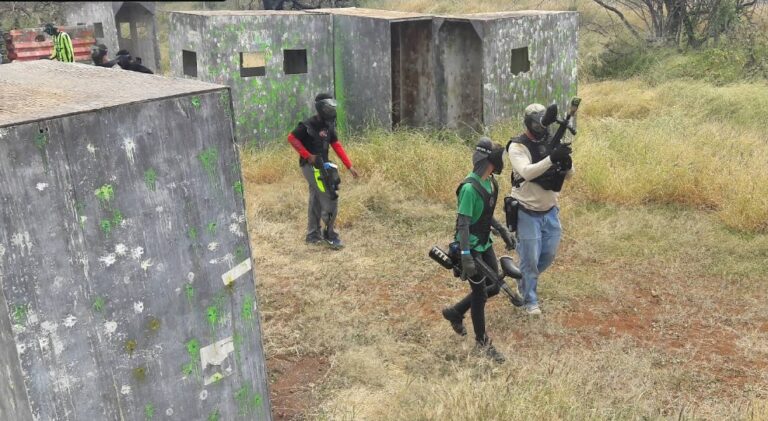
Extreme Sports Complex is located in Kapolei, Hawaii, on the island of Oahu. This family-run outdoor facility offers three distinct playing fields for paintball, airsoft, and GelStrike (gelly ball), catering to everyone from first-time players to tournament-level speedball enthusiasts. Full rental equipment is available on-site, and the fields are designed for scenario games, big games, and competitive play.
The complex also hosts private events including birthday parties, corporate team-building sessions, and group outings, with a lounge area and dressing rooms available for guest comfort. The staff are experienced players who prioritize safety and fair play, creating a welcoming environment that has kept local players returning since 2011.
 Outdoors
Gelly Ball is a fast‑growing, neon‑slick activity that blends the excitement of dodgeball, the precision of hand‑ball, and the tactile novelty of soft, gelatinous projectiles. The “ball” itself is a medium‑sized sphere made from a flexible, rubber‑like polymer that is infused with a vivid, translucent colour—think electric teal, hot pink, or neon orange. When the ball is tossed, it stretches, rebounds, and makes a satisfying “squelch” on impact, giving players a sensory experience that feels part sport, part play‑thing.
Because the material is soft yet resilient, Gelly Ball can be used safely on a variety of surfaces without the risk of broken bones or cracked equipment. The bright hues also make the game instantly eye‑catching, which is why it has become a favourite feature at school recesses, corporate team‑building sessions, and birthday‑party entertainment packages. In short, Gelly Ball is a versatile, low‑impact sport that packs a high‑energy punch.
The basic structure of a Gelly Ball match follows the familiar rhythm of team‑based projectile games, but the rules are deliberately simple so that newcomers can jump in within minutes.
Team Formation
Participants are split into two squads, usually of five to eight players each, depending on the size of the playing area. Teams can be mixed‑gender, mixed‑age, or organized by skill level; the only requirement is that each side has a roughly equal number of players.
Playing Area
The court is a rectangular space—often a gymnasium, a cleared backyard, or a rented pop‑up arena—marked with a center line and two “safe zones” at the back of each side. The safe zones work like the “head‑zone” in traditional dodgeball: players occupying these zones cannot be hit, but they can still throw from within them.
Equipment
Each match uses a single Gelly Ball, though larger events may employ several to keep the action continuous. The ball’s softness means it can be handled with one hand, but players are encouraged to use both hands for maximum control and to build arm strength.
Objective
The aim is to eliminate all members of the opposing team by striking them with the ball. A player is out the moment the ball makes contact with any part of the body above the wrist (or the corresponding area for players with limited mobility). Once out, the player steps aside in a designated “out‑area” until the round ends.
Gameplay Flow
Scoring and Victory
A round ends when one team has no remaining active players. The victorious side scores one point. Matches are typically played to three or five points, depending on the time available. In tournaments, a “best‑of‑three” format ensures that a single lucky toss does not decide the overall outcome.
The combination of rapid movement, hand‑eye coordination, and the tactile pleasure of the squishy ball creates a kinetic experience that feels both familiar and refreshingly new.
Beyond the obvious fun factor, Gelly Ball delivers a suite of physical, mental, and social advantages that make it an appealing addition to school curricula, corporate wellness programs, and family celebrations.
Because the game demands constant sprinting, dodging, and throwing, participants engage large muscle groups in the legs, core, and upper body. A typical ten‑minute round can burn between 80 and 120 calories, comparable to a light jog. The low‑impact nature of the ball reduces stress on joints, making it an excellent cardio alternative for people who may find high‑impact sports intimidating.
Tracking a fast‑moving, semi‑transparent ball and timing a catch or deflection sharpens visual tracking and reaction speed. Repeated play improves fine motor skills, which is especially beneficial for children developing handwriting proficiency and for adults looking to maintain dexterity.
Success hinges on coordinated attacks, strategic passing, and quick verbal cues. Players learn to read teammates’ body language, call out “I’ve got it,” and anticipate movement patterns. This collaborative environment nurtures leadership qualities and teaches conflict resolution in a low‑stakes setting.
The rule set includes rapid decision‑making—choose between shooting, passing, or holding the ball while monitoring opponents’ positions. This mental juggling promotes cognitive flexibility and improves problem‑solving speed, a transferable skill for academic and workplace environments.
The bright colours, soft bounce, and playful nature of the ball trigger a release of endorphins. The act of throwing, especially in a safe, supportive group, provides a physical outlet for pent‑up energy and frustration, leaving participants calmer and more focused after play.
Because the ball is forgiving on impact, players of varying physical abilities can participate without fear of serious injury. Modifications—such as reducing the court size, allowing wheelchair access, or adapting the “out‑zone” rules—make the game adaptable for people with mobility challenges, visual impairments, or other special needs.
The beauty of Gelly Ball lies in its universal appeal. While certain age brackets may dominate specific venues, the game’s design accommodates a surprisingly wide spectrum of participants.
Children (5–12 years): Primary schools have adopted Gelly Ball as a replacement for traditional recess games because it encourages teamwork while minimizing playground injuries. The bright colours also attract younger children who might be hesitant to join more aggressive sports.
Teenagers (13–18 years): High‑school clubs use Gelly Ball for intramural leagues. The competitive element, combined with the opportunity to develop strategic thinking, resonates with adolescents seeking a balance between fun and skill‑building.
Adults (19+ years): Corporate wellness programs feature Gelly Ball as a team‑building icebreaker. It’s an effective way to break down hierarchical barriers—everyone, from entry‑level staff to senior executives, stands on equal footing when dodging a squishy neon projectile.
Seniors (55+ years): Community centres host low‑intensity Gelly Ball sessions for older adults. By adjusting the court dimensions and allowing longer decision windows, seniors can enjoy the benefits of light aerobic exercise and social interaction without overexertion.
People with Disabilities: Adaptive versions of Gelly Ball can incorporate wheelchair access, auditory cues for visually impaired participants, and modified rules for those with limited upper‑body strength. The softness of the ball ensures a safe environment for all.
In essence, anyone who can move their arms and legs a modest distance can join a Gelly Ball match, making it an inclusive sport that bridges generations and abilities.
When it comes to celebrations, Gelly Ball has turned into a go‑to activity for hosts who want more than the typical bounce‑house or piñata. Here’s why it works so well for birthday parties and other festive gatherings:
Instant Entertainment
The moment the neon ball is rolled onto the playing surface, guests’ attention spikes. The visual impact of the glowing sphere combined with the audible “pop” when it hits the floor creates an instant focal point, reducing the need for a separate host or MC.
Scalable Fun
Party planners can adjust the length of a match to fit the schedule. A quick three‑minute round serves as an icebreaker, while a longer best‑of‑five series can occupy an entire afternoon. This flexibility lets organizers tailor the experience to the age group and time constraints.
Photo‑Ready Moments
The vibrant colours and dynamic poses—players mid‑dive, arms outstretched to catch the ball—translate into eye‑catching photographs and social‑media content. Parents love the vivid snapshots that capture their children’s joy, and the aesthetic fits perfectly with the Instagram‑savvy generation.
Customizable Themes
Because the balls are available in a spectrum of colours, they can be matched to party themes—neon pink for a “pop‑star” party, electric blue for a “galactic” celebration, or multiple colours for a rainbow‑themed bash. Some providers even offer branded balls with the birthday child’s name or a logo, turning the game into a personalized keepsake.
Safe, Mess‑Free Play
Unlike paint‑ball or foam darts, Gelly Ball does not leave stains, puncture clothing, or create hazardous debris. The ball’s elasticity means it bounces back rather than shattering, ensuring that the party space remains clean and parents stay stress‑free.
Encourages Social Interaction
In mixed‑age groups, Gelly Ball naturally mixes younger kids with older teens or adults, fostering inter‑generational interaction. The game’s simple rule set eliminates the need for extensive explanations, so guests of all ages can join the fun within minutes.
Because of these advantages, many event companies now list “Gelly Ball Experience” as a premium party package, complete with a portable arena, a set of neon balls, music, and a facilitator to guide the matches.
The adaptability of Gelly Ball allows it to thrive in both open‑air and enclosed environments. Below is a breakdown of the most common venues and what each setting brings to the gameplay experience.
Regardless of the setting, the core requirement for a Gelly Ball venue is a clear, obstacle‑free space that can be delineated into two halves with a center line. Once that baseline is established, the rest of the experience—whether it’s a backyard birthday bash or a corporate team‑building day—unfolds organically.
Gelly Ball’s rise from a novelty classroom activity to a mainstream recreational sport can be traced to its perfect blend of safety, accessibility, and sheer kinetic joy. The vibrant, squishy ball invites curiosity; the straightforward rules lower the entry barrier; and the adaptable play area lets the game migrate from school gyms to corporate atriums with equal ease.
From a developmental standpoint, Gelly Ball offers tangible benefits: improved cardiovascular health, sharpened hand‑eye coordination, and enhanced teamwork skills. From a social perspective, it acts as a universal icebreaker that dissolves age, ability, and status differences. From an entertainment angle, its neon glow and soft‑impact dynamics create memorable moments that translate well onto photos, videos, and social feeds.
Whether a child is learning to throw with precision, a manager is building trust within a cross‑functional team, or a family is celebrating a milestone birthday, Gelly Ball provides a flexible, fun‑filled platform that meets the occasion’s needs. Its capacity to be played outdoors on sprawling lawns, indoors on polished gym floors, or even in compact backyard setups makes it a truly omnipresent sport.
As more communities recognize these advantages, the number of dedicated Gelly Ball arenas and portable kits is set to rise, ensuring that the next generation will have ample opportunities to chase, catch, and celebrate with the neon‑coloured sphere that has already become a vibrant fixture in modern play culture.


 194 Mumba St, Kapolei, HI 96707, United States