El Monte
 Log in
Log in
Log in

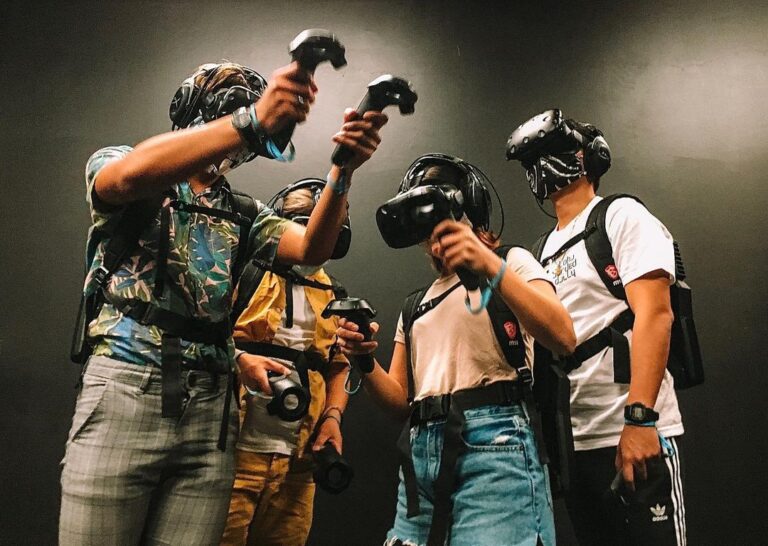
Chambers Escape Games is located on the edge of Kakaako and Downtown Honolulu, in a central and accessible part of the city. The club offers two distinct types of escape experiences: a premium live-action room called “The Temple” (a cinematic, multi-room adventure with automated puzzles and special effects) and a collection of free-roam Virtual Reality escape rooms spanning fantasy, sci-fi, nautical, horror, and steampunk themes. All games are 100% private — your group plays alone. The live-action room accommodates 3-10 players over 60 minutes, while VR games host 2-5 players over approximately 45 minutes. The venue uses advanced VR technology that guarantees zero motion sickness.
Beyond the core games, Chambers offers an “Escape Masters” loyalty program (20% off future games after completing four rooms), gift cards with bonus value, and reduced spectator rates for young children. The facility includes a comfortable themed lobby with seating. The venue regularly hosts birthdays, graduations, corporate team-building events, and school trips. The staff is consistently praised for being friendly, enthusiastic, and attentive. The club was founded by a local owner who designed the space himself, emphasizing authentic storytelling and high production value.
 Indoors
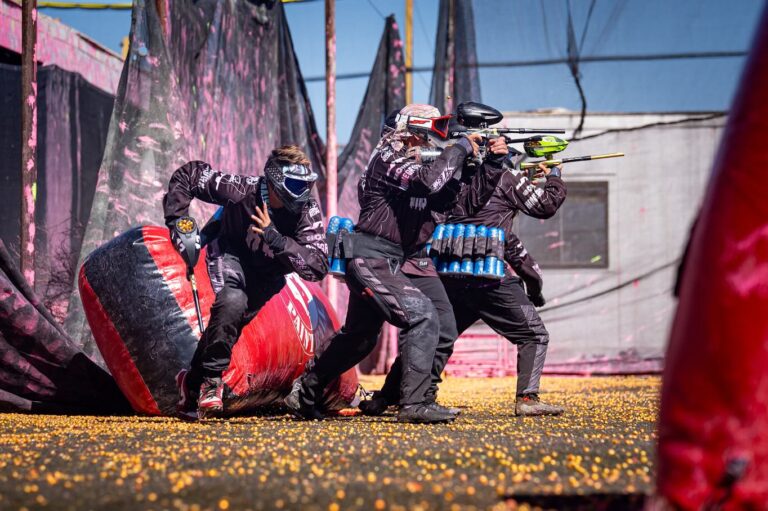
Extreme Sports Complex is located in Kapolei, Hawaii, on the island of Oahu. This family-run outdoor facility offers three distinct playing fields for paintball, airsoft, and GelStrike (gelly ball), catering to everyone from first-time players to tournament-level speedball enthusiasts. Full rental equipment is available on-site, and the fields are designed for scenario games, big games, and competitive play.
The complex also hosts private events including birthday parties, corporate team-building sessions, and group outings, with a lounge area and dressing rooms available for guest comfort. The staff are experienced players who prioritize safety and fair play, creating a welcoming environment that has kept local players returning since 2011.
 Outdoors
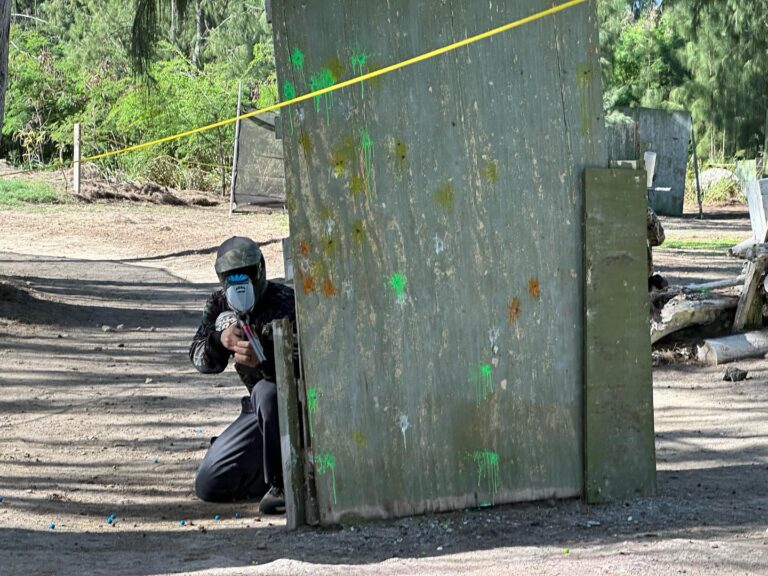
Windward Paintball is located on Bellows Air Force Station in Waimanalo, on the windward side of Oahu, Hawaii.
It is the only dedicated woodsball field on the island, spanning over an acre of natural terrain with wooded areas, open sandy spaces, grassy knolls, and wooden bunkers. The club offers walk-on play on weekends and holidays, private bookings during the week, and a full range of rental equipment including standard, keiki (kids), and deluxe kits. Popular game scenarios include capture the flag and zombie runs, with the staff adapting the pace to suit each group.
The field is well-suited for birthday parties, corporate team-building events, and family outings. A recreation area and lounge space are available on-site. The locally owned operation is known for its attentive, safety-focused staff who go out of their way to make every player feel welcome, including shuttling guests without base access from the gate. Paintballs are sold separately in standard and tactical grades, and admission includes unlimited high-pressure air refills.
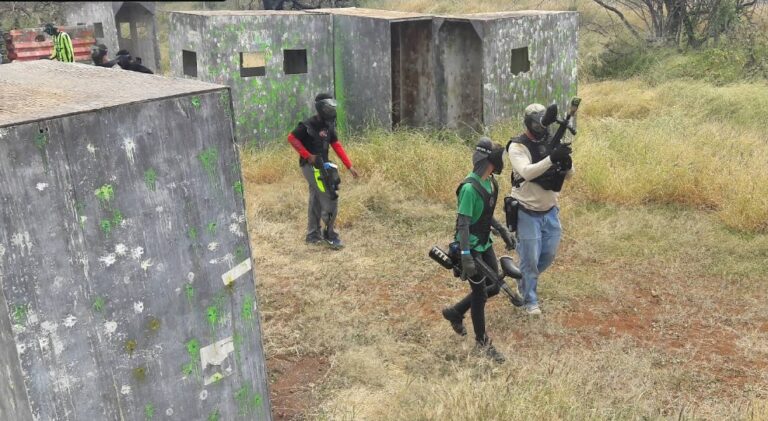
OutdoorsBrothers Paintball Field is located in the Kunia area near Waipahu on the island of Oahu, Hawaii.
The field is a classic outdoor woodsball setup with uneven terrain, brush, and man-made obstacles like wooden bunkers, spools, and oil drums. Games include team deathmatch and capture-the-flag, with referees keeping rounds moving and rotating formats. Rental packages start with basic or upgraded Planet Eclipse Emek markers, while self-equipped players pay a reduced fee for all-day play and air. The facility operates on a field-paint-only policy.
The field is well-suited for birthday parties, corporate team-building, bachelor parties, and school outings. Picnic tables are available for resting between rounds. The business began in 2004 as a small shop and has grown into the only remaining paintball store in Hawaii and one of the few active fields on the island. The staff are experienced players who prioritize safety and provide briefings for newcomers.
OutdoorsEvery year, families, friends, and colleagues face the same fundamental decision: where should the next birthday be celebrated? The answer often depends on the age of the guest of honor, the size of the invited group, the budget, and the desire to create a memorable experience that goes beyond the usual cake‑and‑ice‑cream routine. While traditional venues such as restaurants, parks, or home parties still hold great appeal, a growing number of people are turning to high‑energy, interactive experiences that combine physical activity with a splash of competition. Action‑filled games—laser tag, paintball, airsoft, and the ever‑evolving world of free‑roam virtual reality (VR) clubs—are emerging as compelling alternatives for birthday celebrations that leave participants buzzing with adrenaline and laughter.
The rise of these activity‑based parties is not accidental. Modern children and adults alike are raised on video games, immersive movies, and interactive media, and they increasingly expect their real‑world gatherings to reflect that same level of excitement. By choosing an action‑oriented venue, the birthday host not only offers a unique backdrop for the celebration but also encourages teamwork, strategic thinking, and healthy physical movement. Below is an in‑depth look at each of these options, together with recommendations for matching the activity to the appropriate age group.
Action games bring together the thrill of competition with the safety of a controlled environment. Whether the chosen activity is a neon‑lit arena of laser tag, the muddy fields of paintball, the realistic tactical simulations of airsoft, or the limitless digital realms of VR, each experience is designed to keep participants engaged from start to finish. Unlike conventional party games that may involve passive watching or simple crafts, these action‑oriented activities demand active participation, quick decision‑making, and collaboration—all ingredients that amplify the festive atmosphere.
Physical play has been shown to boost mood‑enhancing endorphins, improve coordination, and foster social bonds. For birthday parties, this translates into a day where guests are not just observers but protagonists in a shared narrative. The excitement of “getting the hit” in laser tag, the strategic planning required for a paintball ambush, or the awe of stepping into a virtual world creates a collective memory that is far more vivid than a standard party playlist.
All reputable venues that host these activities follow strict safety protocols. Participants are equipped with protective gear—such as goggles, helmets, and padded vests—tailored to the specific game. Staff members are trained to enforce rules, monitor equipment, and intervene if necessary. Parents can therefore feel confident that the birthday celebration remains fun while staying within safe boundaries.
Laser tag stands out as an ideal choice for younger children, typically ranging from 5 to 12 years old. The game utilizes infrared beams instead of projectiles, eliminating the risk of bruises or cuts while still delivering a sense of competition. Darkened arenas illuminated by colorful LED lighting and futuristic sound effects create an immersive environment that feels like stepping into a sci‑fi movie.
A typical laser tag session for a kids’ birthday lasts between 30 and 45 minutes, often broken into several short rounds to keep energy levels high. Players wear lightweight vests equipped with sensors that register hits, and each participant carries a handheld gun that emits infrared signals. Scores are automatically tallied, allowing for instant feedback and friendly rivalry.
Paintball moves the birthday celebration into the realm of outdoor adventure, appealing to teenagers and adults who crave a more intense, adrenaline‑pumped experience. The game uses paint‑filled gelatin capsules—commonly called paintballs—propelled from pneumatic markers. When a paintball strikes a player’s clothing or gear, it leaves a visible mark, indicating an “out.” This visual confirmation adds a layer of excitement that is both satisfying and spectacular.
Paintball fields typically span acres of varied terrain, including woods, bunkers, and strategically placed obstacles. A standard birthday session may consist of several matches, each lasting about 10–15 minutes, with short breaks in between for reloading and strategic discussion. The environment can be tailored to suit the skill level of the participants, ranging from beginner-friendly “capture the flag” to advanced tactical “search and destroy” scenarios.
Airsoft occupies a niche between paintball and realistic tactical simulation. Using electrically powered replicas of real firearms—commonly referred to as “airsoft guns”—players fire small plastic BBs that strike with significantly less impact than paintballs. The emphasis on realism, combined with quieter operation, makes airsoft a favorite among adults seeking immersive, near‑military experiences without the mess of paint.
Free‑roam virtual reality clubs represent the newest frontier in birthday party innovation. By combining cutting‑edge VR headsets with spacious, sensor‑tracked arenas, these venues allow participants to step inside fully immersive digital worlds while moving freely in a safe, physical space. From sword‑fighting dragons to cooperative space‑exploration missions, VR clubs can accommodate any theme imaginable.
Upon arrival, guests are fitted with a lightweight VR headset, motion‑tracking controllers, and sometimes additional haptic accessories (such as vests that vibrate upon in‑game impact). The arena itself is equipped with infrared cameras or laser scanners that map each player’s position in real time, ensuring that virtual interactions align perfectly with physical movement. Party packages typically include a set number of game sessions—each lasting around 10–15 minutes—followed by a private lounge area for food, cake, and socializing.
Selecting the appropriate action‑based activity hinges on understanding the preferences, age, and physical capabilities of the birthday celebrant and their guests. Below is a concise guide that aligns each activity with the most suitable demographic:
| Age Group | Recommended Activity | Key Advantages |
|---|---|---|
| 5‑12 years | Laser Tag | Low impact, vivid arena lighting, easy rules |
| 13‑18 years | Paintball | Competitive intensity, outdoor environment, strategic depth |
| 19+ years (adults) | Airsoft | Realistic gear, tactical gameplay, less mess |
| All ages (with appropriate supervision) | Free‑roam VR | Immersive worlds, adaptable difficulty, memorable digital keepsakes |
While the table itself is excluded per the brief, the information above can be woven into narrative form within the article, ensuring the reader receives clear guidance without visual tabular formatting.
Even though the focus of this article is on experience rather than cost, it is helpful to outline typical pricing structures and logistical considerations that can aid hosts in budgeting effectively.
When planning, hosts should also factor in travel time, parking availability, and any required pre‑event safety briefings. Reserving the venue well in advance and confirming the exact number of participants can prevent last‑minute surprises and ensure that the celebration runs smoothly.
The most memorable parties are those that tell a story. By selecting an action‑based activity and weaving it into the overall theme—whether a “Space Mission” birthday where laser tag becomes a star‑fighter battle, a “Warrior Quest” where paintball mirrors a medieval siege, or a “Future Tech” celebration that integrates VR gaming—hosts can elevate the experience from a collection of games to a unified adventure.
Regardless of the activity, safety remains paramount. Hosts should verify that the chosen venue adheres to industry safety standards, provides thorough equipment checks, and employs qualified staff to supervise gameplay. For parties with mixed‑age groups, consider offering alternative, low‑impact side activities (such as a craft station or a video‑gaming lounge) for guests who may not wish to participate in the main action game. This inclusive approach ensures that every attendee feels welcomed and engaged.
Choosing where to celebrate a birthday no longer needs to be a routine decision limited to conventional venues. Action games—laser tag, paintball, airsoft, and free‑roam VR—present vibrant, energetic alternatives that cater to a wide spectrum of ages and interests. Laser tag offers a safe, colorful playground for younger children; paintball delivers a rugged, tactical experience for teenagers and adults; airsoft provides a realistic, strategic environment tailored to mature participants; and VR clubs open the door to limitless digital worlds for anyone willing to don a headset.


 550 Halekauwila St Unit #201, Honolulu, HI 96813, United States