
 El Monte
 Log in
Log in
Log in

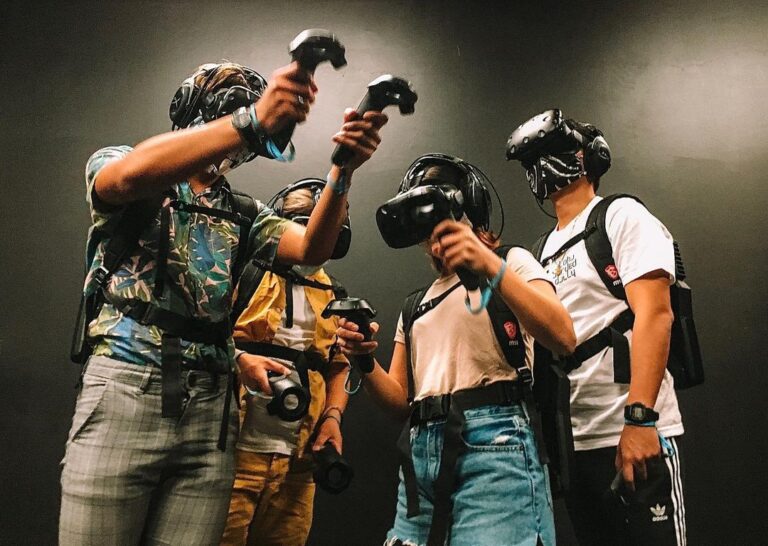
Chambers Escape Games is located on the edge of Kakaako and Downtown Honolulu, in a central and accessible part of the city. The club offers two distinct types of escape experiences: a premium live-action room called “The Temple” (a cinematic, multi-room adventure with automated puzzles and special effects) and a collection of free-roam Virtual Reality escape rooms spanning fantasy, sci-fi, nautical, horror, and steampunk themes. All games are 100% private — your group plays alone. The live-action room accommodates 3-10 players over 60 minutes, while VR games host 2-5 players over approximately 45 minutes. The venue uses advanced VR technology that guarantees zero motion sickness.
Beyond the core games, Chambers offers an “Escape Masters” loyalty program (20% off future games after completing four rooms), gift cards with bonus value, and reduced spectator rates for young children. The facility includes a comfortable themed lobby with seating. The venue regularly hosts birthdays, graduations, corporate team-building events, and school trips. The staff is consistently praised for being friendly, enthusiastic, and attentive. The club was founded by a local owner who designed the space himself, emphasizing authentic storytelling and high production value.
 Indoors
A free‑roam VR arena is a purpose‑built physical space where participants move freely while wearing a head‑mounted display (HMD) that tracks their motion in real time. Unlike seated or room‑scale setups that confine the user to a small play area, the free‑roam environment removes those boundaries. The arena’s walls, floor, and ceiling are embedded with optical or infrared tracking arrays, and the space is often equipped with safety nets, soft padding, and invisible “virtual walls” that prevent collisions with physical obstacles. The result is a seamless blend of the digital and the tangible: users can sprint, duck, leap, or swing a prop, and the virtual world mirrors every gesture with millimetre‑level precision.
The technology hinges on a combination of high‑speed cameras, lidar sensors, and sometimes ultra‑wide‑angle infrared beacons. These systems triangulate the position of each headset and any handheld controllers, feeding that data to a central rendering engine that updates the virtual scene at 90 fps or higher. Because latency is kept below the perceptual threshold, participants experience a convincing sense of presence—often described as “being inside the game” rather than merely looking at a screen.
The possibilities for free‑roam VR experiences are as diverse as the physical spaces that host them. Developers design scenarios that exploit the arena’s freedom of movement, turning traditional gameplay mechanics on their head.
Adventure and Exploration
Imagine a sprawling, alien jungle where participants swing from luminous vines, scale towering crystal cliffs, and uncover hidden relics. Since the arena’s dimensions are known, designers can map the virtual terrain to match the real floor plan, ensuring that a virtual cliff edge aligns with a padded wall in the physical world. The sense of discovery intensifies when players must physically walk to the far side of the arena to locate a clue, rather than using a joystick.
Co‑operative Puzzle Rooms
Free‑roam arenas excel at collaborative problem solving. A team might need to rearrange giant, floating holographic gears, each gear requiring a different physical stance—crouching, reaching upward, or stepping onto a pressure plate. The physicality of the tasks encourages communication and teamwork, making the experience feel less like a video game and more like an interactive escape room.
Competitive Sports
Virtual sports translate naturally into free‑roam. A laser‑tag match set in a futuristic arena, a VR dodgeball game where glowing orbs can be “caught” mid‑air, or a fast‑paced sword‑fighting competition where the haptic feedback of a simulated blade is amplified by the user’s own body mechanics. Because participants can actually run, dodge, and lunge, the intensity of the competition rivals that of traditional physical sports, while the visual spectacle remains fantastical.
Training and Simulation
Beyond entertainment, many organisations employ free‑roam VR for realistic training. Firefighters can practice navigating a burning building with smoke and heat cues, while the safety nets ensure they never encounter real danger. Surgeons can rehearse complex procedures in a scaled‑up operating theatre, moving around the patient as they would in reality. The immersive fidelity afforded by free‑roam technology shortens the learning curve compared with conventional desktop simulations.
The user base for free‑roam VR is remarkably broad, reflecting the versatility of the medium. Demographically, participants range from curious children to seasoned corporate executives, each drawn by different aspects of the experience.
Kids and Families
Children are naturally inclined toward physical play, and free‑roam VR satisfies that kinetic drive while delivering a high‑tech narrative hook. Parents appreciate the controlled environment: safety mats, supervised staff, and clearly delineated play zones reduce the risk of injury. Moreover, many arenas offer age‑appropriate content, with bright colours, whimsical characters, and adjustable difficulty levels that keep younger users engaged without overwhelming them.
Teenagers and Young Adults
For adolescents, the appeal lies in the blend of social interaction and cutting‑edge technology. Multiplayer scenarios allow friends to team up against AI adversaries or compete head‑to‑head, fostering camaraderie. The novelty of moving through a digital world without restraints also satisfies a desire for new, shareable experiences—perfect for social media clips and word‑of‑mouth promotion.
Corporate Teams
Businesses increasingly use free‑roam VR as a tool for team‑building, leadership development, and creative brainstorming. The immersive setting removes everyday office distractions, forcing participants to rely on clear communication, strategic planning, and trust. Companies also utilise custom‑designed scenarios that mirror organisational challenges—such as navigating a virtual supply chain or solving a simulated crisis—allowing employees to experiment with solutions in a risk‑free sandbox.
Event Organisers and Party Planners
The flexibility of free‑roam arenas makes them attractive venues for a variety of celebrations. Whether it’s a birthday party packed with colourful, kid‑friendly quests, a graduation ceremony where graduates “unlock” their future through a series of symbolic challenges, or a corporate holiday party that transforms the space into a dazzling, themed spectacle, the arenas can be re‑skinned and re‑programmed to suit virtually any theme.
When children step into a free‑roam VR arena, safety is the top priority. The physical environment is padded, with low‑height obstacles and clear visual markers that appear in the headset whenever a participant approaches a boundary. Staff members are trained to monitor participants, enforce age restrictions on certain experiences, and intervene if motion sickness or disorientation occurs.
Beyond safety, these arenas can serve as informal learning spaces. Many experiences embed educational content within the gameplay. A dinosaur excavation adventure teaches basic paleontology, a space‑station repair mission introduces concepts of physics and engineering, and a rainforest conservation quest raises awareness about biodiversity. By coupling movement with narrative, children retain information more effectively than through passive watching.
Parents also benefit from the controlled screen time that VR offers. Unlike traditional video games where players can remain sedentary for hours, free‑roam VR encourages continuous physical activity. The immersive nature of the headset reduces the urge to look away for distractions, allowing parents to trust that the time spent inside is both active and focused.
A birthday party in a free‑roam arena becomes a story-driven adventure rather than a series of isolated games. Organisers can choose a theme—pirates searching for treasure, superheroes defending a city, or explorers in a magical forest—and the arena’s layout is transformed with projected backdrops and themed props.
The party itinerary typically follows a simple arc: a brief introductory briefing (where participants are fitted with headsets and safety gear), a core mission that lasts 15–20 minutes, a cool‑down phase where participants can discuss their achievements, and finally a celebration ceremony where virtual trophies are awarded and physical goodies are handed out. This structure ensures that the excitement of gameplay is balanced with moments for cake, laughter, and photo‑ops.
Because the experience is inherently social, children often collaborate to solve puzzles, leading to natural teamwork and shared triumphs. The “aha!” moments—finding a hidden switch, rescuing a virtual character, or beating a boss—translate into genuine smiles that parents can capture on video, creating lasting memories far beyond the usual party games.
Graduations mark transitions, and a free‑roam VR experience can symbolise that journey in a vivid, interactive way. Organisers may design a quest that mirrors the graduate’s academic path: starting in a campus‑styled hallway, navigating through challenges that represent core subjects, and finally reaching a summit that signifies the commencement ceremony.
A notable feature for graduations is the ability to embed personal content. Photos of the graduate, videos of memorable moments, and messages from friends and family can be woven into the virtual environment as holographic displays. As the graduate walks through the arena, these memories appear along the path, creating an emotional narrative that blends nostalgia with forward‑looking optimism.
Group participation also adds a communal feel. Fellow graduates can join the same mission, competing or cooperating to “unlock” a virtual diploma. The shared experience reinforces the bond among classmates, while the visual spectacle provides a unique backdrop for group photos and social media posts.
Corporate gatherings have traditionally balanced networking with entertainment. Free‑roam VR introduces a fresh dynamic that encourages interaction beyond the usual cocktail chatter. Companies can curate branded scenarios that align with their corporate identity—imagine a tech firm hosting a futuristic city‑building challenge where participants construct digital skyscrapers using hand gestures, or a financial services company staging a “risk‑management” obstacle course that mirrors market fluctuations.
Team‑building modules are a staple of corporate VR. Scenarios often require participants to divide responsibilities—one member might operate a virtual crane while another calibrates a sensor—mirroring real‑world cross‑functional collaboration. The physical act of moving together, coordinating movements, and solving problems under a time constraint builds trust and improves communication skills.
Beyond training, corporate parties can transform the arena into a spectacular showcase. Light shows, synchronised music, and interactive installations turn the space into a high‑tech gala. Attendees can wander through themed zones, each offering a different mini‑experience—arcade‑style shooters, immersive art galleries, or kinetic dance floors where motion controls the visual effects. The novelty factor keeps conversations flowing, as participants share their favorite moments and compare scores.
As hardware continues to shrink and tracking technology becomes more affordable, free‑roam VR is poised to expand beyond specialised venues into pop‑up installations, shopping malls, and even outdoor festivals. Modular tracking rigs that can be assembled in a matter of hours will enable temporary arenas at conventions or city events, bringing the immersive experience to a broader audience.
Artificial intelligence is also set to enrich the content pipeline. Procedurally generated worlds could adapt in real time to the number of participants, their skill levels, and the desired theme, offering a fresh experience each visit. Adaptive difficulty algorithms will ensure that both a ten‑year‑old and a senior executive can enjoy the same scenario without feeling bored or overwhelmed.
Moreover, integration with biometric sensors—heart‑rate monitors, eye‑tracking, and haptic feedback suits—will deepen the sense of presence. Organisers could tailor experiences based on participants’ physiological responses, adjusting intensity to maintain comfort while delivering an unforgettable adventure.
Free‑roam VR arenas represent a convergence of cutting‑edge technology, physical activity, and narrative design. By eliminating the constraints of a stationary play space, they invite participants to step directly into the story, using their bodies as the controller. The resulting experiences are versatile enough to entertain children at birthday parties, inspire graduates as they celebrate a milestone, and foster collaboration among corporate teams. As the industry matures, the barriers to entry will fall, allowing more communities to enjoy these immersive worlds. Whether for pure fun, educational enrichment, or professional development, free‑roam VR stands as a powerful medium that redefines what it means to play, learn, and connect in the digital age.


 550 Halekauwila St Unit #201, Honolulu, HI 96813, United States