El Monte
 Log in
Log in
Log in

Extreme Sports Complex is located in Kapolei, Hawaii, on the island of Oahu. This family-run outdoor facility offers three distinct playing fields for paintball, airsoft, and GelStrike (gelly ball), catering to everyone from first-time players to tournament-level speedball enthusiasts. Full rental equipment is available on-site, and the fields are designed for scenario games, big games, and competitive play.
The complex also hosts private events including birthday parties, corporate team-building sessions, and group outings, with a lounge area and dressing rooms available for guest comfort. The staff are experienced players who prioritize safety and fair play, creating a welcoming environment that has kept local players returning since 2011.
 Outdoors
Windward Paintball is located on Bellows Air Force Station in Waimanalo, on the windward side of Oahu, Hawaii.
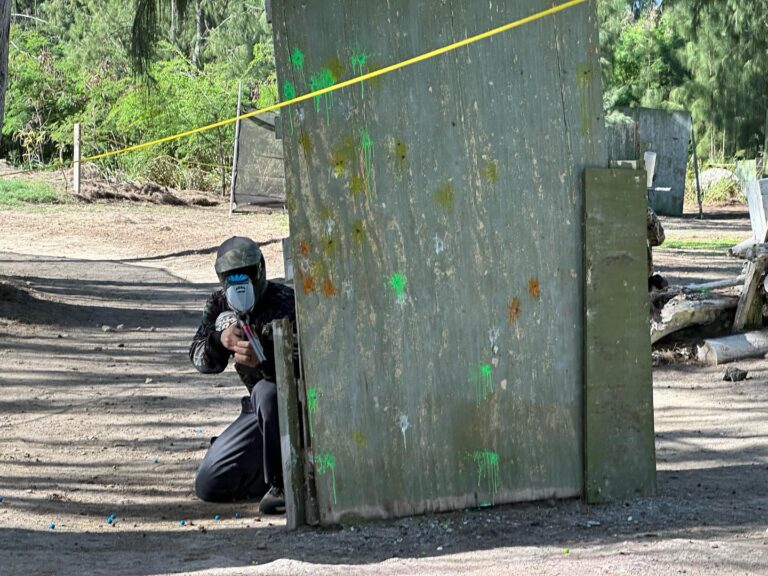
It is the only dedicated woodsball field on the island, spanning over an acre of natural terrain with wooded areas, open sandy spaces, grassy knolls, and wooden bunkers. The club offers walk-on play on weekends and holidays, private bookings during the week, and a full range of rental equipment including standard, keiki (kids), and deluxe kits. Popular game scenarios include capture the flag and zombie runs, with the staff adapting the pace to suit each group.
The field is well-suited for birthday parties, corporate team-building events, and family outings. A recreation area and lounge space are available on-site. The locally owned operation is known for its attentive, safety-focused staff who go out of their way to make every player feel welcome, including shuttling guests without base access from the gate. Paintballs are sold separately in standard and tactical grades, and admission includes unlimited high-pressure air refills.
OutdoorsBrothers Paintball Field is located in the Kunia area near Waipahu on the island of Oahu, Hawaii.
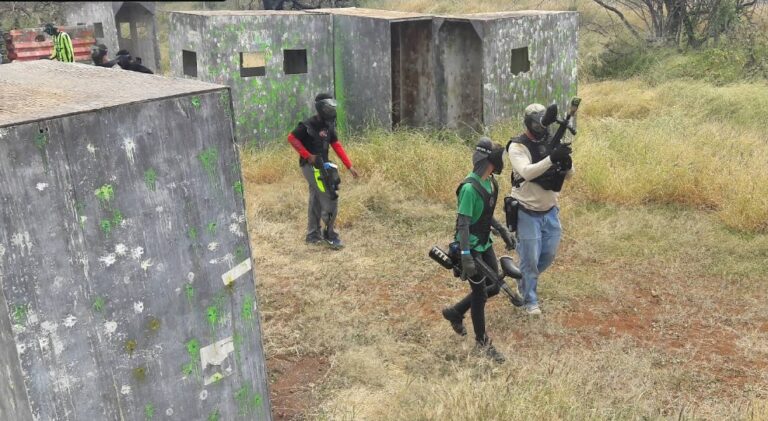
The field is a classic outdoor woodsball setup with uneven terrain, brush, and man-made obstacles like wooden bunkers, spools, and oil drums. Games include team deathmatch and capture-the-flag, with referees keeping rounds moving and rotating formats. Rental packages start with basic or upgraded Planet Eclipse Emek markers, while self-equipped players pay a reduced fee for all-day play and air. The facility operates on a field-paint-only policy.
The field is well-suited for birthday parties, corporate team-building, bachelor parties, and school outings. Picnic tables are available for resting between rounds. The business began in 2004 as a small shop and has grown into the only remaining paintball store in Hawaii and one of the few active fields on the island. The staff are experienced players who prioritize safety and provide briefings for newcomers.
OutdoorsPaintball is a fast‑paced, team‑oriented sport in which participants—called “players” or “markers”—navigate a defined arena while discharging small, compressed‑air‑propelled spheres filled with non‑toxic, water‑based dye. When a sphere bursts on impact, it leaves a vivid, temporary mark that signals an elimination. The equipment is deliberately lightweight: a marker resembling a futuristic pistol or rifle, a harness or vest to carry paint‑filled pods, a high‑capacity air tank, and protective gear such as masks, gloves, and padded clothing. Although the core mechanic is simple—hit = out—the sport has evolved into a global pastime that blends strategy, physical fitness, and a touch of theatrical flair.
Across the many leagues, fields, and informal “scrimmage” sessions, a common set of guidelines keeps the game safe, fair, and enjoyable. The foundation of every match is the “hit rule”: a player whose marker’s projectile makes contact with any part of the body or equipment, except for the face or eyes, is required to raise a hand and leave the field or step into a designated “respawn” area, depending on the game format.
Markers must be calibrated to fire at a velocity that does not exceed the maximum permitted speed—usually 300 feet per second for indoor venues and 280 feet per second for outdoor fields. This restriction curtails the risk of serious injury while preserving the satisfying pop of a well‑aimed shot.
All participants must wear a certified paintball mask that covers the eyes, nose, and mouth throughout the entire round. The mask’s visor must be made of shatter‑proof polycarbonate; any crack, chip, or compromised integrity is grounds for immediate removal from play.
Safety zones—often called “no‑fire zones”—are clearly marked on every field. These include the base lines, the loading area, and any place where a player is required to pause for a strategic discussion. In these zones, markers must be set to “safe” (i.e., the trigger is locked or the barrel is capped), and firing is strictly prohibited.
If a player’s marker malfunctions, the user must cease firing and signal the referee. The field’s staff will inspect the equipment, replace any broken parts, and ensure the marker is again compliant before the player rejoins.
Finally, sportsmanship is codified in a code of conduct that stresses respect for opponents, officials, and property. Unsportsmanlike behavior—such as deliberate targeting of the face, sabotage of opponents’ gear, or verbal abuse—is met with penalties ranging from a temporary suspension to a permanent ban from the venue.
The flexibility of paintball’s basic premise lends itself to a wide array of scenarios, each designed to emphasize a different facet of teamwork, tactics, or narrative immersion.
Capture the Flag – Two teams defend a flag placed within their own territory while attempting to seize the opponent’s flag and bring it back to their base. The scenario rewards fast, coordinated assaults, as well as disciplined defense, making it a staple for beginners and seasoned players alike.
Elimination (or “Last Man Standing”) – All players start at a common point and fight until only one remains. No respawns are allowed, so each decision carries lasting weight. This format tests precision shooting, stealth, and the ability to read the terrain under pressure.
Objective‑Based Missions – Often borrowed from military simulations, these games assign specific tasks such as “defuse the bomb,” “secure a hostage,” or “retrieve intelligence.” Teams must allocate roles—offense, support, reconnaissance—to complete the mission within a set time limit. The narrative element adds drama and encourages creative problem‑solving.
Scenario (Story‑Driven) Games – Some fields stage elaborate, multi‑hour events that combine dozens of objectives, scripted plot twists, and even costumed actors. Participants may be divided into “factions” with different win conditions, creating a living‑board‑game experience where alliances shift and the storyline evolves based on player actions.
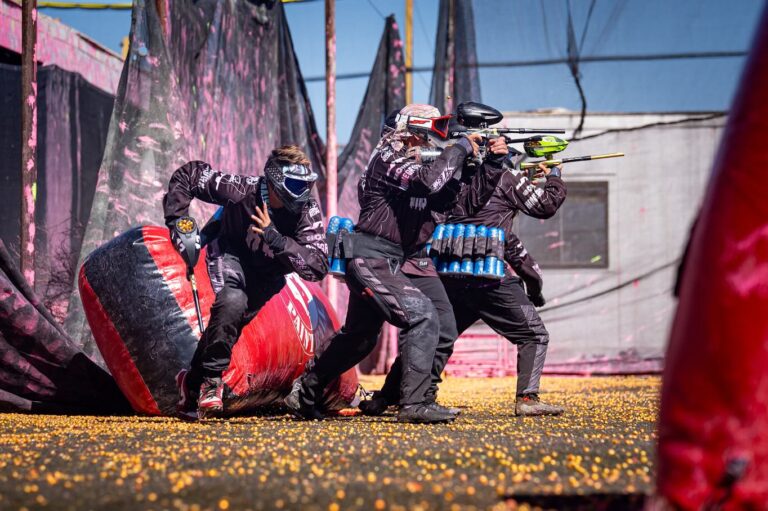
Speedball (Arena) Play – Conducted in a compact, highly manicured field of inflatable bunkers, speedball emphasizes rapid movement, quick reflexes, and precision aiming. Matches are short, typically lasting only a few minutes, and are the format most often seen in televised tournaments.
These scenarios can be mixed, modified, or entirely reinvented, allowing paintball organizers to keep the experience fresh and to cater to groups ranging from casual birthday parties to high‑stakes competitive leagues.
Beyond the obvious thrill of dodging a colored projectile, paintball serves several practical and personal development purposes.
Physical Fitness – Running, crawling, and sprinting across uneven terrain develop cardiovascular endurance, leg strength, and overall agility. The sport also improves hand‑eye coordination, as players must track moving targets while maintaining balance.
Strategic Thinking – Successful teams devise and adapt tactics on the fly, balancing offense, defense, and resource management (e.g., conserving paint pods). Players learn to assess risk, anticipate opponent movements, and make rapid decisions under stress.
Team Building – Paintball is a natural laboratory for leadership and communication. Clear, concise commands, trust in teammates, and the ability to delegate roles are essential for victory. Many corporate training programs now incorporate paintball scenarios to foster collaboration in a low‑stakes, high‑energy environment.
Stress Relief – The physical exertion, combined with the cathartic release of “shooting” in a controlled setting, provides a healthy outlet for tension. Endorphins released during play contribute to improved mood and mental clarity after the match concludes.
Social Interaction – The shared experience of navigating a field together builds camaraderie. Whether among friends, family members, or strangers, the sport creates a common language of inside jokes, post‑match debriefs, and mutual respect for each other’s skills.
Skill Transfer – Marksmanship fundamentals, situational awareness, and quick decision‑making cultivated on the field have crossover benefits for activities such as hunting, tactical shooting, and even video‑game esports, where similar cognitive demands exist.
The paintball community is remarkably diverse. Young adults in their late teens through early thirties constitute the bulk of regular participants, drawn by the sport’s blend of adrenaline and social interaction. However, the demographic spread extends far beyond that core.
Families often book weekend slots for children accompanied by parents, using the activity as a shared adventure that encourages physical play in a safe environment.
Corporate Teams employ paintball as a team‑building exercise, appreciating how the competitive yet collaborative nature of the game mirrors real‑world workplace dynamics.
Military and Law‑Enforcement Personnel use paintball simulations to rehearse tactical movements, communication protocols, and urban engagement strategies without the expense or danger of live‑fire exercises.
College Clubs create leagues that blend sport with campus life, offering scholarships or travel opportunities for top performers.
Veterans and retirees discover paintball as a means to stay active, maintain sharp reflexes, and enjoy a sense of camaraderie reminiscent of service days.
In short, anyone who values physical activity, strategic challenge, and a bit of friendly competition can find a place on the paintball field.
Paintball facilities are designed to cater to a wide range of preferences, weather conditions, and player skill levels. The two primary categories—outdoor and indoor—each offer distinct advantages.
Both outdoor and indoor options commonly provide on‑site equipment rentals—including markers, masks, and protective wear—to lower the barrier to entry for newcomers. Many facilities also operate “paintball shops” where players can purchase custom barrels, high‑capacity pods, and performance‑enhancing accessories tailored to their preferred style of play.
Paintball, at its essence, is a simple game of tag with a splash of color, but the layers built upon that foundation make it a multifaceted activity. A universal set of safety and conduct rules ensures that the excitement never compromises well‑being. A kaleidoscope of scenarios—ranging from classic capture‑the‑flag skirmishes to elaborate story‑driven missions—keeps the experience fresh for a wide audience. Beyond the immediate thrill, the sport cultivates physical fitness, strategic acuity, teamwork, and stress relief, providing tangible benefits that extend far beyond the field’s perimeter.
The community that gathers around paintball is equally varied: teenagers seeking adventure, families looking for shared outings, corporations aiming to strengthen collaboration, and professionals training under realistic yet safe conditions. To accommodate this breadth, venues have diversified into sprawling outdoor parks that harness natural landscapes and meticulously designed indoor arenas that guarantee consistent play regardless of the climate.
Whether a newcomer steps onto a sun‑drenched clearing, a seasoned competitor lines up a shot amid a lattice of inflatables, or a corporate team hatches a plan to capture a flag, the core experience remains the same: a burst of color, a heartbeat of anticipation, and a moment of shared humanity forged in the heat of friendly competition. Paintball continues to evolve, but its enduring appeal lies in that simple, timeless equation—strategy plus action equals unforgettable fun.


 194 Mumba St, Kapolei, HI 96707, United States