El Monte
 Log in
Log in
Log in

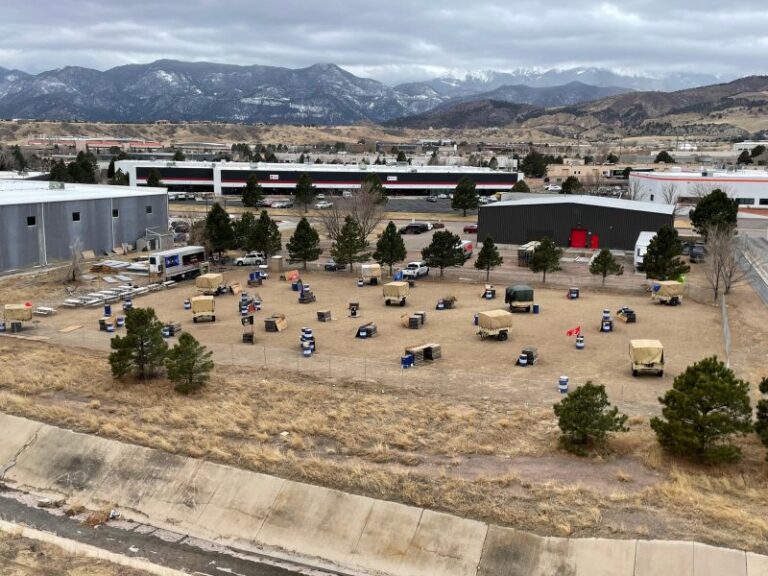
Battlefield Colorado is located in northwest Colorado Springs, next to SoccerHaus near Centennial Blvd and Garden of the Gods Road.
This outdoor laser tag venue spans a full city block and brings video game combat to life with realistic military-style rifles and head/gun sensors — no paint, no bulky vests, no goggles. Players choose from eight rotating missions like Capture the Flag, Defuse the Bomb, and Protect the President, playing multiple rounds per 90-minute session. The field is filled with army trucks, wooden structures, barrels, and crates for cover. The staff is energetic and family-run, with referees who keep games fair and fun for all ages and skill levels.
The club is a great fit for birthday parties (ages 7+), corporate team building, youth groups, bachelor parties, and family outings. Weapon upgrades are available on a first-come basis, free water is provided at team bases, and military discounts are offered. The venue operates by reservation only and accommodates groups from 10 to 40 players. Nearby dining options include Panda Express, Jersey Mike’s, and Marco’s Pizza.
 Outdoors
The Summit Interquest is located off Interquest Parkway in northern Colorado Springs, near I-25 and North Gate Boulevard.
The venue offers 36 lanes of bowling, a two-story laser tag arena (3,500 sq. ft., up to 30 players), and an arcade with over 60 games. Bowling is available by the hour with cosmic sessions on weekends, and laser tag runs 15-minute games with full equipment provided. Regular specials include Mountain Mondays ($9.99 unlimited bowling or laser tag), Hump Day half-price laser tag, and Cosmic Nights. Birthday packages (Silver, Gold, Platinum) combine food with bowling, laser tag, and game cards. The on-site Crossroads Tavern and Grille serves pizza, burgers, salads, and local craft beer.
The venue is suited for birthday parties, corporate events, team building, and casual family outings. Private event rooms and lane-side seating are available for groups. The staff manages game coordination and party hosting. Free parking, military discounts, and ADA accessibility are provided. The facility is open daily from late morning until midnight or later, with extended hours on weekends.
 Indoors
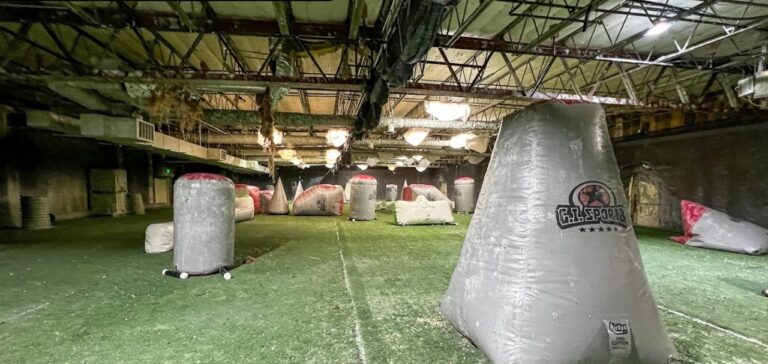
American Paintball Coliseum is located in the eastern part of Colorado Springs, near the intersection of Powers Boulevard and Airport Road. This indoor facility offers four activities — paintball, airsoft, laser tag, and axe throwing — all under one roof. The main attraction is the 10,000-square-foot Scenario Paintball Field filled with salvaged airplane parts, boats, and wooden bunkers, alongside a speedball arena with inflatable obstacles. The venue hosts tournaments, special scenario games like the Battle of Chernobyl, and offers private after-hours events.
The facility is well-suited for birthday parties, corporate team building, bachelor parties, military group outings, and holiday celebrations, with “Eat & Play” combo packages available for groups of 6 or more. An on-site pro shop carries major brands and offers equipment repair and air fills. Each group gets a lounge section for food and celebration, and spectators can watch from designated viewing areas. The staff is frequently praised for being attentive and patient with first-time players.
IndoorsUrban Air Trampoline and Adventure Park is located in northern Colorado Springs off North Academy Boulevard. The park offers a wide range of indoor attractions including trampoline zones, a laser tag arena, indoor go-karts, a ropes course, climbing walls, a zip line, a warrior obstacle course, and a dedicated area for children ages 7 and under. Beyond general admission, the park specializes in birthday parties with dedicated hosts and private rooms, and also hosts school field trips, youth group events, corporate team building, and private park rentals. The on-site Urban Café provides food and drinks, and the staff are known for their attentive and inclusive approach to guest service.
Indoors
Laser tag in Colorado Springs, CO is one of the best ways to get out, have fun and do something active. For those looking for an exhilarating experience, look no further than laser tag in the city of Colorado Springs.
Tucked away in a corner of eastern Colorado, Colorado Springs has a variety of fun activities and places to visit, including some of the best laser tag arenas in the state of Colorado. Laser tag is a physical game similar to the popular game hide and seek that requires teams to use infrared technology to tag each other with special laser guns. Players score points when they tag other players, and many of the laser tag arenas featured in Colorado Springs have different challenges and obstacles to make the game more challenging.

Laser tag is a fast‑paced, team‑oriented game that simulates a futuristic combat experience using infrared‑emitting “phasers” and wearable sensors. Players wear a chest‑mounted receiver and a wrist or headband detector; when a beam from another player’s gun strikes the sensor, a hit is registered and the score is updated in real time. Unlike paintball, there is no projectile, no mess, and the action can be repeated endlessly without the need for reloads or safety gear beyond the standard protective vest. The technology, originally devised for military training in the 1970s, has been refined for recreation, creating a safe, low‑impact sport that can be enjoyed by children, teenagers, adults, and senior participants alike.
The versatility of laser tag lies in its ability to adapt to a wide variety of narrative settings, each designed to heighten immersion and encourage strategic thinking.
Urban Warfare – A maze of concrete walls, abandoned vehicles, and dimly lit corridors mimics a city under siege. Teams must navigate tight alleyways, use cover effectively, and coordinate flanking maneuvers.
Space Station Assault – Metallic panels, glowing panels, and low‑gravity “airlocks” transport players to a futuristic outpost. The scenario often incorporates timed objectives such as “secure the reactor core” or “disable the enemy communications array.”
Zombie Outbreak – A hybrid of survival horror and team sport, this scenario designates a few participants as “infected” who can “tag” others to spread the infection. The remaining survivors must rescue hostages or retrieve a cure before the timer expires.
Mission Impossible – Players assume the roles of elite operatives tasked with infiltrating a heavily guarded facility. The game includes laser‑triggered “alarms” that penalize noisy movements, encouraging stealth and careful planning.
Fantasy Quest – Castles, hidden treasure chambers, and mythic creatures create a medieval backdrop. Players collect “artifacts” by hitting specific sensors, blending role‑playing elements with competitive scoring.
Each scenario can be programmed through the game’s central control system, allowing venue operators to rotate themes daily or tailor experiences for specific groups, such as corporate teams seeking a collaborative challenge or birthday parties that want a storyline centered around the celebrant’s favorite superhero.
Beyond the sheer excitement of darting through a dark arena, laser tag offers a suite of physical, cognitive, and social advantages.
Physical Activity – Although the intensity is moderate compared to high‑impact sports, players constantly move, sprint, duck, and climb, providing a full‑body workout that improves cardiovascular health, agility, and balance.
Strategic Thinking – Success depends on rapid decision‑making, route planning, and resource management (e.g., conserving “ammo” or coordinating power‑up usage). These mental demands sharpen problem‑solving skills and foster adaptive thinking under pressure.
Teamwork and Communication – Most game modes require coordinated attacks, defensive formations, and real‑time communication. Participants learn to assign roles, delegate responsibilities, and give constructive feedback, translating into stronger collaboration in academic or workplace environments.
Stress Relief – The immersive environment, combined with the release of endorphins from physical exertion, provides a healthy outlet for stress. The non‑violent nature of the infrared beams ensures that the excitement does not translate into real aggression.
Inclusivity – Because the equipment is lightweight and the arena can be fully accessible, players of varying fitness levels, ages, and abilities can compete together. Adjustments such as slower game timers or simplified scoring systems make the experience welcoming for beginners and those with special needs.
Technology Literacy – Interacting with the handheld devices, understanding sensor feedback, and interpreting digital scoreboards nurture comfort with modern tech, an increasingly valuable skill in a digitized world.
Researchers in kinesiology and cognitive science have begun to examine laser tag as a viable tool for both physical education and behavioral training. Studies indicate that the game’s blend of aerobic movement and rapid decision‑making activates the prefrontal cortex, improving executive functions such as working memory and mental flexibility. Moreover, the controlled competitive environment offers a real‑time laboratory for studying group dynamics, leadership emergence, and conflict resolution.
From an industry perspective, analysts note that laser tag’s low entry barrier—no need for ammunition, minimal safety equipment, and relatively modest venue setup costs—makes it an attractive addition to entertainment complexes, malls, and even schools looking to diversify extracurricular offerings. Market forecasts predict steady growth, driven by the rise of “experience‑based” leisure activities, especially among Millennials and Gen‑Z consumers who prioritize social interaction and novelty over passive consumption.
The perception that laser tag is a children’s pastime is outdated. While the bright colors and easy‑to‑hold phasers naturally appeal to younger audiences, the sport’s adaptability attracts a broad demographic.
Children (5‑12 years) – For this age group, laser tag introduces basic concepts of teamwork, spatial awareness, and healthy competition. Many venues offer junior‑friendly arenas with lower‑height obstacles and simplified scoring to ensure an enjoyable first experience.
Teenagers (13‑18 years) – Adolescents gravitate toward more competitive, scenario‑driven games that involve strategy and skill progression. Some centers offer league play, where teams accumulate points across a season, fostering a sense of commitment and community.
Young Adults and College Students – Campus recreation departments frequently host laser tag nights as a low‑cost alternative to intramural sports. The blend of physical exertion and tactical gameplay resonates with students seeking a break from academic pressures.
Adults (25‑50 years) – Corporate team‑building events, date nights, and family outings often feature laser tag as an energetic social activity. The technology’s safety record and minimal mess make it appealing for adults who want a playful experience without the logistical concerns of paintball or airsoft.
Seniors (60+ years) – Adaptive equipment, such as lighter‑weight phasers and slower‑pace game modes, enables older adults to stay active, improve coordination, and engage socially. Community centers have reported increased attendance when laser tag sessions are incorporated into senior wellness programs.
The modular nature of laser tag makes it a natural fit for a range of celebrations, each benefiting from customizable themes and scoring mechanics.
Birthday Parties – Parents can book a dedicated time slot and have the arena themed around the child’s favorite movie or superhero. Game duration can be adjusted to match attention spans, and staff can provide “badge” awards for categories like “Best Defender” or “Sharpest Shooter,” adding a personalized touch.
Graduations – Whether celebrating high‑school, college, or military achievements, laser tag offers an active way to mark the transition. Organizers often incorporate “mission” objectives that reflect the graduate’s field of study—e.g., “retrieve the research data” for engineering graduates—creating a memorable link between the event and the individual’s future path.
Corporate Parties and Team‑Building – Companies leverage laser tag to break down hierarchical barriers, fostering camaraderie in a neutral, high‑energy setting. Facilitators can embed specific business‑related challenges, such as resource allocation or crisis management, into the game’s objectives, enabling participants to practice leadership and decision‑making skills while having fun.
The ability to track scores in real time also allows for instant feedback and post‑game debriefs, where facilitators discuss strategies, highlight strengths, and identify areas for improvement—transforming a recreational activity into a development opportunity.
Choosing the right venue hinges on the desired experience, weather considerations, and logistical constraints.
When selecting a venue, organizers should weigh factors such as group size, desired level of thematic immersion, and any accessibility requirements. Indoor arenas excel at delivering a polished, cinematic experience, while outdoor fields provide a rugged, expansive battlefield that can accommodate larger teams and more elaborate missions.
Laser tag has evolved from a niche military training tool into a mainstream, multi‑generational sport that blends physical activity, strategic thinking, and social interaction. Its adaptable scenarios—ranging from futuristic space assaults to zombie survival—keep the experience fresh and engaging for repeat players. The documented benefits, including improved cardiovascular health, enhanced teamwork, and heightened cognitive flexibility, underscore its value beyond mere entertainment.
Scientific inquiry and industry analysis alike recognize laser tag’s potential as a low‑risk, high‑engagement platform for education, corporate development, and community building. Whether celebrated at a child’s birthday, a graduate’s farewell, or a corporate retreat, laser tag provides a versatile backdrop for memorable moments.
With a growing network of indoor arenas equipped with cutting‑edge technology and outdoor fields offering expansive, natural terrains, the options for play are abundant. As society continues to prioritize experiential leisure and inclusive, active recreation, laser tag stands poised to remain a vibrant fixture in the landscape of modern entertainment.


 4925-B, List Dr, Colorado Springs, CO 80919