
 El Monte
 Log in
Log in
Log in

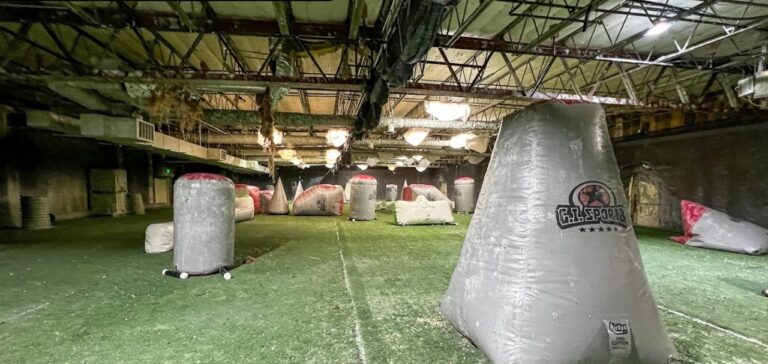
American Paintball Coliseum is located in the eastern part of Colorado Springs, near the intersection of Powers Boulevard and Airport Road. This indoor facility offers four activities — paintball, airsoft, laser tag, and axe throwing — all under one roof. The main attraction is the 10,000-square-foot Scenario Paintball Field filled with salvaged airplane parts, boats, and wooden bunkers, alongside a speedball arena with inflatable obstacles. The venue hosts tournaments, special scenario games like the Battle of Chernobyl, and offers private after-hours events.
The facility is well-suited for birthday parties, corporate team building, bachelor parties, military group outings, and holiday celebrations, with “Eat & Play” combo packages available for groups of 6 or more. An on-site pro shop carries major brands and offers equipment repair and air fills. Each group gets a lounge section for food and celebration, and spectators can watch from designated viewing areas. The staff is frequently praised for being attentive and patient with first-time players.
 Indoors
If you are looking for an exciting new activity to try, Airsoft in Colorado Springs, CO may be just what you need. Airsoft is rapidly gaining popularity across the country as a safe, fun way to engage in recreational gunplay. With a wide variety of different guns and ammunition types available, Airsoft offers a great way to practice shooting at targets without the fear of live ammunition.
Airsoft is a sport where people use airsoft guns to shoot non-metallic pellets at opponents or targets from a distance. Airsoft guns are usually designed to look like real firearms and are equipped with a precision apparatus that shoots plastic pellets but without the recoil of a real firearm. Since airsoft guns use a 6mm plastic pellet instead of a metal bullet, it is considered a safe sport. In most cases, airsoft guns do not rise to a level that would be considered unlawful possession of a firearm.
Airsoft is a tactical sport that uses replica firearms to fire small, non‑lethal plastic pellets (commonly called BBs) at speeds typically ranging from 300 to 400 feet per second. The weapons are modeled after real‑world pistols, rifles and sub‑machine guns, but the power source is an electric motor, compressed gas, or a spring‑driven mechanism rather than gunpowder. Players organise themselves into squads or teams and engage in simulated combat scenarios that can mirror historical battles, modern military operations, or entirely fictional missions.
Unlike paintball, where the visible splatter of paint provides an immediate indication of a hit, airsoft relies on a strict honour system: a player who feels the impact of a BB must call themselves “hit” and leave the field. This combination of realistic equipment, strategic depth, and an emphasis on personal integrity makes airsoft a unique blend of sport, hobby and community experience.
One of the strongest draws of airsoft is its commitment to realism. The replicas often replicate the weight, recoil, and controls of their real‑world counterparts, and many fields are designed with authentic terrain—urban ruins, forested hideouts, and makeshift forts—to immerse participants in tactical environments.
Teamwork is essential. Successful missions rarely depend on a single player’s shooting skill; they hinge on coordinated movement, clear communication, and the ability to adapt to changing circumstances. Squads develop standard operating procedures, assign roles such as point man, sniper, medic, or support gunner, and practice fire‑and‑move tactics that mirror those used by actual military units.
Strategy evolves through the variety of game modes offered. Popular formats include:
These modes compel players to think beyond raw firepower, encouraging the use of cover, flanking maneuvers, and coordination of indirect fire (e.g., smoke grenades) to achieve victory.
Airsoft’s appeal extends far beyond the battlefield thanks to a vibrant culture of customization. Enthusiasts can modify virtually every component of their gear: changing hop‑up settings for greater BB accuracy, swapping out barrels for altered muzzle velocity, adding tactical rail accessories (lights, lasers, foregrips), and even repainting their weapons to match specific unit camouflages. This hobbyist mindset fuels a thriving aftermarket, where manufacturers and independent makers constantly introduce new parts, upgrades, and aesthetic enhancements.
The community aspect is equally powerful. Local clubs host regular matches, training sessions, and social gatherings. Online forums and social media groups allow players to exchange tips, arrange meet‑ups, and showcase custom builds. The shared passion for realism, strategy, and camaraderie often creates lasting friendships that extend beyond the field, reinforcing airsoft’s reputation as more than just a weekend pastime.
Starting out in airsoft need not be costly, but certain pieces of equipment are indispensable for safety and comfort. New players should prioritize the following items:
Beyond safety gear, a reliable BB magazine (capacity typically 300–500 rounds), a reliable airsoft gun suited to the player’s preferred power source, and a portable power source (batteries for electric guns or gas canisters for gas‑powered rifles) round out a functional starter kit.
Airsoft fields operate under a set of universally accepted rules that maintain safety, fairness, and enjoyment for all participants.
Safety First – All players must wear approved eye protection at all times, keep weapons on “safe” mode while on the sidelines, and refrain from shooting at non‑players or spectators. Many fields require a “safety brief” before each session, covering range limits, trigger discipline, and emergency procedures.
The Honour System – Since BB impacts are often invisible, players rely on honesty to call hits. A player who feels a BB impact must immediately announce “hit” and leave the active play area. This system fosters trust and discourages cheating, creating a respectful environment where gameplay is measured by skill, not deception.
Respect – Courtesy extends to both fellow participants and the venue. Players should communicate clearly, avoid hostile language, and respect property (e.g., not damaging field structures or natural habitats). Additionally, many fields have age restrictions and require parental consent for minors, emphasizing responsible participation.
Adherence to these principles ensures that airsoft remains a safe, enjoyable, and socially responsible sport.
Airsoft replicas fall into three primary categories, each with distinct operating mechanisms and performance characteristics.
| Type | Power Source | Typical Use | Advantages |
|---|---|---|---|
| Automatic Electric Guns (AEGs) | rechargeable battery powering an electric motor | Versatile; suitable for most game modes | Consistent rate of fire, easy to maintain, widely available |
| Gas‑Powered Airsoft Guns | compressed gas (green gas, CO₂, or HFC) stored in a reservoir | Realistic blowback action; popular for pistols and rifles | Authentic recoil, high muzzle velocity, adjustable gas pressure |
| Spring‑Powered Airsoft Guns | manual cocking of a spring mechanism | Often used for sniper rifles or entry‑level weapons | Simple design, inexpensive, no batteries or gas required |
Automatic Electric Guns dominate the market because they balance reliability with affordability. A typical AEG consists of a gearbox containing gears, a motor, and a battery; pulling the trigger energizes the motor, which cycles the gears to compress a spring and release a burst of air that propels the BB.
Gas‑Powered guns emulate the feel of real firearms more closely. When the trigger is pulled, gas expands rapidly, driving a piston forward and generating both projectile motion and a simulated recoil. These guns can be tuned for variable FPS (feet per second) by adjusting gas pressure or using aftermarket hop‑up units.
Spring‑powered guns require a manual “cocking” action before each shot, making them slower but highly reliable. They are especially favored by snipers, whose emphasis lies on precision and range rather than volume of fire.
Each type offers a different experience, and many players own multiple guns to suit various scenarios—an AEG for fast‑paced skirmishes, a gas rifle for MilSim operations, and a spring sniper for long‑range engagements.
Researchers in ballistics and material science have examined airsoft BBs to assess their kinetic energy and potential for injury. Studies show that a typical 0.20 g BB traveling at 350 fps carries roughly 1.2 joules of energy—well below the threshold for causing permanent tissue damage when proper protective gear is worn. Nonetheless, experts stress that without eye protection, even low‑energy BBs can inflict serious ocular trauma, reinforcing the sport’s safety mandates.
From an industry standpoint, manufacturers emphasize the importance of regulated velocity limits. Many jurisdictions and fields cap BB speed at 400 fps to prevent injuries and manage liability. Additionally, the development of biodegradable BBs—made from PLA or other compostable polymers—reflects a growing environmental consciousness within the community, reducing plastic waste on outdoor fields.
Security and law‑enforcement specialists occasionally study airsoft replicas to understand how realistic models can be misused in criminal contexts. Their consensus underscores that, while airsoft guns are non‑lethal, responsible ownership, clear markings (e.g., orange tip on certain guns), and public awareness are essential to prevent confusion with real firearms.
Overall, the scientific consensus affirms that when proper safety measures are observed, airsoft presents a low‑risk, high‑engagement activity suitable for recreation and tactical training alike.
Airsoft’s demographic is remarkably diverse. The sport attracts:
The inclusive nature of airsoft means that players of varied ages, backgrounds, and skill levels can find a niche, whether they prefer fast‑paced skirmishes or methodical MilSim campaigns.
Finding the right venue is crucial for a rewarding experience. Options range from small local pits to massive, professionally operated fields.
These are dedicated facilities that adhere to safety standards, enforce velocity limits, and provide built‑in structures such as bunkers, towers, and obstacle courses. Many fields offer rental gear, making them ideal for newcomers. Popular amenities include paintball‑style “play zones,” themed battlefields (urban, desert, jungle), and night‑vision capable arenas for after‑dark engagements.
Across most regions, informal clubs meet weekly to conduct drills, host friendly matches, and share knowledge about gear maintenance. Joining a team provides mentorship opportunities—seasoned players can teach newcomers about sight alignment, trigger discipline, and tactical movement. Clubs also often organize internal tournaments, fostering a competitive yet supportive atmosphere.
MilSim (Military Simulation) events are large‑scale, scenario‑driven operations that may last from a few hours to multiple days. Organizers script missions with objectives such as “extract the hostage,” “secure the supply depot,” or “defend the forward operating base.” Participants receive briefings, maps, and sometimes role‑playing gear (e.g., identification tags, simulated radios). These events attract dedicated enthusiasts who relish the immersive storytelling and strategic depth that MilSim offers.
Regardless of the setting, potential players should verify that the venue enforces the necessary safety protocols, provides adequate medical support, and respects local regulations concerning airsoft activity.
Airsoft stands at the intersection of sport, hobby, and tactical simulation. Its realistic replicas, emphasis on teamwork, and wide array of game modes create a dynamic environment where players can hone strategic thinking, develop camaraderie, and indulge in creative customization. By investing in essential protective gear, adhering to universally accepted safety and honour rules, and selecting the appropriate type of airsoft gun, newcomers can embark on a rewarding journey.
Scientific analysis confirms that, with proper precautions, the kinetic energy of airsoft BBs poses minimal risk, while industry trends point toward responsible velocity limits and environmentally friendly ammunition. The community—spanning veterans, students, professionals, and hobbyists—continues to expand, supported by local clubs, sanctioned fields, and immersive MilSim events.
Whether a participant seeks the thrill of a fast‑paced capture‑the‑flag match, the strategic depth of a MilSim operation, or simply a social outlet to connect with like‑minded individuals, airsoft offers a versatile and engaging platform. As the sport evolves, its blend of realism, teamwork, and creativity ensures it will remain a vibrant part of the recreational landscape for years to come.


 834 Emory Cir, Colorado Springs, CO 80915, United States