
 El Monte
 Log in
Log in
Log in

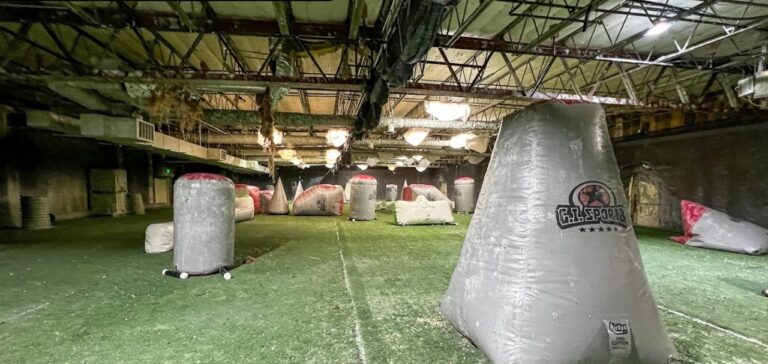
American Paintball Coliseum is located in the eastern part of Colorado Springs, near the intersection of Powers Boulevard and Airport Road. This indoor facility offers four activities — paintball, airsoft, laser tag, and axe throwing — all under one roof. The main attraction is the 10,000-square-foot Scenario Paintball Field filled with salvaged airplane parts, boats, and wooden bunkers, alongside a speedball arena with inflatable obstacles. The venue hosts tournaments, special scenario games like the Battle of Chernobyl, and offers private after-hours events.
The facility is well-suited for birthday parties, corporate team building, bachelor parties, military group outings, and holiday celebrations, with “Eat & Play” combo packages available for groups of 6 or more. An on-site pro shop carries major brands and offers equipment repair and air fills. Each group gets a lounge section for food and celebration, and spectators can watch from designated viewing areas. The staff is frequently praised for being attentive and patient with first-time players.
 Indoors
Paintball in Colorado Springs, CO offers a unique, unforgettable experience for players of all ages and skill levels. Home to the world’s largest paintball complex and some of the best paintball fields in the country, Colorado Springs offers something for everyone.
Paintball has become a popular sport across the world, with people of all ages, genders, and backgrounds playing it. Colorado Springs, in particular, provides an amazing environment to explore the game. The wide variety of terrains, topography, and climates give players the opportunity to create unique playing fields and enjoy an intense game of paintball.
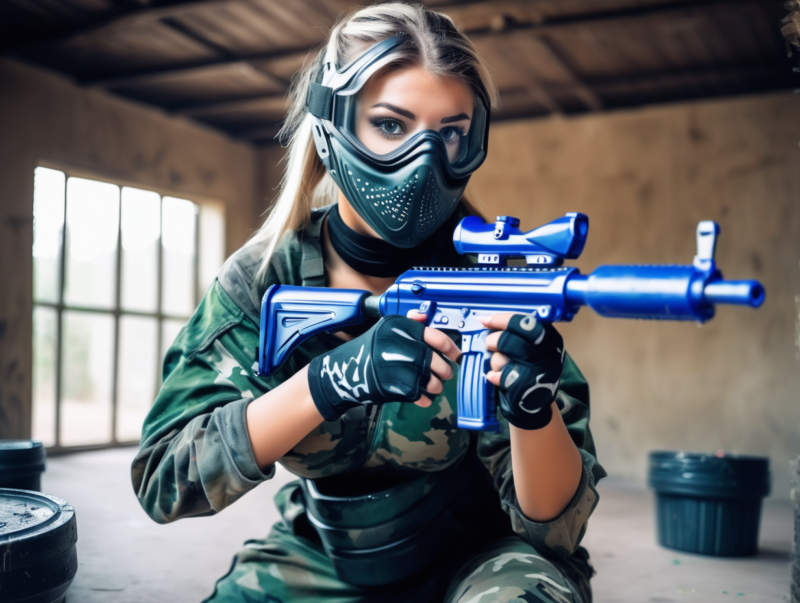
Paintball is a fast‑paced, team‑oriented sport that pits two or more groups against each other in a simulated combat environment. Players, equipped with a paint‑filled polymer projectile—commonly called a “paintball”—launch the round from a pneumatic marker (the device most people recognize as a paintball gun). When a paintball strikes a participant, the gelatin shell ruptures, leaving a visible splatter of pigment that marks the hit. The objective varies by game mode, but it usually revolves around eliminating opponents, completing objectives, or controlling territory. Though the concept is simple, the sport blends strategy, athleticism, and technology, offering a uniquely immersive experience that can be tailored to casual recreation or competitive play.
While specific regulations differ by venue or tournament, the core rules that govern almost every paintball match share several common elements:
Safety Gear Is Mandatory
Every player must wear a full‑face mask that meets ASTM F1492 standards, along with protective clothing such as padded jackets, gloves, and durable footwear. Some fields also require chest protectors or elbow/knee pads, especially for younger or novice participants.
Markers Must Be Chronographed
Paintball markers are restricted to a maximum muzzle velocity of 300 feet per second (fps) for most fields. This limit is enforced with a chronograph—a device that measures projectile speed—to reduce the risk of injury. In “high‑impact” or “stock‑class” formats, the velocity ceiling may be lowered to 280 fps or even 250 fps.
Only Approved Paintballs May Be Used
Players are required to use paintballs that meet the field’s specifications for size (typically .68 caliber) and breakability. “Slug” or “hard” projectiles are prohibited because they can cause severe injuries.
Elimination Is Determined by Paint
A player is considered “out” when a paintball breaks on any part of the body or gear that is not covered by protective equipment. Some fields adopt a “one‑hit” rule, while others allow “cumulative hits” before a player is eliminated.
Refill Zones and Reload Times
Most venues designate refill stations where players may reload their hoppers (the containers that hold paintballs) using a regulated time limit—usually 30 seconds to a minute per refill. This prevents players from “stockpiling” ammunition and encourages strategic movement.
Fair Play and Sportsmanship
Cheating—such as using unapproved markers, modifying a gun to exceed velocity limits, or “tagging” opponents without a genuine paintball—results in immediate disqualification. Unsportsmanlike conduct, including verbal abuse or intentional physical aggression, is also penalized.
Field‑Specific Rules
Each arena may have additional guidelines related to map layout, time limits, or special equipment (e.g., airsoft grenades, flag‑carrying protocols). Players are expected to read and acknowledge these rules before entering the field.
Adhering to these standards ensures that paintball remains a safe, enjoyable activity for participants of all ages and skill levels.
Paintball’s flexibility stems from its ability to accommodate a wide array of game scenarios, each designed to test different aspects of teamwork, tactics, and individual skill. Below are some of the most popular formats:
Two teams defend a flag placed at their home base while attempting to infiltrate the opponent’s territory and retrieve the enemy flag. Success depends on coordinated assaults, disciplined defense, and rapid extraction.
Players aim to eliminate all opponents in a free‑for‑all or team‑based environment. The match ends when only one player or one team remains active. This format emphasizes accuracy, movement, and situational awareness.
Scenarios such as “Hostage Rescue,” “Bomb Defusal,” or “VIP Escort” assign specific tasks that must be completed within a set time frame. Teams must balance offensive pressure with defensive positioning, often switching roles midway through the game.
Played on a small, symmetrical field with inflatable bunkers, speedball is the sport’s competitive core. Matches are short—typically three to five minutes per round—and revolve around rapid, high‑intensity action. This format is the backbone of professional leagues and televised tournaments.
These are large‑scale events that can span multiple acres and last several hours or even days. Players might dress in period‑appropriate uniforms, enact historical battles, or follow a storyline with evolving objectives. Scenario paintball blends role‑playing elements with tactical combat, creating an immersive narrative experience.
All equipment must be sourced from the era being simulated, and markers are limited to 12‑shot magazines that must be manually loaded. This “military simulation” format encourages realism, patience, and strategic planning over sheer firepower.
Each scenario can be adapted to suit the participants’ preferences, the venue’s layout, and the level of intensity desired. The diversity of play styles is a key factor in paintball’s enduring popularity.
Beyond being an adrenaline‑fueled pastime, paintball offers a suite of physical, mental, and social benefits that extend far beyond the confines of the arena.
Running, crouching, sliding, and quick directional changes demand cardiovascular endurance, core strength, and agility. Regular participation can improve stamina, coordination, and overall muscular tone.
Most game modes require players to coordinate movements, share information about enemy positions, and execute strategies together. These collaborative skills translate directly to workplace environments, where clear communication and unified effort are vital.
Paintball scenarios present constantly shifting variables—enemy tactics, limited ammunition, time constraints. Players must assess situations rapidly, make decisions, and adapt tactics on the fly, thereby sharpening critical‑thinking abilities.
The physical exertion combined with focused attention provides a natural outlet for stress. The release of endorphins during gameplay often leads to heightened mood and a sense of accomplishment after a successful match.
Successfully navigating a challenging scenario or surviving a difficult elimination round can boost self‑esteem. For newcomers, mastering marker handling and learning to move confidently under fire fosters a sense of personal growth.
Paintball gatherings bring together friends, families, coworkers, and strangers alike. The shared experience creates strong bonds, encourages networking, and often leads to lasting friendships.
Collectively, these advantages make paintball a valuable activity for schools, corporate team‑building programs, military training, and recreational clubs.
Paintball’s appeal cuts across age groups, genders, and cultural backgrounds, attracting a remarkably diverse participant base.
The sport’s low barrier to entry—most venues provide equipment rentals and introductory sessions—allows newcomers to test the waters without a significant upfront investment, further broadening its reach.
Research into paintball’s impact has been relatively limited compared to larger sports, yet the studies that do exist, along with commentary from industry professionals, paint a generally positive picture.
Safety Research – Biomedical engineers have analyzed the kinetic energy of paintball projectiles, confirming that the standard velocity limit of 300 fps keeps impact forces well below thresholds for serious injury when proper protective gear is used. This data supports the continued enforcement of velocity caps and mask standards.
Psychological Benefits – Sports psychologists note that paintball’s combination of physical exertion and strategic decision‑making stimulates both the body and mind. The “flow state”—a mental condition of complete immersion—has been observed in players during intense matches, correlating with reduced stress levels.
Training Utility – Military analysts argue that paintball offers a cost‑effective, low‑risk platform for practicing small‑unit tactics, communication protocols, and situational awareness. The visual feedback from paint splatter provides immediate, tangible evidence of success or failure, facilitating rapid debriefs.
Industry Growth – Market analysts project that the global paintball industry will continue to expand at a steady compound annual growth rate (CAGR) of around 5 % through the next decade, driven by rising interest in experiential recreation and the proliferation of indoor “speedball” arenas in urban centers.
Environmental Concerns – Some environmental scientists have raised questions about the biodegradability of paintball shells and the impact of frequent field usage on local ecosystems. In response, manufacturers are developing shells made from plant‑based polymers that decompose more quickly, and many fields now adopt recycling programs to mitigate waste.
Overall, the consensus among experts is that, when played responsibly and with the appropriate safety measures, paintball presents a net positive contribution to physical health, tactical training, and recreational enjoyment.
Finding the right venue depends on the desired experience, weather conditions, and proximity. Paintball fields can be broadly categorized into outdoor and indoor facilities, each offering distinct advantages.
Popular outdoor field types include “woodsball” (dense forest settings), “open‑field” (flat, grassy areas with minimal cover), and “mixed‑terrain” parks that combine natural obstacles with purpose‑built bunkers.
When selecting a field, players should consider factors such as the variety of game modes offered, the quality and condition of equipment rentals, safety certifications, and customer reviews. Many venues also host leagues, tournaments, and special events, providing opportunities for both casual participants and competitive athletes to engage with the broader paintball community.
Paintball continues to evolve, blending advances in marker technology, safety standards, and creative game design. Whether a newcomer seeking an afternoon of adrenaline‑fueled fun, a corporate group aiming to strengthen teamwork, or a seasoned competitor chasing tournament glory, the sport offers a versatile platform that challenges the body, sharpens the mind, and fosters camaraderie. With a wide array of venues—from sprawling woods to high‑tech indoor arenas—players across the globe can experience the excitement of stepping onto the field, hearing the hiss of the markers, and feeling the rush of strategy coming to life in a burst of colored paint.


 834 Emory Cir, Colorado Springs, CO 80915, United States