El Monte
 Log in
Log in
Log in

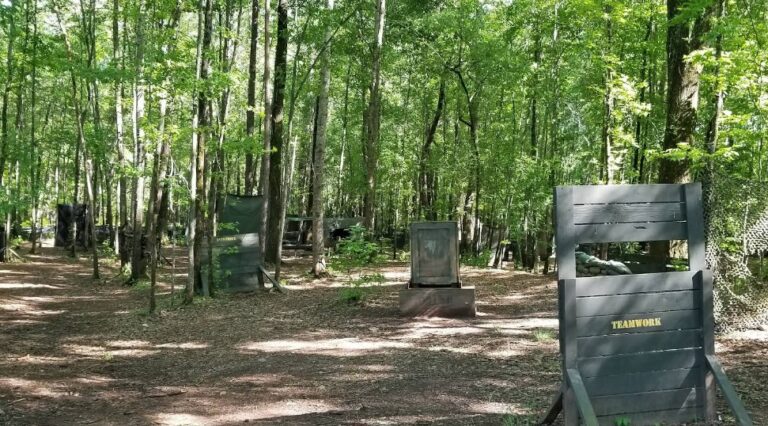
Combat Zone Lagrange is located on Old Hutchinson Mill Road in LaGrange, Georgia. The venue specializes in tactical outdoor laser tag with mission-based, objective-driven gameplay on a football-sized field, featuring real-time scoring, multiple weapon types, and kill streaks. They also offer Splat Ball (low-impact gel ball combat) and Night Ops sessions for a more immersive after-dark experience.
The facility is a popular choice for birthday parties, corporate team-building events, youth groups, and summer camps. Guests can use the authentic military-style party tent to bring their own food and drinks after gameplay. The staff is known for being friendly and knowledgeable, and the venue supports local veterans through Operation Enduring Warrior. A concession stand is available on-site.
 Outdoors
Stars and Strikes Family Entertainment Center is located in Columbus, Georgia, off Veterans Parkway, not far from the National Infantry Museum and the Chattahoochee River area.
This 55,000-square-foot entertainment hub features 24 bowling lanes (including 8 VIP lanes with SPARK augmented reality), a two-story laser tag arena, a 7,000-square-foot arcade with a prize redemption center, bumper cars, axe throwing, virtual reality experiences, and an escape room. The on-site 7/10 Grille serves chef-inspired food and drinks, and the facility offers multiple private party rooms for birthdays, corporate events, and group gatherings.
Beyond the main attractions, Stars and Strikes provides dedicated party hosts for celebrations, an upscale corporate lounge with a private bar that seats up to 100 guests, and a full-service bar with big-screen sports viewing. The center is designed for all ages and occasions — from kids’ birthday parties and school events to team-building outings and fundraisers — with staff trained to handle every detail so guests can focus on having fun.
 Indoors
Urban Air Trampoline and Adventure Park is located in the Bradley Park area of Columbus, GA.
The park offers a wide range of indoor attractions including The APEX Trampolines, a Slam Dunk Zone, a Warrior Course, climbing walls, a Ropes Course, a Leap of Faith, a Tubes Playground, and a Tumble Track. For those seeking something different, there is a two-level laser tag arena, Virtual Reality experiences, Spin and Flip Zone bumper cars, and an indoor Sky Rider zipline. The park is suitable for children and adults of all ages, with height requirements posted at each attraction.
Beyond open play, Urban Air Columbus specializes in birthday parties with dedicated hosts, table seating, and cleanup services. The venue also accommodates school field trips, corporate team-building events, youth sports celebrations, and private park rentals. The Urban Café serves pizza and snacks, and party rooms are available for group gatherings. Membership plans are offered for frequent visitors, providing unlimited play and additional perks like food discounts and free socks.
IndoorsHollywood Connection Family Fun Center is located in the northern part of Columbus, Georgia, just off Whittlesey Road next to the AMC CLASSIC Ritz 13 theater.
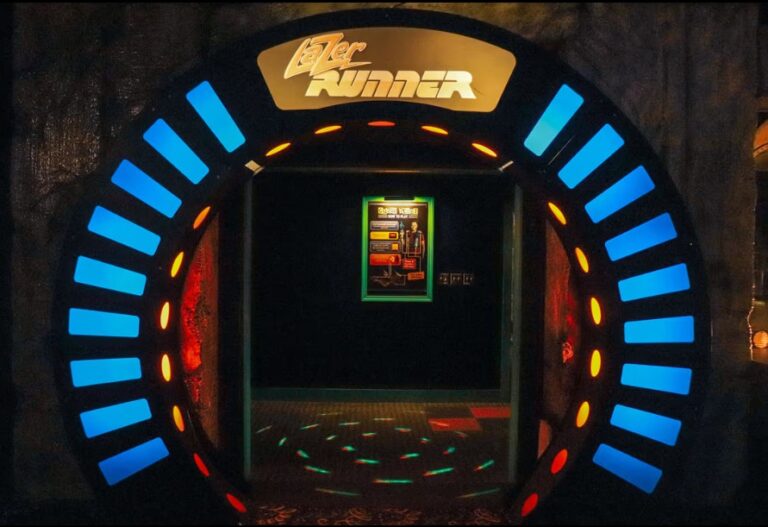
The venue centers around the “Lazer Runner” laser tag system, a multi-level black-lit arena where players can engage in fast-paced tactical games. Beyond laser tag, guests can enjoy the Caddy Shack indoor 18-hole miniature golf course with Wild West and Jurassic themes, the Xanadu roller skating rink, and the Mind Games Arcade — the largest arcade in South Georgia spanning over 10,000 square feet. The center offers several party packages starting at $99, with themed rooms including Princess, Dinosaur, Sports, Glow, and 50s Diner options.
Additional amenities include a 50s-style diner serving burgers, pizza, chicken tenders, and hand-spun milkshakes, as well as a rock climbing wall. The venue is well-suited for birthdays, corporate team-building, church youth groups, and military outings. The staff has been consistently praised in reviews for their patience and hands-on approach, with particular mentions of team members who go out of their way to help children with special needs and ensure parties run smoothly. A VIP wristband option ($18-$19) provides unlimited access to skating, mini golf, and laser tag for a full day of play.
IndoorsImagine the rush. Players in full battle gear. Their bodies racing, their minds strategizing, their hearts hammering with anticipation. The game of laser tag is one of the most thrilling and exciting forms of entertainment, and no one knows this better than those who visit the unique laser tag arena in Columbus, GA.

Laser tag is an interactive, team‑based sport that uses handheld infrared “guns” and sensor‑equipped vests to simulate combat in a safe, non‑lethal environment. Players navigate a designated arena, aiming at opponents’ sensors to register “hits.” The equipment transmits and receives coded infrared pulses, allowing a central computer to keep score in real time. Unlike paintball or air‑soft, laser tag produces no physical projectiles, making it ideal for indoor facilities, schools, corporate campuses, and even outdoor fields where noise and clean‑up would otherwise be concerns. Since its commercial debut in the early 1980s, the game has evolved from simple, single‑player arcade prototypes to sophisticated, multi‑player experiences that incorporate tactical lighting, sound effects, and narrative-driven missions.
Modern laser‑tag venues offer a variety of scenarios that go beyond the classic “free‑for‑all.” Each scenario is designed to stimulate different aspects of teamwork, strategy, and physical activity.
Arena Deathmatch: Two teams compete to score the highest number of hits within a set time limit. The fast‑paced nature of this scenario encourages quick decision‑making and aggressive movement.
Capture the Flag: Teams must locate and retrieve a virtual flag while defending their own. This mode blends offense and defense, rewarding coordination and strategic positioning.
Zombie Outbreak: One or more players begin as “infected” and attempt to tag human players, turning them into zombies. The evolving dynamics create a constantly shifting battlefield that tests adaptability.
Mission‑Based Ops: Players receive a briefing that outlines specific objectives—disarming a virtual bomb, rescuing a “hostage,” or navigating a maze. These missions introduce story‑telling elements and can be tailored to age groups or skill levels.
Training Simulations: Some facilities partner with law‑enforcement or military organizations to develop realistic tactical drills. While the equipment remains non‑lethal, the scenarios can replicate building clearances, breaching procedures, and coordinated entry tactics.
These scenarios can be customized further through adjustable lighting, fog, and soundscapes, allowing venues to create immersive experiences that appeal to casual players, competitive leagues, or corporate team‑building groups.
Beyond pure entertainment, laser tag offers several measurable benefits that appeal to parents, educators, and employers alike.
A typical 20‑minute session can burn between 250 and 350 calories, depending on intensity and arena layout. Players constantly sprint, dodge, and crouch, engaging both aerobic and anaerobic systems. The activity level is comparable to a brisk jog, yet it feels like play rather than exercise, encouraging participants who might otherwise avoid traditional fitness routines.
Laser tag demands rapid situational assessment, spatial awareness, and split‑second decision‑making. Players must remember the location of teammates, anticipate opponents’ moves, and adapt strategies on the fly. Studies on similar fast‑paced video‑game environments have shown improvements in reaction time, working memory, and multitasking abilities.
Successful gameplay hinges on communication and collaboration. Teams that share information about enemy positions, coordinate flanking maneuvers, and support weakened members tend to outscore disorganized groups. This cooperative framework fosters leadership, conflict resolution, and empathy—skills that translate directly to classroom projects, sports teams, and workplace environments.
The combination of physical exertion, focused attention, and a clearly defined competition provides a natural outlet for stress. The “playful fight” experience triggers the release of endorphins, which help lower cortisol levels and improve mood after the session.
Because there are no projectiles, laser tag eliminates the risk of bruises, cuts, or eye injuries associated with paintball or air‑soft. The equipment can be adjusted for different height ranges, and many venues provide wheelchair‑friendly arenas, allowing participants of varying physical abilities to join.
Researchers in kinesiology, psychology, and human‑computer interaction have taken an interest in laser tag as a hybrid of physical sport and digital gaming. A consensus among experts highlights three key points:
Embodied Gaming: Laser tag exemplifies “embodied interaction,” where the body’s movements directly affect digital outcomes. This embodiment has been linked to higher retention of motor skills and deeper engagement compared to screen‑only games.
Data‑Driven Coaching: Modern laser‑tag systems record detailed metrics—hit accuracy, movement patterns, and response times. Analysts can use this data to identify strengths, pinpoint weaknesses, and design individualized training regimens, much like performance analytics in professional sports.
Potential for Therapeutic Use: Occupational therapists are exploring laser tag as a tool for rehabilitation after injury or for children with developmental disorders. The controlled, low‑impact environment allows patients to practice balance, coordination, and social interaction in a motivating setting.
Industry leaders echo the scientific optimism, noting that the technology’s modular nature makes it adaptable for educational curricula, corporate training, and even virtual‑reality integrations. As infrared sensors become more accurate and software platforms more scalable, experts predict a surge in hybrid experiences that blend physical arenas with augmented reality overlays.
The most visible demographic for laser tag is children aged 6 to 16. For this group, the game provides a safe venue for high‑energy play while encouraging the development of strategic thinking. Schools often organize field trips to laser‑tag facilities as part of physical‑education programs, integrating curriculum goals such as teamwork, math (score‑keeping), and science (understanding sensors and infrared light).
Young adults gravitate toward laser tag for its competitive thrill and social atmosphere. Many cities host league nights where teams compete weekly, fostering community and offering a low‑cost alternative to traditional sports. Corporate wellness programs increasingly incorporate laser‑tag sessions to break down departmental silos and build camaraderie.
Although less common, senior centers have begun to adopt laser‑tag events that emphasize low‑impact movement and mental stimulation. Adjustable equipment and slower‑paced game modes make the experience accessible, promoting cardiovascular health and cognitive engagement for older adults.
Laser tag is a popular choice for birthday celebrations because it combines entertainment, movement, and a built‑in scoring system that naturally creates a competitive yet friendly environment. Parents appreciate the “all‑in‑one” nature of the venue: a dedicated space, equipment, and staff who handle setup, safety briefings, and cleanup. Packages often include private arena access, themed decorations, and themed mission briefings that align with the celebrant’s interests—whether it’s “Space Rangers” or “Superhero Showdown.”
Graduation parties benefit from laser tag’s ability to accommodate large groups while offering a memorable experience beyond a typical banquet. Universities and high schools frequently rent arenas for senior‑class outings, using the event as a final bonding activity. The competitive element can be framed as a “class rivalry” that encourages alumni participation and creates a shared narrative for the graduating cohort.
Corporate planners leverage laser tag for team‑building retreats, product launches, and client entertainment. The game’s structure lends itself to debrief sessions where facilitators draw parallels between in‑game tactics and workplace dynamics. For instance, a “Capture the Flag” scenario can be used to discuss cross‑departmental communication, while a “Zombie Outbreak” scenario can illustrate crisis management. Because laser tag is inherently inclusive—requiring minimal prior skill—it levels the playing field, allowing participants of all job titles to engage equally.
Most commercial laser‑tag facilities operate indoors, offering controlled lighting, climate, and safety. Indoor arenas range from compact, modular rooms suitable for small parties to expansive multi‑level complexes that host league tournaments. The environment can be easily themed through LED lighting, projection mapping, and sound design, allowing venues to rotate scenarios on a weekly basis. Many indoor locations also provide rental options for schools and corporations, complete with on‑site technicians who calibrate equipment and manage scoring.
Outdoor laser tag takes advantage of natural terrain—forests, parks, and abandoned warehouses—to create larger, more open‑ended battlefields. The infrared signals travel farther in daylight, but modern systems incorporate ambient‑light filters to maintain accuracy. Outdoor venues often incorporate obstacles such as hay bales, climbing walls, and zip lines, turning the game into a hybrid of laser tag and obstacle‑course athletics. Because weather can be a variable, many outdoor facilities offer covered pavilions or schedule sessions during seasons with mild climates.
A growing trend is the use of mobile laser‑tag kits for temporary events, such as festivals, university fairs, or corporate campuses. These kits include a portable power source, wireless sensors, and adjustable boundary markers, allowing organizers to transform any open space into a temporary arena. Mobile setups provide flexibility for organizations that want a one‑off experience without committing to a permanent venue.
Some cutting‑edge locations blend indoor and outdoor elements by employing glass‑enclosed arenas that open to adjoining fields, or by integrating augmented‑reality headsets that overlay digital obstacles onto physical surroundings. These hybrid experiences push the boundaries of traditional laser tag, offering participants a seamless transition between tightly controlled indoor gameplay and expansive outdoor exploration.
Laser tag has matured from a novelty arcade attraction into a versatile, multi‑generational activity that merges physical exertion with digital interactivity. Its array of scenarios—ranging from quick deathmatches to narrative‑driven missions—caters to casual players, competitive leagues, and professional training programs alike. The sport’s documented benefits—including improved cardiovascular health, enhanced cognitive function, and strengthened social skills—have drawn the attention of scientists and industry experts, many of whom see laser tag as a valuable platform for research, therapy, and performance analytics.
Whether celebrated as a birthday party highlight, a graduation rite of passage, or a corporate team‑building cornerstone, laser tag offers an adaptable venue that accommodates both indoor and outdoor settings. As technology continues to refine sensor accuracy and immersive storytelling, the future of laser tag promises even richer experiences that will keep players of all ages stepping into the arena, laser gun in hand, ready to strategize, collaborate, and have fun.


 605 Old Hutchinson Mill Rd, LaGrange, GA 30240, United States