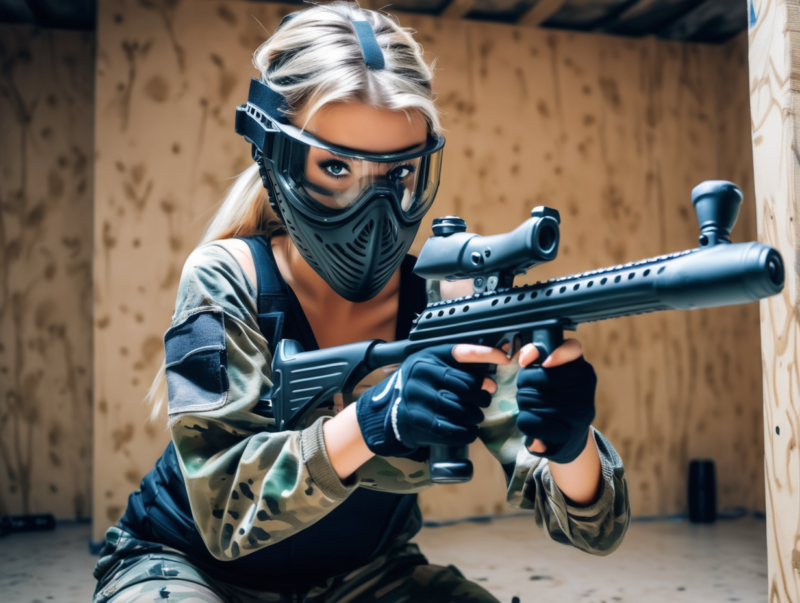
Sorry. We don’t know any paintball locations in this city yet
Best of the best paintball in Columbus, GA
Paintball is a fun and enjoyable activity that has exploded in popularity over the last few years. It has become one of the most popular pastimes for people of all ages. Paintball requires teamwork, skill, and strategy, making it the perfect activity for family outings or even corporate events. Whether you’re looking for a thrilling game with friends or a way to practice your shooting and coordination skills, paintball in Columbus, GA is a great option.
What Is Paintball?
Paintball is a fast‑paced, team‑oriented sport in which participants use pneumatic or CO₂‑driven markers to launch gelatin capsules filled with non‑toxic, water‑based paint. The capsules, commonly called “paintballs,” burst on impact, leaving a visible mark that signals a hit. Modern markers are lightweight, highly accurate, and can fire at velocities ranging from 250 to 300 feet per second, allowing players to engage targets at distances of 30 to 120 feet depending on the arena layout and safety regulations. While the basic equipment—a marker, a hopper or loader, protective mask, and appropriate attire—remains consistent, the sport has evolved to incorporate a wide variety of gameplay styles, from casual “shoot‑out” games to elaborate, story‑driven scenarios that can last several hours.
Paintball’s roots trace back to the early 1980s when enthusiasts in the United States began experimenting with air‑soft weapons and colored markers. Over the ensuing decades, the sport has professionalized: governing bodies such as the National Paintball League (NPL) and the International Paintball Federation (IPF) have codified rules, organized championships, and fostered a global community of players. Today, paintball is practiced in more than 70 countries, with a robust network of professional teams, local clubs, and recreational venues.
General Paintball Rules
Although rule sets can vary slightly between competitive leagues, casual fields, and scenario events, a core framework governs most paintball play:
Safety Gear – Every participant must wear a certified paintball mask that covers the eyes, nose, and ears. Additional protective items such as chest protectors, gloves, and padded clothing are strongly recommended, especially in high‑impact formats.
Marker Power Limits – Most fields enforce a maximum muzzle velocity of 280–300 ft/s (85–91 m/s). This limit reduces the risk of serious injury while preserving a fair playing field.
Ammo Management – Players are typically limited to a set number of paintballs per game or per round. In “no‑limit” formats, markers must still comply with the velocity restriction, and the referee may intervene if a player’s hopper is deemed overly loaded.
Hit Confirmation – A player is out when a paintball visibly breaks on their body or equipment. In some scenarios, a “hit” may be called only if the marker is within a certain range, or if a player’s mask is struck, depending on the event’s specific rules.
Boundaries and Safe Zones – All fields have clearly marked boundaries. Crossing these lines without permission results in a penalty. Safe zones, such as respawn areas or command posts, are designated zones where players cannot be targeted.
Sportsmanship – Unsportsmanlike conduct, intentional equipment tampering, or aggressive behavior is prohibited. Referees have the authority to issue warnings, temporary suspensions, or disqualifications as needed.
Environmental Considerations – Many venues require players to clean up spent paint, especially in outdoor settings where biodegradable paint is used. This practice protects local flora and fauna and aligns with broader sustainability goals.
These fundamentals help ensure that the sport remains safe, competitive, and enjoyable for participants of all skill levels.
Paintball Scenarios
Beyond the classic “elimination” or “capture the flag” matches, paintball scenarios introduce narrative depth and tactical complexity. Scenario games often span several hours, sometimes even an entire day, and can accommodate large groups ranging from a few dozen to several hundred players. Common scenario themes include:
Urban Warfare – Players navigate a mock cityscape with streets, buildings, and vehicle props. Objectives may involve rescuing hostages, securing supply caches, or disabling enemy communication hubs.
Historical Battles – Reenactments of famous conflicts—such as the Battle of Gettysburg or D-Day—allow participants to experience period‑specific tactics and equipment. Authenticity is emphasized through costume, weapon modifiers, and period‑appropriate rules.
Zombie Survival – A designated “zombie” team attempts to infect human survivors by tagging them with paint. Human teams must locate safe houses, gather resources, and hold out until rescue arrives.
Fantasy Quests – Players assume roles like knights, archers, or sorcerers within a medieval fantasy setting. Objectives often revolve around retrieving magical artifacts, defending a castle, or defeating a “dragon” (a mobile target or a designated player with extra lives).
Scenario games typically employ a “mission control” team that tracks player status, enforces rules, and coordinates story beats. This structure adds a role‑playing element, encouraging strategic planning, communication, and adaptability. For newcomers, scenario play offers an immersive introduction to the sport, while veteran players appreciate the depth and variety these games provide.
What Is Paintball Good For?
Paintball delivers a surprisingly wide array of benefits beyond sheer entertainment. Its utility can be examined across physical, mental, and social dimensions:
Physical Fitness – The sport demands running, sprinting, crouching, and quick directional changes. A typical match can burn 500–800 calories, providing a cardiovascular workout comparable to high‑intensity interval training (HIIT). The need for agility also improves balance and core strength.
Teamwork and Leadership – Success in paintball hinges on coordinated tactics, clear communication, and role differentiation. Players learn to delegate responsibilities, develop contingency plans, and trust teammates—skills directly transferable to corporate, military, and emergency‑response settings.
Stress Relief – The adrenaline rush of a fast‑paced game, coupled with the safe environment for controlled aggression, offers a constructive outlet for stress. Many participants report a “runner’s high” after matches, attributing it to endorphin release.
Strategic Thinking – Effective gameplay requires real‑time analysis of terrain, opponent movement, and resource allocation (ammo and time). This sharpens decision‑making abilities and nurtures an analytical mindset.
Social Bonding – Paintball fosters camaraderie among diverse groups. Whether friends, coworkers, or family members, shared experiences on the field promote trust and lasting relationships.
These advantages have encouraged schools, corporations, and military units to incorporate paintball into training programs, team‑building retreats, and physical‑education curricula.
Who Plays Paintball?
Paintball attracts a remarkably heterogeneous demographic. While the sport initially appealed to adrenaline‑seeking teenagers, its reach now extends to:
Youth and Students – High schools and universities host intramural leagues, offering scholarships and varsity‑level competition. Age‑restricted leagues ensure safe participation for younger players.
Professionals – Many corporations integrate paintball into leadership development and team‑building initiatives. The sport’s emphasis on communication and strategic execution mirrors workplace challenges.
Military and Law Enforcement – Tactical training programs employ paintball to simulate combat scenarios without the lethal risks associated with live ammunition. It allows trainees to practice cover, movement, and squad coordination.
Families and Recreational Groups – Weekend outings and birthday parties at local fields provide family‑friendly entertainment. Many venues offer “first‑timer” packages with simplified rules and equipment rentals.
Competitive Athletes – Professional paintball teams travel globally, competing in leagues such as the NPL, the World Series of Paintball (WSP), and the IPF World Championships. These athletes treat the sport with the same dedication seen in traditional sports, maintaining rigorous training schedules and nutrition plans.
The inclusive nature of paintball—its accessibility to various ages, skill levels, and physical abilities—contributes to its sustained global popularity.
Scientists and Industry Experts View on Paintball
Research into paintball’s impact is relatively nascent, yet existing studies and expert commentary highlight several noteworthy findings:
Injury Prevention – Biomedical engineers emphasize that modern paintball masks, constructed from polycarbonate lenses and reinforced frames, reduce ocular injuries by over 95 % compared to early models. Proper velocity regulation further mitigates the risk of blunt force trauma.
Cognitive Benefits – Neuropsychologists note that fast‑paced, decision‑heavy activities like paintball can enhance executive function, particularly in areas of rapid information processing and situational awareness. Controlled experiments have shown short‑term improvements in reaction time among participants after a single session.
Environmental Impact – Environmental scientists commend the shift toward biodegradable paint, which typically decomposes within 30–60 days, reducing soil contamination. Industry leaders are investing in research to develop paint formulations with even lower ecological footprints.
Economic Contribution – Market analysts estimate that the global paintball industry generates upwards of $2 billion annually, encompassing equipment manufacturers, field operators, apparel brands, and related services. This economic vitality supports job creation and stimulates tourism in regions with prominent paintball venues.
Therapeutic Applications – Clinical psychologists have begun exploring paintball as an adjunct therapy for individuals coping with PTSD and aggression management. The controlled, safe environment allows participants to confront stressors while learning coping strategies under professional supervision.
Overall, the consensus among scientists and industry experts is that, when properly regulated and safely administered, paintball offers substantial physical, psychological, and economic benefits while maintaining a relatively low risk profile.
Where to Play Paintball? Outdoor and Indoor Venues
Paintball can be enjoyed in a wide range of settings, each offering distinct experiences and logistical considerations.
Outdoor Fields
Outdoor venues capitalize on natural terrain to create immersive environments. Common features include:
Forests and Wooded Areas – Dense foliage provides natural cover, encouraging stealth and ambush tactics. Players must navigate uneven ground, adding a physical endurance component.
Open Fields with Inflatable Bunkers – Large, flat arenas equipped with inflatable structures simulate urban combat zones. The modular nature of inflatables allows rapid configuration changes for varied game modes.
Mountain and Hilltop Courses – Elevated terrain introduces line‑of‑sight challenges and height advantage strategies. Players must manage altitude changes and potential weather fluctuations.
Hybrid Courses – Some fields combine natural obstacles with man‑made elements like trenches, tunnels, and painted walls, delivering a balanced blend of realism and accessibility.
Outdoor play is often preferred for large‑scale scenario events, where extensive space is needed for elaborate objectives and larger participant counts.
Indoor Arenas
Indoor paintball facilities provide a climate‑controlled environment, making them ideal for year‑round play regardless of weather. Typical characteristics include:
Arena Layouts – Constructed from high‑density foam, plywood, and inflatable barriers, indoor arenas can feature multi‑level platforms, narrow corridors, and intricate mazes. The close‑quarters nature heightens intensity and emphasizes precision shooting.
Speedball Courts – A popular indoor format, speedball involves a symmetrically designed field with inflatable bunkers arranged in a double‑diamond formation. Matches are fast, with short rounds and a focus on aggressive offense.
Laser‑Tag Crossover – Some indoor venues integrate laser‑tag or airsoft elements, offering hybrid experiences that appeal to a broader audience.
Accessibility – Indoor sites are often situated in urban centers, providing convenient access for corporate groups, schools, and casual players. They also typically include rental equipment, on‑site safety briefings, and amenities such as snack bars and locker rooms.
When selecting a venue, players should consider factors such as field size, terrain type, availability of scenario support, safety protocols, and the presence of certified referees. Many fields also host “open play” sessions where individuals can bring their own markers, as well as “organized league” nights that follow standardized competition rules.
Paintball has grown from a niche pastime into a multifaceted sport that blends physical exertion, strategic thinking, and immersive storytelling. Its structured yet adaptable rule set ensures safety while fostering creativity, making it suitable for a diverse audience ranging from casual weekend warriors to elite competitive teams. Whether played under a canopy of trees, within a high‑tech indoor arena, or amid an elaborate scenario narrative, paintball continues to deliver excitement, camaraderie, and tangible benefits that extend far beyond the field.

 El Monte
 Log in