El Monte
 Log in
Log in
Log in

Spare Time Des Moines is located in the Jordan Creek area of West Des Moines, Iowa, right off Jordan Creek Parkway.
This family-friendly entertainment hub features an epic laser tag arena with tactical obstacles and multi-level gameplay, two escape room experiences (30 and 60 minutes), luxury bowling lanes, and a massive Game Zone arcade. Guests can enjoy chef-crafted dining and signature cocktails at multiple restaurants and bars throughout the venue. The facility offers four customizable birthday party packages (Bowling, Bash, Laser Tag, and Gamer), each with a dedicated party host who handles setup and cleanup. Private event spaces include the Elite Suite with eight bowling lanes and a private bar, a Climate Controlled Patio with a firepit, and a Restaurant Event Space for up to 130 guests.
For corporate events and large gatherings, the entire venue can be rented for up to 975 guests, with full catering options from casual appetizers to elegant plated dinners. The venue also features comfortable lounge areas, a climate-controlled patio, and multiple bars for post-game relaxation. The professional staff, praised in guest reviews for their attentiveness, ensures every event runs smoothly. Spare Time is well-suited for birthdays, corporate team-building, fundraisers, field trips, weddings, and milestone celebrations.
 Indoors
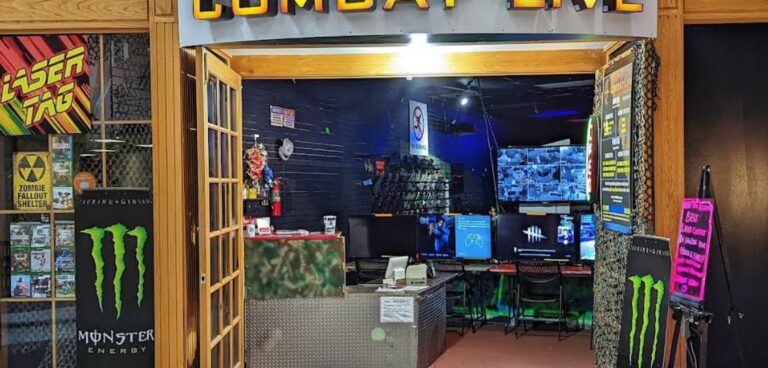
Combat Live Laser Tag is located inside Merle Hay Mall in Des Moines, IA.
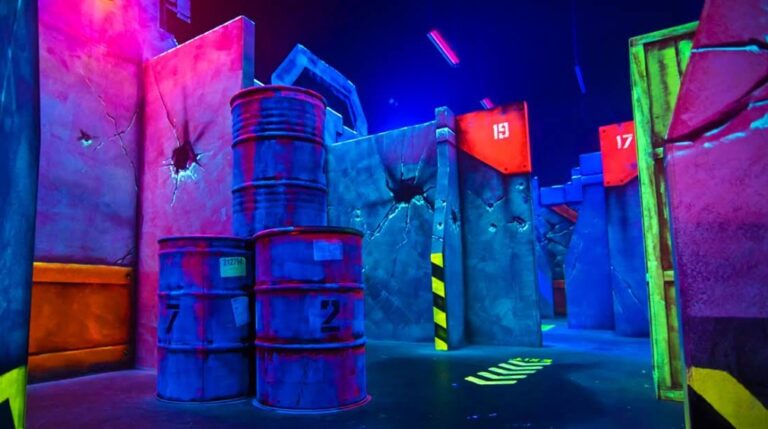
The venue features a 5,000-square-foot laser tag arena with a layout that changes every week and military-grade equipment that simulates 285 different weapons, rotated weekly. Game modes include Team Deathmatch, Capture the Flag, Battle Royal, Predator, Zombie mode, and many more. Walk-in laser tag sessions are available, and private parties can book the arena exclusively with customized game modes for groups of up to 16 players.
Beyond laser tag, the facility includes a game center where visitors can play video games on a dedicated high-speed connection, with purchased time saved to a user ID for future use. The venue is well-suited for birthday parties, corporate team-building events, and family outings. Staff are noted for being welcoming and attentive, and the arena offers discounted walk-in rates during the current setup phase of the facility.
Indoors
Laser tag is a fast‑paced, team‑oriented game that blends elements of hide‑and‑seek, paintball and video‑game combat. Participants wear lightweight vests or harnesses equipped with infrared (IR) receivers and wield hand‑held “phasers” that emit coded IR beams. When a beam strikes an opponent’s sensor, the vest registers a hit and records it on a digital scoreboard. Unlike paintball or airsoft, there are no physical projectiles, no mess, and no risk of penetrating injuries, which makes the activity suitable for a wide age range and a variety of venues. Modern laser‑tag systems often incorporate sophisticated software that tracks individual statistics, enables custom mission scripts, and even integrates with mobile devices for real‑time feedback.
The flexibility of the technology allows operators to design countless scenarios, each with its own narrative, objectives, and level of difficulty.
Classic Team Deathmatch – Two squads compete to rack up the highest number of hits within a set time limit. The simplicity of the format makes it ideal for beginners.
Capture the Flag – Each team hides a “flag” (often a handheld sensor) that the opposition must locate and retrieve while defending their own. This scenario emphasizes strategy, coordination, and rapid decision‑making.
Zombie Apocalypse – A small group of “survivors” must evade or neutralize a larger horde of “zombies.” The game can be staged with varying infection rates, encouraging players to think like both hunters and prey.
Mission‑Based Storylines – Operators can script multi‑stage missions such as “rescue the hostage,” “defuse the bomb,” or “secure the data core.” Sensors placed throughout the arena trigger audio cues and lighting effects, creating an immersive, cinema‑like experience.
Free‑For‑All Skirmish – Every player is on their own, striving for the highest personal score. This format works well for large gatherings where teams are difficult to organize.
League Play & Tournaments – Structured competitions with rankings, brackets, and seasonal play are becoming increasingly popular in dedicated laser‑tag venues.
Because the software can be updated remotely, facilities can rotate scenarios on a weekly or even daily basis, keeping the experience fresh for repeat visitors.
Laser tag offers a blend of physical, mental, and social advantages that extend well beyond simple entertainment.
Players constantly move—running, ducking, crouching, and sprinting—providing cardiovascular exercise comparable to a high‑intensity interval workout. The non‑impact nature of the game reduces joint stress while still encouraging muscular engagement, balance, and agility.
Success in laser tag requires rapid situational awareness, pattern recognition, and decision‑making under pressure. Players must interpret real‑time data from their vests, choose optimal routes, and anticipate opponents’ moves. These mental demands sharpen attention span, improve reaction time, and foster problem‑solving skills.
Most scenarios are built around collaborative objectives. Effective communication—whether through verbal cues, hand signals, or pre‑planned tactics—is essential to coordinate attacks, cover blind spots, and execute strategies. Such teamwork experience translates directly to classroom projects, sports teams, and workplace environments.
The immersive, game‑like setting provides an outlet for releasing built‑up adrenaline in a controlled, safe manner. Participants often report a “runner’s high” after a session, accompanied by elevated endorphin levels that improve mood and reduce anxiety.
Because the equipment is lightweight and the rules can be adapted, laser tag is accessible to individuals with varying physical abilities. The absence of projectile weapons removes the intimidation factor that sometimes deters newcomers to other combat‑style games.
Researchers in kinesiology and human factors engineering have taken an interest in laser tag as a model for studying group dynamics and physical exertion in low‑risk environments. Studies have shown that a 30‑minute laser‑tag session can elevate heart rates to 70‑85 % of maximal levels, delivering comparable aerobic benefits to moderate jogging while also engaging the prefrontal cortex through strategic planning.
Industry experts highlight the technology’s scalability. The infrared communication system, combined with Bluetooth or Wi‑Fi connectivity, allows operators to integrate the game with augmented reality (AR) overlays, creating hybrid experiences that merge physical movement with digital storytelling. This convergence is seen as a stepping stone toward the next generation of “phygital” entertainment, where the line between virtual and real worlds blurs.
Safety analysts emphasize that laser tag’s non‑penetrating nature reduces the likelihood of severe injuries, making it a preferred alternative to paintball in schools and corporate wellness programs. However, they caution that proper eye protection and clear venue rules remain essential, especially for younger participants whose eyes are more sensitive to bright infrared pulses.
Children are among the most enthusiastic participants. The bright colors, futuristic equipment, and immediate feedback on hits make the game instantly appealing. For kids, laser tag serves as an interactive playground that encourages:
Many schools incorporate laser‑tag sessions into physical‑education curricula, using specially designed “educational” modes that focus on concepts such as geometry (aiming angles) or basic physics (energy transfer).
Adolescents gravitate toward laser tag for its competitive edge and the opportunity to showcase skill in league play. In many regions, dedicated laser‑tag arenas host weekly tournaments, fostering a sense of community and friendly rivalry similar to esports.
Corporate wellness programs and team‑building consultants increasingly schedule laser‑tag outings. The activity’s blend of physical exertion and strategic collaboration mirrors real‑world workplace challenges, making it an effective tool for:
Even older adults find value in laser tag, especially in venues that adjust difficulty levels and provide supportive equipment. The gentle, low‑impact nature of the game supports mobility, balance, and social interaction, which are crucial factors for healthy aging.
A birthday celebration built around laser tag turns a typical party into an adventure. Packages often include private arena time, custom mission themes, and personalized scoreboards that award each child a commemorative medal. The immersive environment keeps guests engaged, reducing the need for additional entertainment rentals.
Graduating seniors seeking a memorable send‑off can opt for a laser‑tag tournament that reflects their cohort’s spirit. Organizers may incorporate school colors, mascots, or inside jokes into the mission script, creating a shared narrative that celebrates the transition from academic life to the next chapter.
Companies use laser tag to break the monotony of conference rooms and stimulate creative thinking. A typical corporate laser‑tag event includes:
The measurable metrics—hits, accuracy, time to complete objectives—provide tangible data for facilitators to discuss teamwork effectiveness.
Indoor arenas dominate the market due to their controlled lighting, climate, and safety features. Facilities can range from small, retro‑fitted warehouses to elaborate multi‑level complexes equipped with:
Because the infrared beams are not affected by daylight, indoor venues can offer a consistent experience year‑round, regardless of weather conditions.
Outdoor laser‑tag fields capitalize on natural terrain—forests, abandoned structures, or urban rooftops—to create sprawling battlegrounds. Benefits of the outdoor format include:
Modern outdoor systems use ruggedized equipment with higher‑output IR emitters to maintain reliable hit detection over longer distances.
Some operators blend indoor and outdoor elements, offering “open‑air” arenas with partially enclosed sections. This hybrid approach allows for dynamic lighting effects while leveraging natural features, delivering a unique experience that appeals to both novice and veteran players.
Laser tag has evolved from a novelty arcade attraction into a versatile, technology‑driven sport that offers measurable physical, cognitive, and social benefits. Its adaptability across age groups—from children celebrating birthdays to corporations seeking team‑building tools—underscores its broad appeal. Scientists recognize its value as a low‑impact, high‑engagement exercise, while industry experts see it as a platform for future phygital innovations. Whether played in a climate‑controlled indoor arena, a sprawling outdoor field, or a hybrid venue, laser tag continues to captivate participants with its blend of strategy, movement, and immersive storytelling. As the technology advances and new scenarios emerge, the game is poised to remain a staple of modern recreation for years to come.


 340 Jordan Creek Pkwy, West Des Moines, IA 50266, United States