
 El Monte
 Log in
Log in
Log in

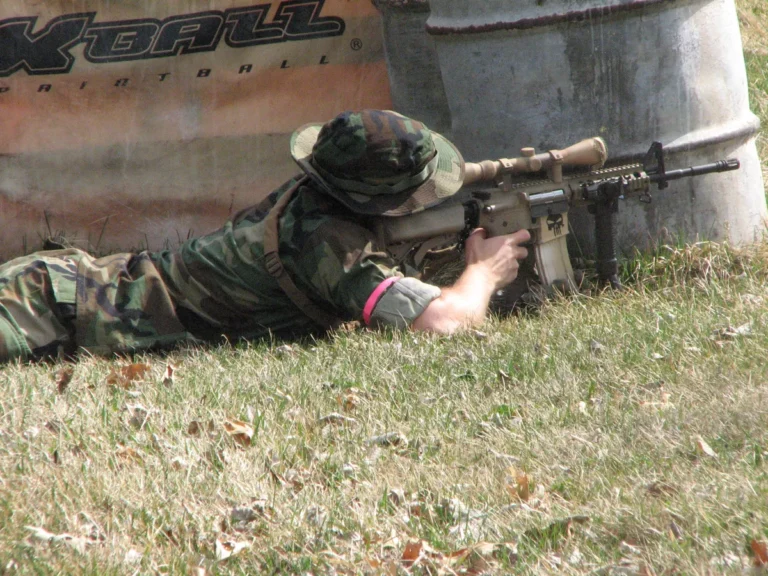
Located on Quail Ridge Avenue in Saint Charles, Iowa — a short drive southwest of Des Moines — DOA Paintball and Airsoft Field offers two large, well-maintained fields packed with creative obstacles like buses, two-story towers, forts, and bunkers. Players can enjoy a rotating selection of game modes including capture the flag, domination, and attack and defend, with both paintball and airsoft available. Rental equipment is provided on-site at reasonable prices, and the staff is known for being professional, safety-conscious, and welcoming to newcomers.
The field is a popular destination for birthday parties, corporate team-building events, bachelor parties, school groups, and family reunions. The minimum age for standard paintball is 10, with a parent waiver required for players under 18. With a 4.9 Google rating and a perfect 5.0 on Facebook, DOA has built a loyal community of regulars who appreciate the spacious fields, short walking distances between play areas, and the friendly, down-to-earth atmosphere.
 Outdoors
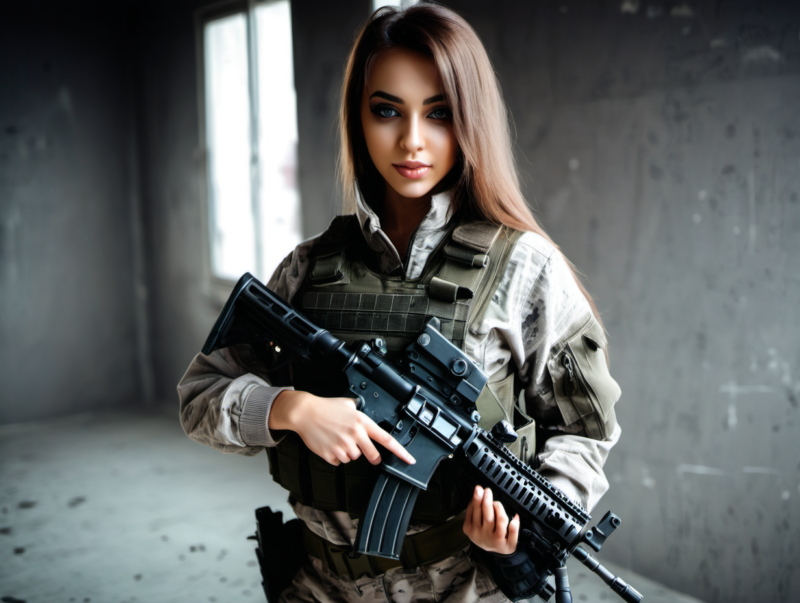
Airsoft is a recreational sport that blends the thrill of tactical combat with the precision of a controlled, non‑lethal environment. Participants—often called “players”—use replica firearms that fire 6 mm plastic BBs at velocities low enough to be safe when proper protection is worn. The appeal of airsoft lies not in the power of the projectile but in the realism, teamwork, and strategic depth that the game offers.
Manufacturers spend considerable effort reproducing the external look, weight, and operation of real‑world weapons. From the click of a bolt to the recoil of an automatic rifle, the tactile feedback creates a sense of immersion that rivals video‑game simulations. Many fields even enforce “load‑out” rules that require players to dress and equip themselves as a particular military or law‑enforcement unit, further sharpening the realistic feel.
Unlike a solo‑player shooter, airsoft forces participants to communicate, coordinate, and adapt on the fly. Whether executing a coordinated flank, establishing a defensive perimeter, or performing a rapid “stack‑and‑move” maneuver, success depends on the collective decision‑making of the squad. Players quickly learn to read the terrain, anticipate opponent actions, and allocate resources such as ammunition and medical supplies.
The sport accommodates a wide spectrum of scenarios. Classic formats like “Capture the Flag” or “Team Deathmatch” are staples, but many fields host elaborate “MilSim” (military simulation) events that last several hours and feature objectives such as hostage rescue, convoy escort, or urban clearing. Seasonal games may incorporate night‑vision equipment, smoke grenades, or even role‑playing elements, ensuring that the experience rarely feels repetitive.
Because the replica guns are built around modular platforms, players can tailor their weapons to suit personal preferences. Options range from changing hop‑up mechanisms and barrel lengths to swapping out external accessories such as rails, scopes, and foregrips. This culture of customization fuels a vibrant aftermarket industry and encourages participants to experiment with performance tweaks, ergonomics, and aesthetics.
Airsoft thrives on a strong sense of community. Online forums, local clubs, and regional tournaments act as hubs where newcomers can seek advice, seasoned veterans can share tactics, and manufacturers can gauge market trends. The shared passion for strategy, gear, and storytelling creates lasting friendships that often extend well beyond the playing field.
Getting started safely requires a baseline set of protective equipment. While the cost of a full kit can add up, investing in quality basics will protect the player’s health and increase confidence on the field.
Eye Protection – The single most critical item. Certified airsoft goggles or full‑face masks that meet ANSI Z87.1 or equivalent standards must be worn at all times. They should provide a snug fit, anti‑fog coating, and impact‑resistant lenses to guard against high‑velocity BBs.
Gloves – Tactical gloves protect the hands from BB impacts, splinters, and rough terrain. Reinforced knuckles and a textured grip assist with weapon handling, especially during prolonged engagements.
Sturdy Boots – Footwear with ankle support, puncture‑resistant soles, and good traction is essential for navigating forests, urban ruins, and muddy fields. Many players opt for lightweight tactical boots that balance protection with agility.
Knee and Elbow Pads – These pads reduce bruising and abrasions when crawling, taking cover behind low obstacles, or falling during high‑intensity maneuvers. Foam‑filled or gel‑layered designs offer comfort for extended wear.
Helmet – A ballistic‑style helmet provides head protection from stray BBs and serves as a mounting platform for accessories such as headlamps or communication devices. Some helmets include built‑in visors that augment eye protection.
Lower‑Face Protection – For players who prefer full‑face masks, a lower‑face shield or balaclava prevents BBs from striking the cheeks, chin, or teeth. Combined with a proper visor, it creates a sealed barrier without sacrificing visibility.
A well‑equipped beginner can focus on tactics rather than worrying about avoidable injuries, which in turn maintains the sport’s reputation for safety.
Airsoft’s longevity rests on a clear, universally respected rule set. Even though the sport is informal compared with organized combat sports, three pillars underpin every match.
All participants must treat every BB as potentially lethal. This mentality translates into mandatory protective gear, strict muzzle‑loading protocols, and designated “safe zones” where weapons must be holstered or set to a non‑shooting mode. Fields often enforce a maximum velocity limit—commonly 350 fps for 0.20 g BBs—to prevent serious injuries.
Airsoft operates on a trust‑based “hit‑call” system. When a player feels a BB strike a protected area, they are expected to call themselves out and follow the field’s “downed” procedures, which may include a predetermined “respawn” time or immediate removal from play. Cheating by ignoring hits undermines the integrity of the game and erodes community trust.
Mutual respect extends beyond the battlefield. Players are expected to treat opponents, referees, and field staff courteously, follow field rules, and leave the venue cleaner than they found it. Respect also means acknowledging the skill levels of newcomers and offering guidance rather than intimidation.
These guidelines create an environment where participants can push tactical limits without compromising personal safety or the sport’s reputation.
Airsoft replicas fall into three primary propulsion categories, each offering distinct performance characteristics and maintenance requirements.
AEGs dominate the hobby due to their reliable, semi‑automatic or fully automatic fire modes powered by rechargeable lithium‑polymer (LiPo) or nickel‑metal hydride (NiMH) batteries. Internally, a motor drives a gearbox that compresses a spring, releasing energy with each trigger pull. Modern AEGs can achieve velocities between 300 fps and 450 fps, and most feature adjustable hop‑up for trajectory control. Their modularity makes them ideal for upgrades such as high‑torque gears, reinforced internals, or custom externals.
These weapons use compressed gas—typically green‑gas (propane‑based) or CO₂—to propel BBs. Gas pistols mimic real‑world blowback action, delivering realistic recoil and slide movement. Gas rifles, especially those modeled after assault platforms, often incorporate “real‑gas” blowback mechanisms that provide a more authentic shooting experience. However, performance can be temperature‑dependent; colder environments may reduce gas pressure and consequently muzzle velocity.
The simplest and most inexpensive category, spring‑powered guns require manual cocking before each shot. The stored energy in the compressed spring releases the BB when the trigger is pulled. While the rate of fire is limited to one shot per cock, the reliability and low maintenance make spring guns popular for beginners and for “mass‑reload” tactical drills. High‑end sniper replicas employ precision‑machined barrels and adjustable hops for extreme accuracy at longer ranges.
Understanding the strengths and limitations of each system helps players select a platform that aligns with their preferred style of play and budget.
Researchers and safety experts have examined airsoft from a public‑health and engineering standpoint. Studies on projectile kinetic energy confirm that a 0.20 g BB traveling at 350 fps carries roughly 0.5 joules of energy—comparable to the impact of a thrown baseball. This energy level is insufficient to cause permanent bodily harm when proper protective gear is used, which is why most safety guidelines revolve around eye and facial protection rather than full body armor.
From an industry angle, manufacturers highlight advances in polymer engineering and battery technology that have improved BB consistency, reduced misfires, and extended battery life. The emergence of “smart” airsoft platforms—integrating RFID tags, telemetry, and Bluetooth connectivity—has attracted interest from both hobbyists and military training developers seeking low‑cost, low‑risk simulation tools.
Overall, the consensus among scientists and industry leaders is that, when practiced responsibly, airsoft offers a safe, physically active alternative to purely digital combat simulations while providing valuable lessons in teamwork, situational awareness, and tactical decision‑making.
The player base is remarkably diverse. Young adults in their late teens to early thirties constitute the core demographic, drawn by the blend of physical activity and tactical depth. However, the sport also attracts:
Women are an increasingly visible segment, with many clubs establishing all‑female squads and mentorship programs. The inclusive nature of the community, combined with the sport’s emphasis on skill over physical stature, has broadened participation across age, gender, and cultural lines.
Finding the right venue is essential for a rewarding experience. Options range from local fields to large‑scale simulations.
These are purpose‑built arenas that meet safety standards, enforce velocity limits, and provide structured game layouts. Many fields feature modular structures—such as shipping containers, barricades, and multi‑story buildings—that can be rearranged to accommodate different scenarios. Players can typically rent gear on‑site, making fields an ideal entry point for newcomers.
Grass‑roots organizations often operate out of community parks, abandoned warehouses, or private land. Clubs arrange weekly scrimmages, host skill workshops, and maintain a rotation of “home‑brew” maps. Membership usually includes a shared responsibility for field maintenance and a collective adherence to the honour system.
MilSim (military simulation) events are large‑scale, often multi‑day affairs that emulate real‑world missions. Participants may be assigned roles such as squad leader, medic, or intelligence officer, and must follow detailed mission briefs, radio communications, and logistical constraints. These events are sometimes organized in collaboration with veteran groups, paintball companies, or outdoor adventure firms and can attract hundreds of players from a wide geographic area.
Regardless of the setting, the common thread is a commitment to safety, realistic immersion, and the camaraderie that emerges when strangers work together toward a shared objective.
Airsoft has evolved from a niche pastime into a globally recognized sport that balances realism, strategic depth, and community spirit. By understanding the core elements—what the game entails, the essential protective gear, the governing rules, the variety of weapon platforms, and the perspectives of experts—newcomers can step onto the field with confidence. The diverse player base and the multitude of venues, from local clubs to expansive MilSim operations, ensure that anyone seeking tactical challenge, physical activity, or simply a new social outlet can find a place in the world of airsoft. With safety as the cornerstone and teamwork as the engine, the sport continues to grow, offering both excitement and personal development for participants worldwide.


 2444 Quail Ridge Ave, St Charles, IA 50240, United States