El Monte
 Log in
Log in
Log in

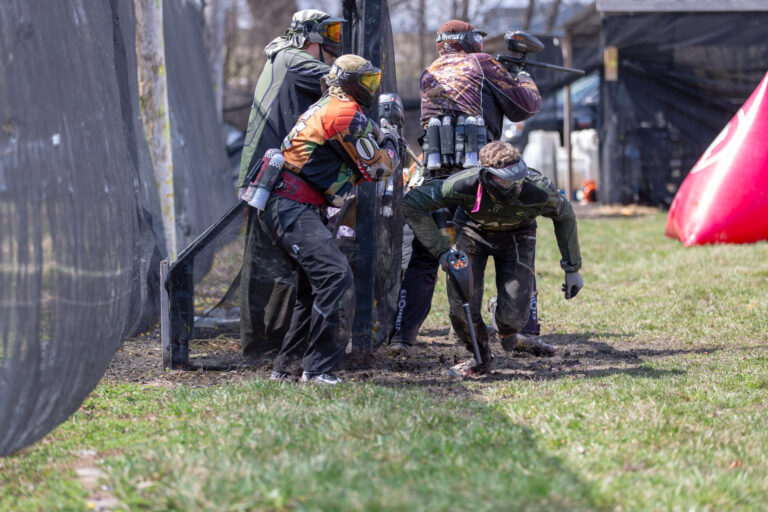
Located on Quail Ridge Avenue in Saint Charles, Iowa — a short drive southwest of Des Moines — DOA Paintball and Airsoft Field offers two large, well-maintained fields packed with creative obstacles like buses, two-story towers, forts, and bunkers. Players can enjoy a rotating selection of game modes including capture the flag, domination, and attack and defend, with both paintball and airsoft available. Rental equipment is provided on-site at reasonable prices, and the staff is known for being professional, safety-conscious, and welcoming to newcomers.
The field is a popular destination for birthday parties, corporate team-building events, bachelor parties, school groups, and family reunions. The minimum age for standard paintball is 10, with a parent waiver required for players under 18. With a 4.9 Google rating and a perfect 5.0 on Facebook, DOA has built a loyal community of regulars who appreciate the spacious fields, short walking distances between play areas, and the friendly, down-to-earth atmosphere.
 Outdoors
Des Moines Paintball Park at Archery Field and Sports is located in Altoona, Iowa, just northeast of Des Moines.
The park offers multiple well-designed paintball fields supporting speedball, woodsball, and scenario games like capture the flag and team deathmatch. Standard paintball is available for ages 10 and up, while low-impact paintball provides a gentler option for younger players. Archery Tag — a dodgeball-style game using bows and foam-tipped arrows — is also offered both indoors and outdoors. Rental equipment is available at reasonable prices, and the facility operates on a reservation-only basis for paintball groups.
The venue is well-suited for birthday parties, bachelor and bachelorette events, school functions, and corporate outings, with private field reservations and dedicated referees available for groups. The on-site pro shop carries equipment and accessories, and the knowledgeable staff provides guidance for newcomers. As part of Archery Field & Sports, the park also benefits from a lounge area, recreation space, and access to one of Iowa’s largest indoor archery ranges.
Outdoors
Paintball is a fast‑paced, team‑oriented sport in which participants—called players—use specially designed markers to fire gelatin capsules filled with non‑toxic, water‑based paint. When a capsule strikes a player’s protective gear, the paint breaks open, leaving a visible mark that signals a hit. The game can be played on a variety of terrain, from dense woodland to purpose‑built arenas, and can range from a casual “tag‑style” match lasting a few minutes to a multi‑hour scenario that mimics military operations. Although the basic equipment is simple—a marker, paintballs, a mask, and protective clothing—the sport’s appeal lies in its blend of strategy, physicality, and adrenaline.
While specific leagues and venues may tweak rules to suit their field layout or player skill level, most paintball games adhere to a core set of standards designed to keep play safe and fair.
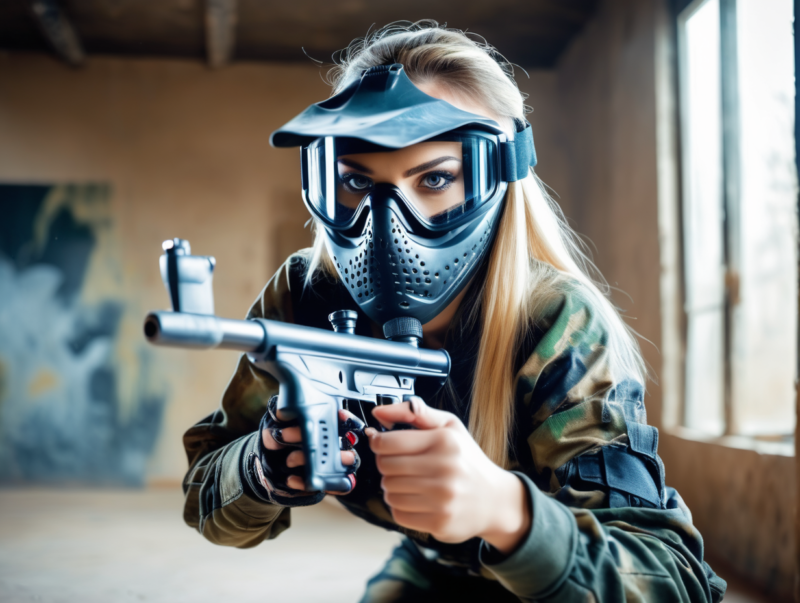
Safety Gear – Every player must wear an approved mask that fully covers the eyes, nose, and mouth. Additional protective items such as chest protectors, gloves, and elbow/knee pads are highly recommended and sometimes required in tournament settings.
Marker Power Limits – Most fields enforce a maximum muzzle velocity, usually measured in feet per second (fps). The typical limit is 300 fps for indoor play and 280 fps for outdoor arenas, ensuring that paintballs do not cause serious injury.
Elimination – A player is considered “out” when a paintball leaves a visible splatter on any part of the body or clothing that is not covered by protective equipment. In some formats, a hit on the head, torso, or any unprotected area triggers immediate elimination; in others, a hit on the leg may be “wound” rather than fatal, allowing the player to continue with a penalty.
Restart Rules – After being eliminated, players may re‑enter the game according to the match’s respawn system. Common mechanisms include “one‑way” respawn points, “balloon” respawns where a teammate must retrieve a marker, or “time‑out” periods that pause play for a brief rest.
No‑Contact Policy – Physical contact beyond incidental brushes is prohibited. Body checks, tackles, or any aggressive maneuver that could cause injury leads to immediate disqualification.
Marker Maintenance – Players must keep their markers in good working order, ensuring that barrels are clean, bolts are lubricated, and air tanks are within the legal pressure range. Malfunctioning equipment may be confiscated or the player removed from the match.
Conduct – Unsportsmanlike behavior—such as intentional targeting of masks, verbal abuse, or tampering with another player’s gear—is not tolerated. Most fields have a code of conduct that, if breached, results in a warning, temporary suspension, or ban.
These rules create a structured environment where the emphasis remains on strategic play and enjoyment rather than raw aggression.
Paintball’s versatility shines through the wide array of scenarios that organizers can craft. Each scenario provides a narrative framework that influences objectives, equipment, and player roles.
One of the most recognizable formats, “Capture the Flag” divides players into two teams, each defending a flag while attempting to seize the opponent’s. The game stresses coordination, speed, and the ability to read the opponent’s movements.
In elimination matches, the goal is simple: be the last player or team remaining. This format can be played on a small arena for quick rounds or on a sprawling outdoor field for extended tactical battles.
Advanced events simulate real‑world missions—such as hostage rescue, bomb defusal, or guerrilla warfare. Players receive mission briefings, specific roles (e.g., snipers, medics, engineers), and limited resources. The narrative drives decision‑making and requires teams to adapt on the fly.
A central “hill” or elevated area is contested. Teams earn points for time spent controlling the hill while defending against opponents. The shifting balance of power encourages aggressive attacks and disciplined defense.
In this popular format, a small group of “survivors” must fend off a larger wave of “zombies.” Survivors can earn extra lives or ammunition by completing objectives, while zombies aim to tag all survivors to win.
Each scenario can be tailored further through field layout, time limits, and special rules (e.g., limited ammunition, night‑vision goggles, or simulated explosives). The flexibility makes paintball attractive to casual players looking for a quick match as well as to seasoned competitors seeking immersive, story‑driven experiences.
Beyond the thrill of competition, paintball offers several tangible benefits that extend into personal development, physical health, and even professional skill sets.
Running, crawling, and quick directional changes are integral to gameplay, providing a cardiovascular workout that improves stamina and agility. The sport also enhances hand‑eye coordination, as players must aim accurately while navigating obstacles.
Successful teams rely on clear, concise communication, often using hand signals or radios to convey tactics under pressure. This environment mirrors real‑world teamwork scenarios, fostering leadership, role delegation, and collective problem‑solving.
The intense focus required during a match diverts attention from everyday worries, delivering a form of active meditation. The release of endorphins from high‑octane activity further contributes to improved mood and reduced stress levels.
Players constantly assess terrain, predict opponent movements, and allocate resources—skills directly applicable to military training, law enforcement drills, and corporate strategy simulations.
Overcoming fear of being “hit,” mastering a marker, and achieving objectives contribute to increased self‑esteem. Newcomers often experience a rapid sense of accomplishment as they progress from hesitant beginners to competent players.
Collectively, these benefits explain why paintball has been adopted by schools for physical education programs, corporate teams for team‑building retreats, and even military units for low‑cost tactical drills.
Paintball’s participant base is remarkably diverse, cutting across age, gender, and professional backgrounds.
Youth and Teens – Many local leagues offer junior divisions, providing a safe, supervised introduction to the sport. Schools sometimes incorporate paintball into extracurricular activities to teach teamwork and responsibility.
College Students – Campus clubs host regular matches, often integrating competitive leagues with social events. The sport’s low entry cost and adrenaline appeal attract students seeking an alternative to traditional varsity athletics.
Adults and Professionals – Corporate groups use paintball for team‑building exercises, capitalizing on the sport’s ability to reveal leadership traits and collaborative dynamics. Professionals from fields such as engineering, finance, and technology appreciate the strategic depth and physical outlet.
Military and Law Enforcement Personnel – While not a substitute for live‑fire training, paintball offers realistic scenario practice in a controlled, low‑risk setting. Units frequently schedule “force‑on‑force” exercises to refine tactics and communication.
Senior Players – Many venues host “senior leagues” or “gentle‑play” sessions that emphasize strategy over speed, allowing older enthusiasts to stay active and socially engaged.
The inclusive nature of paintball—thanks to adaptive equipment, varying field difficulties, and flexible game formats—ensures that anyone with a desire for movement, competition, or camaraderie can find a place on the field.
Research into the physiological and psychological impacts of paintball has grown alongside the sport’s popularity. Several key findings have emerged from studies conducted by sports scientists, medical professionals, and industry analysts.
Medical surveys indicate that serious injuries in paintball are rare. The most common complaints involve bruises, welts, and minor abrasions, typically resulting from high‑velocity impacts on exposed skin. Experts attribute the low injury rate to strict enforcement of mask usage and velocity caps. Ongoing studies recommend continued development of impact‑absorbing fabrics and ergonomic marker designs to further mitigate risk.
Neuroscientists have observed that fast‑paced decision‑making games like paintball stimulate the prefrontal cortex, enhancing executive functions such as attention, planning, and impulse control. Controlled experiments comparing paintball participants to non‑players found measurable improvements in reaction time and situational awareness after a series of weekly matches.
Exercise physiologists classify paintball as a high‑intensity interval sport (HIIT). Players experience short bursts of sprinting followed by lower‑intensity movement, mirroring the heart‑rate profiles seen in traditional HIIT workouts. Longitudinal studies show that regular paintball participation can improve VO₂ max and muscular endurance comparable to other cardio‑centric sports.
Industry analysts estimate that the global paintball market surpasses $2 billion annually, driven by equipment sales, field rentals, and tournament sponsorships. The sport’s growth is linked to rising demand for experiential recreation, especially among millennials and Generation Z, who prioritize activities that blend physical exertion with social interaction.
Overall, the consensus among scientists and experts is that, when played responsibly, paintball delivers a combination of health, cognitive, and social benefits while posing a relatively low risk of severe injury.
Choosing the right venue is crucial for a rewarding paintball experience. Both outdoor and indoor fields offer distinct advantages, and many regions provide a mix of options catering to different preferences.
Outdoor venues typically feature natural terrain—forests, hills, streams, and open fields—that adds realism to tactical scenarios. These sites can accommodate large-scale events, such as “mil-sim” (military simulation) battles involving hundreds of participants. The advantages of outdoor play include:
Many outdoor fields also offer “night paintball,” where infrared markers and night‑vision equipment create a unique low‑light environment. Participants must wear glow‑in‑the‑dark gear, adding a strategic layer to navigation and detection.
Indoor paintball facilities are housed in purpose‑built warehouses or converted sports halls. The environment is controlled, with artificial obstacles such as inflatable bunkers, wooden platforms, and modular walls. Indoor venues excel in:
Some indoor arenas incorporate “laser tag” technology alongside traditional paintball, allowing hybrid experiences that blend the tactile feel of paintball with the convenience of electronic scoring.
A growing trend sees companies setting up temporary fields for festivals, corporate events, or community fairs. Pop‑up paintball arenas can be assembled quickly using inflatable structures and portable netting, delivering the sport to audiences that might not have a permanent venue nearby.
When deciding where to play, players should consider the following factors:
Across the globe, paintball continues to expand, with new venues emerging in urban centers and remote locales alike. The diversity of playing environments ensures that anyone, regardless of geographic constraints, can access the excitement that paintball offers.
Paintball stands at the intersection of sport, strategy, and social interaction. From its simple premise—a marker shooting paint‑filled capsules—to the sophisticated scenarios that challenge teams to think like tacticians, the game accommodates a wide spectrum of participants. Standardized safety rules keep the activity accessible, while varied formats—from classic Capture the Flag to elaborate “mil‑sim” missions—provide endless replay value. The sport’s physical demands improve fitness, its collaborative nature builds teamwork, and scientific research confirms cognitive benefits that extend beyond the field. Whether played in a dense forest, a sleek indoor arena, or a pop‑up event at a community fair, paintball delivers an engaging experience that appeals to youth, adults, professionals, and even military personnel. As the industry continues to innovate with new equipment, immersive scenarios, and data‑driven insights, paintball’s trajectory points toward even broader participation and deeper integration into fitness, recreation, and team‑building programs worldwide.


 2444 Quail Ridge Ave, St Charles, IA 50240, United States