El Monte
 Log in
Log in
Log in

VR and Laser tag “Galaxy Gaming” is located in Sioux Falls, SD.
Known for blending cutting-edge entertainment with family-friendly fun, this venue stands out as a hub for immersive gaming experiences. Among its most popular attractions are its high-energy laser tag arenas and state-of-the-art virtual reality (VR) simulations, which together create a dynamic space where nostalgia meets innovation.
What truly sets Galaxy Gaming apart is its commitment to fostering a welcoming atmosphere. The venue prioritizes safety, with clear boundaries and equipment guidelines, while also offering amenities like snack bars, group booking options, and birthday party packages. The blend of traditional laser tag and modern VR appeals to a wide audience, from children celebrating milestones to adults seeking a quick escape from everyday routines.
 Indoors
Thunder Road of Sioux Falls is located in Sioux Falls.
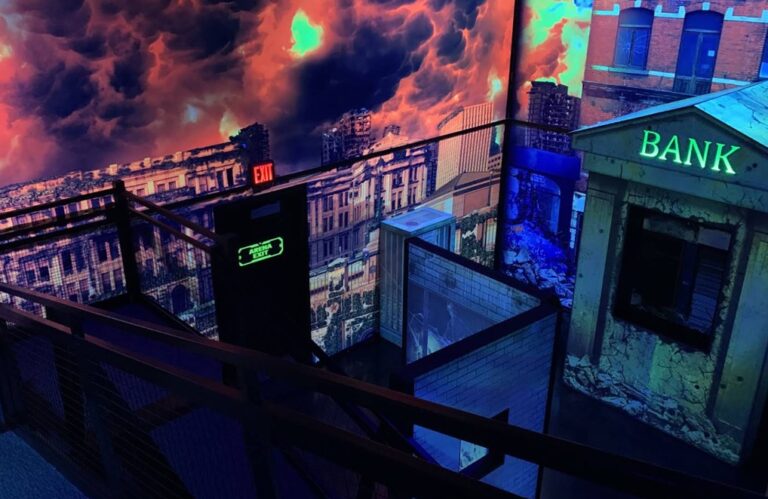
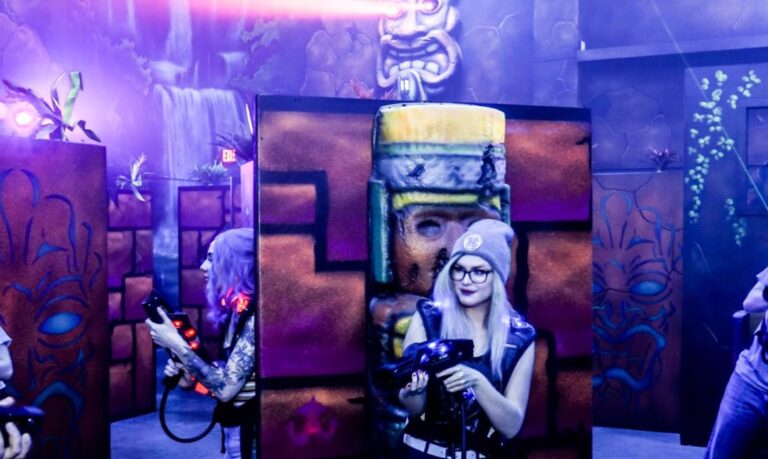
At the core of Thunder Road’s appeal is its state-of-the-art laser tag arena. This multi-level, glow-in-the-dark battlefield transforms players into futuristic warriors navigating a maze of tunnels, ramps, and obstacles. Complementing the adrenaline-pumping laser tag is an expansive virtual reality (VR) gaming zone.
Beyond laser tag and VR, Thunder Road also features a vast arcade floor brimming with classic and contemporary games—ranging from ticket-redemption challenges to racing simulators and motion-based rides.
The facility includes party rooms for celebrations, a full-service snack bar offering everything from popcorn to pizza, and dedicated staff who ensure guests have a smooth and enjoyable experience. Whether hosting a child’s birthday party or organizing a corporate team-building event, Thunder Road provides customizable packages that cater to different group sizes and themes.
Indoors
Laser tag is a fast‑paced, team‑oriented game that uses infrared light to simulate combat without any physical projectiles. Players wear a vest or torso sensor that registers hits from handheld “laser guns” that emit invisible infrared beams. A central computer or a portable control unit tracks each participant’s score, hit locations, and sometimes even the game’s storyline. The result is a safe, high‑tech alternative to paintball or airsoft, where the emphasis lies on strategy, movement, and quick decision‑making rather than on physical impact.
The technology behind modern laser‑tag systems has evolved considerably since the hobby’s birth in the 1970s. Early versions relied on simple infrared LEDs and basic hit detection, while today’s arenas often incorporate wireless networking, real‑time data analytics, and immersive audio‑visual effects. Yet the core premise remains unchanged: two or more teams compete to tag opponents while avoiding being tagged themselves.
To keep the experience fresh, laser‑tag venues design a variety of scenarios that cater to different ages, skill levels, and thematic interests. The most common formats include:
Classic Team Deathmatch – Two teams compete to achieve the highest number of tags within a set time limit. The straightforward nature of this mode makes it ideal for newcomers and large groups.
Capture the Flag – Each side hides a “flag” (often a RFID‑enabled disc) that the opposing team must locate and retrieve while defending its own. This scenario adds a layer of tactical depth, requiring coordinated offense and defense.
Zombie Survival – One or a few players start as “infected” zombies. When a human player is tagged, they convert to a zombie, creating a cascade effect. The remaining humans must survive until time runs out. This mode is popular for themed parties and horror‑loving groups.
Mission‑Based Adventures – Some arenas offer narrative‑driven missions, such as “rescue the hostages,” “defuse the bomb,” or “retrieve the secret data.” Players receive briefings, objectives, and sometimes prop items that enhance immersion.
Free‑For‑All (FFA) – Every player competes individually. The highest‑scoring participant wins, appealing to competitive individuals who prefer solo play over team dynamics.
League Play & Tournaments – For serious enthusiasts, many venues host organized leagues with ranked matches, seasonal championships, and prize structures. These events follow standardized rules and often feature live commentary.
By rotating scenarios, laser‑tag centers maintain excitement, encourage repeat visits, and provide opportunities for players to develop a broad skill set—from rapid reflexes to strategic planning.
Beyond being an entertaining pastime, laser tag offers a suite of physical, cognitive, and social advantages that make it attractive to a wide audience.
Even though the gear is lightweight, participants are constantly moving—dodging, sprinting, ducking, and climbing. A typical 15‑minute round can burn between 150 and 250 calories, comparable to a brisk jog. For children and adolescents, this active play helps counteract sedentary habits associated with screen time.
Laser tag demands rapid decision‑making and spatial awareness. Players must assess opponents’ positions, anticipate movements, and select optimal routes—all while managing limited ammunition or cooldown periods. These split‑second judgments sharpen executive functions such as problem‑solving, attention control, and working memory.
Team‑based scenarios promote collaboration. Success hinges on clear communication, role assignment (e.g., scout, defender, attacker), and the ability to adapt strategies on the fly. Such experiences translate to real‑world teamwork skills valuable in school projects, sports, and professional environments.
The adrenaline surge from a fast‑paced match provides a healthy outlet for excess energy and stress. Because the “combat” is non‑violent and non‑injurious, participants can experience excitement without the fear of harm, fostering emotional regulation and resilience.
Laser tag is low‑impact and adjustable for various physical abilities. The equipment can be calibrated for sensitivity, and many venues provide wheelchair‑accessible layouts. This inclusivity enables people of different ages and fitness levels to play together.
Researchers in fields ranging from kinesiology to psychology have examined laser tag as a model for active gaming. A 2022 study published in The Journal of Sport & Health Science found that regular laser‑tag sessions improved participants’ reaction times by an average of 12% and raised aerobic capacity modestly. The authors highlighted the game’s capacity to blend “structured sport” elements with “digital entertainment,” creating a hybrid activity that can motivate otherwise disengaged youths.
From a technological perspective, industry analysts note that laser‑tag platforms serve as testbeds for emerging sensor and networking solutions. The need for reliable, low‑latency communication between dozens of moving units pushes innovation in Bluetooth Low Energy (BLE) and proprietary mesh networks. Experts at the Consumer Electronics Show (CES) have cited laser‑tag systems as early adopters of “edge‑computing” architectures that process hit data locally, reducing latency to under 30 milliseconds—critical for maintaining immersion.
Moreover, psychologists point out that the game’s clear feedback loop (instant hit confirmation, real‑time scoring) reinforces the learning principle of immediate reinforcement, making it an effective tool for teaching concepts such as cause‑and‑effect, strategic planning, and even basic physics (e.g., line‑of‑sight and angles).
Overall, the consensus among scientists and industry stakeholders is that laser tag represents a valuable intersection of physical activity, technology, and social interaction—a “playful laboratory” for studying human behavior while delivering genuine fun.
Laser tag’s appeal cuts across demographics, with distinct groups gravitating toward the experience for different reasons.
For younger players, the game provides an exhilarating, safe outlet for competitive energy. Schools often incorporate laser‑tag outings into physical education curricula to encourage teamwork and cardio fitness. Youth leagues foster a sense of community and give participants a structured environment to hone skills.
College students and recent graduates enjoy laser tag as a social pastime that blends nostalgia for arcade culture with modern tech. Many venues host “after‑hours” events with music, glow‑in‑the‑dark lighting, and themed nights, turning the arena into a vibrant nightlife spot.
Parents looking for a family‑friendly activity appreciate that laser tag is low‑risk and suitable for mixed‑age groups. Many centers offer “family packages” that allow parents to join alongside their children, promoting intergenerational bonding.
Businesses increasingly adopt laser tag for team‑building retreats. The game’s demand for communication, leadership, and strategic thinking mirrors workplace dynamics, allowing employees to practice these skills in a low‑stakes environment.
Because the equipment is lightweight and the physical demands can be moderated, senior citizens and individuals with limited mobility can also enjoy laser tag. Adaptive programs tailor scenarios to emphasize strategy over speed, ensuring an inclusive experience.
When designing laser‑tag experiences for children, venues typically simplify rules, shorten match durations, and integrate colorful, whimsical themes—think “Space Pirates” or “Jungle Quest.” Safety measures are heightened: sensors are calibrated to register hits from a greater distance, and the gear’s padding is extra soft. Additionally, many centers provide instructional briefings that focus on sportsmanship, encouraging kids to cheer teammates and respect opponents. This kid‑centric approach not only maximizes enjoyment but also reinforces positive social habits such as fair play and cooperation.
A laser‑tag birthday party combines the thrill of a game with the convenience of an all‑in‑one venue. Packages often include private arena time, themed decorations, and a celebratory area for cake and gifts. The structured game flow—welcome briefing, two to three rounds, and a debrief—keeps children engaged while giving parents peace of mind.
High‑school or college graduations are milestones that merit an unforgettable experience. Laser‑tag venues can accommodate large groups, allowing graduates to relive school camaraderie through friendly competition. Some centers offer custom branding (e.g., laser‑tag “team” shirts with the graduating year) that turns the event into a memorable keepsake.
For businesses, laser tag serves as a dynamic alternative to traditional corporate outings. The competitive yet collaborative nature of the game helps break down hierarchical barriers, prompting employees to interact in novel ways. Many providers offer post‑game analysis, where scores and performance metrics are displayed on a screen, facilitating discussions on teamwork, leadership, and areas for improvement. Catering options, conference rooms, and branded swag further tailor the experience to corporate branding.
Laser‑tag arenas can be found in both indoor and outdoor settings, each offering distinct advantages.
Most urban centers host dedicated indoor facilities that feature multi‑level structures, darkened corridors, fog machines, and dynamic lighting. The controlled environment ensures consistent lighting conditions, optimal sensor performance, and year‑round availability. Indoor arenas often incorporate modular walls and props, enabling rapid scenario changes and themed events.
Outdoor laser‑tag takes advantage of natural terrain—forests, abandoned warehouses, or purpose‑built fields. The open‑air setting introduces variables such as wind, uneven ground, and ambient light, adding a layer of realism that mimics actual tactical training. Some adventure parks blend laser‑tag with zip‑lines, climbing walls, and obstacle courses, creating a hybrid “adventure‑combat” experience.
A growing number of venues combine indoor and outdoor spaces, allowing participants to transition between climate‑controlled rooms and outdoor courses within a single session. This hybrid model caters to diverse weather conditions and expands the creative possibilities for scenario designers.
When selecting a venue, players should consider factors such as equipment quality, staff expertise, safety protocols, and the variety of available scenarios. Reviews and word‑of‑mouth recommendations often highlight venues that balance technical reliability with imaginative theming—a key ingredient for a memorable laser‑tag adventure.
Laser tag has matured from a niche amusement into a versatile platform that blends physical activity, strategic gameplay, and cutting‑edge technology. Its myriad scenarios—team deathmatch, capture the flag, zombie survival, mission‑based adventures, and competitive leagues—ensure that every visit feels fresh. The benefits extend beyond mere fun, encompassing improved fitness, cognitive sharpening, teamwork skills, and emotional resilience. Scientists and industry experts recognize laser tag as a valuable testbed for sensor technology and a practical tool for studying human behavior.
From kids celebrating birthdays to graduates marking the end of an era, from families seeking a safe group activity to corporations aiming to strengthen team dynamics, laser tag offers a customizable, inclusive experience. Whether played under the glow of neon lights in an indoor arena or across a sun‑dappled forest field, the core appeal remains the same: a thrilling, low‑risk, socially engaging game that brings people together.
As technology continues to advance—integrating augmented reality overlays, biometric feedback, and AI‑driven scenario generation—laser tag is poised to become an even richer medium for recreation, education, and professional development. For anyone looking for a dynamic, engaging way to move, think, and connect, stepping into a laser‑tag arena is an invitation to ignite the senses and embark on an unforgettable adventure.


 3120 S Mayfair Dr, Sioux Falls, SD 57106