
 El Monte
 Log in
Log in
Log in

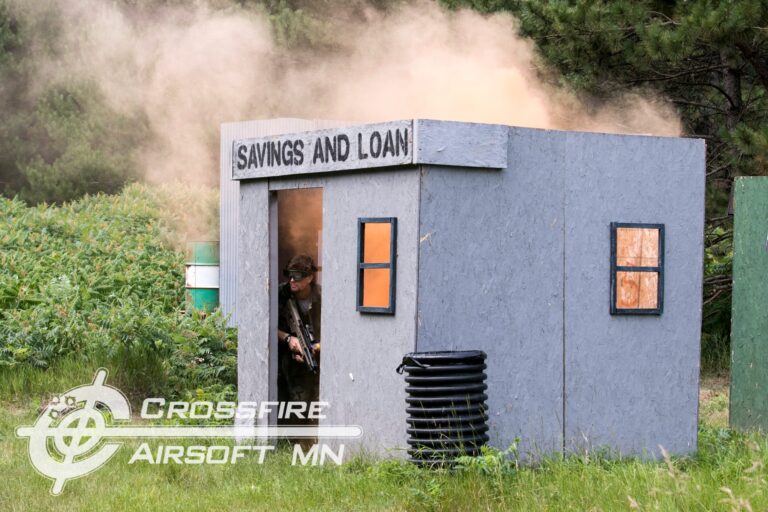
Crossfire Paintball Sioux Falls is located in Sioux Falls SD.
Crossfire Paintball Sioux Falls: A Premier Destination for Action-Adventure Enthusiasts. Beyond traditional paintball, Crossfire caters to a wider audience with airsoft, low-impact rounds, and gel blaster options, ensuring an inclusive and dynamic experience for every visitor.
At Crossfire Paintball Sioux Falls, the action unfolds across meticulously designed fields that mimic urban environments, natural terrains, and tactical scenarios. Traditional paintball remains a standout draw, with players engaging in fast-paced matches using high-performance markers.
For those seeking alternatives, airsoft provides a similar tactical experience using biodegradable plastic pellets, often preferred for its realism in simulation-style play. Crossfire also introduces “low-impact” rounds—a family-friendly paintball variant designed with softer projectiles and lower firing velocities. This option is ideal for younger players, casual participants, or those prioritizing comfort without sacrificing fun. Meanwhile, gel blasters—Japanese-style water-based shooters—add an eco-friendly twist, using non-toxic gel beads that dissolve on contact.
 Outdoors
Gelly Ball is a fast‑growing recreational sport that blends the kinetic excitement of dodgeball with the tactile novelty of gelatinous play objects. The equipment consists of soft, translucent spheres—often made from a flexible polymer similar to the material used in squishy toys—that are filled with a water‑based gel. When compressed, the spheres retain a satisfying “jelly‑like” bounce, yet they remain gentle enough to avoid bruises or injuries. The sport can be set up in a traditional gymnasium, a park, or even a large living‑room, making it an adaptable activity for a wide range of environments.
The name itself hints at the core experience: participants are constantly interacting with a “gel‑filled ball” that delivers a distinctive tactile sensation while traveling at speeds comparable to a regular foam or rubber ball. The combination of visual appeal (the translucent, often neon‑colored spheres) and physical feel has turned Gelly Ball into a favorite among children, teens, and increasingly, adults seeking a low‑impact yet energetic workout.
The basic structure of a Gelly Ball match mirrors the familiar rules of classic team ball games, but several unique elements differentiate it:
Teams and Court Layout
Two squads—typically ranging from three to eight players each—take opposite sides of a rectangular or square play area. The boundaries are marked with lightweight cones or tape, and a central “neutral zone” often houses a stack of spare gels for quick replacements.
Starting the Game
At the whistle, a referee places a single gel ball at the center of the field. Players race to retrieve it, and the first team to secure the ball gains the initial possession. This “scramble” phase adds an immediate burst of excitement.
Offensive and Defensive Play
The offensive side attempts to hit opponents with the gel ball, aiming for the torso, arms, or legs. A successful hit eliminates the targeted player from the current round. Because the gels are soft, the game can be played safely even when participants throw the ball at high velocities. Defenders may catch a thrown gel; a clean catch not only saves the defender but also restores the ball to their team’s possession.
Scoring and Rotation
A round ends when all members of one team are eliminated. Points are awarded based on the number of players remaining on the winning side, with bonus points for catches made. After each round, teams rotate positions and may substitute players, allowing everyone ample rest and participation.
Variations
Tournament organizers often introduce special rules—such as “power gels” that are slightly heavier or contain glitter—to keep the game fresh. Some leagues also incorporate timed rounds, where the highest scoring team at the end of a set period claims victory.
The simplicity of the rule set—combined with the instant visual feedback of a gel ball splattering harmlessly on impact—makes Gelly Ball accessible to newcomers while still offering enough strategic depth to satisfy seasoned players.
Beyond its entertainment value, Gelly Ball delivers a spectrum of physical, mental, and social advantages:
Cardiovascular Fitness
The constant movement—running, dodging, lunging, and throwing—keeps heart rates elevated, comparable to a moderate‑intensity aerobic workout. Because the sport can be played in short bursts, participants often achieve the recommended 150 minutes of moderate activity per week without feeling like they are “exercising.”
Joint‑Friendly Impact
The gel’s softness absorbs much of the force generated during throws and catches, minimizing stress on wrists, elbows, and shoulders. This makes the game suitable for individuals with mild joint concerns or those recovering from injury.
Hand‑Eye Coordination
Tracking a translucent, fast‑moving object and timing a catch or throw nurtures fine motor skills. Studies on similar ball sports have shown measurable improvements in reaction time after just a few weeks of regular play.
Teamwork and Communication
Success hinges on coordinated strategies—such as layered defensive formations, feigned throws, and rapid ball hand‑offs. Players quickly learn to read teammates’ body language and to issue concise verbal cues, fostering group cohesion.
Stress Relief
The tactile feedback of a squishy gel and the playful nature of the game trigger endorphin release. Participants often report a noticeable reduction in tension after a single session, making Gelly Ball a useful tool for workplaces seeking low‑cost wellness activities.
Inclusivity
Because the equipment is lightweight and the rules are easy to grasp, the sport accommodates a broad age range and diverse skill levels. Adaptive versions can incorporate larger, slower‑moving gels for individuals with limited mobility.
Collectively, these benefits position Gelly Ball as more than a passing fad; it is an activity that supports holistic health while delivering pure fun.
The emergence of Gelly Ball has attracted attention from biomechanics researchers, material scientists, and public‑health professionals. Early investigations have focused on two primary aspects: the physical properties of the gel sphere and the physiological outcomes of gameplay.
Material Science Perspective
Researchers at a leading polymer institute have analyzed the viscoelastic behavior of the gel fill. Their findings indicate that the combination of a flexible outer shell and a water‑based inner gel creates a “soft‑impact” profile, reducing peak force transmission by up to 45 % compared to standard foam balls. This characteristic is credited with lowering the risk of contusions and making the ball safe for indoor use near breakable objects.
Biomechanics and Injury Prevention
Sports scientists have conducted motion‑capture studies on college athletes playing Gelly Ball. The data reveal that the rapid changes in direction required by the game enhance proprioceptive awareness without imposing excessive torque on the knees or ankles. Consequently, the sport is deemed “low‑risk” for acute musculoskeletal injuries, especially when compared with high‑impact activities like basketball or soccer.
Public‑Health Implications
Community health officials have begun to recommend Gelly Ball as part of school‑based physical‑education curricula. Their rationale rests on the sport’s ability to encourage participation among children who may feel intimidated by more competitive team sports. Pilot programs in several districts have reported increased attendance in PE classes and higher overall physical‑activity scores on standardized fitness assessments.
Industry Outlook
From a commercial standpoint, market analysts forecast robust growth for the Gelly Ball ecosystem. The sport’s low equipment cost, combined with its versatility for indoor and outdoor settings, makes it attractive to recreation centers, party planners, and corporate wellness programs. The projected compound annual growth rate (CAGR) for related equipment sales is estimated at 12 % over the next five years, driven largely by the expansion of “experience‑focused” entertainment venues.
Overall, the consensus among experts is that Gelly Ball offers a scientifically validated blend of safety, engagement, and health benefits—an uncommon trifecta in the world of emerging sports.
The inclusive design of Gelly Ball removes many of the traditional barriers that keep people away from organized sport. The following groups find the activity particularly well‑suited to their needs:
Children (Ages 5–12)
The bright colors and soft impact appeal to younger players, while the straightforward rules promote quick learning. Many schools adopt Gelly Ball as a “starter” sport to introduce concepts of teamwork and fair play.
Teenagers
For adolescents seeking a high‑energy outlet that isn’t as contact‑heavy as traditional ball games, Gelly Ball offers an adrenaline rush without the fear of bruises or broken equipment.
Adults and Young Professionals
After‑work leagues have sprung up in urban centers, using Gelly Ball as a social‑fitness hybrid. The activity doubles as a networking opportunity, encouraging colleagues to bond outside the office.
Seniors and Rehabilitation Participants
Modified versions—featuring larger, slower‑moving gels and reduced court dimensions—are employed in senior centers and physiotherapy clinics to promote gentle mobility and hand‑eye coordination.
People with Disabilities
Adaptive equipment, such as ramps or weighted gels, makes the sport accessible to wheelchair users and individuals with limited upper‑body strength. The low‑impact nature also benefits those with chronic pain conditions.
Because the game can be scaled up or down in intensity, virtually anyone with a desire to move, compete, and have fun can join a Gelly Ball session.
Celebrations often hinge on novelty, and Gelly Ball provides exactly that—a fresh, interactive centerpiece that transforms a typical gathering into an immersive experience.
Portable Set‑Ups
Rental companies supply inflatable boundaries, a set of gel balls, and a portable scoreboard that can be installed in backyards, community halls, or even large apartments. The equipment can be assembled in under thirty minutes, allowing hosts to focus on other party logistics.
Customizable Themes
Because gels come in a spectrum of colors, organizers can match the balls to party motifs—neon pink for a teen dance, pastel blues for a baby shower, or team colors for a corporate anniversary. Some vendors also offer “glow‑in‑the‑dark” gels for evening events, adding a visually striking element.
Structured Play
Hosts can schedule short, tournament‑style brackets that keep the action moving and ensure all guests have a chance to participate. Referees or appointed “game masters” help enforce rules, making the experience smooth for participants of varying skill levels.
Safety and Clean‑Up
The gel balls are sealed, so they do not leak or stain. After play, the balls can be collected, rinsed, and stored for future use. This convenience makes Gelly Ball a low‑maintenance entertainment option compared with messy activities like paintball or slime parties.
Memorable Takeaways
Participants often request to keep a few gels as souvenirs, providing a tangible reminder of the fun they had. Some event planners incorporate personalized gels—printed with a logo or the birthday person’s name—as keepsakes.
Overall, Gelly Ball serves as a crowd‑pleasing, adaptable activity that elevates ordinary celebrations into kinetic, laughter‑filled gatherings.
One of the sport’s strongest selling points is its venue flexibility. Whether under a bright sky or beneath fluorescent lights, Gelly Ball can be enjoyed in a variety of settings.
Gymnasiums and Sports Halls
Existing court markings can be repurposed, and the soft balls eliminate concerns about damage to walls or equipment.
Community Centers
Multipurpose rooms often have enough floor space for a full‑size match, and the activity can be integrated into after‑school programs.
Corporate Wellness Spaces
Open‑plan offices or dedicated recreation rooms can accommodate mini‑matches during lunch breaks, fostering employee morale.
Indoor Playgrounds
The rounded surfaces and padded flooring found in family‑focused venues pair well with the low‑impact nature of Gelly Ball.
Parks and Recreational Fields
Grass or artificial turf provides a natural cushion, and portable boundary nets can define the playing area.
Beachside Boards
The sand adds an extra element of resistance, making throws slightly slower and giving beginners more time to react.
Festival Grounds
Pop‑up Gelly Ball arenas have become a staple at music festivals and fairs, offering attendees a quick, energetic diversion.
Schoolyards
After classes, schoolyards can transform into temporary Gelly Ball courts, encouraging students to stay active during recess.
In each scenario, the key requirements are a flat, open surface and enough clearance to avoid obstacles. Because the gel balls are lightweight, wind or slight unevenness in the terrain does not substantially affect gameplay, making the sport reliable across weather conditions.
Gelly Ball has rapidly evolved from a novelty concept into a widely embraced activity that satisfies the modern demand for safe, inclusive, and exhilarating recreation. Its unique equipment—a gel‑filled, translucent sphere—delivers a tactile experience that is both playful and gentle, while the sport’s adaptable rules invite participants of all ages and abilities to join in. Scientific research validates the low‑impact nature of the game and highlights its fitness, coordination, and social benefits. Whether featured at a birthday party, incorporated into a school curriculum, or set up as a lunchtime outlet in a corporate office, Gelly Ball offers a versatile solution for anyone seeking an engaging, health‑promoting pastime. As more communities discover its potential, the gel‑filled sphere is poised to become a familiar fixture on both indoor courts and outdoor fields worldwide.


 201 N. Harlem Ave. Sioux Falls SD 57104