El Monte
 Log in
Log in
Log in

Thunder Road of Sioux Falls is located in Sioux Falls.
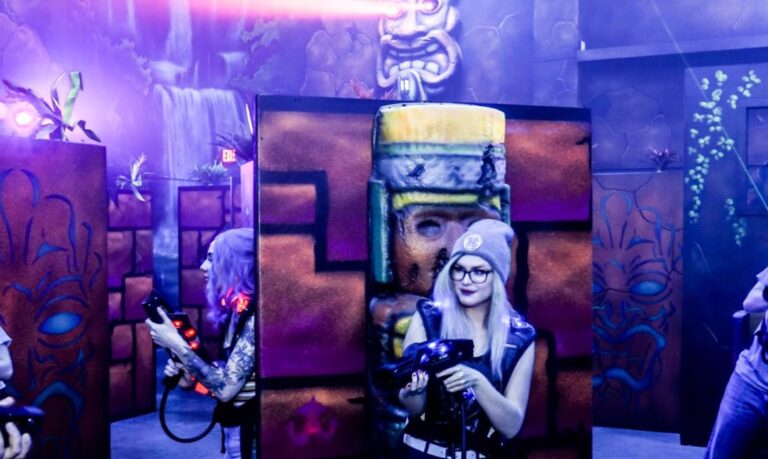
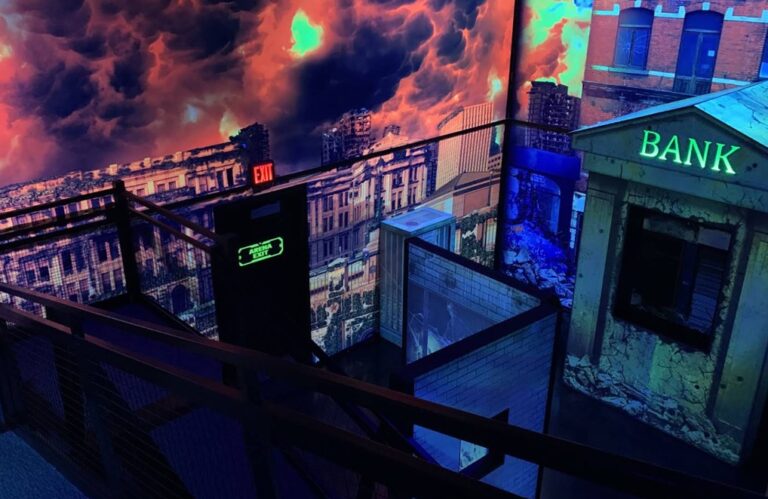
At the core of Thunder Road’s appeal is its state-of-the-art laser tag arena. This multi-level, glow-in-the-dark battlefield transforms players into futuristic warriors navigating a maze of tunnels, ramps, and obstacles. Complementing the adrenaline-pumping laser tag is an expansive virtual reality (VR) gaming zone.
Beyond laser tag and VR, Thunder Road also features a vast arcade floor brimming with classic and contemporary games—ranging from ticket-redemption challenges to racing simulators and motion-based rides.
The facility includes party rooms for celebrations, a full-service snack bar offering everything from popcorn to pizza, and dedicated staff who ensure guests have a smooth and enjoyable experience. Whether hosting a child’s birthday party or organizing a corporate team-building event, Thunder Road provides customizable packages that cater to different group sizes and themes.
 Indoors
VR and Laser tag “Galaxy Gaming” is located in Sioux Falls, SD.
Known for blending cutting-edge entertainment with family-friendly fun, this venue stands out as a hub for immersive gaming experiences. Among its most popular attractions are its high-energy laser tag arenas and state-of-the-art virtual reality (VR) simulations, which together create a dynamic space where nostalgia meets innovation.
What truly sets Galaxy Gaming apart is its commitment to fostering a welcoming atmosphere. The venue prioritizes safety, with clear boundaries and equipment guidelines, while also offering amenities like snack bars, group booking options, and birthday party packages. The blend of traditional laser tag and modern VR appeals to a wide audience, from children celebrating milestones to adults seeking a quick escape from everyday routines.
Indoors
A free‑roam virtual‑reality arena is a purpose‑built physical space where participants can move unencumbered while wearing a headset that tracks their position in three dimensions. Unlike seated or standing tabletop VR setups, the arena eliminates the need for cables or external sensors attached to the player’s body. Instead, an array of ceiling‑mounted or wall‑mounted cameras, lidar scanners, or infrared beacons creates a 360‑degree mapping of the environment, allowing the system to render a digital world that mirrors the user’s every step, turn, and gesture.
The core promise of free‑roam VR is immersion that feels natural. When a participant lifts a hand to pick up a virtual object, the system registers the motion instantly; when they duck to avoid an incoming projectile, their body actually lowers. The arena’s safety net—soft padding, low‑profile barriers, and real‑time collision detection—ensures that the physical and virtual worlds remain in sync, so users can focus on the experience without fear of bumping into walls or each other.
Commercial free‑roam venues range from compact 10‑by‑10‑meter rooms designed for family entertainment to sprawling warehouse‑scale spaces that host competitive e‑sports tournaments. The technology is modular: providers can install additional tracking stations to expand the play area, or they can configure the lighting and acoustics to suit a specific theme, from a haunted forest to a futuristic cityscape.
The flexibility of a tracked, open‑space environment fuels an ever‑growing catalog of scenarios. Some of the most popular fall into four broad categories:
Adventure and Exploration – Players step into richly detailed worlds where they can climb cliffs, glide across alien terrains, or dive into underwater ruins. The freedom to physically walk through the environment adds a layer of realism that static VR experiences cannot achieve.
Co‑operative Puzzles – Teams of two to six participants must collaborate to solve spatial riddles. Because each player can move independently, designers can create challenges that require synchronized movement, such as aligning mirrors to redirect light beams across a large virtual chamber.
Competitive Sports and Battle Games – From laser‑tag‑style shooters to futuristic arena combat, the kinetic nature of free‑roam VR turns virtual contests into full‑body workouts. Scoreboards track hits, kills, and objectives, while spectators watch on large display walls, turning the arena into a live‑action theatre.
Narrative Experiences – Interactive stories place participants at the centre of a plot, with branching outcomes based on their decisions. The physical movement adds emotional weight; a character’s panic is mirrored when the player’s heart races and they physically duck behind cover.
Designers also experiment with hybrid scenarios that blend real props—such as physical swords, steering wheels, or musical instruments—with virtual elements, deepening the tactile feedback loop. The result is a library of experiences that can be tailored for families, school groups, corporate teams, or hardcore gamers.
The demographic landscape of free‑roam VR is remarkably diverse. While early adopters were predominantly teenage and adult gamers seeking a next‑level arcade experience, today the venues attract a broader spectrum of participants.
Children and Families have become a cornerstone of the market. The safety‑first design—soft flooring, low ceilings, and real‑time monitoring—makes it suitable for younger users. Many arenas offer age‑appropriate content, ranging from whimsical treasure‑hunt quests to educational simulations that teach basic physics concepts through hands‑on interaction. The physical activity inherent in free‑roam play also appeals to parents looking for fun ways to get kids moving away from screens.
Teenagers and Young Adults remain the most frequent visitors, drawn by competitive shooters, rhythm games, and e‑sports tournaments that leverage the kinetic advantage of moving in real space. The social aspect—forming teams, streaming matches, and sharing high scores—mirrors the dynamics of traditional multiplayer gaming while adding a novel physical dimension.
Corporate Teams increasingly use free‑roam VR for team‑building exercises. Scenarios that require coordinated navigation, problem‑solving under pressure, and clear communication translate well to workplace skill development. Because the environment is immersive and removes external distractions, participants often report heightened focus and stronger bonds after a session.
Seniors and Wellness Groups are a growing niche. Low‑impact exploration experiences, gentle guided meditation walks, and mild aerobic games are being introduced to promote mobility, cognitive engagement, and social interaction among older adults. The controlled nature of the arena ensures that any risks are mitigated, while the novelty stimulates mental agility.
Overall, the inclusive design of free‑roam VR makes it accessible to virtually any age group, provided that the content is curated appropriately.
Event planners have discovered that free‑roam VR offers a dynamic alternative to traditional party entertainment. The venue itself becomes a blank canvas that can be themed to match the occasion, while the technology delivers an experience that feels exclusive and memorable.
For a child’s birthday, a themed adventure—such as a pirate treasure hunt across a virtual island or a magical quest through a fairy‑tale forest—can be customized to the birthday child’s interests. The arena’s staff can segment the space into stations, allowing small groups to rotate through mini‑missions while the birthday child enjoys a “master‑of‑ceremonies” role, guiding friends through the narrative. Because the activity is inherently collaborative, it encourages social interaction rather than passive observation.
Graduates often seek events that celebrate transition and achievement. A free‑roam VR experience that simulates a futuristic city where participants “build” their future through interactive installations can serve as a symbolic rite‑of‑passage. Milestones—such as crossing a virtual finish line or completing a collaborative puzzle—can be timed to coincide with speeches or award presentations, creating an integrated ceremony where the virtual and physical moments reinforce each other.
Corporations looking to energize staff can book an arena for a “VR hackathon” or a competitive league. Scenarios can be branded, incorporating company logos, product prototypes, or mission statements into the virtual world. For example, a logistics firm might design a package‑sorting challenge that mirrors real‑world workflows, turning a training exercise into a thrilling race against the clock. The immediate feedback loops, leaderboard displays, and post‑session analytics give organizers quantifiable data on team performance and engagement.
In each case, the flexibility of free‑roam VR allows the host to tailor the duration, difficulty, and thematic elements, ensuring that the experience aligns with the event’s tone and budget. Moreover, the shared physical space fosters spontaneous social moments—high‑fives, group cheers, and collective awe—that are difficult to replicate with screen‑based entertainment.
Researchers in human‑computer interaction, neuroscience, and ergonomics have taken a keen interest in free‑roam VR, viewing it as a frontier for both scientific inquiry and commercial innovation.
From a cognitive standpoint, the technology provides a unique platform to study embodiment—the sense that one’s body occupies a virtual space. Experiments have demonstrated that when users navigate a virtual environment through natural walking, their spatial memory and navigation strategies more closely resemble those employed in the real world, compared with controller‑based movement. This has implications for training simulations in fields such as aviation, emergency response, and surgery, where accurate spatial awareness can be life‑saving.
In the realm of physical health, biomechanical analyses reveal that free‑roam VR can deliver moderate‑intensity exercise while maintaining user engagement. Studies measuring heart rate, caloric expenditure, and muscle activation suggest that a 30‑minute session can approximate the benefits of a brisk walk, yet with added cognitive challenges that improve coordination and reaction time. These findings are prompting health‑care providers to consider VR as an adjunct therapy for rehabilitation and fitness programs.
Industrial experts emphasize scalability and safety. The cost of outfitting a venue with high‑precision tracking systems has decreased dramatically over the past five years, making the model viable for both boutique entertainment centers and large‑scale corporate campuses. However, experts caution that the richness of the experience hinges on meticulous environmental calibration; misaligned sensors can cause latency or drift, breaking immersion and potentially causing motion sickness. Continuous software updates and routine hardware maintenance are therefore deemed essential for sustained operational excellence.
Ethical considerations also surface. As free‑roam VR blurs the line between physical and virtual realities, scholars argue for clear guidelines on data privacy, especially when biometric data—such as eye tracking or heart rate—is collected. There is a consensus that informed consent and transparent data handling policies must be embedded in the business model.
Overall, the scientific community views free‑roam VR as a fertile testing ground for theories of perception, learning, and human performance, while industry leaders focus on refining the technology to deliver safe, immersive, and financially sustainable experiences.
The trajectory of free‑roam VR points toward deeper integration with other emerging technologies. Mixed‑reality (MR) overlays could allow physical props to respond dynamically to virtual events, creating a bidirectional feedback loop that heightens realism. Artificial intelligence will enable adaptive scenarios that respond to each participant’s skill level, emotional state, or even physiological signals, providing personalized challenges that keep engagement high.
Furthermore, the rise of networked multi‑site arenas could make it possible for teams in different cities to share a single virtual battlefield while each group moves freely within its own physical space. Such connectivity would expand the social dimension of free‑roam VR beyond the walls of a single venue, opening avenues for global e‑sports leagues and cross‑institutional educational programs.
In parallel, advances in haptic wearables—gloves, exoskeletons, and full‑body suits—promise to deliver more nuanced tactile feedback, allowing users to feel the texture of virtual surfaces, the recoil of a simulated firearm, or the resistance of a virtual wind gust. When combined with the existing freedom of movement, these innovations could redefine what it means to “play” in a digital world.
Finally, as safety standards evolve and cost barriers continue to fall, free‑roam VR is likely to transition from a niche entertainment offering to a mainstream fixture in schools, hospitals, corporate campuses, and community centres. Its capacity to blend physical activity, immersive storytelling, and collaborative problem‑solving positions it as a powerful tool for education, wellness, and social connection in the coming decade.
Free‑roam VR arenas have already reshaped how people experience virtual worlds, turning passive observation into active participation. By allowing users to walk, run, and interact physically within a digitally rendered space, these venues deliver a level of immersion that traditional VR cannot match. Whether it is a child hunting for treasure on a birthday, a graduating class celebrating a milestone, a corporate team building trust, or a scientist probing the limits of human perception, the versatility of free‑roam VR makes it a compelling platform for entertainment, education, and research alike. As technology continues to evolve, the line between the real and the virtual will blur even further, ushering in experiences that are not only fun but also profoundly transformative.


 201 North Kiwanis Drive, Sioux Falls 201 SD