
 El Monte
 Log in
Log in
Log in

Crossfire Paintball Sioux Falls is located in Sioux Falls SD.
Crossfire Paintball Sioux Falls: A Premier Destination for Action-Adventure Enthusiasts. Beyond traditional paintball, Crossfire caters to a wider audience with airsoft, low-impact rounds, and gel blaster options, ensuring an inclusive and dynamic experience for every visitor.
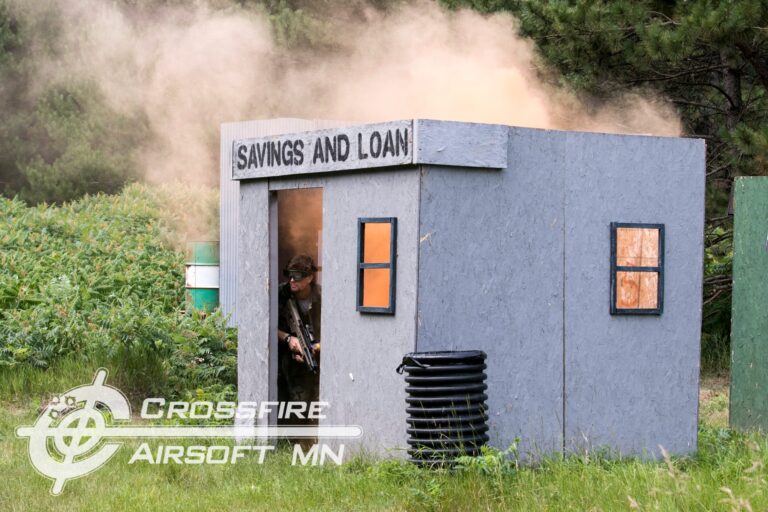
At Crossfire Paintball Sioux Falls, the action unfolds across meticulously designed fields that mimic urban environments, natural terrains, and tactical scenarios. Traditional paintball remains a standout draw, with players engaging in fast-paced matches using high-performance markers.
For those seeking alternatives, airsoft provides a similar tactical experience using biodegradable plastic pellets, often preferred for its realism in simulation-style play. Crossfire also introduces “low-impact” rounds—a family-friendly paintball variant designed with softer projectiles and lower firing velocities. This option is ideal for younger players, casual participants, or those prioritizing comfort without sacrificing fun. Meanwhile, gel blasters—Japanese-style water-based shooters—add an eco-friendly twist, using non-toxic gel beads that dissolve on contact.
 Outdoors
Paintball is a fast‑paced, team‑oriented sport in which participants fire small, gelatin‑encapsulated paint‑filled projectiles—known as paintballs—from pneumatic or CO₂‑powered markers. The markers, often called “guns,” resemble real firearms in shape but are deliberately designed to be safe, with strict limits on muzzle velocity (usually capped at 300 feet per second for adult play). When a paintball makes contact with a player’s clothing or exposed skin, the gelatin shell bursts, leaving a visible, brightly colored splatter that signals a “hit.” Once marked, the player either exits the field for a set period (in “elimination” formats) or returns to the game after a brief respawn interval, depending on the chosen scenario.
The sport traces its modern roots to the early 1980s, when a group of hobbyists in Southern California fashioned homemade markers to simulate military training exercises. Over the ensuing decades, paintball has evolved into a global pastime, with professional leagues, elaborate tournaments, and a thriving recreation industry that offers everything from backyard backyard kits to high‑tech indoor arenas.
Although the specifics can vary from venue to venue, most paintball fields operate under a core set of safety and gameplay regulations designed to protect participants and maintain fair competition.
Mandatory Protective Gear – Every player must wear a full‑face mask meeting ASTM F1492 or equivalent standards. In addition, padded clothing, gloves, and sturdy footwear are strongly encouraged, especially in outdoor fields with uneven terrain.
Velocity Limits – Markers are calibrated before each session to ensure that paintballs travel at a velocity no higher than the venue’s prescribed limit (commonly 280 fps for younger players and 300 fps for adults). This reduces the risk of bruising or more serious injury.
Barrel Safety – A barrel plug or “safety barrel” must be attached whenever a marker is not being actively used. This prevents accidental discharges and protects bystanders.
Paintball Size – The standard paintball diameter is 0.68 inches (17.3 mm). Using non‑standard sizes can cause marker malfunctions and is generally prohibited.
Hit Confirmation – A player is considered “out” only when a paintball clearly bursts on their body or equipment, leaving a visible mark. Vague smears or splatters on the ground do not count.
Field Boundaries – Players must stay within the designated play area. Leaving the field without permission results in a penalty or disqualification.
Respawn Rules – In “elimination” games, a hit means permanent removal from that round. In “capture‑the‑flag” or “objective” formats, a “respawn” timer (usually 30–60 seconds) allows eliminated players to re‑enter the action.
No Physical Contact – Physical aggression, tackling, or weapon stripping is prohibited. The sport relies on projectile contact, not bodily force.
Respect for Referees – Field officials have final authority on disputes, rule interpretations, and safety checks. Their decisions are binding.
These rules provide a framework that balances excitement with safety, allowing newcomers to join with confidence while giving seasoned players the structure needed for competitive play.
Paintball’s versatility stems largely from its ability to simulate a wide array of combat and tactical situations. Organizers craft “scenarios” that transform a simple field into a narrative‑driven battlefield. Below are some of the most popular formats:
The simplest and most ubiquitous format. Teams are divided, and any player who receives a valid hit is removed from the round. The last remaining player or team claims victory. Because there is no respawn, strategy revolves around stealth, positioning, and careful use of cover.
Each side hides a flag (or other marker) within its territory. The objective is to infiltrate the opponent’s zone, seize the flag, and return it to one’s own base without being eliminated. The constant push‑and‑pull creates dynamic, fast‑moving engagements.
These large‑scale events can involve dozens or even hundreds of participants and often feature an overarching storyline—a “zombie outbreak,” “post‑apocalyptic war,” or historical reenactment. Props, obstacles, and role‑playing elements (such as mission briefings and side‑quests) enhance immersion.
Short for “military simulation,” this format mirrors real‑world tactical missions. Teams are given specific objectives—secure a building, defuse a “bomb,” or rescue a “hostage.” Success hinges on coordinated team movements, communication, and adherence to a mission plan.
Played on a compact, symmetrically designed field with inflatable bunkers, speedball emphasizes high‑intensity, rapid‑fire action. Matches are often timed (e.g., two‑minute halves) and scored by points rather than eliminations, making it the preferred format for professional leagues.
A central “hill” or elevated platform is contested. The team that controls the hill for the longest cumulative time wins. This scenario tests both offensive aggression and defensive endurance.
These scenarios can be mixed or modified, allowing organizers to tailor experiences to a specific skill level, age group, or thematic interest. The flexibility of paintball scenarios is one of its biggest draws, ensuring that no two games feel exactly alike.
Beyond being an exhilarating pastime, paintball offers a host of tangible benefits that appeal to a broad spectrum of participants.
Running, dodging, and crawling across varied terrain deliver cardiovascular workouts comparable to a brisk jog or high‑intensity interval training. The sport also strengthens core muscles, improves hand‑eye coordination, and promotes agility.
Most paintball formats require coordinated tactics: assigning roles, sharing intel, and executing plans under pressure. Players quickly learn to listen, give concise directions, and trust one another—skills directly transferable to workplace teams, military units, and sports clubs.
The adrenaline rush of a fast‑paced match provides a healthy outlet for built‑up tension. The combination of focused physical exertion and the playful release of “shooting” paintballs creates a cathartic experience that many participants cite as a major stress reducer.
Effective paintball play hinges on analyzing terrain, predicting opponent movements, and adapting strategies in real time. Regular players develop sharper decision‑making abilities, which can positively impact academic performance and professional problem‑solving.
Paintball events often bring together people from diverse backgrounds—a welcome avenue for building friendships, networking, and fostering community spirit. Team‑building companies frequently use paintball as a corporate retreat activity for precisely this reason.
For military and law‑enforcement trainees, paintball provides a low‑risk environment to rehearse tactics, test equipment, and practice command protocols without the lethality of live ammunition.
Overall, paintball serves as a multifaceted tool for physical health, mental acuity, and social bonding, making it a worthwhile pursuit for individuals and organizations alike.
Paintball’s appeal cuts across age, gender, and cultural lines, though participation trends differ by region and setting.
Youth and Teens – Many junior leagues introduce players as young as eight, emphasizing safety and fundamental skills. Schools sometimes incorporate paintball into physical‑education curricula as a teamwork exercise.
College Students – University clubs thrive on campus, offering affordable weekly games and inter‑college tournaments. The competitive yet social nature of paintball fits well with the energetic lifestyle of many students.
Adults & Professionals – Corporate groups frequently book paintball sessions for team‑building retreats. The sport’s blend of strategy and physical challenge resonates with professionals seeking an engaging break from office routines.
Military & Law‑Enforcement Personnel – As a realistic yet non‑lethal simulation, paintball is used in tactical training programs worldwide. It helps refine unit cohesion and reflexes without the logistical burden of live‑fire exercises.
Senior Enthusiasts – Some fields cater to older adults, offering slower‑pace “tactical” games that focus on strategy over speed. Adaptive equipment, such as lighter markers and modified terrain, enables participants with reduced mobility to enjoy the sport.
Women’s Leagues – Dedicated women‑only teams and tournaments have grown in popularity, promoting inclusivity and encouraging female participation in an arena traditionally dominated by men.
In short, paintball is not confined to a single demographic; its adaptable formats and universal appeal make it a sport that anyone—regardless of fitness level or background—can try and enjoy.
Academic researchers and industry professionals have examined paintball from multiple perspectives, ranging from biomechanics to market economics.
Safety and Injury Research
A series of studies published in sports‑medicine journals have concluded that paintball injuries are relatively low‑severity when proper safety gear is used. The most common complaints are bruises and minor skin abrasions, with severe injuries (e.g., eye damage) being rare due to mandatory mask policies. Researchers highlight that consistent enforcement of velocity caps and regular equipment inspections dramatically reduces risk.
Psychological Impact
Psychologists interested in competitive play have noted that paintball can foster “flow” states—periods of deep concentration where players lose self‑consciousness and become fully immersed in the task. This mental engagement is linked to improved mood and reduced anxiety levels, aligning paintball with other active leisure pursuits that boost mental wellbeing.
Economic Contributions
Industry analysts estimate that the global paintball market generates over $2 billion in annual revenue, encompassing equipment manufacturers, venue operators, and ancillary services such as apparel and consumables. The sector’s growth is driven by rising interest in experiential entertainment, especially among millennials and Gen Z, who prioritize activities that blend social interaction with physical challenge.
Environmental Concerns
Environmental scientists have raised questions about the biodegradability of traditional paintball shells, which historically contained non‑degradable polymers. In response, manufacturers have introduced eco‑friendly shells made from biodegradable gelatin and plant‑based dyes, significantly reducing landfill impact. Ongoing research aims to further improve shell composition while maintaining burst performance.
Technology Innovation
Engineers in the sporting‑equipment field are exploring electronic markers equipped with Bluetooth connectivity, allowing players to track shot counts, velocity data, and game statistics in real time. These “smart” markers are viewed as the next wave of performance‑enhancing tools, aligning paintball with the broader trend of data‑driven sports.
Overall, the consensus among scientists and industry experts is that paintball, when properly regulated, offers a safe, enjoyable, and economically viable activity that also spurs technological advances and promotes healthy lifestyles.
Paintball enthusiasts have a wealth of options when choosing a battlefield, each offering distinct advantages.
Woodland & Forest Courses – Natural terrain creates a realistic tactical environment with trees, uneven ground, and natural cover. These fields often span several acres, allowing for large‑scale scenario games and long‑range engagements.
Open‑Field Speedball Arenas – Constructed with inflatable bunkers arranged symmetrically, outdoor speedball venues emphasize speed and precision. The compact layout makes them ideal for tournament play and rapid match turnover.
Mountain or Desert Settings – Some specialty venues locate themselves in rugged landscapes, offering extreme elevation changes and unique climatic conditions. These sites attract adventure seekers who relish the added physical challenge.
Outdoor play provides fresh air, expansive space, and a more authentic “battlefield” feel. However, weather conditions—rain, wind, extreme heat—can impact gameplay and may necessitate rescheduling.
Inflatable Bunker Facilities – The most common indoor setup, these arenas feature a maze of soft, air‑cushioned obstacles that absorb paintball impact. The controlled environment ensures consistent lighting and climate, allowing play year‑round.
Laser‑Hybrid Centers – Some modern venues blend paintball with laser tag, offering dual‑mode equipment that switches between real paintball projectiles and infrared “laser” shots. This hybrid model caters to varied preferences and offers a lower‑impact alternative for beginners.
Themed Indoor Scenarios – Urban‑style arenas replicate corridors, warehouses, or abandoned buildings, creating close‑quarters combat experiences. These environments are especially popular for MilSim and hostage‑rescue scenarios where tight spaces intensify tension.
Indoor locations excel in accessibility and predictability. Because the playing surface is flat and the obstacles are standardized, these venues are particularly suitable for beginners, corporate events, and youth groups.
Regardless of the setting, reputable fields share a commitment to safety, equipment maintenance, and a welcoming atmosphere—key factors that determine a positive paintball experience.
Paintball has matured from a niche hobby into a globally recognized sport that blends physical exertion, strategic thinking, and social camaraderie. Understanding the fundamentals—what paintball is, the core safety rules, the myriad game scenarios, and the benefits it offers—empowers newcomers to step onto the field with confidence. The sport’s inclusive nature ensures that people of all ages, backgrounds, and fitness levels can find a place on the battlefield, whether they are teenagers seeking thrills, professionals pursuing team‑building, or veterans refining tactical skills.
Scientific research corroborates paintball’s safety when proper protocols are observed, while industry experts point to its robust economic growth and ongoing technological innovation. With a diverse landscape of outdoor forests, mountain ridges, and indoor inflatable arenas, players can enjoy the game year‑round, adapting to personal preferences and logistical constraints.
In the end, paintball is more than just a game of colorful projectiles; it is a dynamic platform for personal development, community building, and strategic exploration. Whether one enters the field for the first time or returns after countless matches, the rush of dodging a paintball, the satisfaction of a well‑executed plan, and the camaraderie forged on the field continue to make paintball an enduring and rewarding pursuit.


 201 N. Harlem Ave. Sioux Falls SD 57104