El Monte
 Log in
Log in
Log in

VR and Laser tag “Galaxy Gaming” is located in Sioux Falls, SD.
Known for blending cutting-edge entertainment with family-friendly fun, this venue stands out as a hub for immersive gaming experiences. Among its most popular attractions are its high-energy laser tag arenas and state-of-the-art virtual reality (VR) simulations, which together create a dynamic space where nostalgia meets innovation.
What truly sets Galaxy Gaming apart is its commitment to fostering a welcoming atmosphere. The venue prioritizes safety, with clear boundaries and equipment guidelines, while also offering amenities like snack bars, group booking options, and birthday party packages. The blend of traditional laser tag and modern VR appeals to a wide audience, from children celebrating milestones to adults seeking a quick escape from everyday routines.
 Indoors
Thunder Road of Sioux Falls is located in Sioux Falls.
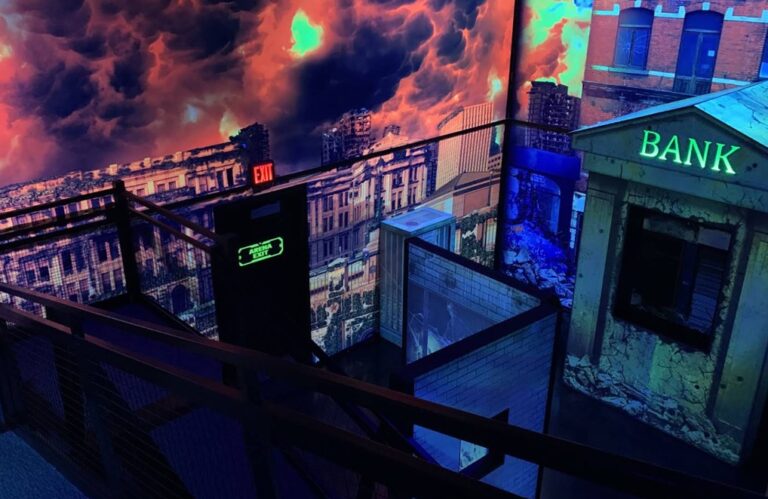
At the core of Thunder Road’s appeal is its state-of-the-art laser tag arena. This multi-level, glow-in-the-dark battlefield transforms players into futuristic warriors navigating a maze of tunnels, ramps, and obstacles. Complementing the adrenaline-pumping laser tag is an expansive virtual reality (VR) gaming zone.
Beyond laser tag and VR, Thunder Road also features a vast arcade floor brimming with classic and contemporary games—ranging from ticket-redemption challenges to racing simulators and motion-based rides.
The facility includes party rooms for celebrations, a full-service snack bar offering everything from popcorn to pizza, and dedicated staff who ensure guests have a smooth and enjoyable experience. Whether hosting a child’s birthday party or organizing a corporate team-building event, Thunder Road provides customizable packages that cater to different group sizes and themes.
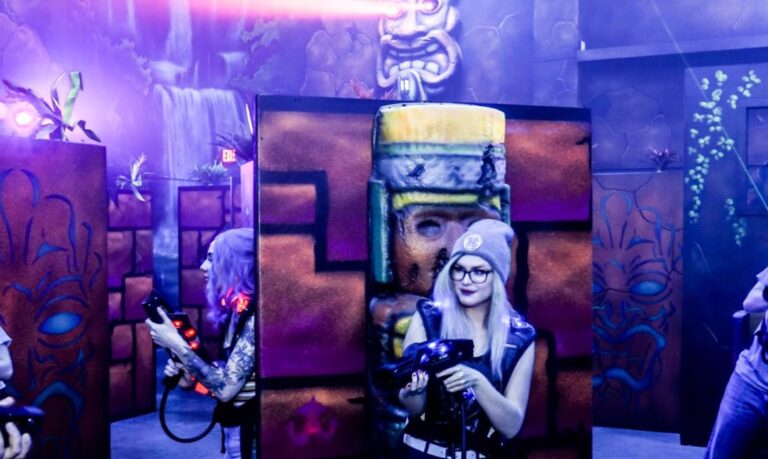
IndoorsLaserTag is a fast‑paced, team‑oriented game that blends physical activity with futuristic technology. Participants wear lightweight vests equipped with infrared sensors and carry handheld “phasers” that emit invisible laser beams. When a beam strikes a sensor, the vest registers a hit and records the point value. The game takes place in a dimly lit arena or a specially designed outdoor field, where obstacles, corridors, and hide‑outs create a dynamic battlefield. Unlike paintball or airsoft, laser beams leave no mess, require no protective gear beyond the vest, and can be safely played in a wide range of environments, from shopping malls to corporate campuses.
Modern LaserTag systems are powered by sophisticated software that tracks each player’s score, the duration of each round, and even the precise location of hits on a digital map. This data is often displayed on large screens in real time, adding a spectator element that transforms a simple game into a mini‑spectacle. Because the equipment is battery‑operated and the beams are harmless, LaserTag can be enjoyed by children, teens, adults, and seniors alike, making it a truly inclusive recreational activity.
The versatility of LaserTag lies in its ability to accommodate an almost limitless array of scenarios. Traditional arenas usually offer a “team deathmatch” mode, where two squads compete to score the most hits within a set time. However, many venues and portable kits provide themed experiences that heighten immersion:
Because the software governing LaserTag can be programmed on the fly, organizers can tailor the length of each round, the number of lives per player, and the scoring rules. This adaptability allows the same venue to host a casual birthday party one night and a high‑stakes corporate tournament the next.
LaserTag delivers a suite of physical, cognitive, and social advantages that extend far beyond the entertainment value of the game.
Even though the equipment is lightweight, the game demands constant motion—running, ducking, climbing, and sprinting through obstacles. A typical 30‑minute session can burn between 200 and 400 calories, comparable to a moderate cardio workout. Because the activity is self‑paced, participants can push themselves as hard as they feel comfortable.
Tracking an invisible laser beam requires rapid visual processing and precise motor responses. Players must aim, fire, and dodge almost simultaneously, strengthening the neural pathways responsible for hand‑eye coordination and reaction time.
Many scenarios hinge on strategic planning and real‑time communication. Successful teams assign roles (sniper, scout, medic), share intel about enemy positions, and coordinate movements to outmaneuver opponents. These dynamics mirror the collaborative demands of workplace projects, making LaserTag an effective informal leadership lab.
The immersive, low‑impact nature of LaserTag provides a safe outlet for adrenaline and competitive drive. The absence of physical pain or injury risk reduces the psychological barriers that sometimes discourage participation in contact sports, allowing players to experience a healthy “fight or flight” response without the downsides.
Because the equipment is adjustable for size and the rules can be customized for varying skill levels, LaserTag welcomes participants with diverse physical abilities. The non‑contact format is especially attractive to schools, senior centers, and rehabilitation programs seeking active recreation that minimizes injury risk.
Researchers in kinesiology, psychology, and human factors engineering have taken a keen interest in LaserTag as a testbed for studying movement, decision‑making, and group dynamics. Several peer‑reviewed studies highlight its efficacy as a low‑risk simulation platform:
Industry analysts also point to LaserTag’s growing market share as evidence of its commercial viability. The global “indoor active entertainment” sector, which includes LaserTag, escape rooms, and VR arcades, is projected to exceed $15 billion by 2030. Analysts attribute this growth to rising consumer demand for experiential leisure activities that blend technology, physicality, and social interaction.
Children constitute a core demographic for LaserTag, and the activity aligns well with developmental milestones. For younger players, the game promotes:
Many venues offer “kid‑friendly” packages that lower the intensity of gameplay—fewer lives, slower scoring, and simplified maps—ensuring that the experience remains fun rather than overwhelming. Parents also appreciate the safety aspect: the infrared beams cannot cause burns or bruises, and the equipment is ergonomically designed for smaller bodies.
The adaptability of LaserTag makes it an appealing centerpiece for a wide variety of celebrations.
A LaserTag birthday party can be organized as a single‑session battle or a series of mini‑tournaments. Packages typically include arena rental, equipment, a briefing session, and optional themed decorations. Because the game naturally creates excitement and friendly rivalry, it keeps children engaged for the entire duration of the event without the need for additional activities.
Graduates looking for an unconventional yet memorable way to commemorate their achievement often choose LaserTag as a group challenge. The competitive element can symbolize the transition from structured academic life to the dynamic professional world, while the collaborative aspects reinforce the bonds formed during years of study.
Companies increasingly view LaserTag as a low‑cost alternative to expensive off‑site retreats. The game’s built‑in scoring and debriefing tools allow facilitators to extract performance metrics—such as average response time and team cohesion scores—that can be discussed in post‑game workshops. Customizable scenarios can be designed to mirror real business challenges, turning the entertainment into an experiential learning session.
LaserTag can be enjoyed in a variety of settings, each offering distinct advantages.
Most urban centers host dedicated LaserTag facilities equipped with black‑out lighting, high‑tech obstacle courses, and climate control. Indoor venues guarantee consistent conditions—no rain, wind, or temperature fluctuations—making them ideal for scheduled events and large groups. Many of these arenas also provide party rooms, catering options, and on‑site staff to manage equipment and safety briefings.
For those seeking a larger battlefield, temporary outdoor setups can be installed in parks, sports fields, or even corporate campuses. Portable laser systems use weather‑proof casings and solar‑charged batteries, allowing organizers to create sprawling mazes, forest‑like hideouts, or open‑field “battle zones.” Outdoor play adds the element of natural terrain, encouraging players to utilize trees, elevation changes, and weather conditions as tactical assets.
Some providers combine indoor and outdoor elements by offering “rain‑or‑shine” domes—large, climate‑controlled structures that mimic outdoor environments while protecting equipment from the elements. These hybrid spaces give organizers the flexibility to design expansive scenarios without sacrificing comfort.
When selecting a venue, considerations include the size of the player group, desired scenario complexity, accessibility for participants with mobility needs, and the availability of ancillary services such as food, parking, and technical support. Many venues now allow online reservations and customizable game settings, simplifying the planning process for birthdays, graduations, or corporate events.
LaserTag has evolved from a niche amusement into a mainstream activity that blends technology, physical movement, and social interaction. Its modular scenarios cater to casual play, competitive tournaments, and purpose‑driven training alike. The documented benefits—including improved coordination, cognitive agility, and teamwork—are reinforced by scientific research and industry forecasts that predict continued growth. Whether for children discovering the thrill of a safe, laser‑filled battlefield, adults celebrating a milestone, or professionals seeking an innovative team‑building experience, LaserTag offers an engaging, inclusive, and adaptable solution. With an expanding network of indoor arenas and portable outdoor kits, the opportunity to step into the arena is more accessible than ever—inviting the next generation of players to experience the exhilaration of light‑fast competition.


 3120 S Mayfair Dr, Sioux Falls, SD 57106